mafia
Don’t mess with the mob; a look into organized crime networks and mafia families, the real-life gangsters that inspired The Godfather.
Jeffrey Epstein: The Ghost That Haunts Trump's White House Return
For the first time in Donald Trump's political career, a narrative is taking shape that even his most loyal supporters are unwilling to buy. That narrative centers around a man who died six years ago—Jeffrey Epstein. As Trump seeks a return to the White House, Epstein's legacy has emerged as a potent force shaking the very foundation of Trump’s authority and the unity of the MAGA movement. Outside the U.S. Chamber of Commerce building in Washington D.C., a woman recently held a placard demanding the release of all files related to Epstein by President Trump. This is not an isolated protest. It symbolizes a growing unrest, not among liberals or left-wing activists, but among Trump's own MAGA loyalists. The red "Make America Great Again" (MAGA) hat is not just merchandise—it's a movement, a belief system, and, until now, a symbol of unity. Trump, who has always claimed ownership over this ideology, once silenced critics by declaring that he created MAGA, and therefore he defines it. This tactic has worked time and again—until now. --- Epstein: The Unwanted Phantom in Trump’s Comeback Jeffrey Epstein, the disgraced financier and convicted sex offender, died in 2019 under mysterious circumstances while awaiting trial. His death, ruled a suicide, only intensified conspiracy theories that he was murdered to protect powerful individuals linked to his alleged crimes. Trump’s supporters were once enthusiastic promoters of this theory, which claimed Epstein had a "black book" containing names of elite figures—some allegedly involved in heinous activities on his private island involving underage girls. Many MAGA voices, including Vice President J.D. Vance and Trump’s own son, Donald Trump Jr., gave life to this theory. It became a cornerstone of their narrative: that an elite liberal cabal was abusing power and silencing threats. Yet now, the same supporters are outraged to find Trump and his administration seemingly stepping back from that narrative. Attorney General Pam Bondi, once vocal about the need for full transparency in the Epstein case, has shifted tone. She now insists there is “nothing more to see” and urges the public to move on. Trump himself recently referred to the Epstein story as “boring” and accused those pushing it of being “bad people.” On his social platform, Truth Social, he dismissed Epstein-related theories as "nonsense" and referred to those who still believe in them as "former supporters." This shift has triggered an internal rebellion. Devoted allies and staunch loyalists are now questioning Trump's intentions. MAGA influencers who once praised him are now expressing anger and suspicion. The trust that Trump spent years building is showing rare signs of fracture.
By Ikram Ullahabout a year ago in Criminal
Wall Street Thieves: When Money Steals Our Morals
Vault 309: When Money Screamed Blood Opening Hook: "What terrified me wasn’t the gunpowder... it was the sound of the hostages’ whimpers. As if they knew this robbery would be the last thing they’d ever witness."
By Ahmed Abdeenabout a year ago in Criminal
She Vanished Without Warning
The Chilling Disappearance That Turned a Small Town Into a Nightmare of Secrets On an ordinary autumn morning, the town of Willow Creek woke to a mystery that would haunt them forever. Emily Hart, a beloved artist known for her radiant smile and magnetic charm, locked her apartment door… and vanished.
By Hamad Haiderabout a year ago in Criminal
Who Killed JFK? You wouldn't even believe if i told you
JFK Assassination Conspiracy Theory #1: The Mafia Did It The Mafia, particularly the Chicago Outfit, tends to factor into many conspiracy theories around the JFK assassination, either as the sole culprit or part of a larger conspiracy. Why would the Mafia have wanted to target John F. Kennedy? Maybe they were distraught about their casinos in Cuba being closed, or maybe JFK’s dad, Joseph Kennedy, had mob connections because he made his fortunes as a bootlegger. He didn’t.
By Kristen Orkoshneliabout a year ago in Criminal
Understanding Social Security Benefits. What They Are and How They Help.
Who Pays for Social Security? Social Security is funded by payroll taxes paid by workers and employers. Every time you earn a paycheck, a percentage of your earnings goes toward Social Security taxes. Employers match this amount, and self-employed workers pay both parts themselves. This money goes into a trust fund that pays current beneficiaries.
By Tariq jamilabout a year ago in Criminal
poison flavored candy (The criminal with 21 faces)
On March 18, 1984, a Japanese man named Kahatsu Izaki was enjoying an evening bath at his home when suddenly two masked and armed men broke in and kidnapped him while he was completely naked. Izaki was the owner of a famous Japanese confectionery factory called Glico. The next day, a ransom demand arrived at his factory. The kidnappers asked for 1 billion Japanese yen and 100 kilograms (equivalent to about 10 million U.S. dollars). They said the payment would be delivered to a public telephone booth in the street; they would specify the location later. However, before any payment was made, Izaki managed to escape from the kidnappers before dawn. No one was watching him, and he was able to untie the ropes binding him, break the door of the warehouse where he was held, and flee. Contrary to what some might think, he was not naked during the kidnapping because the kidnappers had given him clothes. After escaping, he ran far from the place until he found two railroad workers who helped him contact the police. The problem was that Izaki could not identify the kidnappers or describe any of their features. Although the kidnapping attempt failed, the kidnappers did not stop. They sent threatening messages to Izaki and his factory. One message demanded $480,000 and threatened to poison the factory's sweets with cyanide if the ransom was not paid. To prove their seriousness and make sure everyone believed them, the kidnappers broke into the factory and set parts of it on fire. This caused panic among the entire Japanese population and forced the police to deploy more than 130,000 officers to catch them. To those who are hearing this for the first time: this is a case that involved the entire Japanese nation, and the police could not catch the criminals. The criminals were smarter than everyone else. The police did not know who to accuse or suspect for a very long time. In the 1980s, the Japanese police were considered among the strongest worldwide, solving 97% of murder cases and 55% of thefts annually. So their failure to solve the Glico case was a black mark in their history and hurt their reputation. A famous Japanese newspaper, Yomiuri, published a large article on the front page saying they did not remember any case in Japan's history where criminals mocked the police like this. The criminals challenged the police worldwide, taunting them for over a year and a half, sending more than 100 messages with hints and information that could help capture them. The first message read: "To the police: Are you really this stupid? With all these officers, you can’t do your job and catch us? If you were really professionals, you would have caught us by now. But since you are incompetent, we will give you some hints." The hints included that the criminals might be insiders working in the factory or warehouse where Izaki was held. The person writing the messages gave more details, like the color of the car they used during the kidnapping (gray), and even the supermarket from which they bought food. At the end of the message, they wrote: "If you can’t catch us with all this information, then you are thieves stealing from the people who pay taxes to the government to provide them with security." The criminals humiliated the police in front of the entire country. After the first message, thousands more followed, full of taunts and challenges. The police worked intensively on the case, but the criminals were extraordinary. The only thing the police could identify was that the criminals' language resembled the dialect of Osaka city residents, so they suspected the criminals were from Osaka. The case remained unsolved until September 1984, when another candy factory called Morinaga started receiving threatening messages. The kidnappers demanded $410,000 and threatened to poison the autumn sweets of all mothers in Japan with a special bitter-tasting potassium substance. They put warning labels on 20 poisoned candy boxes spread from Hakata to Tokyo. On the same day, shop owners and supermarkets found 18 boxes with warning labels; one was found just 32 meters from Izaki's house. Although not all the boxes contained poison, the discovery caused panic. Another message warned that next time there would be 30 boxes without warning labels. Over the following two weeks, more than 40,000 police officers monitored supermarkets and stores across Japan but could not discover whether the criminals had poisoned more boxes or not. Surveillance cameras caught a man with curly hair, glasses, and a baseball cap placing something on a shelf at one of the stores where a poisoned box was found. The video quality was poor, and the police could not identify the man. The police also released recordings of threatening phone calls made to the factory. The criminal requested factory employees to wait for a call at a public telephone booth in a street station. Two officers disguised as factory employees waited there, but no call came. The criminals continued to mock the police, sending letters challenging their intelligence and ability to catch them. By August 12, 1985, more than a year and a half after Izaki’s kidnapping, the criminals sent their last letter and declared they would stop. During this time, the police received over 28,000 letters from the criminals, used more than 130,000 officers, but could not catch anyone. The police eventually suspected that the criminals were insiders at the Glico factory or involved in the warehouse where Izaki was held. Others believed the criminals sought revenge against food manufacturers because of a tragic poisoning incident 30 years earlier, when a milk factory accidentally contaminated powdered milk with arsenic, causing over 12,000 infants to fall ill and 183 deaths. Another theory focused on a man named Manabu Miyazaki, suspected by the police. A sketch based on police descriptions resembled him closely, and his mother confirmed the image. Miyazaki was the son of a Yakuza boss and had many previous charges, but no evidence could link him to the crimes. Despite all efforts, the criminals were never caught, and the mystery remains unsolved.
By Ink pulse(different angle)about a year ago in Criminal
The Italian Cruise Ship Mysterious Hijacking
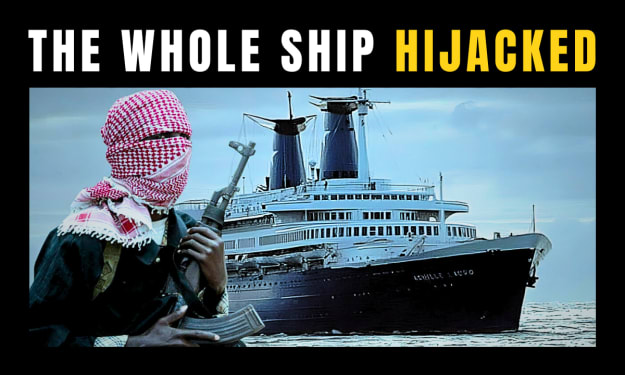
On Monday, October 7, 1985, an Italian cruise ship named Achille Lauro docked at Alexandria Port in Egypt. It was the fifth day of the cruise that had begun from Genoa, Italy. The ship carried a total of 748 passengers and 450 crew members. At Alexandria, 651 passengers disembarked to board buses headed toward the Pyramids of Giza.
By Chronicle of Powerabout a year ago in Criminal
The Monster of Lahore: Javed Iqbal & the 100 Boys-The Unsettling Case That Shook Pakistan. AI-Generated.
In 1999, Lahore, Pakistan, became the site of one of the most gruesome serial murder cases in modern history. The perpetrator, Javed Iqbal, terrorized the city under the guise of offering shelter to vulnerable boys—only to kill and dispose of them in acid. Over six months, 100 boys aged 6–16 disappeared. He was eventually arrested, confessed, tried, and sentenced but died under mysterious circumstances before justice was fully served.
By Nowshad Ahmadabout a year ago in Criminal
Why Czar Nicholas II and the Romanovs Were Murdered
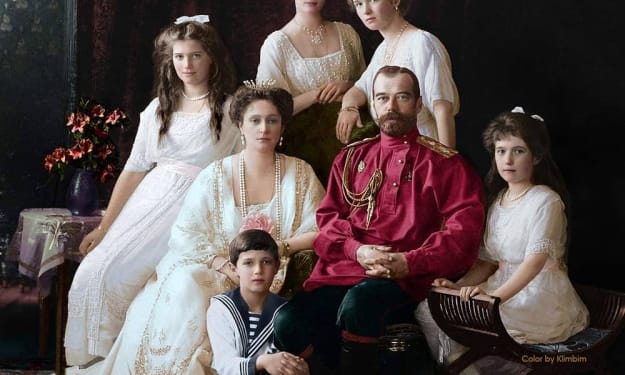
When Nicholas Romanov was crowned czar of Russia in 1894, he seemed bewildered. “What is going to happen to me…to all Russia?” he asked an advisor when he assumed the throne. “I am not prepared to be Czar. I never even wanted to become one.”
By Kristen Orkoshneliabout a year ago in Criminal
Why I Think My Neighbor Is a Serial Killer
I live in a quiet neighborhood where nothing ever happens—at least that’s what people like to believe. Rows of identical houses, tidy lawns, and the occasional barbecue. It’s the kind of place where everyone waves but no one truly knows each other. That illusion of peace shattered for me the night I began watching Mr. Derren.
By MUHAMMAD JALALabout a year ago in Criminal
Ashes in the Rain: A Brother’s Brutal Hunt for the Truth Behind His Sister’s Death
The rain had been falling for four days when Claire Wade disappeared. Her brother, Daniel, figured she just needed space. Nurses worked too hard for too little, and life had a way of grinding people down. But when her ten-year-old daughter, Emma, showed up at his garage alone, soaked and shivering, Daniel knew something was wrong. The police said overdose. No foul play. No case. Daniel had seen dead people before. Too many, actually. Back when he was doing things he never talks about, in places he’ll never name. And Claire didn’t look like an overdose. Her face was too calm. Too clean. Like someone had laid her down gently, wiped the panic from her mouth, and walked away. Three days after the funeral, he found her phone. Tucked inside a cereal box under the sink. Almost missed it. Typical Claire—always one step ahead. Inside were voice memos. Fragments of conversations. Shaky recordings of hushed meetings in break rooms. Files she’d copied from hospital records. People with no ID, no discharge, no trail. She’d been helping someone escape. A woman with bruises who spoke no English. After that night, the woman was never seen again. It wasn't an overdose. It was a message. Daniel brought it to the police. They nodded politely. Said they’d look into it. One officer literally yawned while Daniel spoke. So he went back to the man he used to be—the one he had buried under tools, oil, and ordinary days. --- The first man he found was a paramedic. Smooth uniform, bad hands. Daniel followed him from the hospital to a dive bar near the shipyards. Waited until he staggered out, drunk and humming to himself. A wrench pressed against the spine is a great way to encourage conversation. The man talked. They always did. More names followed. A cleaner who scrubbed records. A night nurse who signed off on “phantom” discharges. A logistics guy who handled transport—of people, not supplies. Each lead peeled back another layer. Each name darker than the last. At the edge of it all stood Marcus Shaw—hospital director, charity speaker, community face. Public hero. Private monster. Daniel tracked him to a warehouse on the river—converted shipping containers with modified locks. Inside, he found three women. Two were conscious. One wasn’t. He left them with Mia, an old medic friend who owed him favors. Then he grabbed his crowbar and Emma’s stuffed rabbit—the one she dropped the night Claire died. --- He found Shaw alone in his office at the docks, pouring himself a drink like it was just another day. “I knew you’d come,” Shaw said. “Family’s a powerful thing.” Daniel didn’t answer. Just smashed the glass table in front of him with one clean swing. The fight was fast, but it was ugly. Shaw was stronger. Younger. But Daniel had grief behind him—and grief doesn’t let go. They wrecked the office. Bookshelves, chairs, blood on the wall. Shaw hit him with a lamp. Daniel drove him into the floor. "She begged me," Shaw gasped, coughing up blood. "All she had to do was shut up." Daniel raised the crowbar again. His hands trembled. But he didn’t swing. Instead, he pressed play on Claire’s final recording. Her voice filled the room, shaky but fierce. Naming names. Telling the truth. And now it was going live—streamed to every contact she had. By morning, Shaw was in handcuffs. Half the city was watching. The rest couldn’t look away. --- A week later, the rain finally stopped. Daniel sat on the porch of his garage, holding the rabbit Emma had asked him to fix. She curled beside him, small and silent. “Did you hurt them?” she asked. He paused. “I stopped them.” Emma looked up. “Is Mum proud?” He didn’t answer. Just pulled her close and held her. Inside, the radio played a quiet song. One Claire used to hum when Emma was small. Outside, puddles reflected a sky trying to remember how to be blue. The storm had passed. But Daniel knew some storms live inside you. And some never leave.
By Ubaid Ur Rehmanabout a year ago in Criminal
Military robbery | The most dangerous armed operation in the world (the reason for arming the police). Content Warning.
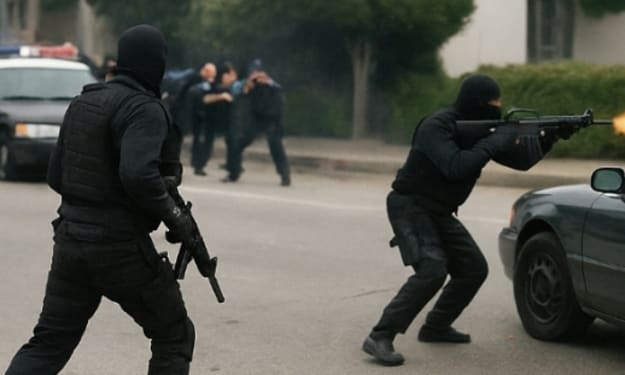
On the morning of February 28, 1997, a fleet of news helicopters flew toward a bank in a quiet neighborhood in North Los Angeles. When they arrived, they pointed their cameras at the bank’s parking lot and began broadcasting live. What appeared on the screens was a bank robbery—expected to be routine, like thousands before it—but this time, it was completely different. In a matter of moments, the robbery turned into one of the most violent shootouts in American police history. Two armed men engaged in a massive firefight with dozens of LAPD officers. The scene resembled a war zone: two men, fearless, firing nonstop, armed with automatic weapons, thousands of rounds of ammunition, and body armor impervious to standard police bullets. The police were outnumbered and under-equipped. Their handguns were useless against the robbers’ heavy armor and high-powered rifles. The streets of the city turned into a battlefield, broadcast live to millions around the world. One of the robbers was Larry Phillips Jr., a man who came from a long line of criminals—his grandfather robbed trains, and his father dug up graves. In 1984, he turned to bodybuilding and joined Gold's Gym in Pasadena. His goal was to build an impressive physique, but when he realized his body couldn't compete professionally, he chose a different path. He tried to appear as a businessman, even stealing a suit from a store—but was caught and jailed for a short time. After his release, he became a real estate agent, but the income didn’t meet his expectations. He turned to scams and fraud, and eventually to bank robbery. But he needed a partner—Enter Emil Mătăsăreanu, a Romanian immigrant who moved to the U.S. in 1976. Emil had health issues, was overweight, and suffered from bullying. But determined to change, he too joined the same gym as Larry. That’s where they met. What brought them together was their mutual love for guns. Larry was experienced, and Emil was a passionate hobbyist—soon that interest evolved into crime. Between 1990 and 1992, they carried out a series of minor robberies: hitting convenience stores and ambushing money transport vans. In 1993, they executed their first major heist—ambushing an armored truck and stealing tens of thousands of dollars. Later, they were stopped by police for speeding. A search of their car revealed an arsenal of weapons, ammo, smoke grenades, body armor, fake IDs, and even listening devices. However, since they weren’t caught in the act of robbery, they were only charged with illegal possession of weapons. Larry was sentenced to 99 days, Emil to 71. Upon release, they resumed preparations. In 1995, they ambushed another armored truck and killed the guard. In 1996, they hit two Bank of America branches, stealing hundreds of thousands of dollars each time—fast, efficient, and undetected. But the money ran out quickly. Their lifestyle didn’t allow for saving. So in 1997, they planned another robbery: the Bank of America branch on Laurel Canyon Boulevard, the largest in North Hollywood. It was strategically located—next to a mall, surrounded by open parking lots, with multiple escape routes. They stocked up on military-grade weapons: AK-47s, a Bushmaster XM15, an HK91 sniper rifle, and over 3,000 rounds of ammunition. Their armor was homemade—Kevlar vests reinforced with steel plates, and Larry even wrapped himself in industrial protective blankets. On the morning of Friday, February 28, at 9:16 a.m., they stepped out of a white Chevrolet, took Phenobarbital (a sedative to calm their nerves), and entered the bank. Their plan: take control, open the vault, fill their bags, and escape within 8 minutes. But something went wrong… The money they expected hadn’t arrived yet. The vault had individual safety deposit boxes, each needing a key. Meanwhile, a patrolling police car noticed them and reported a suspicious situation, requesting backup. Within minutes, the police surrounded the bank. Larry began shooting to intimidate civilians, then turned his gun toward the officers. Emil came out minutes later with a bag holding $33,000, not realizing it contained dye packs that exploded after being hit by a bullet, staining the cash red. The standoff escalated. The police were under-armed—some had to borrow high-powered rifles from nearby gun stores to match the robbers’ firepower. Larry and Emil moved in military formation, covering each other, taking turns firing, like trained soldiers. When they ran low on ammo, they tried to flee in their car. Police shot out the tires. Larry walked behind the vehicle, using it as a shield, still firing, while Emil drove slowly beside him. Eventually, they reached a residential neighborhood, where they split up. Larry hid behind an abandoned truck and was shot multiple times, dying on the spot. Emil tried to hijack another car, but the driver fled with the keys. Surrounded, Emil continued firing, even after taking over 20 bullets to the legs. In the end, he surrendered, was handcuffed, and left bleeding on the street for over 56 minutes, while paramedics were kept away in fear of hidden explosives. He died on the scene from blood loss. The shootout lasted 44 minutes, with over 2,000 rounds exchanged. Twelve police officers and eight civilians were injured. Over 300 officers and SWAT teams responded. Investigators later discovered more weapons, ammunition, body armor, and even a makeshift bomb factory. At the time, LAPD officers were equipped with 9mm pistols or .38 revolvers, ineffective against armored assailants. The incident revealed a major gap in police preparedness. In response, police departments across the U.S. upgraded their weapons and tactics. The AR-15 became standard issue, as did armor-piercing rounds, improved vests, and military-style helmets. Though this wasn’t the only reason for police militarization, it was a critical turning point. The North Hollywood shootout remains one of the most violent criminal encounters in American history—and it changed law enforcement forever.
By Ink pulse(different angle)about a year ago in Criminal