mafia
Don’t mess with the mob; a look into organized crime networks and mafia families, the real-life gangsters that inspired The Godfather.
Tragedy Born of Jealousy
This is a deeply heartbreaking story of four unfortunate brothers. They were ethnic Pashtuns hailing from Nowshera, Pakistan — young men who rose from humble beginnings, driven by ambition, perseverance, and dreams of a better life. Years ago, they left their homeland and ventured to Italy. It wasn't an easy journey. Like countless immigrants, they worked tirelessly, often under harsh conditions and away from their families. They faced language barriers, legal hurdles, cultural shocks, and financial constraints. But through their unwavering determination, they not only established themselves but went on to build their own business — their very own piece of success on foreign soil. Their grit earned them respect in the Italian community, and they ultimately secured citizenship in their new homeland. Despite finding success abroad, they never turned their backs on their roots. Their hearts still beat for their homeland, and their identities remained tied to their people and culture. They were known not only for their hard work but also for their generosity — often sending money home and supporting extended family members in Pakistan. One day, the eldest brother decided to return to Pakistan for his wedding. He didn’t want to celebrate the happiest moment of his life without his family and childhood friends. His brothers, too, joined him. For them, this was not just about a wedding — it was a celebration of love, success, family, and tradition. After years of struggle, they were finally able to celebrate as one. To make the occasion special, the brothers arranged a grand feast — a lavish dinner hosted in honor of their paternal cousins (the sons of their uncle). It was meant to be a gesture of goodwill, a way to bring the family together in the spirit of joy. They wanted to share their happiness, to be generous, and to show gratitude. They believed that their success would be a source of pride for their relatives — that it would inspire, not enrage. But little did they know that behind the polite smiles of those relatives lay burning envy and hidden malice. Their generosity, instead of being appreciated, fueled the flames of jealousy and hatred in the hearts of those who should have been their closest allies. In a horrific twist of fate, the very cousins they honored turned against them. Consumed by jealousy and resentment, the uncle's sons planned a brutal assault. During what was meant to be a moment of family unity, they launched a violent and cowardly attack. The gathering turned into a scene of tragedy and bloodshed. Three of the brothers were killed on the spot. Their dreams, their laughter, their sacrifice — all silenced in a matter of moments. The fourth brother was critically injured and survived, but the emotional scars he carries are beyond description. They came home to celebrate life, but their own blood betrayed them and sent them to the grave. The people they respected, loved, and honored — those with whom they shared their success — repaid them with bullets and blades. This isn’t just a personal tragedy. It’s a grim reflection of a deeper illness that plagues our society — the inability to digest someone else's success. In a culture where blood ties are sacred, and guests are revered, what could push cousins to murder their own flesh and blood? The answer is simple yet painful: jealousy, hatred, and the toxic ego that sees another’s rise as a personal defeat. It is a tragedy that exposes a harsh truth — in our society, success is rarely celebrated by others unless it’s their own. Often, those closest to us find it hardest to be happy for us. Instead of seeing others’ achievements as motivation, some see it as competition. Rather than learning or aspiring to rise themselves, they choose to destroy. These four brothers built something beautiful — a life of honor in a foreign land, a reputation of decency, a business that could have provided for generations. They returned home not to boast, but to share their joy. But all their dreams, all their goodwill, and all their kindness were met with a fate too cruel for words. This incident is not only a call for justice but a cry for societal reform. We must examine ourselves as a community. We must raise our children to be better — to compete through character, not cruelty. We must teach our families that someone else's success is not our defeat. We must celebrate one another, not destroy each other. What happened to these brothers is not just the failure of a family, but a failure of community, of values, and of morality. In a society where such hatred festers in silence and where people smile in front but plot behind, no one is truly safe. Today, three bright lives have been lost. One brother lives on — a survivor not only of physical wounds but of emotional devastation. He has lost his siblings, his happiness, and his faith in family — all in one moment. And so we ask: What kind of people are we becoming, if the price of success is death? If generosity leads to violence? If a celebration of love ends in a massacre? Let this story not be forgotten. Let it be a lesson that echoes through every village, town, and city. Let us rise above jealousy. Let us become a society where success is applauded, not punished. And most of all, let us protect those who return to us with goodwill in their hearts — not bury them with the very hands they came to embrace. May the souls of the martyred brothers rest in peace. May their story shake us awake. May justice be served, and may we never allow such a tragedy to repeat.
By Ikram Ullahabout a year ago in Criminal
Echoes of the Blue Kite
The alley behind the old apartment complex in East Detroit was where Eli always flew his blue kite. It was cheap—faded from sun and frayed at the edges—but to Eli, it was freedom. His little brother, Noah, only five years old, would laugh and cheer every time the kite soared above the buildings, catching wind over rusted rooftops and broken basketball hoops. They didn’t have much. Their mom worked two jobs to keep the lights on, and their dad had disappeared years ago without a word. Eli, just thirteen, had to grow up fast. But he made a promise. “I’ll always protect you,” he told Noah, one night as they curled up under the same blanket. “No matter what.” He kept that promise—until the van came. --- It was a Tuesday afternoon. The blue kite slipped loose from the string and tumbled into the street. Noah ran after it, laughing. Eli chased him, yelling for him to stop. That’s when the white van rolled in—slow, silent. A man stepped out, smiling too much. “Need help with your kite, buddy?” Noah paused. Looked back at Eli. By the time Eli reached the street, the van was gone. And so was Noah. --- The next days blurred into sirens, patrol cars, questions, and cold dinners that went untouched. The police filed a report. They asked the usual things. Then they moved on. “We’ll keep an eye out,” they said. “But honestly? It’s hard. Kids go missing all the time in this part of town.” His mother shattered. Stopped working. Stopped sleeping. Eli stopped talking. He blamed himself. For letting go of the kite. For being slow. For being thirteen and not enough. --- Months passed. Posters peeled off telephone poles. People stopped asking. Some forgot. But Eli didn’t. At fourteen, he dropped out of school. Started bagging groceries, cleaning gas stations. Every dollar he earned went toward printing new flyers. He walked the city for hours after work, checking underpasses, shelters, train stations. Always carrying a copy of Noah’s picture in his pocket. He grew into his grief like a second skin. --- When he turned seventeen, Eli met Marcus, a volunteer with a nonprofit that tracked missing children and human trafficking rings. Marcus told him the truth the cops never would: this is real, this is big, and this is everywhere. Then he showed Eli photos. In one of them, blurry and dark, was a little boy sitting in a basement corner. His hair was longer. His eyes were hollow. But Eli knew that face. It was Noah. The timestamp was from seven months earlier. --- Eli joined the group. He started working undercover, pretending to be a delivery kid, gathering names and locations. He took risks. Big ones. Because every lead felt like a thread that might pull his brother home. Then came a breakthrough. A warehouse outside of Cleveland—believed to be a holding site before children were moved across state lines. Law enforcement got involved. A raid was planned. Eli went along. --- They found six kids—malnourished, terrified, barely able to speak. But no Noah. In the back room, Eli found a kite—faded blue, with a ripped tail and tape around the corners. He picked it up and broke. A federal agent put a hand on his shoulder. “There was a boy,” he said quietly. “Tried to escape a few weeks ago. Didn’t make it. We think... that might’ve been him.” Eli walked out into the cold parking lot, stared at the cloudy sky, and screamed into the silence. --- Today, Eli runs a shelter in Chicago called Noah’s Wings, helping survivors of trafficking rebuild their lives. He teaches them how to build kites. How to hope again. And every year, on the second Tuesday of March, he stands in a public park and flies a blue kite. Old. Tattered. But flying. Because even when the world forgets, promises—especially broken ones—can still rise with the wind. --- Moral: Some crimes steal more than lives. They steal childhoods, peace, and people we never stop looking for. But love, even shattered, can still lift something high into the sky—like a blue kite, carrying a memory that never fades.
By Muhammad Bilalabout a year ago in Criminal
The Silent Confession
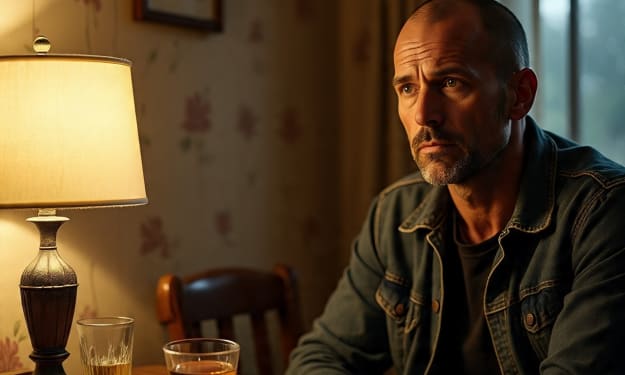
The rain tapped steadily against the cracked windows of Room 209 in the forgotten motel at the edge of the city. Inside, a man sat alone at a small wooden table, a dim lamp above him casting a flickering circle of light. His name was Raymir Cole, known in the underworld as “The Ghost”—a name earned from ten years of flawless heists, vanishing acts, and silence. Raymir wasn’t a violent criminal. He never carried a gun. He never hurt anyone. But he stole things that weren’t his—from banks, vaults, and the homes of the powerful. To many, he was a modern-day Robin Hood. But Raymir kept every dollar for himself. Tonight, however, was different. On the table before him sat a small voice recorder, a half-empty glass of whiskey, and a weathered photograph—of a girl, not more than six, grinning with front teeth missing. Her name was Lila. And she was the reason Raymir’s carefully built world was beginning to crack. --- It started two weeks earlier. Raymir had received a tip about a rare diamond necklace hidden in a private collection—owned by business magnate Charles Hartwell, a man notorious for laundering money through international shell companies. Raymir scoped out the estate, planned for nine days, and executed the job on the tenth. It was supposed to be simple. Get in, disable the cameras, crack the safe, vanish. And that’s exactly what happened—until Raymir noticed the girl. Lila. She was asleep in the room beside the gallery. A child of perhaps six, maybe seven. The necklace had been displayed just outside her room. As Raymir stepped past her door, something compelled him to stop and look in. There she was, curled up on her bed, clutching a worn-out teddy bear with a stitched-up leg. Raymir saw something in her—a version of himself, maybe, or someone he used to know. He left with the necklace, but he couldn’t leave her image behind. Back in his motel room, Raymir tried to ignore it. But each night, the memory returned—her peaceful face, the soft rise and fall of her breath, the innocence in her small fingers wrapped around that bear. Something had shifted. --- On the seventh night, Raymir found himself researching Hartwell. What he discovered shook him. Hartwell wasn’t just a crooked businessman; he was under investigation for child trafficking—his own adopted daughter, Lila, included in suspected abuse allegations that the authorities could never confirm. Raymir had stolen many things, but now he realized what he hadn’t taken—an opportunity to save someone. He knew where the necklace was; he knew where the evidence was. And he knew, deep down, that this time, his silence would make him a criminal in ways worse than any theft ever had. --- And so here he sat, in the dim motel light, recording his confession. Not just of theft—but of witnessing something wrong and walking away. He described every job he had done, every name he could remember, every corrupt official he’d bribed or dodged. But most importantly, he described Hartwell—his estate, the rooms, the secret safes, the camera placements. He gave locations, proof, and described Lila’s room in painful detail. He ended the recording with a message. "his isn’t about redemption. It’s about responsibility. Do what I didn’t do—act before it’s too late.” He placed the recorder and the necklace in a brown envelope labeled “FBI—CRIMES DIVISION,” and mailed it anonymously the next morning. That same day, he boarded a bus headed east, toward nowhere in particular. As the city shrank behind him, he didn’t feel free. He didn’t feel forgiven. But he felt lighter—like a man who had finally spoken after years of silence. Some say the Ghost was never seen again. Others claim they spotted him in distant towns, working in bookstores, teaching chess to kids at the park, always quiet, always watching. But one thing is certain: a week after that package arrived, Charles Hartwell was arrested. Lila was taken into protective custody. And in a world full of criminals who never look back, one finally did—and that made all the difference.
By Muhammad Bilalabout a year ago in Criminal
Shadows of the Bazaar
The narrow alleys of Lahore’s old Anarkali Bazaar buzzed with life, as vendors shouted prices, spices filled the air with aroma, and shoppers haggled under the sun’s golden glare. Among the crowd, Faizan, a quiet middle-aged shopkeeper, ran a modest antique shop that had been in his family for three generations. His stall, tucked away behind a book vendor, held rare coins, old clocks, and fragments of forgotten stories. Faizan’s most prized possession was a centuries-old jeweled dagger believed to have belonged to a Mughal prince. It was not for sale, kept behind glass, and known to only a few collectors and friends. He often said it brought him protection. But that charm was about to be tested. On a Friday evening, as the muezzin’s call echoed through the city and Faizan closed his shop, he noticed something strange: the glass case containing the dagger was open, and the dagger was missing. Panic surged through him. He immediately locked the shop, his hands trembling, and rushed to the nearest police station. Inspector Arif, a sharp and seasoned officer, was assigned the case. “Any enemies? Anyone who’s shown interest in the dagger lately?” he asked. Faizan thought hard and mentioned two names: Hassan, a regular visitor who was once his father’s friend but had recently shown too much curiosity about the dagger, and Kamal, a young tourist from Karachi who had come asking odd questions about antiques. The next morning, Arif visited the shop. There were no signs of forced entry, and the security camera – an old model – had mysteriously stopped recording between 6:40 and 7:00 p.m., just before Faizan had closed. A clean, professional job. But why steal just one item when there were other valuables? Two days later, a tip came in. A local boy named Billa had seen someone sneaking through the alley behind Faizan’s shop on the night of the theft. “He was tall, wearing a cap and a leather bag. I saw him hop on a motorcycle with no number plate,” Billa told the police. With this, suspicion turned toward Kamal, the Karachi tourist. Faizan confirmed he had seen Kamal wear a similar cap and carry a leather bag. But when police visited the guesthouse where Kamal stayed, they found it abandoned. Kamal had checked out the morning after the theft. However, he had used a fake ID, and the phone number was disconnected. Just when the trail seemed to go cold, Inspector Arif received a message from an art dealer in Islamabad, reporting an attempt to sell a Mughal-era dagger matching Faizan’s description. The seller claimed it was inherited, but something about him made the dealer suspicious. Arif and his team rushed to Islamabad and coordinated with local police. They set a trap. The next day, the suspect came to the dealer’s office with the dagger wrapped in silk. The police arrested him on the spot. He turned out to be Hassan – the old family friend. Under interrogation, Hassan confessed. He had learned about the dagger’s value and plotted with Kamal, a small-time con man, to steal it. Hassan had distracted Faizan while Kamal tampered with the camera during one of their earlier visits. On the night of the theft, Kamal sneaked in using a copied key Hassan had made weeks before. Their plan was to sell the dagger through art dealers across cities, masking its origin. Kamal’s role was to flee immediately to avoid suspicion, while Hassan would sell it discreetly. The dagger was returned to Faizan, who broke down in tears as he held it once more. The betrayal of an old friend hurt more than the theft itself. Inspector Arif closed the case, but the shadows of betrayal lingered in the bazaar. The story of the stolen dagger spread like wildfire, and visitors from around the city came to see the antique that had survived history – and almost disappeared into it. As for Faizan, he never placed the dagger back in the glass case. It remained locked in a vault. The shop still smelled of old wood and history, but the air had changed. Trust, once broken, doesn’t mend like timeworn leather.
By Muhammad Bilalabout a year ago in Criminal
The Mansehra Horror: Who Killed 10-Year-Old Sufyan?
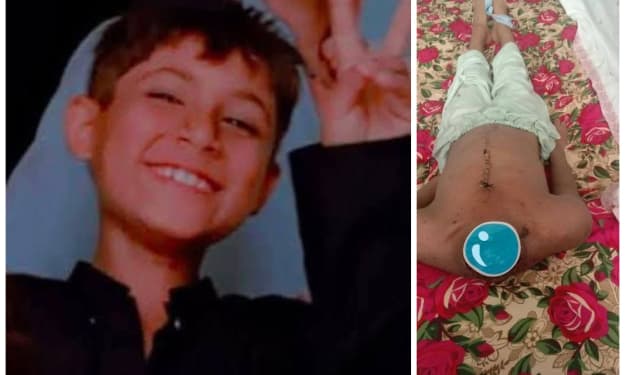
I never imagined we would see days so dark. Each new day brings news more painful and horrifying than the last. Just when you think you've heard the worst, something even more disturbing surfaces—leaving your heart shaken, your soul trembling, and your mind numb.
By 🕵️♂️ True Crime Enthusiast | Storyteller of the Dark Side 🔍about a year ago in Criminal
Silent Streets. A Story of Harassment in the USA.
In the heart of New York City, where dreams rise with the skyline and diversity paints every street corner, lived a young woman named Aaliyah. Twenty-four, independent, and ambitious, Aaliyah was pursuing her master's degree in journalism while interning at a local news agency. Her days were packed with classes, assignments, and coffee-fueled deadlines. But like many women in the United States, behind her driven smile was a story burdened by harassment that far too many ignore.
By Tariq jamilabout a year ago in Criminal
Shadows of Deceit. AI-Generated.
Detective Zara Malik stood in front of the city morgue, the cold wind biting at her skin, but it wasn’t the weather that chilled her to the bone. It was the body on the slab. A well-dressed man, mid-40s, his face a mask of terror and confusion. His eyes were wide open, frozen in a final moment of horror that wouldn’t let go of her.
By Adil Nawazabout a year ago in Criminal
Inside the Mind of a Serial Killer
Serial killers are some of the most feared people in the world. They do not just kill once. They kill again and again — often in cold blood, and sometimes in very strange ways. Many people wonder: what goes on inside the mind of a serial killer? Why do they do such terrible things? In this article, we will explore these questions in simple language.
By Hamza Tahirabout a year ago in Criminal
The Girl Who Spoke 20 Languages—Then Disappeared Forever
In the quiet town of Liepāja, Latvia, a mysterious case unfolded in 2002 that continues to baffle linguists, investigators, and internet sleuths to this day. A 16-year-old girl—whose real name was never released publicly—astonished researchers with her ability to speak over 20 languages fluently. From Latin to Japanese, from Swahili to ancient Greek, she could switch tongues with the ease of someone flipping through radio stations. She became known online as the "Polyglot Girl." But just a year after making headlines, she vanished without a trace. To this day, no one knows what happened to her—or why her final words mentioned something called *Project Babel*. A Teenage Genius Unlike Any Other The girl first caught public attention when a video surfaced online showing her fluently conversing with international tourists in over a dozen language. The video was filmed during a cultural festival in Riga, where she worked as a volunteer translator. Her memory was described by a local professor as "photographic in nature, like a walking, breathing linguistic computer." When asked how she learned so many languages, she reportedly answered, “They were always just... there. Like I already knew them before I was born.” That eerie response marked the beginning of what would soon become one of Europe’s most whispered-about mysteries. The Last Interview—and a Chilling Clue In early 2003, a small documentary team from Sweden interviewed the girl and asked about her future. She smiled and replied cryptically: > “There’s something I need to finish. It’s called Project Babel. But once that’s done, I’ll leave.” No one knew what Project Babel referred to. Was it a school project? A government experiment? Or something darker? Less than two months after that interview aired, the girl disappeared. Her family claimed she went to school one morning and never came home. Her backpack was later found at a bus stop. Inside were only two things: A notebook filled with symbols in an unrecognizable language A worn copy of the Bible, with a single page bookmarked: Genesis 11 — The Tower of Babel Theories That Won’t Die The internet quickly took hold of the case. With so little official information, theories grew wild: 1. Government Experiment Some believe she was part of a secret linguistic or intelligence project and either escaped—or was "removed" to maintain secrecy. The phrase Project Babel sounds eerily like something out of a CIA document. 2. Extraterrestrial Contact UFO forums suggest she may have had contact with extraterrestrials—or even been one. Her ability to speak ancient and obscure languages fueled the idea that she wasn’t “fully human.” 3. Mental Health Crisis Others suggest she may have suffered from a rare psychological disorder such as cryptomnesia or hyperpolyglot savant syndrome and that her disappearance was the result of a mental health breakdown. 4. She Planned It Could she have orchestrated her own vanishing act? Was the notebook a planted clue? Some believe she went “off the grid” to pursue a deeper personal mission—spiritual, philosophical, or otherwise. A Language No One Can Decode Linguists who examined scans of the notebook say the language resembles nothing documented—no known grammatical structure, no root connections, no repetition that would imply meaning. It’s not a cipher. It’s not a hoax. And it’s not gibberish. One expert said: “It’s a system. A complete language. But it doesn’t resemble anything we’ve ever seen.” Where Is She Now? Over 20 years later, the case remains cold. Occasionally, people claim to have seen her—in Thailand, in Greece, even at a UN conference—but none of these sightings have ever been confirmed. Some believe she was abducted. Some believe she ascended to a higher level of consciousness. Others think she might still be watching, waiting, hidden behind another identity. Is *Project Babel* Still Alive? The name *Project Babel* continues to circulate in conspiracy forums and deep web archives. Some claim it’s an AI initiative meant to decode the "original human language." Others suggest it’s a religious or occult society trying to rebuild the knowledge lost in the story of the Tower of Babel. Whatever it is, if she was connected to it, maybe she succeeded. Maybe she vanished because she knew too much. Or maybe, just maybe—she’s trying to warn us. Final Thoughts The case of the Polyglot Girl is a haunting mix of genius, mystery, and the unexplained. Whether you believe she was part of something bigger or simply a lost soul overwhelmed by her gift, her story remains one of the **most bizarre unsolved disappearances of the 21st century. What do you think happened to her? Was it Project Babel? Was she silenced—or did she vanish on her own terms? solved mystery girl
By NextGen Mobile Techabout a year ago in Criminal