mafia
Don’t mess with the mob; a look into organized crime networks and mafia families, the real-life gangsters that inspired The Godfather.
Research My Mind, I’m Sorry
In one sudden, tragic evening, everything changed at 345 Park Avenue—a towering 44-storey building in Manhattan’s busiest commercial district, home to hundreds of employees. As people working nearby were heading home on that hot July evening, employees inside the building were seen running for their lives, barricading conference rooms with tables, and sending farewell messages to their loved ones. Jessica Chin, who works on the second floor of the building, told U.S. media: > "I texted my parents saying I love you." She added, > "The feeling at that moment can’t be put into words." Jessica and others sprang into action after hearing gunshots from the lobby. The shooting resulted in the deaths of four people, including a New York police officer, individuals in the lobby, and someone on the 33rd floor. Rampage in Manhattan’s Busy Streets Just before the attack, around 6:30 p.m., a 27-year-old man arrived in New York after passing through various states including Colorado, Nebraska, and Iowa. Authorities said Shane Tamura, a resident of Las Vegas, double-parked his black BMW on Park Avenue, close to landmarks like Rockefeller Center and St. Patrick’s Cathedral. Wearing a jacket, buttoned shirt, and glasses, and carrying an automatic rifle, he confidently approached the building, which also houses the National Football League (NFL) headquarters—but he never reached that office.
By Ikram Ullahabout a year ago in Criminal
A Trace of Smoke
Detective Elara Vance stood at the edge of the charred ruins, her black boots crunching over shattered glass and soot. The warehouse, once abandoned, was now reduced to a smoldering skeleton of beams and ash. Firefighters were packing up, but she remained still, scanning the wreckage. She wasn’t here for the fire. She was here for the body. “Male, mid-thirties, tied to a chair before the blaze,” the fire chief had said. “Someone torched the place after he was already dead.” A murder, masked as an accident—but sloppily. Elara squatted beside a twisted piece of metal. Something faint lingered in the air, even through the acrid smoke: lavender. Not the scent you’d expect in a warehouse. And not from any man she'd known. She scribbled in her notebook: Lavender. Arson. Male victim. Bound. Pre-mortem bruising. No wallet. Then she paused. There, half-buried in the ash—a cigarette butt. Not fully burned. Carefully, she bagged it. The lab confirmed the obvious: the cigarette had been smoked by someone wearing berry-flavored lipstick. Female DNA. No match in the system. Elara revisited the scene. Nothing new, until she noticed a camera mounted on a building across the alley. It pointed straight at the side door of the warehouse. She pulled the footage. There she was—a tall woman in a black coat and sunglasses. She arrived at 11:52 p.m., walked in calmly. Fourteen minutes later, smoke began curling from the building. The woman never came out. That is, until Elara froze the frame at 12:08 a.m. The same coat. The same sunglasses. But now, her hair was tucked under a hat, her lipstick wiped away. She turned her head slightly as she walked by the camera—revealing a scar above her eyebrow. “Elara,” her partner, Detective Marquez, said the next morning, “the vic was James Rourke. Real estate agent. Recently under investigation for fraud.” “Someone wanted him silenced,” she replied. “And that woman? Any leads?” Elara tapped the scar on her temple. “That’s the key.” They combed through mugshots from old fraud cases, con artists, angry clients. Nothing. Then Marquez found her. Lena Vale. Convicted four years ago for grand larceny. Disappeared after parole. Known for disguises. Known for holding grudges. Rourke had testified against her. Elara knew where to look now. They found Lena in a motel on the outskirts of town. She answered the door like she expected them. “Detective Vance,” she said, smirking. “How long did it take you?” “Long enough,” Elara replied. “You're under arrest for the murder of James Rourke.” Lena didn’t flinch. “Didn’t kill him. Just watched him burn.” “That’s murder.” She shrugged. “He deserved it.” Elara cuffed her, but the scent hit her again—lavender, faint and clinging. A trace of smoke in her hair. --- At the station, Lena confessed. She’d tracked Rourke for weeks, watching him, waiting. She said he ruined dozens of lives, not just hers. “I gave him a choice,” she said. “Confess on camera, or burn.” He laughed. So she lit the fire. Elara watched the footage Lena had recorded on her phone. Rourke was tied up, furious, panicked. He didn’t confess. And then, flames. The case closed, but something nagged at Elara. That cigarette. --- Days later, the DNA came back with a match—not to Lena, but to her younger sister, Ivy Vale, presumed dead five years ago in a boating accident. But Ivy had never died. Elara dug deeper. Security footage from a gas station near the motel the day before the fire showed two women—one clearly Lena, the other nearly identical but scar-free. Ivy. Elara confronted Lena again. “Where’s your sister?” Lena didn’t answer. She just smiled. “She was the one who lit the match, wasn’t she?” Elara asked. “I’m not saying a word.” “You took the fall to protect her.” Still silence. Elara leaned in. “You’re clever. But Ivy’s out there. And she made one mistake.” “What mistake?” Lena asked, unable to help herself. Elara smiled faintly. “She left a trace. A trace of smoke.” Conclusion: The Smoke Always Lingers In the end, the case wasn’t as clean as it seemed. Lena was behind bars, but Ivy was still out there, a ghost behind the flames. And Elara knew she’d be watching. Because murder, like smoke, never disappears. It drifts. It clings. And if you follow it carefully enough, even the faintest trail can lead you straight to the truth.
By Solene Hartabout a year ago in Criminal
The Mastermind Games : Season 01 Episode 01
Theme: The Game Begins It was a quiet morning in Paris, yet scattered across the city, twelve individuals received the same item—an elegant black envelope sealed with a wax stamp depicting an unfamiliar crest: a key within an eye.
By Engr. Mansoor Ahmadabout a year ago in Criminal
How a ‘Nerdy’ Crypto Genius Fooled the World: The Rise and Fall of Scammy Sammy
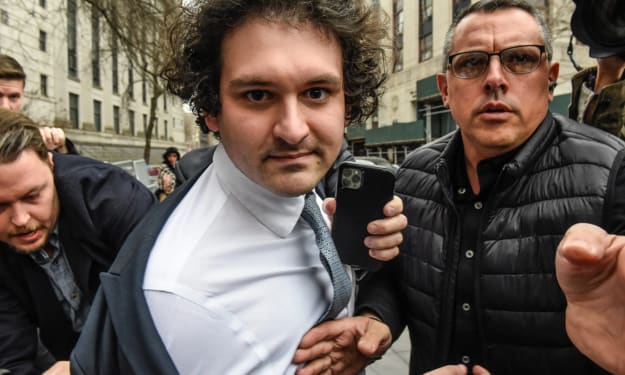
From Genius to Inmate: The Twisted Rise of Sam Bankman-Fried Remember Sam Bankman-Fried? You might recall him as that nerdy, unassuming guy with the wild hair who appeared on your screen during every crypto boom discussion. Once hailed as a revolutionary financial mind and praised for his intentions to save the world through decentralized finance, Sam has now become the poster boy for one of the largest financial scams in modern history. His downfall is not just the story of a single fraudster. It is a cautionary tale about how perception, media hype, and unchecked ambition can converge to create a financial catastrophe that destroyed the life savings of millions.
By Lynn Myersabout a year ago in Criminal
Bajaur's Wound: Innocent Lives Sacrificed for Interests
Bajaur, a land of rugged mountains and resilient people, has long been a region of struggle and survival. Its valleys echo with the voices of those who have lived for generations off the land, farming, trading, and raising families. Yet in recent years, this place—so rich in culture and history—has been overshadowed by violence and fear.
By Ainullah sazoabout a year ago in Criminal
💣 The U.S. vs China Tech Race Is Rigged — And The Winner Isn’t Who You Think 💥
🚨 The Shocking Truth: China Might Already Be Winning — And No One’s Admitting It What if I told you the biggest tech race of our time is already over — and the loser hasn’t realized it yet?
By Awais Qarni about a year ago in Criminal
The Rise of India's Most Notorious Gangster and the Global Trail of Violence. AI-Generated.
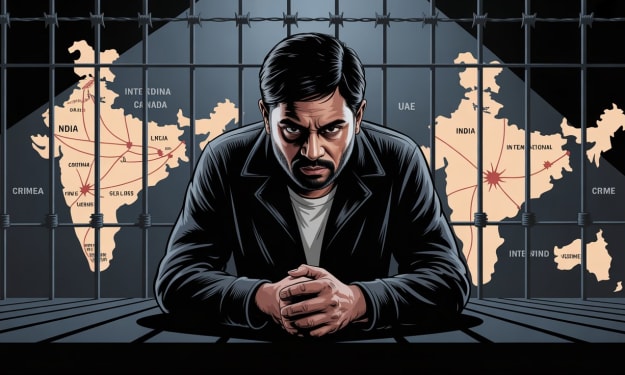
In recent years, a name has repeatedly surfaced in India’s most sensational criminal cases: Lawrence Bishnoi. Once a student leader, Bishnoi now stands as the alleged mastermind behind a vast criminal syndicate, with operations stretching from India to Canada and the Middle East. Accused of orchestrating brutal murders, extortion rings, and international arms deals, Bishnoi has emerged as one of the most feared figures in India's modern criminal landscape.
By Nowshad Ahmadabout a year ago in Criminal
The Vanishing Backpack
It started like any ordinary Monday at City Model High School. The assembly bell rang sharp at 7:45 a.m., and students shuffled into lines, sleepy-eyed and half-listening to the principal’s announcements. But by 9:00 a.m., the school was buzzing—for all the wrong reasons. Tenth-grader Hamza Rehman’s backpack had gone missing. Not from a corridor, not from the playground—but from inside the locked science lab during the first period. “I swear I kept it right next to the white cupboard,” Hamza told the vice principal, his voice shaking. “I went out to use the washroom. It was only five minutes.” The bag contained not just his notebooks, but something far more valuable—his father’s laptop. Hamza had brought it to finish a physics project due that day. Within the hour, the school had turned into a scene from a detective movie. Teachers questioned students, the CCTV footage was reviewed, and the principal called Hamza’s parents. But the footage showed nothing. No one had entered or exited the lab during that time—except Hamza. Whispers spread like wildfire. “Maybe he’s lying.” “Why bring such an expensive laptop anyway?” “He probably lost it and made up a story.” Only Hamza’s best friend, Danish, believed him. “This doesn’t add up,” Danish muttered as they sat outside the staff room, waiting for the police to arrive. “I know you. You wouldn’t risk bringing that laptop unless you really had to.” Hamza nodded. “And I left it there. I swear.” That evening, Danish stayed up reviewing the timeline. He remembered something strange: right after Hamza returned from the washroom and discovered the missing bag, a student named Zayan came out of the adjacent biology lab. He looked… nervous. Flushed. Zayan was new, a quiet type. No one really noticed him. The next day, Danish casually walked past Zayan’s desk in the last row during the break. A zipper from a small black pouch peeked out of his schoolbag, one Hamza immediately recognized. “That’s mine!” he whispered to Danish. They informed the teacher, who called in the principal. When the bag was opened, Hamza’s pencil case was inside—but the laptop and main backpack were missing. Zayan claimed he had found the pouch in the corridor. “I picked it up to return it later,” he mumbled. But his story kept changing. One minute he said he found it near the canteen, the next near the bathroom. That afternoon, the police arrived. Zayan, cornered and panicked, finally confessed. But what he revealed shocked everyone. He hadn’t stolen the bag for himself. He had taken it on instructions from his older cousin, Imran—who was involved in a ring of teenage data thieves. Imran had learned from a hacked school email that Hamza’s father worked in a private software firm and often stored sensitive documents on his personal laptop. Imran had told Zayan to grab it from school, offering him money and a new phone in return. The plan was simple: get the laptop, wipe it clean, and extract anything valuable. But the plan fell apart when Hamza reported the theft immediately. The laptop was recovered from Imran’s apartment during a police raid the next evening. Thankfully, it hadn’t been accessed—the drive was still encrypted. Zayan was suspended from school, and his cousin was arrested for cybercrime and theft conspiracy. As for Hamza, he became something of a quiet legend—the boy whose stolen bag helped uncover a tech crime ring. But he didn’t care about fame. He just wanted his life back to normal. Danish, on the other hand, learned something powerful that week. “Criminals don’t always wear masks or break windows,” he told his classmates during a school debate weeks later. “Sometimes, they sit next to you in class—and all it takes is one bad decision, one act of greed, to change everything.” --- Moral: Trust your instincts, protect what matters, and never underestimate the power of asking the right questions.
By Muhammad Bilalabout a year ago in Criminal
🐴 A Shocking Discovery: Donkey Meat Scandal Uncovered in Islamabad
In a stunning revelation that has sent shockwaves through the capital, the Islamabad Food Authority, aided by local law enforcement and the district administration, uncovered a grotesque and illegal meat processing operation in the Tarnol area of Islamabad. What began as a routine inspection quickly escalated into one of the most unsettling food safety scandals in recent memory.
By 🕵️♂️ True Crime Enthusiast | Storyteller of the Dark Side 🔍about a year ago in Criminal
The Shadow Within: Secrets of a Trusted Face
In the quiet neighborhood of Brooksville, where every neighbor greeted one another with a warm smile and every child played freely in the streets, trust wasn’t just a value—it was a way of life. That was until Adeel Malik, the man who led the community watch, was unmasked as the criminal who had haunted them all along.
By Zahir Ali Khanabout a year ago in Criminal
The Silence Beneath
The town of Elmridge was the kind of place where everyone knew everyone else’s birthday, favorite pie, and how many dogs they owned. Nothing exciting ever happened — unless you counted Mrs. Holloway’s cat getting stuck in a tree as newsworthy. But that calm was only surface deep. Because beneath the silence, death was moving quietly, like pages turning in a darkened library. Every day at 9:00 AM sharp, Beatrice Mallory unlocked the doors to Elmridge Public Library. Always in a gray cardigan, her hair pinned tightly back, glasses perfectly aligned, she was a ghost of a woman — polite, unnoticed, and forgettable. The children said she smelled like old books and peppermints. The adults said she had a tragic past: an only child, no husband, and parents long buried. No one asked questions. Until the disappearances began. It started with Tommy Ray, the teenage troublemaker who got caught spray-painting the mayor’s car. One day he came into the library after school, and then — gone. His mother swore he had promised to meet her for dinner. The sheriff shrugged. Probably ran away again, like last time. But then old Mr. Cartwright vanished. And then Jenna Farrow, the florist’s daughter. Three people in one month. Beatrice shelved books as usual. She served tea to the town council during their meetings in the reading room. She gave out bookmarks to schoolchildren and recommended murder mysteries to lonely retirees. Detective Simon Rourke, however, wasn’t convinced by the town's sleepy explanations. He had transferred from Chicago after a breakdown — too many bodies, too much corruption — hoping for peace. But even here, death found him. What disturbed him was the pattern. Each missing person had last been seen near or in the library. Security footage? The town didn't have cameras inside public buildings — too expensive, said the mayor. Simon decided to go low-key. He visited daily, pretending to browse. Beatrice always greeted him with a smile that didn't reach her eyes. “You like thrillers, Detective?” she asked one afternoon. “Yes. Especially the ones where the killer hides in plain sight.” She didn’t flinch. “The best ones always do.” That night, Simon hid behind the non-fiction shelves until closing. He watched her lock the doors and turn off the lights. Then something strange happened. She didn’t leave. She opened a small, unmarked door behind the front desk — a door Simon had never noticed before. He followed, staying silent. What he found was a narrow staircase descending into darkness. He took out his flashlight. The smell hit first — a mixture of mildew, old paper, and something far worse. At the bottom was a cold room lined with bookshelves. But instead of books, the shelves held something else: boxes. Human-sized boxes. Some covered in dust. Others… fresh. A table stood in the center, and on it lay Jenna Farrow, lifeless, her eyes wide open, her body cold. Footsteps behind him. Beatrice stood there, holding a scalpel. “You were supposed to be a peaceful man, Simon,” she said softly. “You came here to forget death, but you brought it with you.” He drew his gun, but her expression remained calm. “You won't shoot me,” she whispered. “You still want answers.” His hands trembled. “Why?” he asked. She smiled gently. “They were broken. Lost. I gave them silence. I preserved them. People forget — libraries are for keeping things safe.” She lunged. The shot echoed in the basement, muffled by the stone walls. Beatrice collapsed, her blood pooling on the cold stone floor, her scalpel clattering beside her. It was over. Or so he thought. Later, as investigators cleared the room and bodies were taken for autopsy, Simon noticed a worn ledger tucked in Beatrice’s desk upstairs. Inside, a list of names. Dates. Notes like "too loud" or "always asking questions." There were thirty-four names. But only ten bodies in the basement. Twenty-four still missing. The last name on the list? Simon Rourke. The ink was still wet. --- The silence of Elmridge had always been deceptive. And some stories, even in quiet libraries, refuse to stay closed.
By Muhammad Bilalabout a year ago in Criminal
Shadows of the Silk Street
The narrow lanes of Silk Street had always been a tapestry of life—vendors yelling out prices, children chasing kites, and the rhythmic beat of tailors hammering needles through cloth. But on one humid July morning, the vibrant rhythm came to a halt when a body was discovered behind Ahmad Tailor’s shop. Inspector Rahim stood over the lifeless form of Imran Shah, a well-known businessman from the city center. His body lay sprawled on a bed of discarded fabric, his white shirt soaked in blood. There were no signs of forced entry, no witnesses, and no apparent motive. But Rahim knew that nothing on Silk Street was ever what it seemed. Ahmad, the tailor, was the first suspect. A soft-spoken man in his late fifties, he had stitched clothes for generations. His shop was small, lined with rolls of fabric and photographs of clients from years past. When questioned, Ahmad’s hands trembled, not from guilt but from age—or so he claimed. “I closed the shop at 9 p.m. as usual,” Ahmad said. “Imran sahib was here in the evening to pick up his sherwani, but he left after ten minutes. We didn’t even talk much.” Rahim glanced around the tiny workshop. On a table near the back wall, he noticed a dusty, leather-bound notebook. Inside were notes in neat Urdu handwriting: measurements, client names, payment records. One name kept appearing—"Farooq Shah." Rahim’s instincts kicked in. Farooq was Imran’s estranged younger brother, a former gambler turned aspiring politician. The Shah brothers had long feuded over the inheritance left by their father—half of which Imran had refused to release. The case had gone to court and ended bitterly a year ago. Farooq had lost. Rahim paid Farooq a visit at his residence in Gulberg. The politician looked startled when he heard about Imran’s death. “He was killed?” Farooq asked, faking surprise poorly. “That’s… shocking. But why are you here?” “You had motive. A public one,” Rahim replied calmly. “And your name keeps showing up in Ahmad Tailor’s ledger. Care to explain?” Farooq hesitated. “I ordered a few suits. I’ve known Ahmad since I was a boy. There’s nothing criminal about that.” But Rahim wasn’t convinced. He returned to the tailor’s shop and pressed Ahmad again. “You were making suits for both Shah brothers. Did they ever mention each other?” Ahmad hesitated. “Farooq sahib once asked me to duplicate the design of Imran sahib’s sherwani. He said it was for a friend’s wedding, but… I found it odd.” That night, Rahim’s team examined the CCTV footage from a jewelry shop across the street. At 9:13 p.m., a shadowy figure was seen entering the alley beside Ahmad’s shop. Though blurry, the silhouette resembled Farooq—tall, slim, slightly hunched. Most importantly, the figure entered but never exited. The next morning, a breakthrough arrived. Forensic results showed fibers on Imran’s body—blue silk with a distinct thread pattern. The same silk used in Farooq’s custom-made sherwani, which he had never collected. When confronted with the evidence, Farooq broke down. “He ruined my life,” he confessed. “That night, I saw him laughing as he left the shop. I just wanted to scare him, but he mocked me. Called me a beggar.” The knife had been Ahmad’s—kept in the shop for cutting thick cloth. Farooq had struck once, in blind rage, and fled through the rear exit, unnoticed. In the end, Ahmad was cleared of all charges. Farooq was arrested, and Silk Street resumed its rhythm—but with a new whisper woven into its daily hum: the story of two brothers, stitched together by blood and torn apart by greed. As Inspector Rahim walked away from the scene, he glanced at the tailor’s shop and murmured, “Some threads were never meant to be sewn.”
By Muhammad Bilalabout a year ago in Criminal