jury
The right to trial by an impartial jury is a defendant's constitutional right; explore this pivotal duty to assess the evidence, deliberate and deliver a verdict.
Who Killed JFK? You wouldn't even believe if i told you
JFK Assassination Conspiracy Theory #1: The Mafia Did It The Mafia, particularly the Chicago Outfit, tends to factor into many conspiracy theories around the JFK assassination, either as the sole culprit or part of a larger conspiracy. Why would the Mafia have wanted to target John F. Kennedy? Maybe they were distraught about their casinos in Cuba being closed, or maybe JFK’s dad, Joseph Kennedy, had mob connections because he made his fortunes as a bootlegger. He didn’t.
By Kristen Orkoshneliabout a year ago in Criminal
"The Teen Who Shook the CIA: The Biggest Cyberattack and an Unbelievable Ransom Demand"
You might think that the most dangerous weapon in the world today is nuclear power—but in reality, you’re mistaken. The weapon that is being used daily and whose impact could potentially wipe out entire countries from the map is cyber warfare, also known as hacking. Hackers today are some of the most dangerous individuals on the planet. You might be surprised to learn that a country as powerful as the United States might negotiate with them—trying to appease them just to stop or prevent a cyberattack. To understand how powerful these people are, let me tell you a true story about a 15-year-old boy who managed to hack the most powerful intelligence agency in the world: the CIA. And not only that—he demanded a ransom of 5 trillion dollars from the U.S. government in exchange for not leaking the data he obtained! Back in 1955, at the Massachusetts Institute of Technology (MIT), the first hacking operation in history took place—ironically, supervised by the same institution. The operation was simple, intended to test the feasibility of hacking in the first place. As it succeeded, further experiments followed, and studies were published warning of the dangers, calling for regulation and laws to govern such acts. And so, the concept of hacking began to spread and evolve over the years. In the world of hacking, there are three main types of hackers: 1. White Hats – These are legal hackers who work with governments to protect systems from being hacked. They form what's known as cyber armies. Their tasks include building firewalls, developing anti-hacking software, and launching counterattacks on state enemies. 2. Gray Hats – Independent hackers who don’t belong to any political organization. They hack mainly for training or testing, and often collaborate with large corporations to identify security loopholes in exchange for large sums. For instance, JPMorgan Bank experiences around 600,000 hacking attempts daily! 3. Black Hats – The most dangerous of all. They launch attacks capable of paralyzing entire countries. One example is the 2021 Colonial Pipeline attack in the U.S., which disrupted fuel supply in 18 states and caused losses exceeding $75 million. And all of this is just the introduction to our main story—about the “Godfather of the Black Hats”, a child behind the largest cyberattack in U.S. history. The story began in 2008, with a young American boy known as "Default." He was addicted to the video game Counter-Strike, and his father worked in the tech industry. His dad taught him some basic programming, and from there, the boy’s genius began to unfold. "Default" started by breaking into nearby Wi-Fi networks. Through them, he accessed the personal computers of his neighbors. He later learned encryption techniques and developed complex protection systems—his computer once took 30 minutes just to unlock due to the intensity of its security! Despite his extraordinary talent, he was rejected by the famous hacking group Anonymous, so he continued teaching himself. One day, he accidentally hacked a Canadian university's system and discovered financial data for over 400 students. He decided to erase their debts—totaling 9.4 million dollars! In 2014, after the Danish government passed a law allowing humans to marry animals, a group called AnonSec launched a massive cyberattack on government websites. "Default," just 14 at the time, was the mastermind behind the attack, which eventually forced the government to reverse the decision. That same year, "Default" and his British friend "Kraka" decided to launch a cyberattack on the CIA after a new law permitted surveillance on U.S. citizens. They met in Hong Kong and planned the operation. Using a simple Google search, they found personal data for James Clapper, the Deputy Director of the CIA. With it, they hacked his email, changed the password, and accessed a vast trove of classified documents—including files about the Iraq War, Guantanamo Bay, and future American military strategies. These documents were leaked through WikiLeaks, and they even mocked CIA Director John Brennan. They went so far as to call him personally and demand 5 trillion dollars! The attack shook the United States. The military disconnected its nuclear missile control systems out of fear they’d be hacked next. Authorities had no idea who was behind it. Eventually, "Default" was exposed when he drunkenly confessed his secret to a friend, who reported him. He and "Kraka" were arrested in 2015. Because they were only 15, they received 5-year sentences and were fined $145,000. Authorities also confiscated Default’s hard drive—which contained 1,000 Bitcoins (worth over $60 million today). It’s said that the U.S. government recruited both boys after their release. Since then, no one knows their whereabouts. Even the widely circulated photo of "Default" is fake. People like them are considered walking digital treasures—recruiting them is a huge win for any country in the world.
By Ink pulse(different angle)about a year ago in Criminal
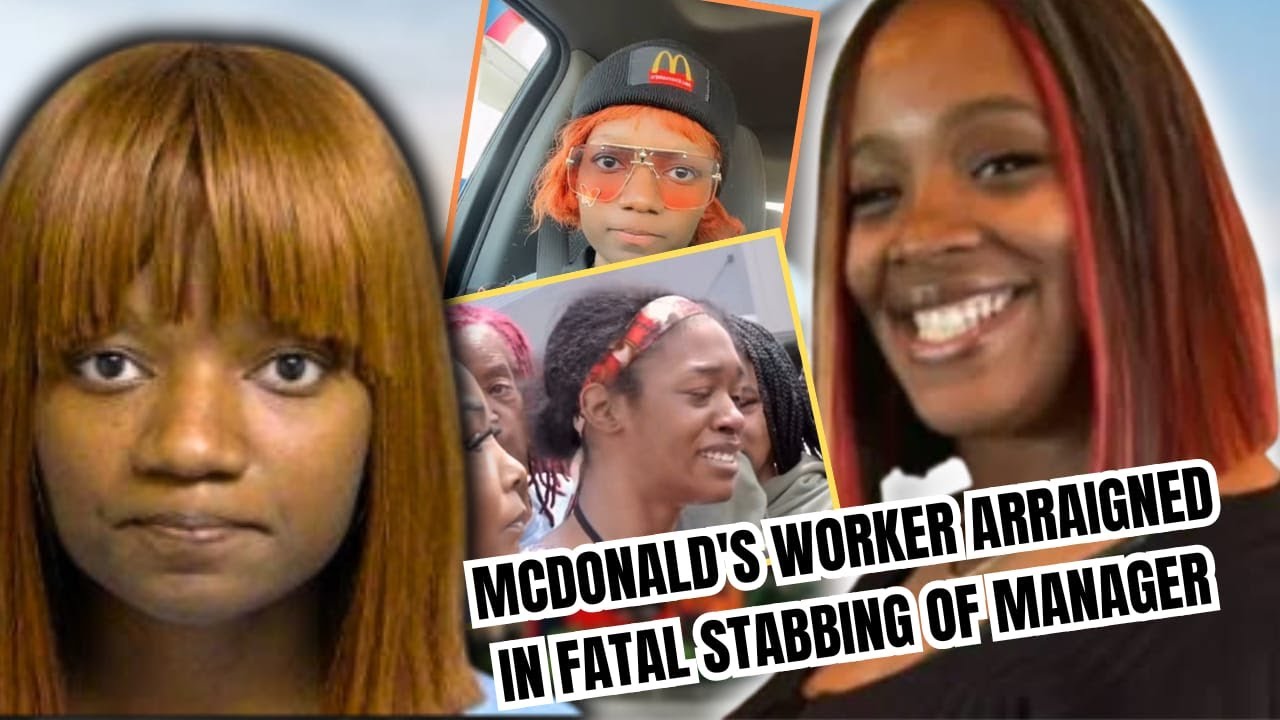
Self Defense or Murder: A McDonalds Employee Stabs Her Manager Claims of Bullying . Content Warning.
A Detroit McDonald's employee stabs and kills her manager at their workplace. The manager was a single mother of six kids and had worked as a manager at McDonald’s for years. The employee claims on social media that her manager was a bully. Even though this whole story is tragic, everyone was debating believed she was a folk hero when th others believed she was a bloody murderer. Was this act of self-defense, or was it homicide?
By Gladys W. Muturiabout a year ago in Criminal
Where 9 Key Members of the Manson Family Are Today
On August 8, 1969, the Manson family, on orders from their leader, murdered pregnant actor Sharon Tate, who was married to director Roman Polanski, as well as four other people—Jay Sebring, Wojciech Frykowski, Abigail Folger, and Steven Parent—at 10050 Cielo Drive in Beverly Hills. A day later, they killed wealthy grocery store owners Leno and Rosemary LaBianca.
By Kristen Orkoshneliabout a year ago in Criminal
Why the Menendez Brothers Killed Their Parents
On August 20, 1989, José and Mary Louise “Kitty” Menendez were shot to death in their Beverly Hills home. Nearly seven years, three trials, and many thousands of hours of TV coverage later, their sons, Lyle and Erik Menendez, were found guilty of their murders and sentenced to life in prison without the possibility of parole. Now, freedom is a very real possibility for the Menendez brothers, who were resentenced Tuesday and are immediately eligible for parole.
By Kristen Orkoshneliabout a year ago in Criminal
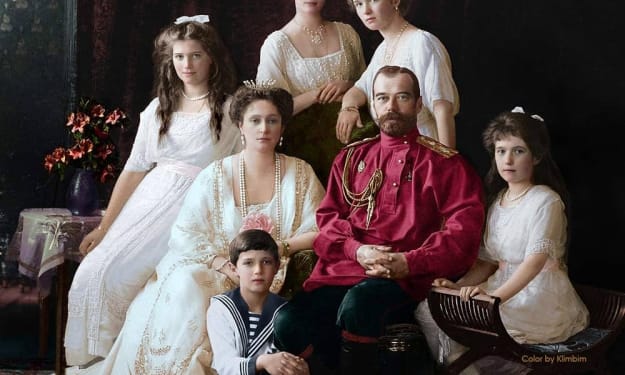
Why Czar Nicholas II and the Romanovs Were Murdered
When Nicholas Romanov was crowned czar of Russia in 1894, he seemed bewildered. “What is going to happen to me…to all Russia?” he asked an advisor when he assumed the throne. “I am not prepared to be Czar. I never even wanted to become one.”
By Kristen Orkoshneliabout a year ago in Criminal
“Watching the Back: A Hostage Nightmare in Henry County”
Chapter 1: The Silence That Spoke Volumes It was just past 11 a.m. on April 4, 2019, when Anetria White pulled into her sister’s driveway in Stockbridge, Georgia. She had been trying to reach her pregnant sister, Sandra White, since the night before—but calls had gone unanswered. So had texts. Sandra wasn’t the type to just “go quiet.”
By 🕵️♂️ True Crime Enthusiast | Storyteller of the Dark Side 🔍about a year ago in Criminal
African American Serial Killers Part 4
In the late eighties early nineties, the Crack Era had police departments involved in bringing hustlers “to justice.” In fact, the War on Drugs, or battle from an inanimate object, sapped the resources of other departments dedicated to solving actual crimes.
By Skyler Saundersabout a year ago in Criminal
Acid Attacks
It was a quiet evening in Lahore when Zara stepped out of her university gates. She had just finished her last exam — a final step before beginning her internship at a design firm. Her eyes sparkled with ambition, and her heart beat fast with dreams. She didn’t know that someone else had been watching her — someone who couldn’t stand the fact that she had said “no” to his proposal. A man who believed her refusal deserved punishment.
By Mehtab Ahmadabout a year ago in Criminal
The Final Confession
Daniel Malik had everything a lawyer could dream of — success, money, power. His name was etched in gold outside a firm that defended the city’s most dangerous men. And he had a reputation: if Daniel was your attorney, you walked free — no matter how guilty you were. He told himself it was just the job. Everyone deserved a defense. But deep down, he knew he’d bent the law more than once to protect criminals. It never bothered him much. Until the letters started coming. The first one arrived in a plain envelope. No return address. Inside was a single sentence typed in all caps: > “A man will die under the wheels of a 7:42 train at Silverpoint Station.” Daniel tossed it aside. Probably some protestor trying to scare him. But two days later, the exact death was reported on the evening news. The same train. The same time. Even the victim’s description matched the note. He felt a chill. Coincidence? Maybe. Then the second letter came. It described a woman in a red dress, strangled in a downtown hotel. “Room 415. Red silk scarf around her neck. Wedding ring missing.” That murder happened the next day — exactly as written. --- By the time the third letter arrived, Daniel’s hands were shaking. > “The judge who traded justice for money will meet the weight of his own gavel.” And just like clockwork, Judge Harlan — the very same man who had once helped Daniel’s client avoid a life sentence — was found dead in his home. Blunt force trauma to the skull. The weapon? His ceremonial gavel. But what haunted Daniel the most was what the police didn’t release to the press. A cufflink was found at the scene. Silver. With Daniel’s initials engraved. It was his. --- Sleep left him. Food had no taste. He locked his office door and combed through his old case files. It didn’t take long to see the pattern: the victims of these murders weren’t random — they were tied to his past. Each one had helped protect or release a guilty man Daniel had defended. And then he found the Gaines case. A rich businessman, drunk behind the wheel, had struck and killed a young mother. Her son survived, but barely. Daniel had crushed the prosecution and smeared the mother’s reputation. The client walked. Daniel won. Another trophy on the shelf. But the child who lost everything? He was never mentioned again. --- The fourth letter arrived. > “You wore the robe of justice, but your hands were red. Now it’s your turn.” Enclosed was a photo. A young man in his twenties, standing outside Daniel’s office. Cold eyes. Familiar face. The boy from the Gaines case. He was all grown up — and he wanted justice. --- Daniel ran to the police. He told them everything — the letters, the patterns, the murders. But they didn’t buy it. His fingerprints, they said, were being found at scenes. Evidence was stacking against him. His story sounded like panic. Like guilt. And maybe it was. Then, a private message arrived at Daniel’s door. > “Meet me. Alone. No police. Bring nothing but the truth.” He followed the instructions, arriving at an abandoned courthouse late at night. Inside, Elias — the boy he had forgotten — stood waiting. “I know what I did,” Daniel said. “I thought I was doing my job. I never thought of what it cost others.” “You thought about winning,” Elias replied. “That’s all.” Then he handed Daniel a folder. Inside was a typed confession — a detailed account of every case Daniel had twisted, every criminal he’d helped go free. It was all written out like a legal affidavit, ready for public release. “Sign it,” Elias said. “Let the world see what justice looks like.” Daniel stared at the pages, heart pounding. He knew what would happen if this went public. He’d lose his license, his firm, his legacy. But maybe that’s what he deserved. He signed. --- Daniel disappeared the next day. No trial. No arrest. But news broke anyway — leaked documents, anonymous tips, media frenzy. His fall was complete. And Elias? Vanished. But the city remembers. And somewhere, another envelope is being sealed.
By Ubaid Ur Rehmanabout a year ago in Criminal