jury
The right to trial by an impartial jury is a defendant's constitutional right; explore this pivotal duty to assess the evidence, deliberate and deliver a verdict.
Chilling Discovery: Colorado Couple Missing Since 2011 Found Sitting Inside Abandoned Utah Mine Eight Years Later
In a haunting case that puzzled both families and law enforcement for nearly a decade, the remains of two young travelers from Colorado — 26-year-old Sarah Bennett and 28-year-old Andrew Miller — were discovered in 2019, deep within a sealed uranium mine in southern Utah. Their mysterious disappearance in 2011 had left their loved ones in anguish, and their eventual discovery raised even more questions than answers. A Peaceful Weekend That Turned Into a Tragedy Sarah and Andrew, both outdoor enthusiasts and amateur photographers, had planned a quiet weekend getaway in May 2011. Known for their love of nature and photography, they were drawn to the haunting, otherworldly beauty of the San Rafael Swell — a remote, wind-swept expanse of desert in Utah, marked by abandoned uranium mines, deep canyons, and desolate valleys. “They weren’t thrill-seekers,” Sarah’s sister Emily Bennett told The Denver Post in 2020. “They were looking for silence — an escape from work, from life’s noise. Just a few days to recharge.” But the couple never returned. Their last confirmed sighting was at a gas station in Green River, Utah. Surveillance footage showed them fueling up their Subaru Outback and purchasing an Emery County map. That was the last time anyone saw them alive. What followed was an extensive search that lasted months and eventually stretched into years. Helicopters, search dogs, drones, and hundreds of volunteers scoured the rugged terrain. Yet, no sign of the couple or their vehicle was found. It was as if the desert had swallowed them whole. Over time, their story faded from the headlines, but not from the hearts of their families. Rumors swirled in the absence of evidence — from foul play to cartel involvement, even theories involving alien abduction. But none held water. The Grim Discovery Then, in August 2019, a team of geology students from the University of Utah were exploring old uranium shafts near Temple Mountain. While surveying one long-abandoned mine, they stumbled over something unexpected — an old, rusted folding chair partially hidden in the shadows of the mine’s entrance. Curious and cautious, they ventured deeper. Roughly 300 feet inside the shaft, they discovered a chilling scene: two fully clothed skeletons sitting side-by-side on metal folding chairs, their bones eerily preserved by the dry desert air. In front of them sat a shattered lantern, a rusted thermos, and an old Nikon camera — remarkably intact. The mine had partially collapsed further inside, creating what forensic experts would later refer to as a “natural crypt,” sealing the scene and preserving it from the elements. Dental records soon confirmed what the families had long feared: the remains were those of Sarah Bennett and Andrew Miller. A Mystery Without Clear Answers Despite finally discovering the couple’s remains, the mystery of their deaths remained unresolved. The official cause of death was listed as “undetermined.” Investigators believed the couple had willingly entered the mine, perhaps to explore or photograph its eerie interior. However, it appeared that a partial cave-in had trapped them inside, making escape impossible. Some speculated that the mine may have been filled with toxic gases, such as radon or carbon monoxide, which could have quickly rendered them unconscious. Others believed they may have simply lost their way and run out of food and water, deciding to sit and wait — possibly for help that never came.
By Ikram Ullahabout a year ago in Criminal
LIVE: Bryan Kohberger Sentencing Today — Start Time, Family Reactions, and What to Expect
The nation is watching. After nearly two years of speculation, legal twists, and emotional outpouring, Bryan Kohberger, the man accused of brutally killing four University of Idaho students, is finally facing sentencing today. The courtroom is packed. The atmosphere is tense. And the world is demanding answers that may never come.
By Bevy Osuosabout a year ago in Criminal
African American Serial Killers Part 9
The Kansas City Strangler, also known as Lorenzo Gilyard, maintained his innocence even after DNA evidence proved otherwise; even after he had been convicted of six murders; he always professed his alleged not guilty status. This could be infuriating. After leaving mostly prostitutes and women and girls on the fringes of society dead in his wake, Gilyard still maintains he’s innocent. How abominable is that?
By Skyler Saundersabout a year ago in Criminal
Viral Video of Woman and Man's Killing in Balochistan: "Tribal Chief Ordered the Execution"
In Pakistan’s province of Balochistan, a video has gone viral showing a man and a woman being killed allegedly on the orders of a local tribal chief over accusations of Karo-Kari (a form of honor killing). Following this, the police have registered a case. According to the FIR received from the police, the incident occurred in a remote area called Sanjidi Degar, located about 40 to 45 kilometers from the Hina Police Station in Quetta. The FIR has named 15 individuals. Earlier, Chief Minister Sarfaraz Bugti claimed on social media that the video showing the killing of the man and woman was recorded a few days before Eid. He further stated that 11 suspects have been arrested so far. However, police have not officially confirmed any arrests yet and have said the incident took place three days before Eid and the video surfaced 35 days after the event.
By Ikram Ullahabout a year ago in Criminal
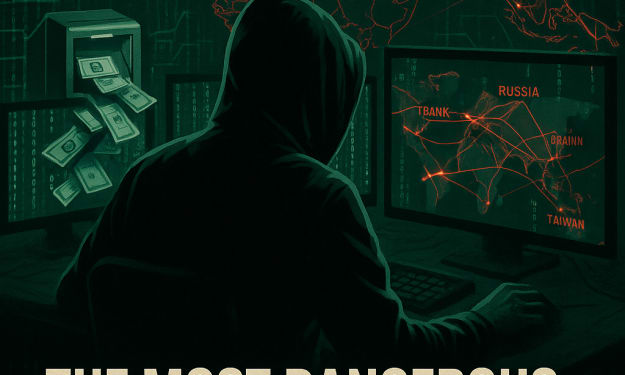
The most dangerous hacking operation in the history of banks | Kings of the Dark Web?
On September 13, 2017, the IT director of a Russian bank was living a normal life with everything going well. But at exactly 3 a.m. on that date, he called the bank’s accounts manager with a trembling voice and said, “Contact the IT team immediately because the situation is very serious.” Without asking for details, the IT employee contacted Kaspersky and requested that they send a specialist to the bank immediately. He told them, “It seems the problem that has baffled the world has now reached Russia.” Indeed, Kaspersky sent an IT expert to the bank within fifteen minutes. The expert met with the bank’s IT employee, and the surprise was that someone had managed to control the primary domain controller—the unit that controls all the bank’s computers. To clarify, if you control this unit, you control everything in the bank. The IT director and Kaspersky expert sat in front of the main server and watched the hacker sending data to China without any logical reason. The Kaspersky expert was shocked by the strength and scale of the breach and initially lost hope of stopping it, but he began searching for malicious software to minimize the damage. After a long search, he found a program that allowed the hacker to monitor and control the computer remotely. At one strange moment, the expert opened Microsoft Word and typed “Hello” in Russian. For minutes, nothing changed, then suddenly the mouse pointer moved, and a message appeared on the screen. The hacker replied in Russian, “You will never catch us.” The expert responded, “We will catch you.” The hacker answered, “No, my friend, you won’t.” This marked the start of a psychological war between professional hackers and the cybersecurity team. This was the beginning of one of the most dangerous hacking operations in history. But who won in the end? The hackers or the banks, security forces, and investigators? The entire story is highly classified, and only limited names and data have been disclosed because revealing the details of such a theft could cause a global economic crisis. The story began in 2014 when the group’s sole mission was to quietly monitor internal banking systems and gather information without carrying out any real hacking—just testing vulnerabilities and waiting for the right moment. On April 8, 2014, they started their plan by sending a phishing email with an infected Word document to a low-level employee at a Ukrainian bank. The document exploited a vulnerability in Microsoft Word, unleashing malware that opened a backdoor into the entire banking system. They were then able to watch everything on that employee’s computer, recording every keystroke and password entered. The employee was unaware his device was compromised. This employee effectively became the gateway to a much larger breach, gradually spreading into all the bank’s servers and devices. After nearly two years of surveillance, the hackers executed their first major theft on July 10, 2016, in Taipei, Taiwan. During this theft, two gang members wearing surgical masks entered a bank. One stood at the entrance observing, while the other stood calmly at an ATM machine without withdrawing cash or entering a PIN. Suddenly, the ATM started dispensing money continuously. The gang member calmly collected the cash into his bag and fled before a stranger approached the ATM. The stranger, who attempted to withdraw money, was shocked to see cash strewn all over the floor but didn’t take any. This wasn’t an isolated event; the exact operation occurred simultaneously at 20 locations worldwide, causing confusion among bank managers who initially thought it was a software glitch or a coincidence. The gang was highly organized with specific teams for each phase: reconnaissance, penetration testing, monitoring, data collection, analysis, planning, and execution. Their theft methods were sophisticated. They transferred money from fake accounts into their own while manipulating balances so the bank’s internal systems wouldn’t notice any suspicious activity. They also collaborated with on-the-ground “cash handlers” who physically collected the money from ATMs. In one month, they stole over $50 million using this method. After stealing billions from over 100 banks in 30 countries, Kaspersky, Taiwanese police, and various international security agencies began tracking the gang. In 2018, authorities raided the home of the gang’s Ukrainian leader, Denis, who lived a lavish life in Spain. They confiscated his possessions, including two BMW cars, half a million dollars in jewelry, and 15,000 bitcoins worth over a billion dollars today. Denis was a programming genius but used his skills more as a personal challenge than just for wealth. Authorities arrested several gang members, but the network remains large and complex. Some sources suggest the gang is part of the Russian cyber army, though no official evidence confirms this. The key lesson: never open suspicious links or log in to unknown websites, even if sent by trusted people, because hackers are everywhere.
By Ink pulse(different angle)about a year ago in Criminal
The story of the Lloyds Bank robbery | They stole Britain's most dangerous secrets by accident
On January 13, 2006, in the city of Acassuso near Buenos Aires, the largest bank in Argentina was hit in an armed robbery. The gang stormed the bank and took customers and employees hostage. Just fifteen minutes later, it seemed like the plan had failed: one robber tried to escape with a hostage but was met with a full police blockade. He returned inside, seemingly cornered along with his accomplices. But this was all part of a masterfully crafted illusion. The gang leader was actually executing what would later be known as the most brilliant bank heist ever—“The Heist of the Century.” It began on May 15, 2005, when Fernando Araujo told his psychologist that he wanted to do something to reignite his passion for life. When asked what, he said, “I want to rob a bank.” The psychologist laughed. He wasn’t joking. Araujo was a bright man: a legal assistant and part-time actor. He began riding his motorcycle around Acassuso, scouting banks. Banco Río stood out—a major bank where most Argentines kept their savings, with a secure vault full of safe deposit boxes storing cash, gold, diamonds, and more. He weighed two options: robbing employee safes during a stickup (a risky move with limited payoff), or breaking into the underground vault (high reward but nearly impossible). Cameras and heat sensors connected directly to the police made it seem hopeless. Then he noticed a pattern: manhole covers leading to a large sewer system 160 meters from the vault. If he could reach the bank through there, it might work. For 35 days, he studied every detail. He recruited Sebastián Bolster, an engineer who hated banks after his family’s savings were wiped out. They called each other “The Leader” and “The Engineer.” The Engineer entered the bank pretending to be a wealthy client, using a hidden camera to film the vault. But the operation needed money, so The Leader brought in “The Doctor,” a mysterious mastermind who recruited the rest of the crew: “The Financier,” a silver-tongued con man; “The Fierce One,” a hardened ex-con; and “The Kid,” a trusted operative. The plan was bold: dig a 30-meter tunnel from the sewer to the vault. The Engineer designed a heat-insulated suit to beat the sensors, but it proved too restrictive. So they switched strategies — enter the bank in disguise, fake a failed robbery, then escape with the loot through the sewer. Weapons were required, but they used plastic toy guns. The Engineer also built a special compressed-air tool called “The Gun” to break vault locks in seconds. On the morning of January 13, a vintage Volkswagen pulled up to Banco Río. Four men in gray uniforms, blonde wigs, and ski masks entered and took control. Inside, they acted nervous and clumsy to sell the illusion of a botched job. Outside, the police quickly surrounded the bank. One robber, The Financier, pretended to try and escape with a hostage, only to be "forced" back inside—again, part of the act. Meanwhile, The Engineer emerged in the vault after tunneling through the wall, beginning to crack open hundreds of safe deposit boxes with “The Doctor.” The Leader used the hostages to delay the police, even ordering pizza to buy more time. Once done, they loaded bags of cash, jewelry, and gold into the tunnel. They left toy guns and a fake bomb behind to confuse the police and delay their entry. They floated the loot through the sewer on inflatable rafts to an exit 200 meters away. “The Kid” waited above in the Volkswagen, modified with a hidden trapdoor for the escapees. They drove off, leaving the police still negotiating with ghosts. Hours later, the police stormed the bank—and found nothing. No robbers. No real weapons. Just silence. The crew split the money and agreed to disappear. But betrayal came from within. The Financier’s wife took $100,000 worth of the loot and, after a fight, reported everything to the police. One by one, the gang was arrested: The Financier, The Leader, The Engineer, and The Fierce One. The Doctor and The Kid escaped the country. None of the money was recovered. The bank absorbed the loss. Each received sentences of 9–15 years, but none served more than three thanks to clever legal defenses and public sympathy. Years later, their story became a hit movie. In a surprising twist, they donated 30% of the film’s profits back to the bank. And thus, "The Heist of the Century" became known as the smartest robbery ever pulled off in modern history.
By Ink pulse(different angle)about a year ago in Criminal
Cybercrime and Digital Policing
It was a chilly winter morning when Inspector Faraz received an unusual call. A mother, trembling with panic, reported that her 17-year-old daughter had gone missing after being blackmailed online. The girl had been chatting with someone she believed was a schoolmate. But the boy turned out to be a predator who had gathered private pictures and was now threatening to leak them if she didn’t meet him in person. This wasn't just a case of missing persons — this was cybercrime in its darkest form.
By Mehtab Ahmadabout a year ago in Criminal
African American Serial Killers Part 8
Call him the “Jacksonville Strangler” or the “Killer Cabbie” or just a horrific loser, Paul Durosseau demonstrated how not to go about life as a human being. A dishonorable discharge receiver, he couldn’t summon the courage and fortitude that would last him a lifetime of endless bliss. No, he chose the vicious path. By killing five women and only being convicted of one instance of murder, he is currently serving a life sentence after the jury found the death penalty a 10-2 decision. The judge would not permit a split choice.
By Skyler Saundersabout a year ago in Criminal
African American Serial Killers 7
Not only is it racist for people to assume serial killers are white males, it’s counterproductive. Derrick Todd Lee, known as the Baton Rouge Serial Killer, terrified this section of Louisiana from 1992 until 2003. Though he would die in the hospital after a bout with heart disease in 2016, he would be forever remembered as a disgusting example of a human being.
By Skyler Saundersabout a year ago in Criminal