investigation
Whodunnit, and why? All about criminal investigations and the forensic methods used to search for clues and collect evidence to get to the bottom of the crime.
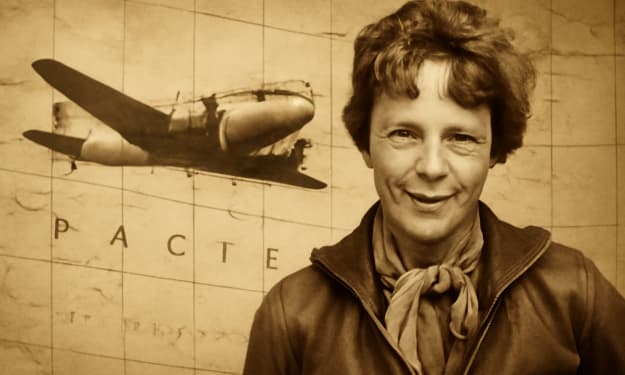
Amelia Earhart: The Disappearance That Shocked the World
Amelia Earhart was a pioneering aviator and a trailblazer for women in aviation. She achieved remarkable feats that broke barriers in an era when aviation was dominated by men. However, her greatest adventure ended in mystery. On July 2, 1937, during her attempt to become the first woman to fly around the world, Earhart and her navigator, Fred Noonan, disappeared while flying over the Pacific Ocean, never to be seen again. The mystery surrounding her disappearance remains unsolved to this day, sparking countless theories, searches, and fascination for over 80 years. The Final Flight: A Vanishing Act Amelia Earhart’s final flight began as part of her ambitious plan to fly around the world. In 1937, she set out on this journey with her aircraft, a Lockheed Electra 10E, accompanied by Fred Noonan. The pair had already completed a large portion of their journey, but the most challenging leg lay ahead: a flight from Lae, Papua New Guinea, to Howland Island, a tiny strip of land in the middle of the Pacific. This stretch was critical as Howland Island was difficult to locate, even with the navigational tools available at the time. Despite the challenges, Earhart and Noonan set off on the morning of July 2. But soon after departure, they encountered problems. They began having trouble with their radio equipment, which led to difficulty in receiving the needed bearings from the U.S. Coast Guard. The last confirmed communication from Earhart occurred at around 7:42 p.m. (local time), when she reported that they were “running out of fuel.” Despite this, the plane’s location was still unclear, and soon, Earhart’s transmission was lost. The plane had not made it to Howland Island. The search efforts that followed became one of the largest and most expensive in history, yet they yielded no trace of Earhart or her plane. The official search was called off after several weeks, and the fate of Earhart and Noonan remained unknown. Theories on What Happened to Amelia Earhart Since that fateful day, numerous theories have emerged, each attempting to explain what happened to Amelia Earhart. Though the truth has never been uncovered, the mystery has captivated generations of people. Some theories suggest that Earhart and Noonan crashed into the Pacific, while others propose they landed on a remote island and survived for a time. Here are some of the most popular theories: Theory 1: Crashed into the Pacific Ocean The most widely accepted theory is that Earhart and Noonan simply ran out of fuel and crashed into the Pacific Ocean. The location of their last known position was approximately 100 miles from Howland Island, and it’s believed that the plane may have plunged into the water. Despite the extensive search efforts conducted by the U.S. Navy, no wreckage was ever discovered. This theory remains plausible, as it’s based on Earhart’s last known communication, which mentioned a fuel shortage, and the subsequent silence that followed. Theory 2: The Gardner Island Hypothesis Another theory that has gained significant attention over the years is the Gardner Island Hypothesis, which suggests that Earhart and Noonan crashed on a small, uninhabited island now known as Nikumaroro, part of the Phoenix Islands in the Pacific. In 1940, nearly three years after Earhart’s disappearance, a British colonial officer found a partial skeleton on the island, which some speculate may have belonged to Earhart. The bones were sent to Fiji for analysis, but the findings were inconclusive, and the skeleton was ultimately lost. Proponents of this theory believe that Earhart and Noonan could have survived for several weeks on the island, but eventually died from exposure, dehydration, or malnutrition. Further expeditions to the island have uncovered several artifacts that suggest the possibility of a crash landing, including pieces of aircraft wreckage and personal items such as a woman’s shoe and a box of tinned food, which may have been used by the aviators. However, no definitive proof has been found to confirm that Earhart and Noonan ever made it to Nikumaroro, and many experts remain skeptical. Theory 3: The Japanese Capture Theory Some theories suggest that Earhart and Noonan didn’t crash at all but were instead captured by the Japanese military. This theory posits that after running low on fuel, Earhart may have been forced to land on a Japanese-controlled island. The theory further suggests that Earhart and Noonan were taken prisoner, either as spies or due to a misunderstanding. The capture theory has been widely debunked, as there’s no concrete evidence to support it, but it remains one of the more controversial theories surrounding Earhart’s disappearance. Theory 4: Secret Government Mission Another theory that has circulated is that Earhart’s disappearance was part of a secret government mission. Some believe that the U.S. government secretly commissioned Earhart to fly over the Pacific to conduct intelligence gathering missions on Japanese military bases. According to this theory, Earhart was forced to land somewhere safe, possibly on a remote island, and her disappearance was orchestrated to cover up the mission. While this theory lacks substantial evidence, it adds an intriguing layer to the mystery. The Search for Amelia Earhart: Ongoing Efforts Despite decades of investigations and searches, the true fate of Amelia Earhart remains a mystery. There have been numerous expeditions to the Pacific Islands, particularly Nikumaroro, where some believe Earhart’s plane may have crash-landed. The most recent search efforts have been undertaken using modern technology such as sonar equipment and submersibles, which allow researchers to explore the ocean floor more thoroughly. However, as of now, no definitive wreckage or remains have been found to conclusively solve the mystery. While the disappearance of Amelia Earhart remains unsolved, her legacy has only grown stronger. She is remembered not just for her pioneering accomplishments in aviation but also for her courage and determination in the face of adversity. Earhart was the first woman to fly solo across the Atlantic, and her contributions to the field of aviation paved the way for many women in the industry. Why the Mystery Endures Amelia Earhart’s disappearance continues to captivate the public for several reasons. The first is the enduring mystery itself: the fact that one of the most famous figures in the world at the time simply vanished without a trace. The story taps into our deepest questions about fate and survival, and the allure of unanswered questions keeps people coming back. Moreover, Earhart’s courage, pioneering spirit, and role as a female trailblazer have contributed to her status as a cultural icon. Her disappearance is as much a part of her legacy as her incredible achievements in aviation. Earhart’s story, and the mystery surrounding her disappearance, has inspired countless books, films, documentaries, and podcasts. People continue to speculate, theorize, and dream of the day when the truth will finally be uncovered. Until then, the legend of Amelia Earhart will endure. The disappearance of Amelia Earhart is one of the greatest unsolved mysteries in modern history. Despite numerous theories, investigations, and searches, the truth remains elusive. Whether she crashed into the ocean, landed on a remote island, or became a victim of an international conspiracy, Amelia Earhart’s story continues to intrigue and captivate people around the world. As time passes, the mystery of her disappearance only grows, and her legacy as a pioneering aviator and cultural icon remains as powerful as ever.
By The Insight Ledger 11 months ago in Criminal
The Girl in the Green Hoodie
M Mehran The storm hit Silverbridge just after midnight—sheets of rain hammering pavement, lightning flashing over the empty streets like camera shutters capturing crimes no one had yet committed. Detective Jalen Cross preferred nights like this. Bad weather made criminals sloppy. Tonight, however, he wasn’t hunting criminals. He was hunting ghosts. His radio crackled as he stepped out of his car. “Cross, you’re sure this is the location?” Captain Hale asked. “Positive,” Jalen replied. “Third anonymous tip in two weeks. Same description. Same time of night.” The description was always the same, too: A girl in a green hoodie. Barefoot. Wandering the abandoned rail yard. Crying. The first time dispatch received the call, units arrived in under five minutes. Nobody was there. Dogs picked up no scent. Security cameras caught nothing but fog and static. The second time was the same. Tonight, Jalen wanted answers. He pushed through the broken gate and stepped onto the gravel. The rain softened into a cold drizzle. The air felt wrong—too quiet, too heavy. The rail yard had been shut down for eight years, after a burning tanker ruptured and killed three workers, including sixteen-year-old Valerie Durnham, a runaway hiding in one of the boxcars. Some locals claimed the place stayed haunted. Jalen didn’t believe in ghosts. But he did believe in patterns. And this pattern terrified him more than he cared to admit. As he approached the old station house, thunder cracked overhead. A small figure darted from behind a rusted container. There. A flash of green. Jalen froze. “Hey! Stop!” The figure didn’t run. Instead, she turned slowly toward him. It was a girl—maybe fifteen, maybe younger—barefoot, soaked, wearing a green hoodie two sizes too big. Her hair plastered to her cheeks. Eyes wide. Trembling. Just like the callers had described. Jalen raised his hands in a gesture of calm. “You’re not in trouble. I just want to talk.” The girl shook her head violently. “You can’t be here. He’s coming.” “Who?” “Please,” she whispered, stepping backward. “He’ll kill us both.” Jalen took out his phone. “You need help. I can call—” “No!” she cried. “He listens. He always listens.” Lightning flashed again—and her shadow disappeared. Literally vanished. Jalen blinked hard. The girl still stood there, but the ground beneath her feet cast no silhouette. His breath caught. “What… are you?” he whispered. A tear slid down her cheek. “I’m just trying to go home.” Before he could respond, another voice echoed across the yard. “Detective Cross!” Jalen spun. Captain Hale and two officers jogged toward him. “There’s no one here,” Hale said without looking around. “We scanned the area. False alarm again. Let’s wrap it up.” Jalen gestured frantically. “What? She’s right—” He turned. The girl was gone. Not running. Not hiding. Gone. The ground where she stood was undisturbed. Even the gravel looked untouched. Jalen’s pulse thundered. “Captain, I swear she was right here.” Hale placed a hand on his shoulder. “You need sleep. You’ve worked fourteen days straight.” “I saw her.” “You saw what you expected to see.” Jalen wanted to argue, but a cold dread crawled up his spine. Something about Hale’s voice was wrong—too gentle, too final. “Let’s go,” Hale said. “We’re clearing the yard.” But Jalen didn’t move. Because something else caught his eye. A small footprint. Bare. Fresh. Pressed into the wet gravel behind a train car. Jalen walked toward it, ignoring Hale’s commands. More footprints appeared, leading toward Warehouse 7—the only building still boarded shut after the explosion. “Cross!” Hale barked. “Stand down!” But Jalen had already yanked the side door open. And discovered hell inside. The warehouse was massive, dark except for a series of lanterns arranged in a circle on the floor. In the center sat a workbench covered in files—photos of missing teenagers dating back ten years. Notes. Maps. Schedules. All marked in Captain Hale’s handwriting. Jalen felt the blood drain from his face. Hale had been running a trafficking network. And he was using the abandoned rail yard to store kids before shipping them out of state. A faint sob echoed from behind a crate. Jalen moved quietly around the corner. There she was. The girl in the green hoodie—knees pulled to her chest, shivering. Tangible. Solid. Real. “You came back,” she whispered. He knelt beside her. “I’m getting you out of here.” “No,” she said. “I came to warn you.” Jalen frowned. “Warn me about what?” “About him.” Jalen turned just as Captain Hale slammed the warehouse door shut. Holding a gun. “Detective Cross,” Hale said softly. “You never knew when to stop digging.” Jalen positioned himself between Hale and the girl. “You hurt her.” Hale smirked. “I didn’t hurt that one.” Jalen blinked. “That one?” He turned. The girl was gone again. Only her footprints remained. And then he understood. She wasn’t from tonight. She wasn’t even alive. She was Valerie Durnham—the runaway who died in the explosion eight years ago. Trying, even now, to save the next victim. Hale raised the gun. Jalen lunged. A shot cracked through the warehouse. When the officers finally broke in, Hale was handcuffed, bleeding from the shoulder, screaming that Jalen had ruined everything. Jalen didn’t hear him. He was staring at a wet footprint near the exit. Small. Barefoot. Pointing home. And for the first time, he believed in ghosts.
By Muhammad Mehran11 months ago in Criminal
The Last Confession
M Mehran Detective Mara Vance had learned two unshakable truths in her twenty years with the Harbor City Police Department: people lie, and guilt never sleeps. Tonight, both truths pressed heavily on her shoulders as she stepped into Cell 12 of the precinct’s lower wing. The man inside—Elias Rowan—sat on the metal bunk like he had been waiting for her. Maybe he had. His hands were folded neatly in his lap, cuffed, but calm. Too calm for someone accused of three murders. “You asked for me,” Mara said, shutting the door behind her. “You said you wanted to confess.” Elias smiled faintly. “I wanted to talk to the only detective in this city who still listens.” Mara didn’t rise to the flattery. She’d interrogated enough criminals to know when she was being played. Still, there was something different about Elias Rowan—an eerie steadiness in his dark eyes, a quiet sincerity in his voice. Serial killers usually radiated either arrogance or panic. Elias radiated neither. “You’re being charged with the deaths of Lorne Gibbons, Ava Morales, and Daniel Carter,” she said. “All found within three blocks of your apartment. All matching the same MO. You fit the pattern. Forensics fit the pattern. So tell me, Elias—what do you want to say?” “I didn’t kill them,” he said simply. She sighed. “That’s not a confession.” “No,” he said. “But it’s the truth. And I can prove it.” Mara paused. She hated wasting time, but she hated sloppy assumptions even more. “Go on.” “Each victim…” Elias shifted slightly, cuffs clicking. “Each victim came to me before they died.” Her brows rose. “Came to you? For what?” “For protection.” Mara crossed her arms. “And you didn’t think to mention this to anyone? Three separate people beg you for protection and then turn up dead? You see how that sounds.” “I didn’t say they begged.” His voice lowered. “I said they came. Because they were being hunted.” Mara leaned forward. “By whom?” Elias looked up, and for the first time, fear flickered across his face. “By a man who doesn’t exist on paper. A man with no name. Someone who kills loose ends.” The room suddenly felt colder. “I was supposed to be one of those loose ends,” Elias continued. “I used to work for him. Not officially. Not in any way that could be traced. I laundered assets, covered digital prints, rerouted funds. I never touched blood. But when you work for a ghost, you don’t quit. You vanish.” Mara hesitated—not because she believed him, but because she wanted to check. Something about this felt too detailed for fabrication. “You’re telling me those victims were connected to this ghost employer of yours?” “Yes,” Elias said. “Each one had something he wanted erased. Lorne was a driver. Ava was a runner. Daniel was a forger. They all tried to get out. They all came to me, hoping I could hide them like I hid transactions. But I’m not a miracle worker.” “And you didn’t kill them,” she said. “I didn’t kill them,” he repeated. “So who did?” Elias stared at her with the steady calm of a man speaking his final truth. “You already know. You’ve been chasing him for years.” A chill crept up Mara’s spine. “Corvus,” she whispered. The nickname tasted like metal. Harbor City’s phantom. The mastermind behind a constellation of unsolved crimes—money laundering, disappearances, blackmail rings, digital sabotage. A shadow figure the department could never pin down. “You’re saying Corvus killed them?” she asked. Elias nodded. “And he’s going to kill me too. But I thought I could make one last good choice and tell someone who might actually do something.” Mara swallowed hard. “Why now?” “Because he’s tying up his entire network,” Elias said. “Everyone who ever touched his operations. He’s disappearing us one by one.” Something buzzed in Mara’s pocket—her phone. She ignored it. “You can’t just throw Corvus’s name out there without evidence,” she said. “You’re asking me to believe the boogeyman is real.” “He is,” Elias said softly. “And if your phone is buzzing right now, it’s probably because you’re next.” A second buzz. Then a third. Mara blinked and pulled the phone free. Three text messages. Unknown number. Stop talking to him. Walk away. This is your only warning. Mara’s pulse quickened. “Elias… did you send these?” He shook his head. “Detective… Corvus already knows you’re here.” Her mouth ran dry. The basement level was nearly empty at this hour. If someone wanted to walk in and— The lights flickered. Elias tensed. “He’s here.” “How?” she whispered. “He’s always been here,” Elias said. “You’ve just never looked in the right place.” The lights snapped back on. A soft click echoed from behind Mara, near the hallway outside the cell. Not footsteps. Not voices. A door locking. Mara unholstered her gun and moved toward the cell door, adrenaline spiking. “Detective Vance,” a familiar voice crackled over the PA system. Her blood froze. Captain Rourke. Her captain. Her mentor. “I’m disappointed,” Rourke said, voice calm, almost bored. “You were always the smart one. I thought you’d stay out of this.” Elias’s voice broke. “I told you. He’s everywhere.” Mara’s heart slammed against her ribs. Rourke. Corvus. Her captain was the ghost. “You’re in my way, Mara,” Rourke continued. “Walk out now, and I’ll forget you were ever in that room.” The problem was—she couldn’t walk out. The door was sealed. Locked from the outside. Elias whispered urgently, “He’s going to kill both of us.” Mara turned slowly toward him, mind racing. “No,” she said. “Not tonight.” She raised her gun—not at Elias, but at the cell’s lock. One shot. Sparks flew. The lock cracked open. Elias stared at her, stunned. “You… believe me?” “I believe in evidence,” she said. “And I’m about to collect some.” Outside, heavy boots hit the concrete floor—Rourke’s men. Mara looked at Elias. “Run.” And for the first time since she met him, Elias Rowan obeyed without a word. The chase had begun. And the city’s ghost was finally visible.
By Muhammad Mehran11 months ago in Criminal
👻 The Digital Ghost of Tokyo: Tracking the $50 Billion Bitcoin Heist That Vanished Without a Trace
1. The Day Bitcoin Died (The Setting ) It was the Wild West of the early 2010s, and Bitcoin was the shiny, new gold rush. If you wanted a piece of the action, you went to one place: Mt. Gox.
By The Insight Ledger 11 months ago in Criminal
Crime Chronicles: The Great Maple Syrup Heist
Welcome back to Crime Chronicles! So far, we’ve had body snatchers, nurses, nobles, and a couple of really nasty serial killers. Considering the brutal assault on the psyche that was the previous entry, I think it’s time we cover a different crime; one that’s perhaps more…amusing. How about a heist story? Just for something different? How is a heist funny? Well…it’s not so much the crime itself as it is the bounty.
By Greg Seebregts11 months ago in Criminal
Vanishing Point. AI-Generated.
On a warm June night in 2018, 23-year-old Jermain “Liz” Austin Charlo walked out of a Missoula alley and into a mystery that still grips Montana—and the nation. A mother of two and a member of the Confederated Salish and Kootenai Tribes, Jermain was vibrant, creative, and planning a new chapter. She loved fishing, hiking, and art. She was applying for a firefighting job and dreaming of college. Her life was full of promise. Then, she vanished.
By Jeremy Byers11 months ago in Criminal
The Paternity Case of the so-called Madeline McCann
This paternity case involves a Polish young woman named Julia Wandelt who claims to be the missing three year old Madeline McCann, a British girl who disappeared in 2007 and wants to reunite with her family. The McCann family doesn't believe her however Julia claims to have "proof" that she is the missing girl. Wandelt or Wandell spent years giving the McCanns hell until DNA proof showed who she truly is.
By Gladys W. Muturi11 months ago in Criminal
Kelowna Harvest Fellowship and Harvest Ministries International: Child Sex Abuse Allegations, Civil Suits, and Evangelical Accountability in British Columbia
This article examines recent abuse-related cases in British Columbia’s evangelical landscape. It outlines criminal charges against Pastor Edwin Alvarez of an unnamed Metro Vancouver church for alleged sexual interference and assault against children between 2017 and 2021. It then reviews two active civil lawsuits against Pastor Art Lucier and Kelowna Harvest Fellowship, where plaintiffs allege long-term grooming and sexual abuse beginning in childhood, alongside institutional negligence. The article contrasts these ongoing actions with a separate Kelowna case in which a former youth pastor, anonymized as “CM,” received an 18-month custodial sentence after pleading guilty to child sex offences.
By Scott Douglas Jacobsen11 months ago in Criminal
Northside Foursquare Church and Cloverdale Christian Fellowship Church Abuse Allegation Cases
Langley, with its dense Evangelical presence, has seen serious abuse allegations within local churches. One civil case involves Pastor Barry Buzza of Northside Foursquare Church, accused of grooming and sexually abusing a teenage congregant who sought pastoral guidance, with claims the church ignored warning signs. Another case centers on Pastor Samuel Emerson of Cloverdale Christian Fellowship Church, who faced multiple charges related to sexual misconduct involving youth; he was ultimately convicted on one count of sexual assault, with other charges and those against his wife dismissed. These cases highlight patterns of spiritual authority, impunity, and inadequate safeguarding in regional Evangelical institutions.
By Scott Douglas Jacobsen11 months ago in Criminal