investigation
Whodunnit, and why? All about criminal investigations and the forensic methods used to search for clues and collect evidence to get to the bottom of the crime.
The Shame That Echoed: Understanding the Brian Cole Pipe Bomber Case
Some stories stay with you because they reveal how easily an ordinary life can fall apart. The case of the Brian Cole pipe bomber is one of those stories. It forces you to sit with uncomfortable questions about anger, loneliness, and the silent pressures that can grow inside a person until they spill into violence. You don’t need to be an expert in crime or psychology to feel the weight of it. It’s the kind of event that makes you look twice at the strangers you pass every day, wondering what might be simmering beneath the surface. This article walks through the case in simple language, but it also tries to understand what drives someone toward harm, and what we can learn when a community is shaken by fear.
By Muqadas khan11 months ago in Criminal
The Case That Crumbled: Why Bryan Kohberger’s Guilty Plea Feels Like Justice Denied
Three years ago, Bryan Kohberger left the Poconos to study at Washington State University. He's wasn't your average graduate student, he had been accepted into their prestigious PhD program in criminal justice. On paper, it was the perfect start to a future career in law enforcement. Instead, it was the start of a freefall into darkness.
By Lawrence Lease11 months ago in Criminal
She went missing after a party — five days later, her body was found in a suitcase in the forest.
The death of the young Austrian beauty influencer sent shockwaves across Europe and beyond, not only because of the brutality of it all but also due to the haunting silence that surrounded her disappearance. What started off as a normal night out with friends turned into one of the most disturbing cases to hit this region in years.
By iftikhar Ahmad11 months ago in Criminal
Five Things That Leave Us Asking Questions About The JonBenet Ramsey Case
On the morning of December 26, 1996, at around 5:30 a.m., Patsy Ramsey, a devoted wife and mother living in Boulder, Colorado, started her day like any other. She got out of bed and made her way downstairs in her family’s sprawling mansion to brew some coffee. But what she found on the staircase was far from ordinary—it was shocking. Sitting there was a ransom note addressed to her husband, John Ramsey. The note began:
By Lawrence Lease11 months ago in Criminal
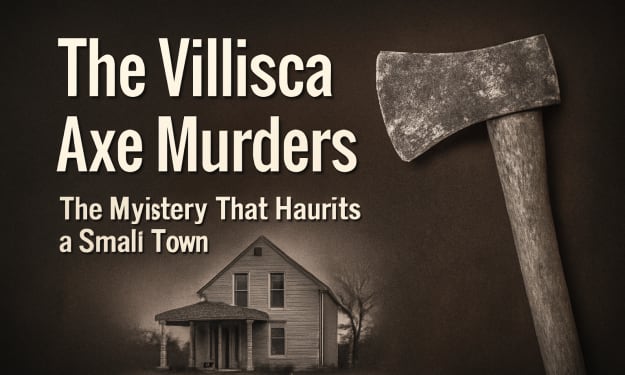
The Villisca Axe Murders: The Mystery That Haunts a Small Town
On the evening of June 9, 1912, in the quiet town of Villisca, Iowa, a gruesome crime was committed that would forever change the course of the community's history. Six members of the Moore family, along with two young guests, were brutally murdered in their home. The weapon used was an axe, and the brutality of the crime left an indelible mark on the town, leading to decades of speculation, numerous theories, and a case that remains unsolved to this day. The murder of the Moore family—parents Josiah and Sarah Moore, their four children (Herman, Kathryn, Martha, and Lewis Moore), and two young guests, Lena and Ina Stillinger—has been called one of the most horrific and perplexing crimes in early 20th-century American history. Despite several investigations, numerous suspects, and a trial that captivated the nation, the true identity of the killer—or killers—has never been confirmed. The Crime Scene: A Night of Horror The Moore family, well-respected members of the Villisca community, lived in a modest but comfortable home on 2nd Street. On the night of the murders, they were visited by Lena and Ina Stillinger, two young girls who had stayed over at the Moore home after attending a church service with the Moore children earlier that evening. The family was known to be a close-knit, religious household, and there was nothing to suggest that they had any enemies. That evening, after a long day, the family and their guests retired to their beds. The following morning, neighbors grew concerned when they noticed the Moore family had not yet emerged. At around 7:00 AM, Mary Peckham, a neighbor, went to the house to check on them. She knocked on the door but received no answer. Fearing something might be wrong, she entered the house and discovered a scene of unimaginable horror. Inside the home, the bodies of all eight victims were found. They had been brutally murdered with an axe. The killer had struck each victim in the head with tremendous force, leaving gruesome injuries. The bodies of the Moore family were found in their beds, while the two girls, Lena and Ina, were found in a separate room. It was evident that the killer had taken extreme care in committing the murders, as the victims were struck with precision. The Investigation: Searching for Answers The news of the murders spread quickly, sending shockwaves through the small town of Villisca. The local sheriff and deputies arrived at the scene, but they were unable to find any immediate clues that could lead to the killer’s identity. There were no signs of forced entry into the house, and nothing appeared to have been stolen. It was as if the killer had entered the house freely, committed the murders, and then simply left. One of the most puzzling aspects of the crime was that the killer had taken the time to clean up after the murders. There were no bloody footprints leading out of the house, and the axe used in the killings was wiped clean. The killer had also covered the victims’ faces with bedclothes, making it clear that they did not want their actions to be immediately discovered. Sheriff Lester R. G. D. and his team questioned neighbors, family members, and anyone who might have had a connection to the victims, but they were met with dead ends. Several theories emerged during the early stages of the investigation, but no solid evidence linked any suspects to the crime scene. The Suspects: From the Obvious to the Bizarre Over the years, numerous suspects have been linked to the Villisca Axe Murders, but no one has ever been definitively charged with the crime. The case remains one of the most enduring unsolved mysteries in American history. Some of the most notable suspects include: 1. Reverend George Kelly – A traveling preacher who was known to have been in Villisca the night of the murders. Kelly was questioned several times by authorities and became a prime suspect due to his odd behavior. He had a history of mental instability and had allegedly been seen acting strangely in the days before the murders. However, there was no direct evidence to link him to the crime, and he was eventually cleared of suspicion. 2. Frank Jones – A local businessman who had a longstanding feud with Josiah Moore. Some believed that Jones had a motive for the killings due to personal animosity and potential financial disputes. There were also rumors that Frank Jones’ son, Albert, was involved in the crime. However, no substantial evidence ever surfaced to connect Frank Jones or his family to the murders. 3. The “Stillinger” Theory – Another theory suggests that the murders may have been committed by someone familiar with the Moore family. Some believe that Lena and Ina Stillinger, the two young girls who were staying at the Moore home, may have been targeted specifically. The idea that the killer may have been someone the family knew has been suggested by several investigators, but no concrete proof has ever been found. 4. A Serial Killer Theory – Over the years, some investigators have suggested that the Villisca murders were part of a series of similar axe murders that occurred in other parts of the Midwest during the same time period. Some believe that a serial killer may have been responsible for the Villisca killings, with multiple unsolved murders potentially linked to the same individual. Theories and Speculations: What Really Happened? The Villisca Axe Murders have given rise to several theories, but the lack of hard evidence and the sheer brutality of the crime make it difficult to reach a conclusive answer. Some experts believe the killer may have had personal ties to the Moore family, while others argue that the crime was the work of a stranger with no clear motive. One popular theory is that the killer may have been motivated by religious zealotry, given that the Moore family was known for their strong religious beliefs. Others believe that it was a crime of passion or that the killer was mentally unstable and acting on impulse. Another theory suggests that the murders were committed by someone familiar with the area, possibly a local who was able to gain access to the house without raising suspicion. The fact that the killer had enough time to carefully plan and execute the murders, as well as clean up the crime scene, has led some investigators to conclude that the crime was highly organized and calculated. The Aftermath: The Legacy of the Villisca Axe Murders Though the Villisca Axe Murders were officially closed as a case, the mystery continues to capture the public’s imagination. The house where the murders took place has become a tourist attraction, with visitors flocking to the site in hopes of uncovering clues or experiencing a connection to the tragic event. The case has inspired numerous books, documentaries, and even films, cementing its place in the annals of American true crime history. Despite the passage of time, the families affected by the murders, as well as the townspeople of Villisca, are still haunted by the unsolved mystery. Conclusion The Villisca Axe Murders remain one of the most chilling and baffling crimes in American history. The brutality of the killings, the lack of a clear motive, and the enduring mystery of the killer’s identity have kept the case alive in the public consciousness. Whether it was a personal vendetta, a random act of violence, or the work of a serial killer, the truth about what happened that night in Villisca may never be known. However, the story of the Moore family and the Stillinger girls continues to fascinate and disturb us, leaving behind a mystery that will never be forgotten.
By The Insight Ledger 11 months ago in Criminal
The Mysterious Disappearance of The Isdal Woman: Norway's Unsolved Cold Case
On November 29, 1970, a woman’s body was discovered in Isdalen Valley, Norway, in a case that would come to be known as the Isdal Woman mystery. Her death has remained unsolved for over five decades, attracting the attention of criminal investigators, amateur sleuths, and conspiracy theorists around the world. The bizarre circumstances surrounding her disappearance and death have led to numerous theories about her identity, the cause of her death, and whether she was involved in espionage or organized crime. The Discovery The Isdal Woman’s body was found by two hikers in a remote area of Isdalen Valley, near Bergen, a port city on Norway’s west coast. Her body was burned beyond recognition, and her belongings were scattered around the scene. A suitcase was found nearby, but it had been emptied out, and there was no identification on the body. What made this case even more perplexing was that the woman’s clothing labels had been cut out, making it difficult to trace where she came from. The Clues and Strange Findings As investigators began piecing together evidence from the scene, several unsettling details emerged: 1. The Mysterious Suitcase – The suitcase found near the body contained foreign currency, an assortment of worn-out clothes, and a diary with strange, cryptic notes. There was no indication of who the suitcase belonged to or where it had come from, which added to the confusion. 2. The Identity of the Woman – The woman’s physical appearance suggested she was in her late 30s or early 40s. She was well-groomed, and her clothes, though unlabelled, were of a high standard. Investigators believed she was a foreigner, likely from Europe. However, her identity remained a mystery for many years. 3. The Cryptic Diary – The woman’s diary contained a series of strange notes and codes that didn’t make much sense. Some of the entries appeared to be travel logs from various locations, and there were references to cities like Paris, Brussels, and Lisbon, suggesting the woman had traveled widely before her death. However, there were also references to mysterious symbols and numbers that led many to speculate that the woman might have been involved in espionage. 4. Burned Clothing and Hair – The fact that the woman’s body had been burned so badly that her face was unrecognizable led investigators to consider foul play. It appeared that she had been deliberately set on fire after her death, and the clothing and belongings found near her body didn’t offer much in the way of clues. 5. No Identification – After months of investigating, authorities were still unable to determine the woman’s identity. She had no passport, identification cards, or other documents that might reveal her background. The foreign currency in the suitcase was found to be from various countries, including Sweden, Germany, and Belgium, indicating that she might have been a traveler. 6. Unusual Behavior at Hotels – Investigators later learned that the Isdal Woman had stayed at several hotels in the Bergen area in the days before her death. Witnesses recalled that she would often check in under different names and would speak in broken English, leading some to speculate that she might have been trying to conceal her true identity. At one of the hotels, she was said to have checked in with a man, who was never seen again.
By The Insight Ledger 11 months ago in Criminal