investigation
Whodunnit, and why? All about criminal investigations and the forensic methods used to search for clues and collect evidence to get to the bottom of the crime.
The Last Confession: A Crime That Slept for Twenty Years
M Mehran The police station clock struck midnight when Inspector Arjun Malhotra finally opened the dusty case file. The label read “Rohit Verma Murder — Unsolved.” It had been untouched for nearly twenty years. Most people had forgotten the crime, but Arjun hadn’t. Some cases don’t fade with time—they wait. Rohit Verma was twenty-six when he was found dead in his apartment, stabbed once in the chest. No signs of forced entry. No stolen valuables. No fingerprints except his own. It was the kind of murder that mocked investigators—clean, quiet, and cruel. Back then, Arjun was a junior officer, watching helplessly as leads dried up and witnesses contradicted themselves. The case was eventually closed due to “lack of evidence.” But closure on paper never meant justice in reality. That night, a letter had arrived at the station—no return address, no stamp. Just a single line written in shaky handwriting: “I am ready to confess.” A Voice from the Shadows The next morning, an elderly man walked into the station. His name was Suresh Kapoor, a retired schoolteacher with trembling hands and tired eyes. He asked to speak only to Inspector Malhotra. “I killed Rohit Verma,” he said calmly. Arjun stared at him, searching for madness, attention, or regret. What he saw instead was exhaustion. Suresh explained that Rohit wasn’t a stranger. He was his former student—and later, his son-in-law. Twenty years ago, Rohit married Suresh’s daughter, Naina. On the surface, their marriage looked perfect. In reality, it was a prison. Rohit was controlling, violent, and manipulative. He isolated Naina from her family, monitored her calls, and turned his anger into bruises she hid beneath long sleeves. Every visit home ended with forced smiles and rehearsed lies. “She begged me not to interfere,” Suresh whispered. “She said it would only make things worse.” The Night Everything Changed On the night of the murder, Suresh received a phone call from Naina. She was crying, barely able to speak. “He’s going to kill me, Papa.” Suresh drove through the rain like a man possessed. When he reached the apartment, the door was unlocked. Inside, he heard shouting—Rohit’s voice, sharp and drunk. What happened next unfolded in seconds. Rohit lunged at Suresh with a kitchen knife, screaming accusations and threats. In the struggle, the knife slipped from Rohit’s hand. Suresh picked it up. “I didn’t plan it,” he said, tears running down his face. “I only wanted to protect my daughter.” The blade struck once. Rohit fell. Silence followed. A Crime Covered by Love Panicking, Suresh cleaned the knife and wiped every surface he had touched. Naina stood frozen, unable to process what had happened. Before leaving, Suresh looked at his daughter and made a decision that would haunt him for decades. “Forget this night,” he told her. “Live your life.” The investigation never suspected a respected schoolteacher. Naina moved abroad a year later, rebuilding her life piece by piece. She never spoke of her past again. Suresh carried the weight alone. “I thought I could live with it,” he told Arjun. “But guilt doesn’t age well. It grows.” The Truth Finally Surfaces Inspector Malhotra reopened the case. Old evidence, once meaningless, now fit perfectly with Suresh’s confession. The lack of forced entry. The wiped fingerprints. The single stab wound—defensive, not brutal. For the first time in twenty years, the case made sense. Suresh was arrested, but the public reaction was divided. Some called him a murderer. Others called him a father who did what the law failed to do. During the trial, Naina returned to testify. She spoke calmly, confidently, and without fear. “I am alive because of my father,” she said. The courtroom fell silent. Justice or Mercy? The judge sentenced Suresh to a reduced term, citing self-defense and emotional distress. He would spend the remainder of his life in custody, but not behind harsh bars—under medical supervision. As Suresh was led away, he looked at Arjun and nodded—not in relief, but in acceptance. That night, Inspector Malhotra closed the case file again. This time, for real. Some crimes are born from greed. Others from rage. And some—from love twisted by desperation. Justice, Arjun realized, isn’t always clean. But truth, no matter how late, always finds its way into the light. And some confessions wait twenty years—not because they are forgotten, but because they need the right moment to be heard.
By Muhammad Mehran9 months ago in Criminal
The Carters Are Quietly Aware Of Who Has Been Working Against Their Empire by NWO Sparrow
From courtroom showdowns to industry rivalries, the conflicts that sparked whispers across entertainment circles For more than two decades, Jay Z and Beyoncé have maintained a rare level of cultural influence while protecting their brand with calculated precision. Their dominance in music, business, and philanthropy has placed them in a unique position where praise and criticism often operate at extreme levels. In recent years, online conversations have reignited speculation that coordinated attacks exist against the power couple. While no verified evidence confirms organized smear operations, several high profile figures have played roles in controversies that amplified negative narratives and public suspicion of Hollywood's most influential couple.
By NWO SPARROW9 months ago in Criminal
The Girl Who Refused to Die
In the grim annals of true crime, there are stories that chill the bone, and then there are stories that redefine the very essence of human resilience. The story of Mary Vincent is both. It is a harrowing descent into the darkest depths of human cruelty, followed by an ascent fueled by a will to live that defied every law of medicine, logic, and fate.
By Mayar Younes9 months ago in Criminal
Trump, Obama, and the “Apes” Controversy: A Political Storm That Shook American Discourse
**Trump, Obama, and the “Apes” Controversy: A Political Storm That Shook American Discourse** A new wave of controversy has swept through American politics after a video circulated online showing former President Barack Obama and former First Lady Michelle Obama depicted as apes. The clip, which was briefly shared from an account associated with former President Donald Trump, immediately ignited outrage, debate, and intense media attention. Even though the video was quickly removed, the incident reopened deep conversations about race, political rhetoric, and the power of imagery in modern politics. This moment did not occur in a vacuum. It landed in a highly polarized environment where every symbol, joke, or visual carries amplified meaning. The reaction was swift and emotional, highlighting how sensitive and explosive political communication has become in the digital age. **How Did the Trump–Obama Apes Video Spread So Quickly** The video appeared as part of a longer political montage circulating on social media. While most of the clip focused on election-related themes and political opponents, a brief segment showing the Obamas portrayed as apes became the focal point. Screenshots and short recordings spread rapidly across platforms, ensuring that even after the original post was deleted, the imagery continued to circulate. This rapid spread demonstrates how online content can escape control within minutes. Once shared by a high-profile figure or account, even a few seconds of offensive material can dominate headlines and public conversation. **Why Was the Imagery Considered So Offensive** The depiction of Black public figures as apes is widely recognized as a racist trope with a long and painful history. For many Americans, this imagery evokes decades of dehumanization and discrimination. That historical context is why the video was not viewed as harmless satire by critics, but rather as deeply insulting and dangerous. The outrage was not limited to political opponents. Many observers argued that regardless of political affiliation, such imagery crosses a moral and cultural line, especially when associated with someone who has held the highest office in the country. **What Was the Immediate Political Reaction** Political leaders from across the spectrum reacted strongly. Democratic figures condemned the video as racist and unacceptable, calling for accountability and clearer standards for political communication. Some Republicans also expressed discomfort, noting that the imagery distracted from legitimate policy debates and damaged the tone of national discourse. The backlash forced a rapid response. The video was removed, and explanations followed, including claims that it was shared unintentionally or without full review. However, for many critics, the damage had already been done. **How Did the White House and Trump Allies Respond** Initial responses from Trump allies attempted to emphasize context, arguing that the video was meant as political mockery rather than a racial attack. Supporters framed the outrage as exaggerated, insisting that opponents were using the moment for political gain. This defense failed to calm the situation. As criticism continued to grow, the narrative shifted from justification to damage control. The focus turned toward how such content was approved and shared, and whether stronger oversight should exist for political social media accounts. **Did Barack and Michelle Obama Address the Incident** Barack and Michelle Obama did not issue a direct public response to the video. Their silence was notable but consistent with past behavior, as they have often chosen not to respond personally to offensive attacks. Instead, reactions came from allies, civil rights advocates, and public commentators who spoke on their behalf. This lack of direct response also shifted attention away from personal conflict and toward broader questions about political culture and responsibility. **What Does This Incident Reveal About Modern Political Communication** The controversy highlights how political messaging has evolved in the age of social media. Visual content, memes, and short clips now shape public opinion as much as speeches or policy proposals. This environment rewards shock value and emotional reactions, often at the expense of nuance and respect. It also raises concerns about oversight. When content can be shared instantly with millions, even a momentary lapse in judgment can lead to national outrage. Many analysts argue that this incident will intensify calls for stricter review processes and clearer ethical boundaries in political messaging. **How Has the Public Reacted to the Trump Obama Apes Controversy** Public reaction has been sharply divided. Many Americans described the video as racist and disturbing, arguing that it reflected a broader problem of dehumanizing language in politics. Others defended it as satire or claimed it was taken out of context. Social media became a battleground of opinions, with debates about free speech, intent, and historical sensitivity dominating comment sections. This divide reflects deeper cultural fractures that extend far beyond a single video. **Why This Moment May Have Lasting Impact** While the video itself was brief, its implications are lasting. It has reinforced concerns about how race is weaponized in political conflicts and how easily offensive content can enter mainstream discourse. The incident may influence how campaigns, political offices, and public figures manage their online presence moving forward. More importantly, it serves as a reminder that words and images matter. In a country still grappling with issues of race, identity, and unity, even a single image can reopen old wounds and shape national conversation. In the end, the Trump, Obama, and apes controversy is not just about one video. It is about the boundaries of political expression, the responsibility of leadership, and the kind of discourse Americans are willing to accept in the digital era.
By America today 9 months ago in Criminal
The Epstein Files
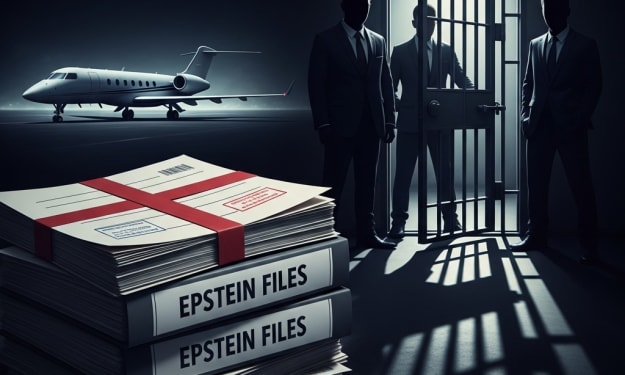
The Epstein Files The Jeffrey Epstein case is not just the story of one criminal. It is a mirror showing how power, money, and silence can protect wrongdoing at the highest levels of society. While Epstein was officially charged and convicted for serious crimes, many questions remain unanswered about how his network operated for decades without being stopped.
By Wings of Time 9 months ago in Criminal
The Sole Survivor: A Silent Scream in the Face of Death. Content Warning.
The most heart-wrenching stories often begin in places where safety should be guaranteed: at home. In 1987, the lives of Saye Rivazfar, her younger sister Sara, and their brother Arash took a dark turn following the divorce of their parents, Patricia and Ahmad. While their father, of Iranian descent, settled in New York, the three children remained with their mother in Pensacola, Florida.
By Mayar Younes9 months ago in Criminal
Still Missing: Savannah Guthrie’s Mother Nancy, FBI Offers $50,000 Reward in Urgent Search
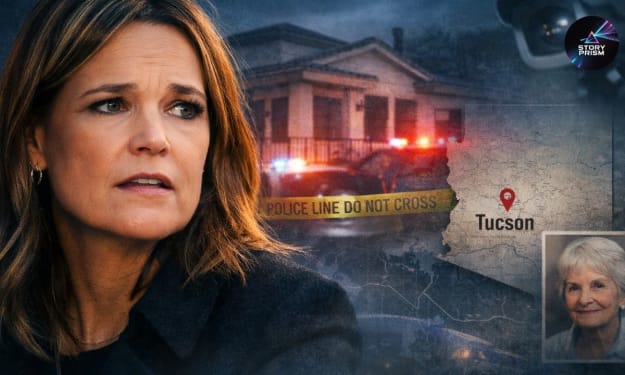
Savannah Guthrie, the familiar face of NBC’s Today show, has been thrust into a deeply personal crisis as her 84-year-old mother, Nancy Guthrie, remains missing in Tucson, Arizona. Authorities and family members alike are urging anyone with information to come forward, emphasizing the urgency of the situation given Nancy’s fragile health.
By Story Prism9 months ago in Criminal
Why the Epstein Network Was Never Fully Exposed
Why the Epstein Network Was Never Fully Exposed The most haunting question after the Jeffrey Epstein case is not what he did, but why so much remains hidden. Despite arrests, court documents, and years of investigation, the full network surrounding Epstein has never been completely exposed. This failure is not accidental. It reveals how modern power systems are designed to protect themselves, even when serious crimes are involved.
By Wings of Time 9 months ago in Criminal
The Epstein Files: Power, Secrets, and the Questions That Remain
The Epstein Files: Power, Secrets, and the Questions That Remain The name Jeffrey Epstein has become one of the most disturbing symbols of power, secrecy, and unanswered questions in modern history. What began as a criminal case involving sexual abuse and trafficking soon turned into a global scandal that touched politics, finance, intelligence agencies, and elite social circles. Even years after Epstein’s death, the so-called “Epstein files” continue to raise serious concerns about justice, accountability, and how powerful people are protected.
By Wings of Time 9 months ago in Criminal
The Night the City Learned How Quiet a Crime Could Be
M Mehran At exactly 1:13 a.m., the security cameras on Fifth and Monroe froze for three seconds. Not long enough to trigger an alarm. Not long enough for anyone to notice. But long enough for a man to walk through the blind spot and disappear into the city. By morning, someone would be dead. The victim was Jonah Keller, forty-two, respected real estate consultant, married, no criminal history. He was found seated at his kitchen table, hands folded neatly, a single glass of water untouched beside him. No signs of struggle. No blood. No forced entry. Just silence. Detective Mara Ilyas knew immediately this case would be a problem. Crimes without chaos always were. The medical examiner confirmed the cause of death within hours. A rare toxin. Colorless. Tasteless. Deadly in small doses. It stopped the heart as gently as sleep. “Poison,” Mara muttered. “Someone planned this.” The question was why. Jonah Keller had no enemies. At least none that showed up on paper. His colleagues described him as polite. His neighbors said he waved every morning. His wife, Rachel, collapsed into tears so convincing that even the most cynical officer felt uncomfortable doubting her. But Mara doubted everyone. Especially the quiet ones. Jonah’s phone revealed nothing suspicious. No threatening messages. No secret affairs. His finances were clean. Too clean. People rarely died in kitchens without leaving a mess behind, emotional or otherwise. Then Mara found the voicemail. It was old. Nearly a year back. Jonah’s voice sounded tired. “I did what you asked,” he said. “Please stop calling.” The number was unregistered. That was the crack in the perfect surface. Mara dug deeper, requesting sealed records and forgotten complaints. Eventually, she uncovered a civil case buried under layers of legal dust. A zoning dispute. Jonah’s company had pushed a redevelopment project that displaced dozens of low income families. The case never went to trial. It had been settled quietly. One of the complainants stood out. Elias Monroe. Former schoolteacher. Divorced. Son died during the eviction when their apartment caught fire from faulty wiring. The city blamed outdated infrastructure. The company blamed the city. No one blamed themselves. Elias disappeared shortly after. Until now. Security footage from a pharmacy two blocks away showed a man buying bottled water the night Jonah died. He wore a cap low over his face, but his posture told a story. Straight back. Careful movements. A man used to control. Mara recognized the walk. Elias Monroe had returned. They found him in a small rented room above a closed bookstore. No resistance. No surprise. He sat on the bed as if he had been waiting. “I didn’t hate him,” Elias said during interrogation. “I needed him to understand.” Mara leaned forward. “Understand what?” “That silence is violence,” Elias replied. “And people like him profit from it.” Elias explained everything calmly. He had studied chemistry online. Learned how to extract toxins from common plants. Tested doses on rodents. Documented every step. This was not a crime of passion. It was a message. “I sat with him,” Elias continued. “I made him drink the water. I watched him realize what was happening. I wanted him afraid, just for a moment. The way my son was.” Mara felt a chill crawl up her spine. “Why turn yourself in?” she asked. Elias smiled faintly. “I didn’t. You came to me.” He was right. The city arrested Elias within hours. Headlines exploded. Protesters gathered. Some called him a monster. Others called him a symbol of justice. Jonah Keller’s name slowly disappeared from public sympathy. Investigations reopened. Documents leaked. It turned out Jonah had known about the faulty wiring. Emails proved it. He had approved delays to save money. Rachel Keller stopped answering calls. The trial was swift. The evidence overwhelming. Elias Monroe was sentenced to life in prison without parole. As the verdict was read, he showed no reaction. Later, Mara visited him one last time. “Do you regret it?” she asked. Elias thought carefully. “I regret that it took a death for people to listen.” That night, Mara walked through the city streets. Neon lights flickered. Cars passed. Life continued, loud and careless. But beneath it all, something had shifted. The city had learned that the most dangerous crimes don’t announce themselves. They arrive quietly. They sit at your table. They ask you to drink. And by the time you notice them, it’s already too late. Months later, the case became required reading in criminology classes. Professors debated motive versus morality. Students argued late into the night about whether intent mattered more than outcome. Some insisted Elias was evil. Others claimed the system had created him. Mara followed the discussions from a distance. She never joined. She had seen Elias’s eyes. They were not empty. They were heavy. The city council quietly passed new safety regulations. Developers were forced to disclose risks. Inspectors were no longer optional. No one publicly connected the reforms to Jonah Keller’s death, but everyone understood the cause. Rachel Keller sold the house. Neighbors said she moved like a ghost during her final days there, avoiding eye contact, flinching at sudden sounds. Guilt, like poison, worked slowly. Elias wrote letters from prison. Not appeals. Not apologies. Explanations. He sent them to lawmakers, journalists, and families still fighting eviction notices. Some letters were published. Others were ignored. None were answered by the man himself. Mara kept one letter locked in her desk. It ended with a sentence she could never forget. “I chose a crime that would be remembered,” Elias had written, “because quiet suffering is never archived.” Years passed. New crimes took over the news cycle. Louder crimes. Bloodier crimes. Easier crimes to understand. But every time Mara stood in a silent kitchen, she remembered Jonah Keller’s folded hands and untouched glass. She remembered how easy it was to miss responsibility becoming guilt. And she remembered that justice is often decided long before police arrive. Always.
By Muhammad Mehran9 months ago in Criminal
The Man Who Confessed to a Murder That Never Happened
M Mehran The police station was unusually quiet that night. No shouting. No ringing phones. Just the hum of a flickering tube light and the sound of rain tapping against barred windows. At 2:17 a.m., a man walked in and calmly said the words that would haunt everyone inside for years: “I killed someone.” Officer Daniel Reyes looked up, annoyed more than alarmed. False confessions weren’t rare—drunks, attention-seekers, broken souls. But this man didn’t look drunk. Or nervous. Or desperate. He looked… relieved. A Confession Without a Body The man identified himself as Ethan Moore, 34, accountant, no prior criminal record. Clean clothes. Steady voice. Hands folded like he was waiting for a dentist appointment. Reyes followed protocol. “Who did you kill?” Ethan answered immediately. “My brother. Liam Moore.” That changed everything. A missing person report had been filed for Liam three years ago. No body. No evidence of foul play. The case went cold—another adult who “probably wanted to disappear.” Until now. Details Only a Killer Should Know In the interrogation room, Ethan spoke slowly, carefully, as if reciting a story he’d rehearsed a thousand times. He described the fight. The broken glass. The shove near the staircase. “He hit his head,” Ethan said. “Didn’t move after that.” Detectives exchanged glances. The details were disturbingly specific. “Where’s the body?” Detective Harris asked. Ethan shook his head. “There is no body.” The room went silent. A Perfect Crime—or a Perfect Lie? Over the next 48 hours, police tore apart Ethan’s life. They searched his apartment. Dug through phone records. Interviewed neighbors and coworkers. Nothing. No blood. No suspicious financial activity. No signs of violence. But Ethan never changed his story. He never asked for a lawyer. Never cried. Never defended himself. He just kept saying: “I deserve to be punished.” The Psychological Puzzle Criminal psychologists were brought in. One theory suggested survivor’s guilt. Another proposed delusional disorder. But none fully explained why a mentally stable man would confess to murder without evidence—and refuse to retract it. Dr. Helen Cross, a forensic psychologist, noticed something chilling. “Ethan isn’t confessing to a crime,” she said. “He’s confessing to a feeling.” The Brother Who Lived in the Shadows Through interviews, a darker picture emerged. Liam Moore was charismatic, reckless, always the center of attention. Ethan, the quiet one, spent his life cleaning up after him—financially, emotionally, mentally. Their final fight wasn’t about money or anger. It was about freedom. “Liam told me I was invisible,” Ethan admitted. “That without him, I was nothing.” That night, Liam walked out during the storm. He never came back. The Twist That Changed the Case Three months into Ethan’s incarceration, a body was found—nearly 200 miles away. It wasn’t Liam. But the discovery reopened old missing persons databases. And that’s when a patrol officer noticed something strange. A man in another state had been living under a new identity. Same scars. Same dental records. Liam Moore was alive. The Truth Behind the Confession When confronted, Ethan finally broke. “I didn’t kill him,” he whispered. “But I wanted to.” The real crime wasn’t murder. It was emotional imprisonment. Ethan confessed because guilt had eaten him alive—not for killing his brother, but for wishing him gone. He believed that thought alone made him a criminal. A Crime Without a Law Legally, Ethan had committed no crime. Morally, he had sentenced himself. The court released him. No charges. No apology could erase the months he spent behind bars by choice. Liam was questioned and released. He never contacted Ethan again. The Most Dangerous Criminal Is the Mind This case never made national headlines. No blood. No verdict. No dramatic ending. But detectives still talk about it. Because it revealed something unsettling: The human mind can punish itself harder than any prison. Ethan Moore walked into a police station not because he was guilty of murder—but because he couldn’t escape his own conscience. Final Reflection True crime isn’t always about killers and victims. Sometimes, it’s about guilt. About family. About the quiet crimes we commit in our thoughts—and the punishment we give ourselves for them. Ethan confessed to a murder that never happened. But the psychological damage? That was real. And it almost destroyed him.
By Muhammad Mehran9 months ago in Criminal
A Crime?. Content Warning.
What is a crime? From Merriam Webster, I took this: Definition of crime 1: an illegal act for which someone can be punished by the government especially : a gross violation of law 2: a grave offense especially against morality 3: criminal activity efforts to fight crime 4: something reprehensible, foolish, or disgraceful
By Mike Singleton 💜 Mikeydred 9 months ago in Criminal