investigation
Whodunnit, and why? All about criminal investigations and the forensic methods used to search for clues and collect evidence to get to the bottom of the crime.
Gone Girl
"Gone Girl" by Gillian Flynn is a psychological thriller that has captivated readers and viewers since its release. The novel, which was published in 2012, quickly became a bestseller and was later adapted into a successful film directed by David Fincher, starring Ben Affleck and Rosamund Pike. The story centers on the mysterious disappearance of Amy Dunne and the subsequent media frenzy, police investigation, and the shocking revelations that unfold. This article will explore the intricate plot of "Gone Girl," its themes, characters, and the impact it has had on popular culture. We will also invite you to dive deeper into the world of "Gone Girl" by listening to the audiobook for free.
By Alberto & Judy Romero2 years ago in Criminal
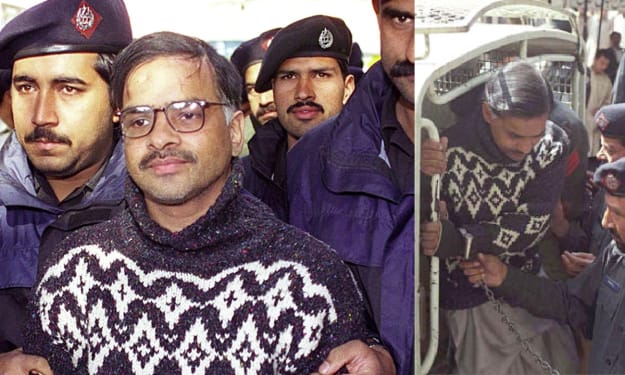
Javed Iqbal: Pakistan's Most Notorious Serial Killer
Javed Iqbal Mughal was one of the most prolific serial killers in history. Between 1998 and 1999, he confessed to the sexual abuse and murder of over 100 young boys in Lahore, Pakistan, ranging in age from 6 to 16 years old. His crimes were among the most horrific ever documented.
By Rare Stories2 years ago in Criminal
Creepy Stories of Maniac Parents Who Kept Their Children Incarcerated
The heroines of the following terrifying stories spent many years in captivity, held by their own parents. Although all the victims survived and were eventually freed, the decades they spent in confinement forever changed their lives.
By Vitalii Petrov2 years ago in Criminal
Helping Families Through Legal Difficulties: A Florida Family Law Firm's Function
The role of a criminal defense lawyer in Miami is pivotal in safeguarding the rights of individuals accused of criminal offenses. These legal professionals serve as advocates, strategists, and defenders within the complex and often daunting realm of the criminal justice system. This article explores the crucial responsibilities, expertise, and impact of criminal defense lawyers in Miami, highlighting their role in ensuring fair treatment, protecting constitutional rights, and advocating for justice.
By Wilmorris Law2 years ago in Criminal
Five Chilling Mysteries Finally Solved
Some mysteries seem destined to remain unsolved, leaving us to ponder their secrets indefinitely. However, with advances in DNA analysis and other scientific techniques, even the most baffling cases can eventually be cracked. Here are five chilling mysteries that were recently resolved, bringing closure to decades of uncertainty and speculation.
By Cybele Grace2 years ago in Criminal
The Brutal Murders of Kathleen Henry and Veronica Abouchuk
In September 2019, a woman named Valerie Casler stole Brian Steven Smith's cellphone from his truck in Anchorage, Alaska. When Casler charged the phone, she made a horrifying discovery - it contained graphic videos and photos depicting the murder of 30-year-old Alaska Native woman Kathleen Jo Henry.
By Rare Stories2 years ago in Criminal
The Mysterious Disappearance Of The Jamison Family. Content Warning.
Up until October 8, 2009, Bobby Dale Jamison, his wife Sherilynn, and their six-year-old daughter Madyson seemed to be enjoying regular lives in Eufaula, Oklahoma. All three of them vanished from their house that day mysteriously, leaving no trace of their whereabouts. The family’s pickup truck was found by the police after several days of searching, but this discovery left more questions than it did answers.
By Victoria Velkova2 years ago in Criminal
Frank Lucas: How a $100,000 Chinchilla Coat Exposed Harlem's Kingpin
Frank Lucas, the notorious drug lord who ruled Harlem in the 1970s, was known for his discretion, operating under the radar of law enforcement. This all changed in 1971, when he made a decision that would alter the course of his criminal career. Lucas decided to attend a Muhammad Ali boxing match wearing a $100,000 full-length chinchilla coat. This ostentatious display of wealth caught the attention of law enforcement, leading to his eventual downfall. The Muhammad Ali Fight Frank Lucas had managed to keep a low profile, building a massive drug empire without attracting much attention. However, his appearance at the Muhammad Ali fight in 1971 marked a significant turning point. Wearing the extravagant coat and sitting in seats better than those of celebrities like Diana Ross and Frank Sinatra, Lucas stood out in the crowd. Law enforcement officials at the event were intrigued by his presence and his apparent wealth. A "Massive Mistake" Lucas later described his decision to wear the chinchilla coat as a "massive mistake." The coat, along with his high-profile seating, made him a marked man in the eyes of the police. This sudden visibility led to increased scrutiny from law enforcement agencies, who began investigating Lucas's activities more closely. The coat that was meant to display his success instead became a symbol of his downfall. The Aftermath The attention from law enforcement eventually led to the unraveling of Lucas's drug empire. Authorities discovered that Lucas had been importing heroin directly from Southeast Asia, bypassing traditional Mafia-controlled routes. His operation, which he called "the Golden Triangle," involved smuggling drugs in the coffins of deceased American soldiers returning from the Vietnam War. This audacious scheme allowed Lucas to dominate the heroin trade in New York City, amassing immense wealth and power. However, the increased scrutiny following the Muhammad Ali fight exposed Lucas and his operation. Law enforcement agencies conducted extensive investigations, leading to his arrest in 1975. Lucas was convicted and sentenced to 70 years in prison, though he later cooperated with authorities, leading to a reduced sentence. Reflections on His Mistake Frank Lucas's reflection on his mistake serves as a cautionary tale about the dangers of ostentation in the criminal world. His decision to flaunt his wealth with the chinchilla coat was driven by a desire to assert his status, but it ultimately led to his downfall. Lucas's story highlights the importance of discretion and the fine line between success and exposure in the underworld. In his own words, Lucas admitted, "I left that fight a marked man." His decision to wear the chinchilla coat not only marked the end of his anonymity but also set in motion the events that would lead to the collapse of his empire. The coat, once a symbol of his success, became a reminder of the consequences of attracting too much attention. Legacy and Cultural Impact Frank Lucas's story has had a lasting impact on popular culture, inspiring numerous books, documentaries, and films. His life was the basis for the 2007 film "American Gangster," starring Denzel Washington as Lucas and Russell Crowe as Richie Roberts, the detective who brought him down. The film highlighted Lucas's rise and fall, illustrating the complexity of his character and the intricacies of his criminal enterprise. Lucas's legacy is a testament to the allure and danger of the drug trade, as well as the human cost of such a lifestyle. His story serves as a reminder of the consequences of living outside the law and the inevitable downfall that comes with excessive pride and visibility. Conclusion The story of Frank Lucas and his $100,000 chinchilla coat is a vivid example of how a single moment of indiscretion can change the course of a person's life. Lucas's decision to wear the coat to a high-profile event led to his exposure and the eventual dismantling of his drug empire. His reflection on this "massive mistake" underscores the precarious nature of success in the criminal world and the importance of maintaining a low profile.
By Deji Akomolafe2 years ago in Criminal
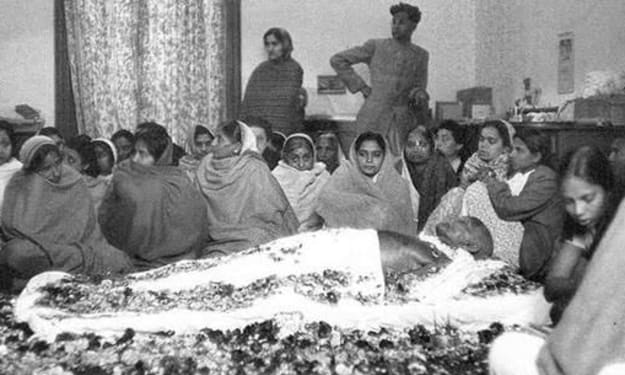
The Assassination of Mahatma Gandhi
On January 30, 1948, the world was shaken by the assassination of Mahatma Gandhi, one of the most prominent figures in the struggle for Indian independence. This tragic event not only marked the end of an era but also left an indelible scar on the fabric of Indian society. Gandhi, revered as the Father of the Nation, was a beacon of peace, non-violence, and unity. His assassination was a shocking act of violence that contrasted sharply with the principles he championed throughout his life. The Fateful Day The evening of January 30, 1948, began like many others for Mahatma Gandhi. He was at Birla House in New Delhi, preparing for his customary evening prayer meeting. Gandhi's prayer meetings were gatherings where people of different faiths came together to reflect and pray, embodying his vision of religious harmony and tolerance. As he made his way to the prayer ground, a crowd gathered around him, as it often did. Among the crowd was Nathuram Godse, a Hindu nationalist with a deep-seated grudge against Gandhi. Godse, armed with a semi-automatic pistol, approached Gandhi on the pretext of seeking his blessings. As he bent down, ostensibly to touch Gandhi’s feet, he drew his weapon and fired three shots at point-blank range. The bullets struck Gandhi in the chest and abdomen. He collapsed to the ground, uttering "Hey Ram" – a phrase that would later be remembered as his final words. Despite immediate medical attention, Gandhi succumbed to his injuries within minutes. The news of his assassination spread rapidly, plunging the nation into grief and disbelief. Nathuram Godse: The Assassin Nathuram Godse was a member of the Hindu nationalist organization Rashtriya Swayamsevak Sangh (RSS) and a staunch follower of Vinayak Damodar Savarkar's ideology of Hindutva. Godse and his associates believed that Gandhi's policies of non-violence and his insistence on accommodating Muslims during the partition of India were detrimental to Hindu interests. They perceived Gandhi’s efforts to maintain Hindu-Muslim unity as a betrayal, especially after the creation of Pakistan. Godse’s disillusionment and anger culminated in the assassination, an act he believed would save India from Gandhi's "appeasement" of Muslims. In his trial, Godse articulated his motivations, claiming that Gandhi’s actions were responsible for the partition of India and the subsequent violence. He argued that Gandhi’s influence over the Congress party and the Indian government was leading the country down a path of destruction. Despite his defense, Godse was found guilty and sentenced to death. He was executed on November 15, 1949. His act of violence, intended to silence Gandhi’s influence, ironically amplified the very ideals he opposed. The Aftermath and Impact Gandhi's assassination sent shockwaves throughout India and the world. Leaders and citizens alike mourned the loss of a man who had dedicated his life to the principles of truth, non-violence, and communal harmony. His death led to an outpouring of grief and a nationwide period of mourning. The assassination also sparked widespread violence, particularly against Hindu nationalist groups like the RSS, which was temporarily banned by the Indian government. Gandhi’s death marked a critical juncture in Indian history. It underscored the deep-seated communal tensions that had been exacerbated by the partition. The nation faced the daunting task of healing and rebuilding in the wake of such a profound loss. Jawaharlal Nehru, India's first Prime Minister and a close associate of Gandhi, addressed the nation with a heavy heart, urging unity and peace. He reminded the people that Gandhi's ideals must continue to guide the nation’s path forward. Internationally, Gandhi's assassination highlighted the global struggle for peace and justice. Leaders from around the world expressed their condolences and acknowledged Gandhi’s immense contribution to the global discourse on non-violence and civil rights. His philosophy of non-violent resistance influenced numerous movements and leaders, including Martin Luther King Jr. and Nelson Mandela. The tragedy of his death reinforced the relevance and urgency of his message. Legacy of Mahatma Gandhi Despite the tragic end to his life, Mahatma Gandhi’s legacy endures. His principles of Satyagraha (truth and non-violence) continue to inspire movements for social justice and political change worldwide. Gandhi’s vision of an inclusive and harmonious society remains a guiding light for India and the global community. His teachings on self-reliance, simplicity, and environmental sustainability are increasingly relevant in today’s world, grappling with issues of inequality, conflict, and ecological degradation. Gandhi's assassination serves as a stark reminder of the perils of intolerance and the destructive power of hatred. It underscores the importance of vigilance in safeguarding democratic values and promoting dialogue and understanding among diverse communities. The ideals that Gandhi lived and died for – non-violence, truth, and justice – are more pertinent than ever in a world often torn apart by violence and discord. In commemorating Mahatma Gandhi, it is essential to reflect not only on his life and achievements but also on the circumstances surrounding his death. The lessons from that fateful day in January 1948 continue to resonate, urging us to strive for a world where peace and compassion prevail over hatred and violence. Gandhi’s life was a testament to the power of the human spirit to overcome adversity and achieve greatness through humility and perseverance. His legacy is a call to action for each of us to contribute to a more just and peaceful world.
By Deji Akomolafe2 years ago in Criminal