interview
Interviews with defense attorneys, law enforcement officials, forensic psychologists and anyone with insight into bad behavior.
Inside the Mind of Robin Westman: The Disturbing Obsession Behind the Minneapolis Catholic School Massacre
On the morning of August 27, 2025, the quiet calm of the Church of the Annunciation in Minneapolis was shattered when a lone gunman opened fire during a back-to-school Mass. By the time the shooting ended, two children ages eight and ten were dead, and seventeen others lay wounded, most of them schoolchildren and elderly parishioners. The perpetrator, identified as Robin M. Westman, twenty-three years old, died by suicide at the scene, leaving behind a violent manifesto, disturbing videos, and a community struggling to understand why.
By Lynn Myersabout a year ago in Criminal
Meet Zipho Memela a Million Dollar Tycoon. Content Warning. AI-Generated.
In an age where startups can rise and fall in a year and new industries are born overnight, one entrepreneur’s journey to becoming a Million Dollar Tycoon stands out—not for flashy headlines or viral success, but for relentless determination, smart risk-taking, and the power of a bold vision.
By Kin Mancookabout a year ago in Criminal
Zipho Memela Talks about Cryptocurrency. Content Warning. AI-Generated.
In the ever-evolving landscape of technology and finance, one digital asset has consistently remained at the forefront: Bitcoin. Born in the aftermath of the 2008 financial crisis, Bitcoin has transformed from a niche cryptographic experiment into a globally recognized asset class, sparking debates across financial, technological, and political sectors.
By Kin Mancookabout a year ago in Criminal
In India, a man who claimed to have buried more than 100 girls who were raped and then murdered at a temple has been arrested
Police in India have arrested the man who recently claimed that he was forced to bury the bodies of dozens of women who had first been raped and then murdered. His shocking claims have shaken Dharmasthala, a small religious town in the southern Indian state of Karnataka. The town is home to the centuries-old Manjunatha Swamy Temple, which is dedicated to Lord Shiva, one of Hinduism’s three supreme deities. The temple attracts thousands of devotees every day and is central to the lives of the local people. Following political controversy in the state, the government set up a Special Investigation Team (SIT) to investigate these allegations. An SIT official, speaking to the BBC on condition of anonymity, said that the man was arrested on charges of perjury—giving a false statement. In early July, the middle-aged man had filed a complaint with the police and recorded a statement before a magistrate. His identity has not been revealed, and in public he has so far appeared wearing black clothes, a mask, and a helmet. The complaint filed with the police, seen by the BBC, stated that he had worked as a cleaner at the temple between 1995 and 2014. He alleged that during this time, he was forced to bury the bodies of hundreds of girls and women who had been brutally raped and then killed. He described in detail five such incidents and said that there were many more. He also claimed that some of the victims were minors.
By Ikram Ullahabout a year ago in Criminal
The DNA on the Coffee Cup. AI-Generated.
The manicured lawns of Scottsdale, Arizona, were supposed to be a refuge from the chaos of the world. But on February 22nd, 2017, the chaos came home. Jessica Pierce stood on the pristine porch of her sister's sprawling ranch-style house, a cold dread creeping up her spine. For two days, her calls to her sister, Linda Turner, had gone unanswered.
By Wesley Thorneabout a year ago in Criminal
I am not Surprised on Emmanuel Haro
This case is just “too easy” to handle just like the Carlee Russell case, the Susan Smith case, and the Chris Watts case. A 7-month-old baby boy gets kidnapped by an unknown Hispanic man after he assaulted his mother. The parents pleading with the news media for the son's return until the police found inconsistencies costs them to backtrack and not speak on the case.
By Gladys W. Muturiabout a year ago in Criminal
U.S. Designates Majeed Brigade as a Foreign Terrorist Organization Amid Rising BLA Attacks
Pakistani authorities have termed the U.S. designation of the banned Majeed Brigade as a “foreign terrorist organization” a commendable step. On August 11, the U.S. State Department announced: “Today, the Department of State is designating the Balochistan Liberation Army (BLA) and the Majeed Brigade as Foreign Terrorist Organizations (FTOs). The Majeed Brigade is also being added to the BLA’s existing ‘Specially Designated Global Terrorists’ (SDGT) list.” According to the U.S. State Department, the Balochistan Liberation Army was first designated as a Specially Designated Global Terrorist group in 2019 after multiple terrorist attacks. However, since then, both the BLA and Majeed Brigade have claimed responsibility for further attacks. The statement mentioned that in 2024, the BLA claimed responsibility for suicide attacks near Karachi Airport and the Gwadar Port Authority Complex. In March 2025, the BLA claimed the hijacking of the Quetta-to-Peshawar-bound Jaffar Express train, in which over 100 security personnel were killed and more than 300 passengers were taken hostage. The State Department said: “Designating the organization as a terrorist group plays a significant role in our fight against terrorism and is an effective way to deter support for terrorist activities.” It should be noted that Pakistan had declared the Majeed Brigade, the BLA’s suicide squad, as a banned terrorist organization in 2024, while the separatist BLA itself was banned in 2006. Previously, Pakistan had urged the United States to declare the Majeed Brigade a terrorist organization. The BLA’s Majeed Brigade has been active in Balochistan for over a decade, and in recent years, the group’s attacks have intensified and expanded in scope. Due to this situation, Pakistan had also requested the United Nations Security Council to impose a ban on the Majeed Brigade. is the Majeed Brigade and what militant activities has it been involved in? The name of the Majeed Brigade and its so-called “fidayeen” (suicide attackers) first emerged on December 30, 2011, when a suicide bomber targeted a car outside a house on Arbab Karam Khan Road in Quetta, the capital of Balochistan, on a winter evening. The house belonged to Shafiq Mengal, son of former federal minister Naseer Mengal. Shafiq Mengal escaped unharmed, but 10 people, including his guards, were killed, and 23 others were injured. The banned Balochistan Liberation Army claimed responsibility for the attack, saying it was carried out by the Majeed Brigade, and the suicide bomber was a young man named Darvesh. After this incident, the Majeed Brigade disappeared from the scene for a while and did not claim responsibility for any major attack. Ustad Aslam, also known as Aslam Achu, was the first leader of the Majeed Brigade. He brought both innovation and intensity to the group’s operations and shifted the decades-long Baloch insurgency from the mountains to urban areas, particularly Karachi. In December 2018, Aslam Achu was killed in an attack in Kandahar. Leadership of the group then passed to a man named Bashir Zeb, a former chairman of the Baloch Students Organization (BSO). Aslam Achu faced multiple charges for bomb blasts, attacks on security forces, and targeted killings in Balochistan. A bounty of 5 million rupees had been placed on his head. Almost seven years after the attack on Shafiq Mengal, in August 2018, a truck collided with a bus carrying Chinese engineers in Dalbandin, the capital of Chagai district, which is rich in gold and copper deposits. The suicide attack injured three Chinese engineers and two others. The Majeed Brigade claimed responsibility, revealing the attacker was a young man named Rehan — the son of Majeed Brigade leader Aslam Achu. That same year, in November 2018, a major attack targeted the Chinese Consulate in Karachi, in which four attackers were killed in a police encounter. The Majeed Brigade also claimed responsibility. In 2019, the group attacked the Pearl Continental Hotel in Gwadar, a central hub of the China-Pakistan Economic Corridor (CPEC), killing five people, with three attackers killed. The group described this as a “fidayeen mission.” The following year, in June 2020, the Karachi Stock Exchange was attacked, with four attackers killed. The Majeed Brigade also claimed responsibility. More recently, in 2022, Shari Baloch, a woman, carried out a suicide bombing at the Chinese Confucius Institute in Karachi University. In 2023, another woman, Samia Qalandrani, attacked a Frontier Corps (FC) vehicle in Turbat; she was the fiancée of Rehan, son of Aslam Achu. In 2024, a woman named Mahil Baloch carried out a suicide attack on an FC camp in Bela. All these attacks were claimed by the Majeed Brigade, and it became clear the group had begun using women for suicide missions. Similarly, in March this year, the group claimed responsibility for the hijacking of the Jaffar Express and the killing of passengers. According to Abdul Basit, writing for the Jamestown Foundation, the banned Majeed Brigade possesses high-grade weaponry, including improvised explosive devices (IEDs), anti-personnel and anti-tank mines, grenades, rocket-propelled grenades (RPGs), and various automatic weapons like M4 rifles, BM-12s, MM-12s, and MM-012s. He adds that the group’s militants also have access to advanced explosives like C4 for making suicide vests. Where did the name “Majeed Brigade” come from? During the tenure of Pakistan’s first PPP Prime Minister, Zulfikar Ali Bhutto, when Balochistan’s first elected government — led by the National Awami Party — was dismissed, resistance had already begun in the province. In August 1975, when Prime Minister Bhutto arrived in Quetta to address a public gathering, a young man named Majeed Langove was killed in a grenade explosion. Reports later indicated that Majeed intended to attack Bhutto. Majeed Langove belonged to the Mangochar area and was associated with the Baloch Students Organization (BSO) since his student days. After his death, his younger brother was born and also named Majeed. He later joined the banned BLA and was killed in 2011 in an encounter with law enforcement near Quetta. The BLA states that on the day of the younger Majeed’s death in 2011, the formation of the “fidayeen group” was announced, and Ustad Aslam, aka Aslam Achu, named the group after both brothers — hence, “Majeed Brigade.” What does the U.S. designation of the Majeed Brigade as a “foreign terrorist organization” mean? When the U.S. designates a group as a “foreign terrorist organization,” all its assets are frozen, and no individual or entity is allowed to conduct any transactions with it. Providing any form of material support to such a group is considered a serious crime under U.S. law, punishable by 20 years or more in prison. Members and supporters of the group are also banned from entering the United States, with strict immigration restrictions applied. According to the U.S. State Department website: “It is unlawful for any person in the United States or subject to U.S. jurisdiction to knowingly provide material support or resources to a designated Foreign Terrorist Organization (FTO).” Under U.S. law, “material support” includes financial aid, lodging, expert advice, training, false documents and identification, communications equipment, explosives, personnel, and means of transportation. If a member of a designated FTO is not a U.S. citizen, they are barred from entry, and if they are already in the U.S., they may be deported. In addition, if a U.S. financial institution finds that it controls funds in which a designated FTO or its members have an interest, it must report this to the U.S. Department of the Treasury. The State Department says the purpose of such designation is to cut off terrorist financing, encourage other countries to do the same, isolate the organization internationally, prevent donations or economic dealings with it, and raise public awareness about such groups.
By Real contentabout a year ago in Criminal
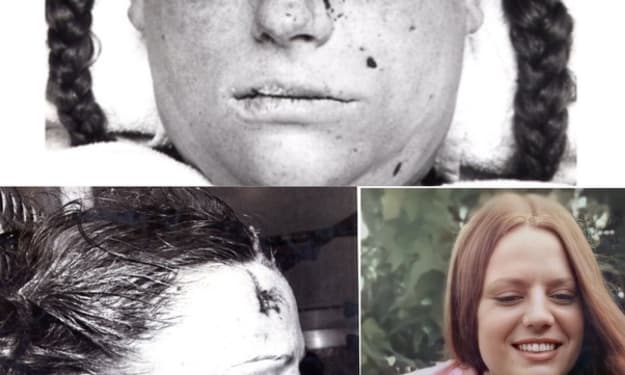
She Was Found in a Ditch Wearing a Buckskin Poncho. For 37 Years, No One Knew Her Name
Introduction: Silent for Decades, Finally Heard On a frigid spring morning in April 1981, the body of a young woman was discovered in a ditch off Greenlee Road, Troy, Ohio. Her identity? Unknown. Her fate? Sealed in anonymity. For 37 years, she was simply “Buckskin Girl” until science spoke her name.
By Lynn Myersabout a year ago in Criminal