interview
Interviews with defense attorneys, law enforcement officials, forensic psychologists and anyone with insight into bad behavior.
Bloodshed on Yom Kippur: Inside the Terror Attack That Shook a Manchester Synagogue. Content Warning.
A Day of Prayer Turned to Panic On October 2, 2025, one of Britain’s most sacred Jewish sites became the center of a national tragedy. Worshippers gathered at the Heaton Park Hebrew Congregation in Crumpsall, Manchester, to observe Yom Kippur, the holiest day of the Jewish calendar. It is a time meant for reflection, atonement, and peace.
By Lynn Myersabout a year ago in Criminal
The Unsolved Mystery of Jessica Alba's 1996 Kidnapping on the Flipper Set. AI-Generated.
The Unsolved Mystery of Jessica Alba's 1996 Kidnapping on the Flipper Set Imagine a sunny afternoon on a Florida beach. A young teen actress steps away from her crew for a quick break. Hours later, she's found tied up in a car trunk, scared but alive. This happened to Jessica Alba in 1996, right on the set of the TV show Flipper. At just 15, she was chasing her dreams in Hollywood. The Jessica Alba kidnapping 1996 shocked everyone. Police searched hard, but no one got caught. Today, the case sits cold, full of questions. What drove someone to grab her? Why no clues? This story pulls back the curtain on a dark side of fame. It shows the risks young stars face. We'll walk through her early days, the scary event, and what came after. Her strength inspires us. Yet the mystery lingers, begging for answers.
By Story silver book about a year ago in Criminal
From Hero to Horror: The Tragic Descent of Thomas Jacob Sanford. Content Warning.
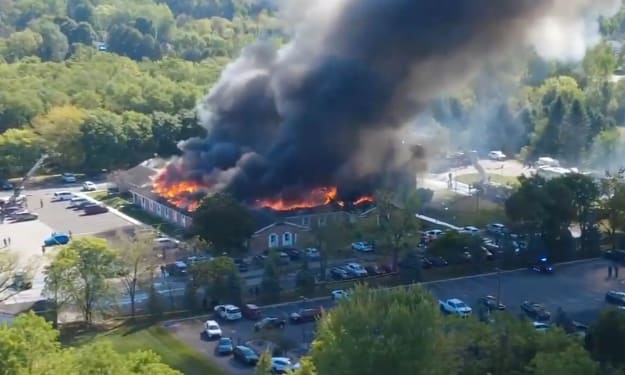
Introduction On Sunday morning in Grand Blanc Township, Michigan, the tranquility of worship was shattered by a devastating act of violence. A man crashed a pickup truck into a meetinghouse of The Church of Jesus Christ of Latter-day Saints, opened fire on congregants, and set the building ablaze.
By Lynn Myersabout a year ago in Criminal
Time for petty revenge?
Sorry for SUPER long story!! Got divorce few years ago. Me, F45 and ex-husband M42, had fights about money and spending. We both worked full-time and made about the same amount of money (we have kids and owned apartment). Se both got good salary, not huge but we lived comfortably, or so I thought. He had access to my bank account and phone and knew always what I got salary and what I’d spent. I never had his. Sus#1. He liked nice stuff, I’ve never been into shopping and never go to salon etc. We got shared household, so the person paid who got money, and we never counted who paid what. At some point I didn’t knew where the money had gone. I asked and he was shady about it. Sus#2. All I knew, I paid more and more bills and also gave money to him to pay his bills. After break-up, turns out he had taken big loan behind my back! He confessed after he tried to win me back, he were already moved out. Money was spent on tv’s, playstions, cars, clothes you name it. I didn’t truly knew we had no money for all of that. I wasn’t cool with shopping expensive stuff and shared my doubts, he assured we afford everything. There was also some pressuring having intimacy, eventually I wanted less and less and he then acted like a child. I also experienced belittling from him. Due to all this, I wanted divorce. I brew my thought years while this all was happening. So, after hard break-up and long divorce we continued living together, not smart from me but he insisted. Eventually things get stiff between us and I call it off. I wanted both of us to moving forward. His parents bought big and nice apartment for him (and for the kids, we shared custody equally). They also made full all-paid renovation. I sold alone our apartment and all the left over furnitures (which he didn’t wan’t and they didn’t fit into my new apartment), and paid him half for every single dime i got from house end sold furnitures, we didn’t have marriwge settlement any kind. He didn’t have to pay full rent to his parents (after i kindly informed mil about their sons loans), they desided to pay all his living expenses, so he can reduce his dept. At the same time I got small apartment, struggled alot, I lost my dad and almost didn’t keep up with all expenses. When I tried to talk about money and child support (I suggested keeping child benefits for me, we agreed share them due 50-50 custody). I tried to reason with him not paying nearly anything while I have full rent and other costs. He laughed out loud ”Too bad you don’t have parents to pay your rent and help you out!”. My dad had just month ago passed after long suffer. Ex-husband knew exactly how much my dad meant to me and laughed to his passing. I said nothing back and sucked it up.
By syed storeabout a year ago in Criminal
We Are Not The Same. AI-Generated.
My name is Thorne Empire, and I want to speak directly to you about my upcoming song, “We Are Not The Same.” This isn’t just another track; it’s a cry from my heart, born out of the injustice I see in our world every single day.
By Thorne Empireabout a year ago in Criminal
The First Degree Podcast
Unlike numerous network-supported true-crime podcasts that save money via cursory discussions of a crime, The First Degree takes audiences beyond the headlines and into the lives of people directly impacted by crime, the friends, family, neighbors, and coworkers forever changed.
By Frank Racioppiabout a year ago in Criminal
Girl Stabbed to Death on North Carolina Train: What We Know So Far
The Incident On a routine NC train ride through Charlotte, tragedy struck when Iryna Zarutska, a Ukrainian refugee, was fatally stabbed. Witnesses reported chaos on board as passengers attempted to intervene and authorities rushed to respond.
By KAMRAN AHMADabout a year ago in Criminal
From Defense to War: What a U.S. “Ministry of War” Would Mean
What if the United States government announced tomorrow that it was renaming the Department of Defense to the Ministry of War? At first glance, it might seem like nothing more than a change in language. But in politics, language is never just language—it shapes perception, frames policy, and influences how nations see themselves and one another. A shift in terminology from “defense” to “war” would represent a dramatic transformation in America’s identity and global posture.
By Muhammad Ibrahimabout a year ago in Criminal
The Case of the Vanishing Briefcase
M Mehran Okulmide was not the sort of detective who filled out paperwork quietly behind a desk. In Lagos, where the air hummed with traffic, markets, and secrets traded in alleyways, his reputation had grown: sharp eyes, sharper instincts, and a stubbornness that made criminals nervous. One humid Thursday morning, he was called to Balogun Market, the beating heart of the city’s commerce. A crime had unfolded—not the usual pickpocketing or counterfeit goods, but something that carried real weight. A businessman named Chuka Eze had reported a stolen briefcase. To most, that would seem ordinary. But this was no ordinary briefcase. Inside, Chuka swore, were documents worth millions—contracts that could seal or destroy a powerful construction deal with foreign investors. Okulmide arrived at the scene, weaving through stalls of fabric and electronics. Chuka, sweating and frantic, gripped his arm. “It was right beside me,” Chuka insisted. “I stepped away to take a call, two minutes only, and when I turned back—it was gone.” “Two minutes is enough time for the market to swallow a man whole,” Okulmide muttered, scanning the crowd. He began asking questions. Vendors shook their heads, some too busy bargaining to care. But an old woman selling oranges leaned closer and whispered, “I saw a boy, maybe twenty, moving fast with a black case. He ran toward the back streets.” That was enough. Okulmide followed the trail into the maze behind the market—narrow alleys where laundry lines hung low and children kicked footballs against cracked walls. He knew these backstreets well; they were where desperate hands turned to crime. At the end of one alley, he found a man slouched against the wall, chewing on roasted corn. His eyes darted nervously when he saw Okulmide. “Evening, Jide,” the detective said casually. “You’ve been busy?” Jide laughed, too quickly. “Me? Busy with what?” “With a briefcase.” The corn husk fell from Jide’s hands. For a heartbeat, silence. Then he bolted. Okulmide gave chase, his shoes slapping against the pavement. Jide was fast, leaping over puddles, pushing through doorways, but Okulmide was relentless. At the corner of an abandoned warehouse, he tackled him to the ground. “Where’s the case?” Okulmide demanded. “I—I don’t have it!” Jide stammered. “I passed it off!” “To who?” Jide hesitated, then spat out a name: “Rufus.” That name made Okulmide’s jaw tighten. Rufus was no street thief. He was a fixer, a man who dealt in stolen goods for bigger players. If Rufus had the briefcase, then the documents were already on their way to competitors—or worse. Dragging Jide to his feet, Okulmide marched him back to the station. But his mind was already ahead, plotting the next move. That night, he went hunting. The city’s nightclubs were Rufus’s territory—flashing lights, music heavy with bass, smoke curling through the air. Okulmide entered one such club, his plain shirt and stern expression making him stand out among the glitter and gold chains. He found Rufus at a corner table, sipping expensive whisky. The briefcase sat on the floor beside him like a loyal dog. “Evening, Rufus,” Okulmide said, sliding into the seat opposite. Rufus smiled thinly. “Detective. I was wondering when you’d arrive. Drink?” “No. Hand me the case.” Rufus chuckled. “You think it’s that simple? These papers—contracts, bribes, dirty dealings—people would pay heavily for them. Why should I give them to you?” “Because if you don’t, I’ll drag you out of here in front of everyone, and tomorrow your name will be on every front page in Lagos. And you know how enemies multiply when a man becomes exposed.” Rufus swirled his glass, considering. His eyes flicked toward the dance floor, then back. At last, he leaned down, lifted the briefcase, and slid it across the table. “Take it,” he said. “But know this—your Chuka is no angel. He’s building towers on land that isn’t his, land taken from families who have lived there for generations. Those papers prove it. Return them, and you become part of his crime.” Okulmide froze. The weight of the briefcase in his hands suddenly felt heavier. He knew Rufus was manipulative, but he also knew corruption ran deep in the city’s bones. Later, in the quiet of his office, he opened the case. Pages of contracts, maps, and payment records spilled out—documents that confirmed Rufus’s words. Chuka’s deal wasn’t just business. It was theft dressed as development. The detective sat back, staring at the city lights outside his window. He had solved the theft, yes. But now he faced a deeper choice: return the case to Chuka and let injustice rise like glass towers, or expose the truth and risk angering powerful men. In the end, Okulmide made his decision. The next day, the Lagos Herald ran a front-page story: “Detective Uncovers Land Grab Scandal: Businessman’s Project Halted.” Chuka was arrested, investors withdrew, and the families of Windmere land—once faceless victims—were given a voice. As for Rufus, he slipped into the shadows once again, watching. Criminals always returned. And Okulmide would be waiting.
By Muhammad Mehranabout a year ago in Criminal