incarceration
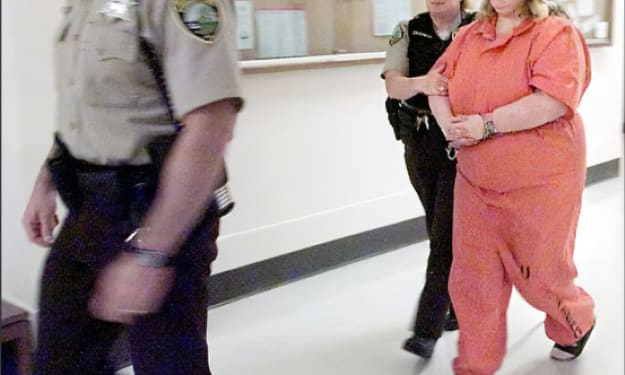
Incarceration, rehabilitation, recidivism: The reality of prison life and what it's like to be an inmate locked up behind bars.
The bender family lived together and killed together.
While some children are forced to murder by their parents others are ready and willing to kill. For the family on the prairies of Kansas in the 1870s, passing travelers stopped to see a Wild West Medicine Show. The frontier men are mesmerised by a beautiful young woman who offers spiritual cures for earthly ills. Kate Bender was a very pretty woman. It's been said that she had lips. She was around five six and a very slender woman She had quite a bit of class. She wasn't like most of the women here in the prairie area. She was very outspoken and quite the talker. She did seances, maybe she would laugh and flirt through this kind of thing. She was a lure.
By Lesedi Molutsi2 years ago in Criminal
Kate was always given credit for slitting the throats from ear to ear.
What kind of parent will ask their child to kill. Children cannot say no to a parent that wants them to kill. They compared her to Charles Manson in the Wild West. The family business is murder. Kate was always given credit for slitting the throats from ear to ear. A terrifying mother has a deadly request. Murder is a family affair it runs in the bloodlines. On a quiet April day in 2001 Greg Hyman visits his sick father. Something is very wrong, the house has been emptied. Korea his grandmother suffering from Alzheimer's has been abandoned, slowly starving, she had survived by eating newspapers, the only thing she could reach.
By Lesedi Molutsi2 years ago in Criminal
Anu Singh decides to host a dinner party with her own death as the main attraction.
It was a dinner invitation they couldn't refuse. It's wonderful occasion Anu singh has enticed her fellow law students with a spine-chilling promise. She told a whole bunch of people ‘I'm gonna commit suicide come to my place and we'll have a farewell dinner’. One person doesn't know of her sinister plan, her fiance Joe. Somewhere in that process she said to herself well if I am going to die Joe should die too. It is beyond my comprehension that those at the party that knew what this was all about did not speak up speak up and stop it.
By Lesedi Molutsi2 years ago in Criminal
This man was a hero, he survived five tours of duty in the Middle East and yet he could not survive five months of marriage
It's after midnight on the edge of a ranch stock pond in Texas, Wendy Davidson has something she desperately needs to hide. She knew that if she dumped him in water his body would rise to the surface pretty fast.
By Lesedi Molutsi2 years ago in Criminal
Robert Pickton butchered female sex workers and feed them to his pigs
Robert Pickton, a name synonymous with terror and depravity, is did so many heinous acts shocked the world. His story is not just about the gruesome murders he committed but also about the failures of the justice system and the deep societal issues that allowed his atrocities to go unchecked for far too long. Born on October 24, 1949, in Port Coquitlam, British Columbia, Robert William Pickton grew up in a farming family. The Pickton family operated a pig farm, which would later become the haunting grounds for Pickton's murderous rampage. Despite his unassuming appearance and seemingly normal upbringing, Pickton harbored dark desires that would eventually consume him and terrorize a nation. Pickton's descent into darkness began in the late 1990s when women began disappearing from Vancouver's Downtown Eastside, a neighborhood known for its poverty and high rates of drug addiction and prostitution. The marginalized status of these women made them easy targets for predators like Pickton, who prowled the streets in search of vulnerable victims. It wasn't until 2002 that authorities finally caught wind of the horrors unfolding at the Pickton farm. What they discovered was beyond comprehension. The farm, which had once been a place of agricultural activity, had become a grisly graveyard. The remains of numerous women were found buried in shallow graves, dismembered and discarded like trash. The extent of Pickton's depravity was staggering, with evidence suggesting that he may have killed as many as 49 women. As the details of Pickton's crimes emerged, the public was left reeling in shock and disbelief. How could such atrocities go unnoticed for so long? Questions were raised about the adequacy of the police response and the systemic failures that allowed Pickton to evade capture for years. The victims, many of whom were Indigenous women, had been failed by a society that had turned a blind eye to their struggles. The trial of Robert Pickton, which began in 2007, provided further insight into the mind of a serial killer. Pickton, who initially faced 26 counts of murder, was eventually convicted of six counts and sentenced to life in prison without the possibility of parole for 25 years. Throughout the trial, Pickton showed no remorse for his actions, displaying a chilling indifference to the suffering he had caused. The case of Robert Pickton serves as a sobering reminder of the dangers that lurk in the shadows of society. It exposes the vulnerabilities of marginalized communities and the failures of the justice system to protect those most in need. But it also highlights the resilience of those affected by his crimes, as they continue to seek justice for their loved ones and strive to prevent similar tragedies from occurring in the future. In the years since Pickton's arrest, efforts have been made to address the systemic issues that allowed his crimes to occur. Initiatives aimed at supporting vulnerable women, improving access to addiction treatment and mental health services, and reforming law enforcement practices have been implemented in an effort to prevent similar tragedies from happening again. However, the legacy of Robert Pickton continues to cast a long shadow, serving as a grim reminder of the capacity for evil that exists within the human psyche. As we reflect on the case of Robert Pickton, we must not only remember the lives that were lost but also strive to create a society where such horrors are no longer possible. It is only by addressing the root causes of violence and inequality that we can hope to prevent the rise of another monster like Robert Pickton. Until then, his name will remain etched in the darkest corners of our collective memory, a chilling reminder of the darkness that lies within us all.
By Deji Akomolafe2 years ago in Criminal
Timothy Jones Jr. Strangled Is Children To Death
Timothy Jones Jr. believed so much in corporal punishment and on that one day, one of his sons, broke an electric outlet, and what followed was a rage that led him to strangle five of his children to death. 9 days later, their bodies were found in black trash bags in Alabama. The story goes this: In the quiet town of Lexington, South Carolina, a series of events unfolded that would shock the nation and leave a community reeling. At the center of this tragedy was Timothy Jones Jr., a man whose name would become synonymous with unspeakable horror. His story is one of anguish, mental health struggles, and the devastating consequences that can result when individuals slip through the cracks of a broken system. Timothy Jones Jr. was born on May 19, 1982, in Alabama. From the outside, his upbringing seemed relatively normal. However, behind closed doors, there were signs of trouble brewing. Reports indicate that Timothy struggled with mental health issues from a young age, exhibiting symptoms of bipolar disorder and schizophrenia. Despite his parents' efforts to seek help for their son, the resources available were limited, and Timothy's condition worsened over time. As Timothy entered adulthood, his mental health deteriorated further. He struggled to hold down a job and maintain stable relationships. His behavior became increasingly erratic, and he isolated himself from friends and family. Despite multiple attempts at intervention, including hospitalizations and therapy sessions, Timothy's condition continued to spiral out of control. The breaking point came in August 2014 when Timothy Jones Jr. committed an act so heinous that it would forever change the lives of those involved. In a fit of rage, Timothy murdered his five young children, ages 1 to 8, in their home. He then drove their bodies across several states before dumping them in rural Alabama. The news sent shockwaves through the community and left many questioning how such a tragedy could have occurred. In the aftermath of the murders, details of Timothy Jones Jr.'s troubled past began to emerge. Reports revealed a history of substance abuse, financial difficulties, and strained relationships with his ex-wife, who was the mother of the children. Mental health professionals who had interacted with Timothy expressed frustration at the lack of adequate resources and support available to individuals like him. The case also shed light on the shortcomings of the mental health care system in the United States. Despite numerous red flags and warning signs, Timothy Jones Jr. slipped through the cracks, failing to receive the help and support he so desperately needed. Many argued that if proper interventions had been in place, perhaps this tragedy could have been prevented. In September 2019, Timothy Jones Jr. was found guilty of five counts of murder and sentenced to death. The trial brought closure to some, but the scars left by his actions will never fully heal. The case serves as a sobering reminder of the devastating impact that untreated mental illness can have on individuals, families, and communities. In the years since the tragedy, efforts have been made to improve mental health care services and support networks. Advocates have called for increased funding, better access to treatment, and destigmatization of mental illness. While progress has been made, there is still much work to be done to ensure that individuals like Timothy Jones Jr. receive the help they need before it's too late. As we reflect on the story of Timothy Jones Jr., we are reminded of the importance of compassion, understanding, and empathy. Mental illness is not a choice, but a complex and often debilitating condition that requires proper care and support. By coming together as a society, we can work towards a future where tragedies like this are no longer a reality, and all individuals have the opportunity to lead healthy and fulfilling lives.
By Deji Akomolafe2 years ago in Criminal
Lynn was dangerous to any man who had a wallet and a badge.
A police officer Glenn Turner was too young to die. Just 31 he has suffered a slow agonizing death. As Glenn's family and colleagues mourn, one person barely sheds a tear, his wife. There are certain women who are attracted to cops. Lynn turner is one of those women. Some women have an erotic attraction to power, uniforms and Badges. They represent power and authority in our society. Working in police radio dispatch the glamorous 22 year old is surrounded by the men she craves, but Lynn Turner's smile hides a darker side. She is aggressive, manipulative and controlling. In Cobb County Georgia police officer Mike Archer knew her as a woman to keep away from. She did not have a real good reputation and she was just kind of sneaky.
By Lesedi Molutsi2 years ago in Criminal
"The Mystery of Jessica Chambers: Unraveling the Tragic Truth
1. **Scene of the Crime**: On December 6, 2014, crisis administrations answered a vehicle fire on a provincial street in Courtland, Mississippi. Firemen found a seriously consumed young lady, Jessica Path Chambers, staggering from neighboring underbrush. Regardless of extreme consumes covering 93% of her body, Jessica was alive and ready to talk, expressing names like "Eric" or "Derek."
By Animated Detective2 years ago in Criminal
Kendall Francois murderer 8 Sex workers in 1998
Kendall Francois is a man whose outwardly unassuming demeanor belied a monstrous reality lurking within. His story serves as a chilling reminder that evil can sometimes dwell in the most unexpected of places. Born on July 26, 1971, in Poughkeepsie, New York, Kendall Francois grew up in a seemingly ordinary suburban neighborhood. His early years were unremarkable, marked by the typical rites of passage of adolescence. However, beneath this veneer of normalcy, dark impulses were simmering within Francois, waiting to be unleashed upon an unsuspecting community. It wasn't until 1996 that Francois's reign of terror would begin in earnest. Over a period of two years, a string of disappearances sent shockwaves through Poughkeepsie, leaving residents gripped by fear and uncertainty. The victims, mostly young women of color, seemed to vanish without a trace, leaving behind grieving families and a community on edge. Despite the efforts of law enforcement, the perpetrator remained elusive, his identity shrouded in mystery. It wasn't until September 1, 1998, that the truth would finally come to light. Acting on a tip from a street informant, police descended upon 99 Fulton Avenue, the home where Kendall Francois resided with his parents and sister. What they discovered inside was beyond comprehension. Hidden within the confines of Francois's home were the bodies of eight women, their remains concealed in various locations throughout the house. The full extent of Francois's depravity was laid bare for all to see, sending shockwaves through the community and beyond. The ensuing investigation revealed a disturbing portrait of a man who had managed to live a double life, concealing his heinous crimes behind a façade of normalcy. To those who knew him, Francois was a quiet and unassuming individual, someone who blended into the background without attracting undue attention. Yet beneath this outward persona lurked a predator, preying upon the vulnerable with impunity. As details of Francois's crimes emerged, the true horror of his actions became apparent. His victims, many of whom were known to him personally, had been subjected to unspeakable acts of violence before meeting their tragic end. The discovery of their bodies offered a grim glimpse into the depths of human depravity, leaving an indelible mark on all who bore witness to the aftermath. In the aftermath of Francois's arrest, the question on everyone's minds was how such a monster could have operated undetected for so long. The answer, it seemed, lay in the very fabric of society itself—a society that too often turns a blind eye to the suffering of the marginalized and vulnerable among us. In the years since his capture, Kendall Francois has become a cautionary tale—a chilling reminder of the dangers that lurk beneath the surface of everyday life. His crimes serve as a sobering reminder that evil can sometimes wear a familiar face, lurking in the shadows of our communities undetected until it's too late. Yet, even amidst the darkness of Kendall Francois's crimes, there are glimmers of hope to be found. In the aftermath of his arrest, the community of Poughkeepsie rallied together, offering support to the families of the victims and vowing to never forget those whose lives were tragically cut short. It is in moments of adversity that the true strength of a community is revealed, and Poughkeepsie proved itself to be resilient in the face of unspeakable tragedy. As we reflect on the legacy of Kendall Francois, let us not dwell solely on the horror of his crimes, but also on the resilience of those who refused to let his darkness consume them. May the memory of his victims be honored, and may their stories serve as a reminder of the importance of remaining vigilant against the forces of evil that seek to divide us.
By Deji Akomolafe2 years ago in Criminal
China Arnold was Convicted for Microwaving Her 28-day-old Baby
In 2005, China Arnold was a young mother living in a low-income neighborhood in Dayton. She had a troubled past, marked by substance abuse and brushes with the law. But nothing could prepare the community for the horrific crime that unfolded in August of that year. Arnold's infant daughter, Paris, was just 28 days old when she died. The cause of death was determined to be hyperthermia—overheating—due to being placed in a microwave oven. The details of the crime were shocking and deeply disturbing, prompting widespread outrage and disbelief. As the investigation unfolded, it became clear that Arnold had been drinking heavily on the night of her daughter's death. She had been involved in a heated argument with her boyfriend, Terrell Talley, who was the father of Paris. In a fit of rage, Arnold had allegedly placed her daughter in the microwave and turned it on. The case garnered significant media attention, with reporters and legal experts speculating on Arnold's mental state at the time of the crime. Questions arose about her capacity to understand the consequences of her actions and whether she was fit to stand trial. Arnold's defense team argued that she suffered from a combination of mental illness and substance abuse issues, which impaired her judgment and decision-making abilities. They painted a picture of a troubled woman who had been failed by the system and society at large. However, prosecutors portrayed Arnold as a cold and calculating murderer who was fully aware of her actions. They pointed to her history of substance abuse and criminal behavior as evidence of her culpability. In 2008, Arnold stood trial for the murder of her daughter. The proceedings were emotional and contentious, with witnesses providing conflicting testimony about Arnold's mental state and intentions on the night of the crime. Ultimately, the jury found Arnold guilty of aggravated murder, and she was sentenced to life in prison without the possibility of parole. The verdict was met with mixed reactions, with some applauding the decision as justice for Paris, while others expressed sympathy for Arnold's troubled past. The case of China Arnold continues to raise important questions about mental illness, substance abuse, and the criminal justice system. It serves as a sobering reminder of the complex factors that can lead to such senseless acts of violence and the challenges of achieving justice in their aftermath. As we reflect on this tragic story, we must strive to address the underlying issues of poverty, addiction, and mental health that contribute to such tragedies. Only by understanding and confronting these root causes can we hope to prevent similar crimes from occurring in the future. The impact of China Arnold's crime extended far beyond the courtroom. It left a scar on the community of Dayton, Ohio, and sparked conversations about the inadequacies of the social safety net and the failures of the criminal justice system to address the underlying issues of poverty and mental illness. In the years following Arnold's conviction, efforts were made to improve access to mental health services and support for at-risk families in Dayton and across the country. However, the case also highlighted the deep-rooted challenges of addressing systemic issues such as poverty and addiction, which continue to plague communities nationwide. For Arnold herself, life behind bars has been a grim reality. Serving a sentence of life without parole, she remains incarcerated, a symbol of the devastating consequences of untreated mental illness and addiction. But amid the tragedy and despair, there are also glimmers of hope. Organizations and advocates continue to work tirelessly to address the root causes of crime and to support individuals and families in crisis. From community-based mental health programs to initiatives aimed at breaking the cycle of poverty, there is a growing recognition of the need for holistic approaches to addressing complex social problems. The case of China Arnold may be a dark chapter in our history, but it also serves as a reminder of the resilience of the human spirit and the power of communities coming together to effect positive change. As we strive to build a more just and compassionate society, let us honor the memory of Paris Arnold and all those who have been impacted by violence and injustice, by redoubling our efforts to create a world where every child is valued, every family supported, and every individual given the opportunity to thrive.
By Deji Akomolafe2 years ago in Criminal