incarceration
Incarceration, rehabilitation, recidivism: The reality of prison life and what it's like to be an inmate locked up behind bars.
Bloodlines of Betrayal
M Mehran The streets of Karachi never slept, but some nights were darker than others. Tonight was one of them. The neon lights flickered against rain-soaked pavement, casting distorted reflections of the city’s hidden underworld. And somewhere in the shadows, Adeel Javed, known in whispers as The Fox, prepared for a night that could change everything. Adeel was no ordinary criminal. Born into a family where loyalty and deception coexisted uneasily, he learned early that trust was a currency more fragile than gold. His father, once a respected trader, had been murdered by a rival clan when Adeel was only twelve. That night, he vowed never to be a victim again. Years passed, and Adeel honed his skills—not just in fighting, but in reading people. He understood fear, manipulation, and strategy in ways that made him lethal without firing a single shot. His network stretched across Karachi: informants in every market, contacts in every alley, and ears in every tavern. Yet, despite his growing empire, Adeel remained invisible, a shadow moving unseen. Tonight, his target was Malik Shah, a corrupt politician rumored to deal in arms and money laundering. The plan was simple: infiltrate Malik’s high-security estate during the annual masquerade gala, retrieve incriminating documents, and leave before anyone noticed. But in Adeel’s world, simple was never easy. Dressed in a tailored suit and a Venetian mask, he entered the grand hall, blending seamlessly with wealthy socialites unaware of the danger in their midst. Crystal chandeliers sparkled above, and the soft hum of a string quartet filled the room. Adeel’s eyes, however, never lingered on the opulence—they scanned exits, guards, and vulnerabilities. He approached the study, where Malik had been rumored to keep his secrets. A narrow corridor, guarded by two men, stood in his way. But Adeel was the Fox, not a brute. With a whispered distraction and a carefully timed flicker of light, he led the guards away from the entrance. In moments, he was inside. The office was a testament to Malik’s arrogance: thick mahogany furniture, shelves filled with expensive books, and a safe hidden behind a painting. Adeel worked quickly, bypassing the intricate locks with the skill of a master thief. Documents were packed into a small leather satchel, enough to topple Malik’s empire and expose years of criminal activity. But as he prepared to leave, the sound of a gun cocking froze him. “Didn’t expect me, did you, Fox?” a voice sneered. Malik himself, holding a silenced pistol, stepped from the shadows. Adeel smiled faintly. “I thought you’d be more careful, Malik. Yet, here we are.” The two men circled each other, tension thick enough to choke the air. Malik fired once, narrowly missing Adeel, who rolled behind a grand desk. Time slowed. Every move, every decision mattered. One mistake, and it would be over. Adeel noticed the floorboard near Malik’s feet was loose. A quick step, a flick of the satchel, and Malik’s balance betrayed him. The gun slipped from his hand as he crashed to the floor, dazed. Adeel moved swiftly, pinning Malik and pressing the barrel of a small pistol to his temple. “You’ll pay for every life you’ve ruined,” Adeel said quietly. Malik’s eyes widened in fear. Instead of killing him, Adeel made his choice. He took photos of the documents with his encrypted phone, leaving Malik alive, humiliated, and powerless. This was Adeel’s code: strike hard, but with purpose. Kill only when necessary, expose corruption whenever possible. By dawn, the gala continued as if nothing had happened. Malik returned to his guests, unaware that his empire had already begun crumbling. And somewhere in the streets of Karachi, Adeel vanished, leaving behind only the legend of the Fox, the man who punished with intelligence, not brute force. As the city awoke to its daily chaos, whispers of Adeel’s latest heist spread quietly among the underworld. No one knew where he would strike next, or if they ever would. But one thing was certain: in a world ruled by betrayal and greed, Adeel Javed remained untouchable, a shadow of justice, cunning and relentless.
By Muhammad Mehranabout a year ago in Criminal
The Shadow of Peshawar
M Mehran In the narrow alleys of Peshawar, the city breathed in whispers. Everyone had a story, but few dared to tell the truth. Among them, one name carried fear like a shadow: Zahid Khan, a man whose reputation straddled the line between legend and nightmare. Zahid wasn’t born a criminal. Once, he had a small shop selling trinkets near Qissa Khwani Bazaar. But fate, as cruel as it often is, left him destitute when a fire destroyed his shop. The insurance never paid, and the banks refused mercy. It was hunger and desperation that first pushed him to steal a loaf of bread. That act was the spark; what followed was fire. Years passed, and Zahid transformed into the city’s most notorious figure. The police knew him by sight, traders by rumor, and even children whispered his name in fear. But what made Zahid dangerous wasn’t his skill with a gun or his network of thieves—it was his mind. He planned, calculated, and executed with precision. Every move was a chess piece; every step, a story in itself. One humid evening, Zahid walked into the dimly lit tea shop near Chowk Yadgar. His sharp eyes scanned the room. In the corner, a young man with nervous hands was counting notes too quickly. Zahid recognized him immediately—Arman, a small-time pickpocket trying to step into the bigger league. “Careful,” Zahid murmured, his voice low, almost a warning. Arman froze, his heart pounding in rhythm with the old ceiling fan’s creak. Zahid smiled faintly, the kind of smile that could cut deeper than a knife. “You want to survive here, you follow rules. And the first rule… never bite more than you can chew.” Arman nodded, swallowing his pride and fear. Zahid’s reputation was legendary, but few knew the man behind the shadow. Beneath the hardened exterior, Zahid had principles—a strange code that governed his criminal empire. He never harmed the innocent, never cheated those who trusted him, and always kept his word. It was a paradox that kept the authorities guessing: a criminal, yet oddly honorable. That night, a message arrived on Zahid’s old, cracked phone. “The consignment is delayed. Need plan B.” His brow furrowed. This wasn’t unusual. The city’s underworld was unpredictable, but something about this delay felt different. He gathered his trusted men in the warehouse near the outskirts of the city, the smell of diesel and rust thick in the air. “Listen,” Zahid said, his voice cutting through the tension. “This isn’t just about money anymore. Someone is trying to play us. We move tonight, or we risk losing everything.” His men nodded, their faces tight with resolve. They trusted him, feared him, and followed him without question. The night fell heavy, the streets of Peshawar nearly deserted, except for the occasional stray dog scavenging for leftovers. Zahid’s team moved silently, shadows among shadows, to the location where the consignment was supposed to arrive. A single streetlamp flickered above, painting the scene in intermittent light. Then, the ambush. Men masked and armed blocked the alley, their weapons glinting under the weak light. Zahid’s instincts kicked in. Years of surviving the streets, escaping police raids, and dodging betrayals sharpened his senses. He gave a quick signal, and his men split strategically. Chaos erupted—gunfire, shouts, and the metallic echo of fear. Zahid ducked behind a rusted cart, watching carefully. He noticed the leader of the ambushers, a man with a scar across his cheek, shouting orders. Zahid’s lips curled into a small grin. He had been expecting this. With a precision only he could manage, he launched a counterattack. Within minutes, the attackers were either subdued or fleeing, leaving behind empty crates and confusion. By the time dawn painted the city in hues of orange and gold, Zahid was already gone. The alley was silent again, save for the faint clatter of broken crates. News would spread quickly: the city’s shadow had struck again. But Zahid? He vanished into the maze of the city, leaving only whispers behind. Some said Zahid Khan was unstoppable. Others claimed he was a myth, a story told to keep children from wandering too far. But those who had crossed him, or worse, trusted him, knew the truth: Zahid was more than a criminal. He was the shadow of Peshawar—relentless, calculating, and unforgettable. And as the city woke to its usual chaos, Zahid walked the streets in plain sight, a ghost among the living, already planning his next move.
By Muhammad Mehranabout a year ago in Criminal
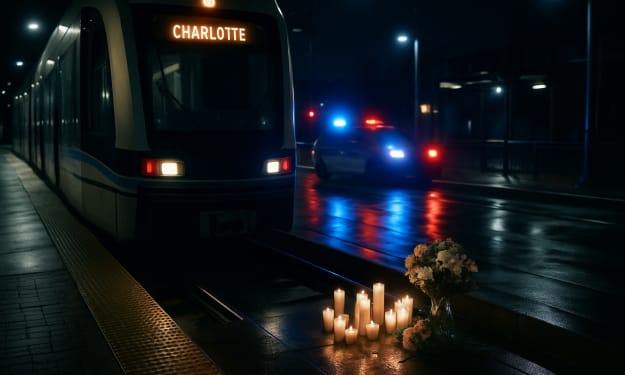
Girl Stabbed to Death on North Carolina Train: What We Know So Far
The Incident On a routine NC train ride through Charlotte, tragedy struck when Iryna Zarutska, a Ukrainian refugee, was fatally stabbed. Witnesses reported chaos on board as passengers attempted to intervene and authorities rushed to respond.
By KAMRAN AHMADabout a year ago in Criminal
The Rise of New Powers After World War 3
The Rise of New Powers After World War 3 How Global Conflict Could Reshape the Balance of Power If a Third World War were to break out, the devastation would not be limited to battlefields and bombed-out cities. The conflict would also dismantle the political and economic order that has defined the modern age. Nations that survive the opening strikes would likely emerge wounded and exhausted, leaving room for new players to step forward. History reminds us that every great conflict rearranges the balance of power. After the First World War, vast empires collapsed. After the Second, the United States and the Soviet Union rose to dominate global affairs. Should another world war erupt, a similar shift—though perhaps far more dramatic—would be inevitable.
By Wings of Time about a year ago in Criminal
The Queen of Canada
It can be very hard to be a Canadian. September has arrived, and I can feel a change in the air. The weather is still sunny and bright, but cool air now circulates around my legs and I can feel it on my runs and trips to local markets, cafés and parks. I have begun a few classes, ended others, considered how to pay my bills while waiting for money to come in, and thought about what the next few months will bring.
By Kendall Defoe about a year ago in Criminal
From Defense to War: What a U.S. “Ministry of War” Would Mean
What if the United States government announced tomorrow that it was renaming the Department of Defense to the Ministry of War? At first glance, it might seem like nothing more than a change in language. But in politics, language is never just language—it shapes perception, frames policy, and influences how nations see themselves and one another. A shift in terminology from “defense” to “war” would represent a dramatic transformation in America’s identity and global posture.
By Muhammad Ibrahimabout a year ago in Criminal
Murderer at 14. Content Warning.
This true crime story involves a young girl from Jacksonville, Florida, who reportedly went missing for six days until she was found dead in a teenage boy's room. The boy was named Josh Phillips, a 14-year-old who committed an unbelievable that no teen would ever commit upon a child.
By Gladys W. Muturiabout a year ago in Criminal
Crime Chronicles: The Werewolf of Wysteria
A Quick Warning: Guys and Gals, this is an important piece of info so please read carefully. This article is going to delve into some really dark, messed up stuff including graphic descriptions of violence committed against children. There are also excerpts and notes written by our villain of the story with some profanity and other potentially upsetting stuff. These have been included because they are part of the story, they're there for the sake of completion and nothing more.
By Greg Seebregtsabout a year ago in Criminal
🌍 World War 3: The Sparks That Could Ignite a Global Firestorm
The Sparks That Could Ignite a Global Firestorm Introduction: A World on Edge The world has always lived under the shadow of war, but today the fear of World War 3 feels more real than ever before. From Europe to Asia, the Middle East to South America, conflicts are spreading at an alarming pace. Military buildups, border clashes, cyberattacks, and economic sanctions are becoming the new normal.
By Wings of Time about a year ago in Criminal