incarceration
Incarceration, rehabilitation, recidivism: The reality of prison life and what it's like to be an inmate locked up behind bars.
As American Warships Lurk in Venezuela, Fear and Hope
As one speaker after another, microphone in hand, called on the hundreds of government supporters in one part of the city to defend the country with their lives, hundreds of them held their rifles to their chests.
By Francis Damiabout a year ago in Criminal
A Forensic Theory Rooted in Empathy and Accountability
Views Expressed Disclaimer: The views, thoughts, and opinions expressed in the text and article belong solely to the author in their private capacity as a citizen whose intent is to be constructive, help balance the needs of society, and achieve a successful outcome for all parties involved. These views do not reflect the views, policies, or positions of the author’s employer, any specific state or federal government agency, organization, committee, or other group. The information provided is for general informational purposes only and is not intended to be a substitute for professional advice. Furthermore, this work was completed exclusively using personal time and resources.
By s.hogan.jrabout a year ago in Criminal
New Surveillance Footage and Prison Leak Renew Questions in the Bryan Kohberger Case
The case against Bryan Kohberger, the man who admitted to killing four University of Idaho students in November 2022, continues to evolve—even after his guilty plea. Recent developments have revealed previously unseen surveillance footage and sparked a separate investigation into a leaked video from inside an Idaho prison. Together, these updates shed new light on both the night of the murders and the challenges facing investigators, corrections staff, and the community in the aftermath.
By Lawrence Leaseabout a year ago in Criminal
From Heiress to IRA Revolutionary
Rose Dugdale was born into a life of privilege. She was a British heiress who was due to inherit a large fortune. However, this was not the life Dugdale dreamed for herself. She would give it all up to become a militant freedom fighter.
By Sam H Arnoldabout a year ago in Criminal
Murder Inside ADX Florence: The “Alcatraz of the Rockies"
On April 21, 2005, at America’s most secure federal prison—ADX Florence in Colorado—guards made a shocking discovery. Inside the recreation yard of the so-called “Alcatraz of the Rockies,” an inmate was found bloodied, motionless, and near death.
By Lawrence Leaseabout a year ago in Criminal
Pro Bono Paralegal Mind Sharing
Not plageurizing. Prompted by this article: https://people.com/where-are-ruby-franke-jodi-hildebrandt-now-8733975 Ruby Franke. Charged with Child Abuse. Confessed. Serving time. A very provocative case. Her partner-in-crime: Jodi Hildebrandt. Same charge. Same situation. Did the system fail them? Is this justice or another case for a legal mind to use as an example of a Conflict of Interest between Human Rights and The Constitution of the United States of America? Both. This is why I wish to share my paralegal mentality for a defence for the two women aforementioned.
By Shanon Angermeyer Normanabout a year ago in Criminal
33 Most Dangerous Prisoners Inside Texas Most Secure Prisons
33 - Holly Elkins. Holly Ann Elkins was convicted for her role in the 2020 murder of Alyssa Ann Burkett who was the ex-girlfriend of Elkins' fiancé Andrew Beard and was shot and stabbed to death in a parking lot.
By Vidello Productionsabout a year ago in Criminal
Michel Praddo Diabão: The Extreme Tattoo Artist Who Cut Off His Ears to Celebrate Freedom. AI-Generated.
Michel Praddo Diabão: The Extreme Tattoo Artist Who Cut Off His Ears to Celebrate Freedom Picture this: it's late 2020, and the world starts to breathe easier as mask rules fade away. In Brazil, one man takes it to a wild level. Michel Praddo, better known as Diabão, grabs a tool and slices off both his ears. This shocking move screams rebellion against lockdown blues. As Michel Praddo Diabão, he's a tattoo king with over 85% of his skin inked. His story shows how far some go for self-expression. It mixes body mod extremes with a fight for personal freedom during tough times.
By Story silver book about a year ago in Criminal
How the U.S. Government Turned Crack Into a Weapon — And Why the Legacy Still Shapes Inequality Today
This article was researched and drafted with the assistance of AI technology. All facts, quotes, and historical references have been cross-verified for accuracy. The perspective, framing, and responsibility for this work belong to the author.
By DJ for Changeabout a year ago in Criminal
Breaking Down the Charlie Kirk Shooting: DNA Evidence, Digital Trails, and Unanswered Questions
The story of Charlie Kirk’s shooting in Utah has moved fast — sometimes too fast for the public to keep up. In just a matter of days, what began as chaos at Utah Valley University has shifted into a case with DNA links, alleged digital confessions, and a suspect whose politics and personal life are under the microscope.
By Lawrence Leaseabout a year ago in Criminal
The Secret Ukraine-Russia Tech War: Drones, Cyberattacks & Global Threats
The Secret Ukraine-Russia Tech War: Drones, Cyberattacks & Global Impact In the 21st century, wars are no longer just fought on the ground with tanks and soldiers. The ongoing conflict between Ukraine and Russia has evolved into a high-tech battlefield, where drones, cyberattacks, satellites, and AI-assisted systems are reshaping the rules of modern warfare. What started as a traditional military confrontation has now become a secret war of technology, drawing attention from the entire world.
By Wings of Time about a year ago in Criminal
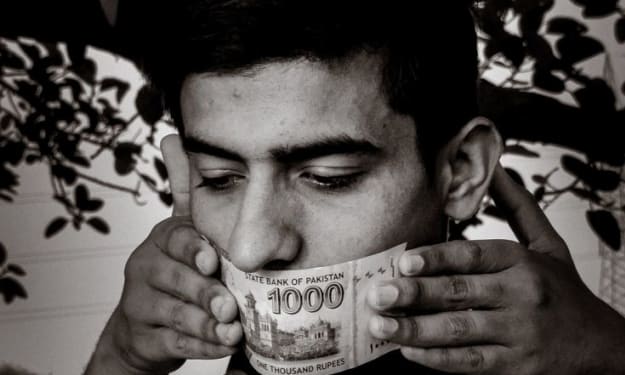
The Silent Dealer
M Mehran The city of Islamabad gleamed under the cold winter moon, its streets quiet except for the occasional rickshaw rattling down narrow lanes. But in the shadows, a different rhythm existed—a rhythm dictated by someone the police barely believed existed: Rafiq, known in the underworld as The Silent Dealer. Rafiq didn’t need a reputation; his work spoke for itself. While others thrived on noise, violence, or spectacle, he thrived on invisibility. No one saw him coming, no one traced his steps. His transactions were clean, his presence nearly mythic. Rumor said he could acquire anything—information, weapons, or even secrets that could ruin the powerful. Tonight, Rafiq walked briskly down a back alley near F-7, a small leather satchel clutched in his hand. Inside was the prize: stolen microchips from a foreign tech company, smuggled in through the airport. The chips were worth millions on the black market, but for Rafiq, money was secondary. Influence was the game. Whoever controlled information controlled the city. He reached the meeting point, an abandoned warehouse at the edge of the city, where two men waited nervously. They were newcomers, eager to impress, unaware that Rafiq’s reputation was more than just a name—it was a warning. “Do you have it?” one asked, voice shaky. Rafiq didn’t answer. He opened the satchel slowly, revealing the microchips gleaming under the flickering fluorescent light. The men’s eyes widened, and greed replaced their fear. “Impressive,” the other said. “But how do we know you’re not—” Rafiq raised a hand. Silence. That was all it took. He didn’t shout, threaten, or brandish a weapon. The mere calmness in his voice, the precision in his movements, made them pause. In that moment, they understood: crossing Rafiq was a mistake they could never undo. Suddenly, a loud crash echoed from the warehouse entrance. Rival smugglers, tipped off by an anonymous source, stormed inside. Guns were drawn, chaos erupted. Rafiq moved like water. He was never the first to attack, but always the last to leave. With calculated steps, he navigated through the melee. One man lunged, and Rafiq sidestepped, using the intruder’s momentum to throw him against a crate. Another aimed at his chest, but Rafiq, anticipating the shot, dropped and rolled, leaving the bullet to shatter the wall behind him. Every move was deliberate, every step measured. Within minutes, the attackers were subdued, some fleeing in panic, others groaning on the cold floor. Rafiq’s calmness never wavered. He collected the two nervous men, handed them a portion of the microchips, and spoke in a tone that brooked no argument: “This is your share. Keep quiet, stay alive, and remember: the city is bigger than greed. Respect it.” By the time dawn broke over Islamabad, the warehouse was empty. No one could trace Rafiq’s movements. The microchips had vanished from the black market, now in the hands of those who knew their place, and the city returned to its normal hum, oblivious to the storm that had passed. Rafiq returned to his modest apartment, a small room cluttered with books, maps, and a laptop covered in stickers. Unlike others in his line of work, he didn’t crave luxury or fame. His satisfaction came from control—the invisible strings he could pull to orchestrate events, manipulate outcomes, and remain untouchable. Yet, even he knew danger was never far. In his world, trust was a rare commodity, betrayal a constant companion. One slip, one wrong move, and everything could end. But Rafiq had learned to thrive in the shadows, to read people like an open book, and to survive where others fell. As Islamabad stirred awake, the legend of the Silent Dealer grew, whispered among criminals, traders, and those seeking information. Some dismissed him as myth, but those who had crossed him—or worked for him—knew better. Rafiq didn’t need recognition. He didn’t seek fame. He needed only one thing: to remain untouchable, a ghost moving silently through the city, always two steps ahead of everyone else. And in the quiet of his apartment, sipping tea while monitoring the city through encrypted feeds, Rafiq smiled faintly. The city slept, unaware that the Silent Dealer was watching, planning, surviving—always one step ahead.
By Muhammad Mehranabout a year ago in Criminal