fact or fiction
Is it fact or merely fiction? Fact or Fiction explores the myths and beliefs we hold about copycat killers, eyewitnesses testimony, what makes a murderer and more.
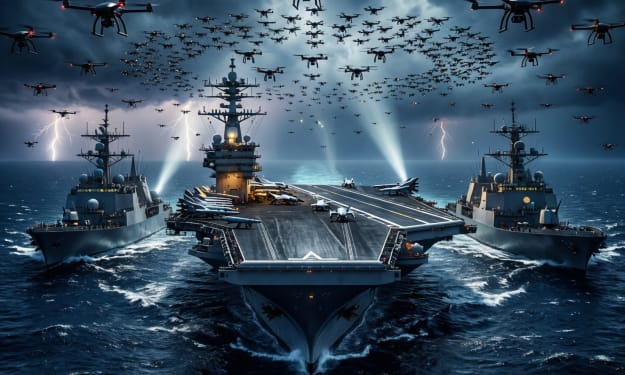
Can Aircraft Carriers Survive the Drone Age?
Can Aircraft Carriers Survive the Drone Age? For more than seventy years, aircraft carriers have stood at the center of global military power. They are mobile airbases, capable of projecting force anywhere on the planet without relying on foreign soil. Their presence alone can alter diplomacy, deter rivals, and reassure allies. But a new challenge is rising—quietly, cheaply, and rapidly. The age of drones is forcing militaries to confront an uncomfortable question: are aircraft carriers becoming vulnerable giants in a world of unmanned warfare?
By Wings of Time 10 months ago in Criminal
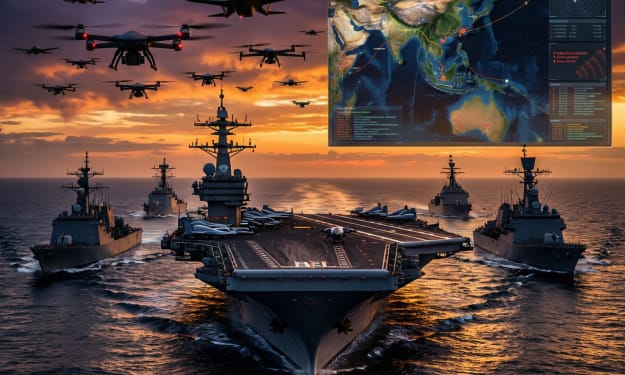
Drones vs Aircraft Carriers
Drones vs Aircraft Carriers For decades, aircraft carriers have symbolized ultimate military power. They are floating cities, armed with fighter jets, guided missiles, radar systems, and layered defenses. A single carrier strike group represents not just military strength, but political will. Wherever it sails, it sends a message: power has arrived.
By Wings of Time 10 months ago in Criminal
Floating Power and Fragile Diplomacy
Floating Power and Fragile Diplomacy In recent weeks, renewed attention on U.S. naval movements, particularly carrier strike groups operating across strategic waterways, has highlighted a deeper shift in how global power is projected. From the South China Sea to the Indian Ocean, the presence of American naval assets is no longer just a show of strength—it is a message shaped by technology, deterrence, and fragile diplomacy.
By Wings of Time 10 months ago in Criminal
🔥New ICE Policy Sparks Outrage After Allowing Officers to Enter Homes Without Court‑Approved Warrants
Federal law enforcement agents gather outside a private residence in St. Paul, Minnesota, on January 18, 2026. Samuel Doe woke before the sun did. Some instinct — ancient, animal — pulled him out of sleep. The house was still, the kind of stillness that comes before something breaks it. His three kids slept in the next room, their soft breathing the only proof that the world was still gentle somewhere.
By Press Release 10 months ago in Criminal
My Husband’s Dark Price for Wealth
Please don't be a ghost reader, do engage, let me also learn from you My husband asked me to ab0rt our babies for money r!tual after four years of childlessness, so that he can make money and take care of his poor mother and also relocate to UK.
By Edward Smith10 months ago in Criminal
Donald Trump Threatens to Strike Mexico: A New Escalation in Political Rhetoric
Donald Trump Threatens to Strike Mexico: A New Escalation in Political Rhetoric Recent statements attributed to former US President Donald Trump have sparked widespread debate after he suggested the possibility of military action against Mexico. The comments, framed around combating drug cartels and cross-border crime, immediately drew attention from media outlets, political analysts, and the public. While such remarks are not entirely new in Trump’s political style, the idea of striking a neighboring sovereign nation has raised serious concerns about diplomacy, international law, and regional stability. WHY DID TRUMP THREATEN TO STRIKE MEXICO Trump’s threat is rooted in his long-standing criticism of Mexico’s handling of drug trafficking and illegal immigration. He has repeatedly accused Mexican authorities of failing to stop powerful drug cartels that smuggle fentanyl and other narcotics into the United States. According to Trump, these cartels represent a direct national security threat, and extraordinary measures may be necessary to confront them. By floating the idea of military action, he positions himself as tough on crime and uncompromising on border security, themes that strongly resonate with his political base. IS TRUMP SERIOUS ABOUT MILITARY ACTION Many experts believe Trump’s comments are more rhetorical than operational. Historically, Trump has used provocative language to dominate headlines and frame himself as a decisive leader. However, even rhetorical threats carry weight, especially when they involve military force. While launching strikes against Mexico would face enormous legal, political, and logistical barriers, the seriousness lies in how such statements normalize extreme solutions and shift public discourse toward confrontation rather than cooperation. HOW DID MEXICO RESPOND TO THE THREAT Mexican officials have firmly rejected any suggestion of foreign military intervention. Leaders emphasized national sovereignty and stated that security challenges must be addressed through bilateral cooperation, intelligence sharing, and economic development. Mexico has consistently argued that drug consumption within the United States is a major driver of cartel power, making it a shared responsibility rather than a unilateral failure. Trump’s remarks were viewed by many in Mexico as disrespectful and politically motivated. WHAT WOULD A STRIKE MEAN FOR US MEXICO RELATIONS Any military action against Mexico would severely damage diplomatic relations between the two countries. The United States and Mexico share one of the most important trade relationships in the world, along with deep cultural, economic, and security ties. A strike would likely end security cooperation agreements, disrupt trade, and fuel anti-American sentiment across Latin America. Even discussing such a move creates uncertainty that can affect markets, migration policy, and regional alliances. CAN A US PRESIDENT LEGALLY ATTACK MEXICO Under international law, attacking another country without its consent or a clear act of self-defense would violate established norms. Domestically, a US president would face strong opposition from Congress, the military, and the intelligence community. Mexico is not officially considered an enemy state, and launching attacks on its territory would require extraordinary justification. Legal experts argue that targeting cartels inside Mexico without approval would set a dangerous precedent. HOW DID AMERICANS REACT TO TRUMP’S COMMENTS Public reaction in the United States has been sharply divided. Supporters praised Trump’s aggressive stance, arguing that traditional approaches have failed to stop drug trafficking. Critics, however, warned that such threats are reckless and could lead to unnecessary conflict. Many Americans expressed concern about escalating violence and the potential loss of life, both civilian and military. The comments also reignited debates about border policy, immigration, and the limits of presidential power. WHAT DOES THIS MEAN FOR THE 2024 ELECTION AND BEYOND Trump’s threat fits into a broader campaign strategy focused on law and order, national strength, and border control. By proposing extreme measures, he distinguishes himself from political rivals and keeps media attention focused on his agenda. Regardless of whether such actions ever materialize, the rhetoric itself influences public opinion and international perceptions of US foreign policy. It signals a willingness to challenge norms and could shape future debates about how the United States addresses transnational crime. In conclusion, Trump’s threat to strike Mexico represents more than a controversial soundbite. It highlights deep frustrations over drug trafficking, exposes fragile diplomatic balances, and underscores how powerful political language can be. Even without action, the consequences of such statements ripple far beyond campaign speeches, affecting trust, stability, and the future of US-Mexico relations.
By America today 10 months ago in Criminal
The Dark Side of Fame
The high-gloss world of indie-pop and the gritty reality of a missing person’s investigation collided in a way that no one could have predicted when the name David Anthony Burke—known to millions as d4vd—suddenly appeared on a police report for all the wrong reasons. In a digital age where the distance between a fan and an idol is often just a Discord message away, the tragedy of Celest Rivas Hernandez has become a haunting case study in the dark underbelly of internet fame. What started as a local search for a runaway teenager in 2024 morphed into a nationwide scandal in late 2025, leaving the music industry in shock and the public demanding answers that the legal system is only beginning to provide.
By Teodor Monescu10 months ago in Criminal
The Charlie Kirk Phenomenon
September 10, 2025, will be etched into the recent history of the United States not as a mere day of campaigning or academic debate, but as the moment when political polarization reached a point of no return. Charlie Kirk, one of the most influential and simultaneously controversial figures of modern conservatism, was the victim of a brutal assassination during a public event at Utah Valley University. This event did not just mark the tragic end of a 31-year-old thought leader; it triggered a wave of reactions that exposed deep social tensions, wild conspiracy theories, and a fierce debate about the limits of hatred in the digital age.
By Teodor Monescu10 months ago in Criminal
Is America a Terrorist State? And Why Trump's Policies Alarm the World
**Is the United States a “Terrorist Country”? And Are Trump’s Policies Dangerous for the World? When people call the *United States* a “terrorist country,” what they mean is not that the U.S. is exactly like al-Qaeda or ISIS. Instead, critics argue that some U.S. actions — especially military interventions, drone strikes, and economic sanctions — *look similar to terror tactics in their impact on civilians and societies. To understand this, we must examine **policies, consequences, and expert criticism based on data. **
By Junaid Shahid 11 months ago in Criminal
America and Venezuela: Inside a Silent Cold War Shaping Latin America’s Future
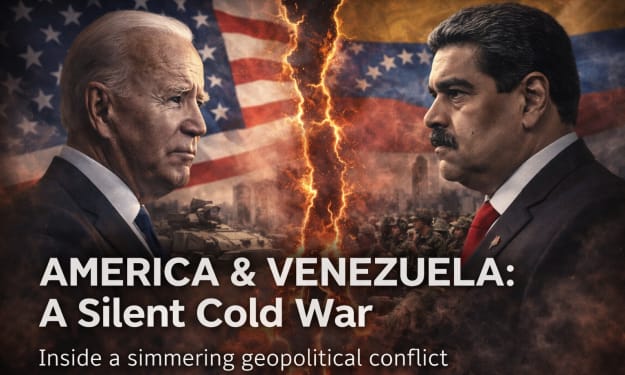
**America and Venezuela: Inside a Silent Cold War Shaping Latin America’s Future** The relationship between the United States and Venezuela has evolved into what many observers describe as a modern Cold War. Unlike traditional wars fought with armies and weapons, this conflict unfolds through political pressure, economic sanctions, ideological confrontation, and global influence. It is a struggle that affects not only both nations, but also the wider region of Latin America and the international balance of power. This silent Cold War has been developing for years, raising many questions that people around the world continue to search for. Understanding its causes, methods, and consequences is essential to grasp why tensions remain high and why resolution has proven so difficult. ### What Is Meant by a Cold War Between the United States and Venezuela A Cold War refers to a prolonged conflict where direct military confrontation is avoided, but rivalry is expressed through indirect means. In the case of the United States and Venezuela, this rivalry includes sanctions, diplomatic isolation, media narratives, cyber influence, and alliances with opposing global powers. Each side seeks to weaken the other’s position without triggering open warfare. This form of conflict has created a climate of constant tension, where every political move is closely watched and often interpreted as part of a broader strategic struggle. ### Why Relations Between the Two Countries Deteriorated Relations began to decline sharply in the early twenty-first century, when Venezuela adopted a political direction that openly challenged U.S. influence. Leaders in Caracas promoted a socialist ideology, criticized American foreign policy, and sought closer ties with rival global powers. These actions were viewed in Washington as a threat to regional stability and democratic norms. Over time, disagreements deepened over issues such as governance, elections, human rights, and control of natural resources. Oil, in particular, played a crucial role, as Venezuela holds some of the largest proven reserves in the world. Control over energy policy and economic independence became central to the conflict. ### How Economic Sanctions Became a Key Weapon One of the most searched questions online is why economic sanctions are so central to this Cold War. The United States has relied heavily on sanctions to pressure the Venezuelan government. These measures target financial systems, oil exports, and key officials, aiming to reduce the government’s ability to operate and force political change. Supporters of sanctions argue they are a peaceful alternative to military intervention and a way to hold leaders accountable. Critics counter that sanctions worsen living conditions for ordinary citizens and deepen economic collapse, making recovery even more difficult. ### What Role Ideology Plays in the Conflict Ideology is at the heart of this Cold War. The United States frames the conflict as a defense of democracy and rule of law, while Venezuela presents itself as resisting foreign interference and protecting national sovereignty. This clash of narratives fuels distrust and makes compromise politically risky for both sides. These competing stories are amplified through media, speeches, and online platforms, shaping public opinion at home and abroad. As a result, the conflict is not just political or economic, but also psychological and symbolic. ### Why Other Global Powers Are Involved Another common question is why countries outside the region are involved. Venezuela has strengthened relationships with global powers that challenge U.S. dominance. These alliances provide financial support, diplomatic backing, and strategic cooperation, reducing the impact of isolation efforts. For the United States, this involvement raises concerns about influence and security in its traditional sphere of interest. For Venezuela, it offers alternatives and leverage in negotiations. This global dimension transforms a bilateral dispute into part of a larger geopolitical competition. ### How the Cold War Affects Ordinary Venezuelans Beyond politics, the human cost of this Cold War is significant. Venezuela has experienced severe economic hardship, shortages of essential goods, and widespread migration. Millions of people have left the country in search of stability and opportunity, creating social and economic pressures across neighboring nations. Many people ask whether the conflict could have been avoided or resolved earlier. While internal policies and governance challenges play a role, the prolonged standoff has undeniably shaped the country’s current reality. ### Is There a Path Toward De-escalation One of the most important questions people search for is whether this Cold War can end. Diplomatic dialogue, mediation, and gradual easing of tensions are often proposed as solutions. At times, negotiations have shown promise, but deep mistrust continues to block lasting progress. Any meaningful resolution would require compromises from all sides, internal political changes, and international cooperation. It would also need to prioritize humanitarian concerns alongside political goals. ### Why This Conflict Matters Globally The Cold War between the United States and Venezuela is not an isolated issue. It reflects broader struggles over power, ideology, and influence in a changing world. The outcome will shape Latin America’s political future, energy markets, migration patterns, and international norms around sovereignty and intervention. This modern Cold War is a reminder that conflicts do not always involve armies and explosions. Sometimes, they unfold slowly, quietly, and persistently, affecting millions of lives over time. The tension between America and Venezuela illustrates how ideology, economics, and global ambition can lock nations into long-term confrontation. Understanding this conflict is the first step toward imagining a future where dialogue replaces pressure and stability replaces uncertainty.
By America today 11 months ago in Criminal