fact or fiction
Is it fact or merely fiction? Fact or Fiction explores the myths and beliefs we hold about copycat killers, eyewitnesses testimony, what makes a murderer and more.
My Neighbor Isn’t Human — I Have Proof
I’ve lived in my apartment complex in Portland, Oregon, for six years. It’s a quiet neighborhood — retirees, students, a few families. The kind of place where nothing ever happens. That changed the day Apartment 3B got a new tenant. Her name was **Elara**. She moved in late one evening in the middle of winter. No moving truck, no friends helping, just a single black suitcase and a cat carrier with no cat inside. I remember because I offered to help, but she just stared at me for a moment before saying, “No need. I already brought everything I require.” That word — *require* — stuck in my head. It wasn’t the way people talked. At first, I didn’t think much of her. She kept to herself, didn’t make noise, didn’t socialize. But after a few weeks, I started noticing small, strange things. Every night, exactly at **2:37 a.m.**, a faint hum came from her apartment — low, rhythmic, mechanical. Like a generator or some kind of machine. I’d press my ear against the wall and hear soft clicking sounds, like typing but faster than any human could manage. Then there was the light. Her apartment window glowed with a pale blue tint, the kind that doesn’t come from any normal bulb. When I asked our landlord about it, he shrugged. “She pays on time, doesn’t cause trouble. Let it be.” Still, curiosity got the best of me. One night, I pretended to leave for work but circled back and waited outside her door. Around the usual time — 2:30 — the humming began. Through the peephole, I saw faint shadows flickering under her door. And then, a sound I’ll never forget: a metallic scraping, followed by a whisper that didn’t sound like a person’s voice. It said something like: > “Transmission stable. Awaiting next human data set.” I froze. The next morning, I knocked on her door, trying to act casual. She opened it slightly — not wide enough for me to see inside. Her eyes looked… wrong. Not just the color — they reflected light, like a cat’s in the dark. I noticed she wore gloves, even though it was warm inside. I asked if everything was okay last night. She smiled — but the smile didn’t reach her eyes. “Just my *equipment*,” she said. “Sometimes it needs calibration.” I nodded, pretending to understand, and left. After that, things escalated. Birds stopped perching near her balcony. My Wi-Fi would drop every time she came home. My phone started showing a new network signal named **E-3B_DEVICE** — with full bars, even in airplane mode. One night, my curiosity turned into fear. I was asleep when I heard knocking on my door — three slow knocks. When I checked the peephole, no one was there. But when I opened it, a folded piece of paper was on the floor. It said: > “Stop listening.” No signature. No explanation. The next day, I went to the building’s security office and asked to see the footage from the hallway. The guard told me the cameras outside her apartment had been *disabled* since the day she moved in. That’s when I decided to record her myself. I set up a small camera facing her door. That night, the 2:37 hum began again. The next morning, my camera was gone — not broken or unplugged — just gone, like it had never been there. Two nights later, Elara knocked on *my* door for the first time. She said, “Your curiosity is inefficient. You’ll forget soon.” I tried to laugh it off, but she stepped closer, her pupils flickering with faint static. “You record,” she said softly, “but you don’t understand what you see.” When I woke up the next day, my laptop and phone were wiped clean. Every file, every photo, every password — gone. The only thing left on my desktop was a single folder named **RETURNED**. Inside it was one image: a picture of me sleeping, timestamped 2:38 a.m. That night, she moved out. No one saw her leave. The landlord said her lease had been terminated by “an external agency.” I don’t know what she was — government experiment, alien, something else entirely. But I know this: sometimes, at exactly 2:37 a.m., my walls still hum. And when that happens, my phone lights up with a notification from a network that shouldn’t exist: **E-3B_DEVICE connected.**
By America today 11 months ago in Criminal
The Ghost Returns: Blood on the Costa del Crime. AI-Generated.
The Mediterranean sun rose over Marbella like a blade of gold, cutting through the mist that hung over the harbor. It had been almost three years since Patrick “Patsy” Doran, the man the underworld called The Ghost, vanished into legend.
By shakir hamid11 months ago in Criminal
The Ghosts of Marbella: Europe’s Hidden Cocaine Highway. AI-Generated.
The sun over Marbella shines like gold, but beneath the luxury — beneath the yachts, champagne, and celebrity villas — there’s a darkness no one talks about. A hidden empire built not on business or tourism, but on cocaine, blood, and silence.
By shakir hamid11 months ago in Criminal
The Short Man Who Set the World on Fire
The Short Man Who Set the World on Fire — Without Meaning To In the heart of the Balkans, where mountains meet rivers, the city of **Sarajevo** awoke to a quiet summer morning in 1914. No one knew that this would become one of the bloodiest days in human history. On a narrow street near the market stood a thin young man in a faded coat, his small hands trembling around a pistol hidden in his pocket. His name was **Gavrilo Princip**, the son of a poor farmer from a small Bosnian village. He was short — barely 1.60 meters tall — frail, and overlooked by everyone. But inside him burned a fire of pride, anger, and humiliation. Since childhood, he had dreamed of becoming a soldier, fighting for a free “Greater Serbia.” But every time he applied to the army or for a government job, he heard the same words: > “You’re too small. Too weak. You don’t fit.” Rejection after rejection turned his frustration into hatred, and his hatred into a thirst for revenge. To him, the **Austro-Hungarian Empire**, which ruled Bosnia and Herzegovina, was the embodiment of oppression. He secretly joined a nationalist underground group called **The Black Hand**, whose goal was to drive out the Austrians and unite all Serbs under one flag. One night, the group decided on a daring plan: **to assassinate Archduke Franz Ferdinand**, heir to the Austro-Hungarian throne, during his visit to Sarajevo. On the morning of **June 28, 1914**, the royal motorcade rolled through the city streets lined with flags and cheering crowds. Gavrilo and his comrades waited along the route, each armed with bombs or pistols. The first attempt failed — a bomb missed the car and exploded behind it. The conspirators scattered, convinced the plan had failed. Disheartened and exhausted, Gavrilo sat at a nearby café, thinking his mission was over. But fate had other plans. An hour later, by sheer accident, the Archduke’s car took a wrong turn and stopped right in front of the café where the young man sat. Without hesitation, Gavrilo stood, pulled out his pistol, and fired **two shots**. The first struck **the Archduke**, the second hit **his wife, Sophie**. Both died instantly. Gavrilo Princip could not have known that those two bullets would ignite a war that would consume all of Europe. Within weeks, **Austria-Hungary** declared war on **Serbia**. **Russia** rushed to defend Serbia, **Germany** supported Austria, and soon **France** and **Britain** joined the fight. The assassination of one man had exploded into **World War I**, which lasted four long years and took the lives of more than **20 million people**. Gavrilo was captured within minutes. At his trial, he said calmly: > “I wanted freedom for my people. I never wished for a world war.” > He died of tuberculosis in prison two years later, at just twenty-three. But the fire he lit did not die with him. When the war ended in **1918**, **Germany** emerged defeated and humiliated by the **Treaty of Versailles**, forced to pay enormous reparations and disarm completely. Hunger, poverty, and anger swept through the nation. And from the ashes of defeat, another short man rose — one with fierce eyes and a tiny mustache: **Adolf Hitler**. He had been a soldier in the Great War, and like millions of Germans, he carried the bitterness of loss. But he possessed something more dangerous — a gift for stirring crowds. He told the people that Germany had not been defeated on the battlefield but **betrayed from within**. He promised to restore their pride, rebuild their army, and make Germany great again. While the world was distracted by economic crises, Hitler rose to power in **1933**, openly defying the Treaty of Versailles and rebuilding his forces. Then, on **September 1, 1939**, his troops invaded **Poland**, and **World War II** began — a conflict far deadlier and more devastating than the first. Over **70 million people** would perish, cities would crumble, and the map of the world would change forever. And so, it all began with a short man rejected because of his height, and ended with another short man who demanded the world bow before him. Between the first bullet fired by **Gavrilo Princip** in Sarajevo, and the last bullet fired by **Adolf Hitler** into his own head in Berlin, lay thirty years of war, fire, and ruin — a tragedy born from pride, pain, and the desperate need of two small men to feel tall before the world.
By America today 11 months ago in Criminal
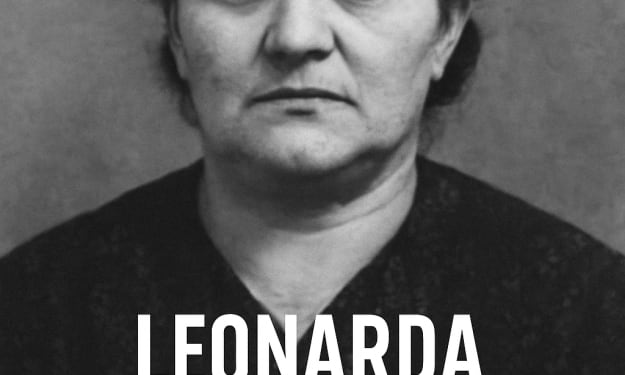
Leonarda Cianciulli: The Soap-Maker of Correggio
The House of Secrets in Correggio In the quiet northern Italian town of Correggio, Reggio Emilia, neighbors remembered Leonarda Cianciulli as a kind woman — generous, maternal, even charming. She ran a small shop, told fortunes, and offered advice to those seeking luck or love.
By Silvia Chiarolanza11 months ago in Criminal
France: daring daytime heist at the Louvre Museum in Paris
The Louvre Robber The Louvre Museum in Paris is one of the world’s greatest cultural institutions. It holds thousands of priceless artworks and historical artifacts, including masterpieces such as the Mona Lisa and the Venus de Milo. Known for its beauty and significance, the Louvre attracts millions of visitors every year. However, in October 2025, this symbol of art and heritage became the scene of a shocking robbery that left the public and authorities stunned. A group of organized thieves managed to break into the museum and steal valuable Napoleonic jewels, raising serious questions about how such a crime could occur in one of the most secure museums on earth.
By America today 11 months ago in Criminal
The Leap into the Void: The Air Escape Legend That Shook America
On the afternoon of November 24, 1971, the day before Thanksgiving, a man calling himself Dan Cooper approached the Northwest Orient Airlines counter in Portland, Oregon. Cooper was a completely nondescript individual: a calm, middle-aged man in a dark business suit, a crisp white shirt, and a black clip-on tie. Using cash, he bought a one-way ticket for Flight 305, a short, routine hop to Seattle, Washington.
By Alexander Reeve11 months ago in Criminal
The “No Kings” Movement — A New American Call for Democracy
The “No Kings” Movement — A New American Call for Democracy** In recent weeks, the “No Kings” movement has emerged across the United States as a powerful social and political statement. The phrase, simple yet deeply symbolic, represents a growing call among Americans to reaffirm democratic values and resist any sign of authoritarianism or excessive concentration of power in the hands of political leaders. Although the slogan is new, the idea behind it is rooted in the very foundation of American history — a nation born out of opposition to monarchy and built on the principles of equality and shared governance. --- ## A Brief Overview of the “No Kings” Movement The “No Kings” movement began as a public response to what many see as the erosion of democratic norms and accountability within government institutions. Protesters, commentators, and ordinary citizens have adopted the slogan as a reminder that the United States was founded on the belief that no one person should have unchecked power. The phrase first appeared on social media and in public demonstrations, often written on signs, shirts, and murals. Soon, it became a unifying expression across different political groups — liberals, moderates, and even conservatives who share concerns about the balance of power. The movement’s central message is that democracy thrives only when leaders serve the people, not the other way around. “No Kings” does not target one individual alone. Instead, it calls for vigilance in defending the democratic system itself. The protests and discussions surrounding it emphasize the importance of transparency, independent institutions, and an informed citizenry that holds its government accountable. --- ## Historical Context The roots of the slogan go back to the American Revolution, when early settlers rejected the rule of King George III and built a republic guided by the principle that leadership should be temporary and earned through consent. The Constitution was written to prevent tyranny — whether by a monarch or by an elected official abusing power. The “No Kings” movement revives this foundational sentiment, reminding citizens that democracy requires constant defense and renewal. In the 21st century, many citizens have grown concerned that political polarization and the concentration of influence in executive offices threaten that original balance. “No Kings” serves as a warning that even democratic nations are not immune to the gradual erosion of freedoms if citizens stop participating actively in governance. --- ## The Message and Its Broader Meaning The movement’s message is not about rejecting leadership; rather, it demands leadership that listens, respects institutions, and operates within constitutional boundaries. Supporters believe that the strength of America lies in its ability to question authority peacefully and to insist that no leader stands above the law. Participants in “No Kings” rallies often emphasize civic engagement — voting, local activism, and open debate — as the true expression of patriotism. The call for “No Kings” is therefore not about rebellion but about responsibility: a reminder that citizens must be guardians of their democracy. --- ## Questions People Often Ask **What does “No Kings” actually mean?** The slogan symbolizes resistance to absolute power and a call to preserve democratic institutions. It reminds leaders and citizens alike that the country was founded on the principle of equality before the law, not rule by one powerful figure. **Is the “No Kings” movement political or nonpartisan?** While it has political implications, the movement presents itself as nonpartisan. It focuses on values — democracy, accountability, and freedom — rather than promoting any particular political party. People from various backgrounds have joined in, united by the belief that government must serve the people. **Why is it gaining attention now?** The slogan has become popular because of growing tensions in national politics and concerns about executive overreach. Many citizens feel the need to restate the country’s founding ideals during a time when trust in institutions has declined. **How are people expressing their support?** Supporters have organized peaceful rallies, written opinion pieces, and shared the slogan online. It appears on handmade posters, digital art, and community events. Some schools and civic groups are also using the phrase as part of discussions about constitutional rights and the importance of participation in democracy. **Could this become a larger movement?** Yes, the potential is strong. The simplicity of the message makes it easy to connect with. If the sentiment continues to resonate with citizens who want fair representation and transparency, “No Kings” could grow into a lasting civic movement encouraging more engagement in democratic processes. --- ## The Broader Implications The “No Kings” movement reveals something fundamental about the American spirit — a refusal to accept complacency in the face of power. Whether viewed as protest or patriotism, it reflects the deep belief that freedom is not guaranteed but earned through continued effort and vigilance. At its heart, “No Kings” reminds people that democracy is not just a system of government; it is a collective promise between citizens and leaders. When that promise weakens, movements like this rise to renew it. The real strength of the United States lies not in the authority of any single leader but in the unity of millions of citizens who care enough to defend their principles. As one observer put it, the phrase “No Kings” is not just a protest cry — it is a declaration of purpose. It reaffirms that the country’s destiny belongs to its people, not to power, and that in every generation, the promise of liberty must be made new again.
By America today 11 months ago in Criminal