fact or fiction
Is it fact or merely fiction? Fact or Fiction explores the myths and beliefs we hold about copycat killers, eyewitnesses testimony, what makes a murderer and more.
The Girl in Apartment 4B
M Mehran The first thing Officer Lena Hale noticed about Apartment 4B was the silence. Not the normal kind—the heavy, suffocating kind that felt staged. Manufactured. She knocked again. “Police. Ms. Carter, are you inside?” No answer. A neighbor had called dispatch an hour earlier, reporting “terrifying screams” from 4B, followed by a crash. Domestic dispute, maybe. Break-in, possibly. In this building? Very likely. Lena tested the doorknob. Locked. “4B, this is your last warning.” Still nothing. She slid her pick from her belt—old-school tool, but faster than waiting for backup—and worked the lock. The door clicked open. The smell hit her first. Bleach. Sharp and recent. “Ms. Carter?” she called, stepping inside. The apartment was immaculate. Too immaculate. A couch perfectly aligned with the rug. A coffee mug washed and turned upside-down to dry. A half-finished jigsaw puzzle on the table—blue sky, white sailboat—each piece arranged with almost obsessive care. Normal on the surface. Wrong underneath. Her radio buzzed: “Unit 12, backup in ten minutes.” “Copy,” Lena murmured. She moved deeper into the apartment. Photos lined the hallway—portraits of a woman in her early thirties, smiling. Camille Carter. Teacher, single, never caused trouble. The kind of person neighbors described with words like “sweet” and “quiet” and “kept to herself.” But on the last frame, the glass was cracked. The picture inside had been removed. Only the cardboard backing remained. Lena’s pulse jumped. She reached the bedroom door. That’s when she heard it. A faint thump. Then another. Muffled. “Camille?” she whispered. No response. Lena pushed the door open with the barrel of her weapon. The bedroom was empty. Except for the closet. A thin line of light glowed beneath the door. She approached slowly, listening. A breath. Soft. Fragile. She swung the door open. And froze. A girl—maybe nine or ten years old—huddled inside the closet, knees tucked to chest, arms wrapped tight around them. Her eyes were wide, terrified, darting instantly to the gun. “It’s okay,” Lena said gently, lowering it. “I’m here to help.” The girl didn’t speak. “Where’s Camille? Is she your mother?” The girl shook her head so subtly Lena almost missed it. “Did something happen to her?” Another tiny shake. Lena crouched. “What’s your name?” The girl opened her mouth, hesitated, and whispered, “Lily.” “Hi, Lily. Can you tell me why you’re hiding?” Lily swallowed hard. “He told me to.” “Who?” But the girl just pressed her lips together, trembling. Lena scanned the closet. A small stuffed rabbit. A notebook. A pair of children’s sneakers. Children’s belongings, in an apartment of a woman who lived alone. Her stomach twisted. “Lily… do you live here with Camille?” Lily hesitated. Then, with a broken little voice: “She saved me.” Lena’s breath caught. This was no ordinary case. “Saved you from what?” Lily lifted her shirt sleeve. Faded bruises. Patterned. Repetitive. Lena felt heat burn behind her eyes. Before she could say another word, the apartment’s front door creaked. Someone had entered. Lily’s eyes went wide with pure terror. She darted out of the closet and clung to Lena’s arm. “He’s back,” she breathed. Lena rose and guided Lily behind her. Footsteps—heavy, confident—moved through the kitchen. “Police!” Lena shouted. “Identify yourself!” Silence. Then—a man’s voice. Smooth. Cold. “You shouldn’t be here.” Lena stepped into the hallway, gun raised. A tall man stood in the living room, rain dripping from his coat, face carved with quiet fury. He carried a leather duffel bag that sagged with weight. “Hands where I can see them,” Lena commanded. He smiled, slow and amused. “You think you’re the first officer she’s called? Camille never learned.” “Step away from the bag.” His eyes flicked down to the hallway—toward the bedroom. Toward Lily. Lena noticed the recognition in his gaze. Too sharp. Too intimate. He knew her. And Lily knew him. “Lily,” Lena murmured, “is that—” “My father,” Lily whispered, voice small as ash. “He killed Camille.” Lena didn’t have time to react. The man dropped the duffel. But not because he surrendered. Because something inside rolled out with a soft thud. A woman’s hand. Camille’s hand. Lena fired. The man lunged. A blur of movement. He barreled toward her, grabbing her wrist, slamming her against the wall. Pain shot up her arm. The gun clattered away. Lily screamed. Lena twisted, fighting his grip. He was strong—too strong—but desperation lent her force. She drove her knee into his ribs. He grunted, loosening enough for her to shove him back. He reached for the gun on the floor. She dove after him. They collided, scrambling. Fingers brushing the weapon. Breath ragged. His elbow smashed into her jaw—stars burst behind her eyes. Then a sound cut through the chaos. A crack. Like wood hitting bone. The man collapsed forward. Behind him stood Lily—holding the heavy ceramic sailboat piece from Camille’s puzzle. Her small hands trembled, but her eyes—her eyes were steady. Lena grabbed the gun and cuffed the man while he writhed. Backup burst through the door moments later. Lily ran into Lena’s arms and clung to her with every ounce of strength she had left. “It’s okay,” Lena whispered into the girl’s hair. “He’ll never hurt you again.” Outside, rain began to fall. But inside Apartment 4B, for the first time that night, the silence finally broke. It wasn’t eerie anymore. It was safe.
By Muhammad Mehran9 months ago in Criminal
The Last Witness
M Mehran Rain fell in needles the night Detective Mara Vance realized she was being followed. She’d left the precinct after midnight, the kind of exhausted where the world felt underwater. The Rosen Case—a convenience-store robbery gone brutal—had dragged the department for weeks. A clerk dead, a missing witness, and a blurry security tape that showed a man with a serpent tattoo along his wrist. That was it. No face. No prints. No breaks. Until that morning. A trembling twenty-year-old named Eli Mercer had walked into the station claiming he saw everything. He’d been hiding, terrified the killer would find him. Mara believed him. More than that—she believed he was in danger. Which was why, when she spotted the same gray sedan in her mirror for the third turn in a row, her tiredness evaporated. She didn’t go home. She drove to the river instead. The car followed. Mara parked beneath the bridge, stepped out, and kept one hand on the grip of her concealed pistol. The other car idled thirty feet behind her. Its headlights cut shapes across the rain. “Enough,” she murmured and walked toward it. The driver door opened. A man stepped out slowly, hands raised. Dark hoodie, jeans, water dripping from the brim of a cap. “I’m not here to hurt you,” he said. His voice was deep, calm. “Then congratulations,” Mara said, “you’ve started this evening badly.” He lifted his head. Under the streetlamp, she saw his face—mid-thirties, sharp jaw, tired eyes. “My name’s Caleb Rowan,” he said. “Eli sent me.” That made her pause. “Eli Mercer? How do you know him?” “I’m his brother.” “He told us he had no family.” “He had reason to lie,” Caleb said, lowering his hands. “And if you’re smart, Detective, you’ll start asking why." --- The two sat in Mara’s car, rain thrumming on the roof. Caleb’s clothes were soaked, his hands shaking slightly, though his voice stayed steady. “Eli didn’t just witness a robbery,” he said. “He witnessed someone being silenced.” “Silenced?” Mara asked. Caleb nodded. “Your victim—the store clerk—he wasn’t random. He was supposed to testify in a federal case. A laundering ring. Eli saw the killer go in after him.” “And the killer saw him,” Mara murmured. “Exactly. That’s why Eli ran. Why he hid. And why someone’s now watching you.” He swallowed. “They know Eli came forward.” Mara stared through the fogging windshield. A knot formed in her stomach. If this was true, the case wasn’t small—not a robbery gone wrong, but a hit. “And what do you want with me?” she asked. Caleb reached into his pocket slowly and slid a small flash drive across the seat. “This is what Eli was too scared to carry. Security footage. Not from the store—from the alley outside. The killer waited there for fifteen minutes before going in. His face is visible. Clear as day.” Mara blinked. “Why didn’t Eli give this to us earlier?” “Because he knew the police had leaks,” Caleb said. “People on the inside who protect the ring.” Her spine stiffened, instinct screaming denial—but she’d been on the force long enough to know corruption wasn’t a ghost story. “If he didn’t trust us,” she said quietly, “why trust me?” Caleb exhaled. “Because he saw the way you questioned him. You listened. You believed him. You didn’t look at him like a burden or a liar.” His voice cracked. “You reminded him of our mother.” Mara swallowed, emotion catching her unexpectedly. She pocketed the drive. “Where is Eli now?” Caleb’s jaw tightened. “That’s why I followed you. He’s missing.” The words slammed into her like a fist. Missing. --- One hour later, Mara and Caleb stood in a run-down motel on the edge of town. Room 12. Eli’s room. The lock wasn’t broken—but the air felt wrong. The bed unmade. A backpack spilled open. A half-eaten container of noodles on the table, still warm. “He was here recently,” Mara said. “He left in a hurry.” Caleb’s hands balled into fists. “They took him.” Mara kneeled near the backpack. Something metallic glinted on the floor. She picked it up. A ring. Silver. Inscribed with a serpent. Her heart lurched. “We need to leave,” she said. “Now.” But the moment the words left her mouth, the room lights cut out. Darkness swallowed them. Caleb cursed, grabbing Mara’s arm. She yanked her gun free, senses flaring. A soft click came from the doorway. Night-vision goggles, she realized. Someone was watching them. “Stay behind me,” she whispered. A voice drifted through the dark, oily and calm. “You should’ve stayed out of this, Detective.” Mara fired two shots toward the door. Glass shattered. Caleb ducked. Heavy footsteps pounded away. By the time she reached the hallway, the killer was gone—into the night like smoke. But he’d left something behind. A phone, screen glowing. A text message displayed: We have the boy. Bring the drive. Midnight. Pier 7. Come alone. Caleb stood behind her, shaking. “He’s alive?” “For now,” Mara said. “And we’re getting him back.” She closed her hand around the flash drive, rain pounding the motel roof like war drums. The clock read 11:08 p.m. Fifty-two minutes until midnight. Fifty-two minutes until everything changed.
By Muhammad Mehran9 months ago in Criminal
Inside the Bonnie Blue Controversy: Why Her Bali Arrest Is Breaking the Internet
The internet hasn’t stopped talking for days, and the shockwaves aren’t slowing down. When American content creator Bonnie Blue suddenly got arrested in Bali, social media exploded with rumors, outrage, confusion, and endless speculation. But what went down behind closed doors? Why has this incident taken over the world’s attention?
By iftikhar Ahmad9 months ago in Criminal
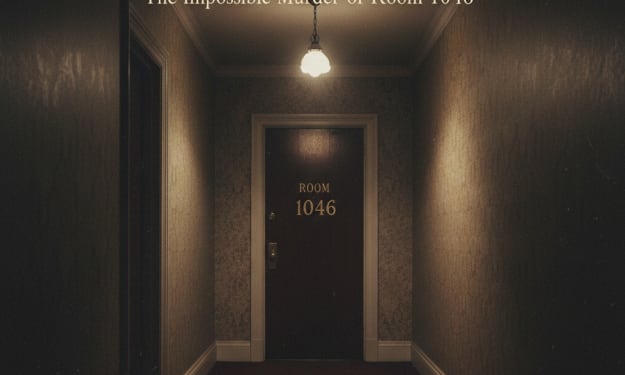
The Man Who Locked Himself In: The Impossible Murder of Room 1046
There are murders that frighten you because they are violent. And then there are murders that frighten you because they make no sense at all. The case of Room 1046 sits firmly in the second category — a story built of contradictions, shadows, unanswered questions, and a victim whose own identity was a mystery. The year was 1935. The place: the President Hotel in Kansas City, Missouri. A tall building, busy enough to feel alive but quiet enough for travelers to disappear in the flow of guests. People checked in. People checked out. Nothing unusual. Until a man calling himself Roland T. Owen walked through the lobby doors and changed the hotel’s history forever. A Man With No Story He arrived with almost nothing: A comb. A toothbrush. A hairbrush. No luggage. No real address. A name that felt like a pseudonym from the moment he spoke it. Witnesses described him as polite but tense, like someone carrying a weight he didn’t want to explain. He requested an interior room — one with no window view — and the clerk handed him the key to Room 1046. That was the last normal moment in the entire case. From here on, the story bends into angles that don’t fit. The First Strange Signs Housekeeping entered his room later and found something odd: Owen was sitting in the dark. All the lights were off, the blinds drawn tight, as if the outside world was an enemy. He seemed nervous. Distracted. He spoke quietly, almost carefully, as if someone else was listening. A maid later recalled his words: “Don’t lock the door — I’m expecting someone.” That sentence became a puzzle piece no one could place. Who was he waiting for? Why in the dark? Why in a nearly empty hotel? The Phone Calls, the Voices, the Fear In the next 24 hours, staff noticed more odd behavior: • Owen kept the room completely dark. • He barely left his bed. • He spoke to someone on the phone in a low, worried voice. • He mentioned a man named “Don” — a name that would become the ghost of the investigation. Witnesses heard fragments like: “I’ll be there tomorrow… I knew that…” “Don, don’t put it off, let’s settle it.” Settle what? Money? Threats? Blackmail? Something darker? No one knows. But the fear in his voice stayed with every witness who heard it. The Night Everything Broke By the second night, the hotel staff noticed the door to Room 1046 locked from the outside — which meant someone had left. But Owen was still inside. That detail alone makes the case feel impossible. How does a man stay inside a locked room… without locking it? Was he hiding from someone? Was someone locking him in? Or was someone entering and exiting quietly, with a key that should not have existed? The answer never came. The Discovery: A Room of Shadows and Blood On the morning of January 4th, a bellboy approached Room 1046 to deliver a message. The door was still locked. He knocked. A weak voice answered: “Come in.” But the door was locked — from the inside this time. When the bellboy reminded the man he couldn’t enter, the voice simply replied: “Turn on the lights.” It made no sense. Finally, worried, staff fetched a master key. And when the door opened, the scene inside looked like something from a nightmare. Owen was on his knees, naked, drenched in blood, his hands bound, his head wounded. The telephone had been ripped from the wall. Towels, sheets, and the carpet were soaked red. Yet he was still alive. Barely. When asked who did this, he whispered something that still haunts police files: “Nobody did this… I fell… against the bathtub.” A man with stab wounds and bindings was trying to protect someone — or something. Minutes later, he collapsed. By that afternoon, Roland T. Owen was dead.
By The Insight Ledger 9 months ago in Criminal
The Silent Twins: A Bond So Deep It Terrified Everyone Who Tried to Break It
There are mysteries made of missing people, strange footprints, or odd camera footage. Then there are mysteries like that of June and Jennifer Gibbons — two girls who never disappeared, never hid, never ran… yet remained unreadable, unreachable, and ultimately unexplainable. Their story feels less like true crime and more like a psychological ghost story written in real time. June and Jennifer were born in 1963 to a Caribbean family living in Wales. From the moment they could talk, something unusual began to show. They didn’t interact with the world the way other kids did. They stayed together, walked in sync, and developed a mirrored behavior that teachers, neighbors, and even psychologists found unsettling. The first red flag came in school: they spoke, but not to anyone else. Not to teachers. Not to classmates. Not even to their own parents. The silence wasn’t shyness. It was an act of exclusion — a deliberate closing of the door between them and everyone else. But the most shocking twist? They talked constantly — to each other. Rapid, fluid, expressive. A private language nobody else could understand. Their secret world had two rules: 1. Trust no one outside the twin bond. 2. Mirror each other’s life exactly, so neither could break the symmetry. For years, the girls were placed in special programs, speech therapy, and counseling. Experts suggested autism, selective mutism, trauma — every explanation except one: maybe the girls simply wanted their world to exist without outsiders. By their early teens, silence hardened into rebellion. June and Jennifer started committing small crimes — shoplifting, petty vandalism, breaking into homes. Their diaries later revealed they didn’t do these things out of thrill, but out of mutual pressure. Each wanted the other to push further. Each wanted to prove loyalty by matching the other’s actions. Eventually, a series of arsons sealed their fate. They were arrested and sent to Broadmoor, a high-security psychiatric hospital in England. It was the kind of place that housed violent offenders… and also two teenage girls who refused to speak. Broadmoor became a prison inside a prison. Not because of its walls — but because the twins’ own bond became suffocating. Their diaries, discovered years later, remain some of the most haunting personal writings ever recorded. Jennifer wrote: “I want to live. But I live through her. We are one. We are two. We are the same.” June wrote: “She is my shadow, and I am hers. Without her, I might live. But without me, she will not.” The twins' relationship was not simply close — it was parasitic, interdependent, and at times violent. They fought physically. They resented each other. They felt trapped inside a partnership they could not leave. The eeriest pattern: whenever one twin grew stronger — more confident, more expressive — the other weakened. It was as if their identities were sharing the same battery, taking turns draining each other. After 11 years in Broadmoor, the hospital finally arranged to move them to a lower-security facility. A journalist who had been following their story visited them days before the transfer. During that meeting, Jennifer said something chilling: “It’s been decided.” The journalist asked, “What has been decided?” Jennifer replied: “One of us has to die.” She said it calmly. Without fear. As if announcing the weather. And then came the moment that turned a psychological case into a supernatural legend. On the day of the transfer, Jennifer suddenly collapsed in the van. She was unresponsive, her eyes half-open. No drugs in her system. No injuries. No poisoning. No signs of trauma. She died hours later. The cause of death? Acute myocarditis — inflammation of the heart. No reason. No disease. No infection. Healthy girl, no medical history, no trigger. Doctors called it “natural,” but privately admitted it made no biological sense. June’s reaction was stranger than the death itself. She didn’t scream, faint, or panic. She simply said: “I’m free.” And then she began to speak — really speak — to doctors, to nurses, to investigators, and later to journalists. Her lifelong selective mutism disappeared as if a spell had been broken. Within months, she was living independently. Within years, she was fully rehabilitated. Today, she lives quietly in Wales, a normal woman with an abnormal past. The world still wonders: Did Jennifer die naturally? Did she choose to die? Did June’s freedom come at the cost of her twin’s life? Was their bond psychological, spiritual, or something beyond explanation? Even June refuses to give exact answers. In interviews, she simply says: “We had a pact. I can’t say more.” The Silent Twins remain one of the most unsettling mysteries in modern psychological history. A case where no monster existed outside them — the monster lived between them, inside a shared identity that broke the moment one heart stopped beating. It’s a reminder that not all mysteries require ghosts or killers. Sometimes, the strangest story is the human mind itself.
By The Insight Ledger 9 months ago in Criminal
The Teen Killers Who Shocked the World
They were not hardened criminals, with no long-standing criminal history. They were just teenagers-kids who should have been thinking about school, friendships, and the future. Yet, behind innocent faces, they carried secrets so dark that the world still struggles to understand them.
By iftikhar Ahmad9 months ago in Criminal
The Black Dahlia: The Unsolved Murder That Shocked Hollywood
Los Angeles, 1947: A young woman full of dreams and hope for a Hollywood career was found dead under horrifying circumstances. Elizabeth Short, later nicknamed the "Black Dahlia," had her body brutally mutilated and was left in a vacant lot. The city was shocked, the press went into a frenzy, and the case quickly became one of the most infamous unsolved murders in American history. Even more than seventy years later, the story of the Black Dahlia continues to fascinate people all over the world.
By iftikhar Ahmad9 months ago in Criminal