capital punishment
Weigh the pros, cons and controversies surrounding the grave issue of capital punishment; should the death penalty be allowed?
"I Want to Talk to You" – The Tragic Final Hours of Humaira Asghar
📰 Editor’s Note: This story is a follow-up to my earlier coverage of the sudden and tragic death of Pakistani actress and public figure Humaira Asghar. New revelations have emerged from the police investigation that deepen the mystery and raise even more troubling questions. Here is the full updated report based on the latest evidence.
By 🕵️♂️ True Crime Enthusiast | Storyteller of the Dark Side 🔍about a year ago in Criminal
The Final Plea: The Story of Nimisha Priya, a Kerala Nurse on Death Row in Yemen
The Tragic Tale of Nimisha Priya: From Nurse to Death Row in Yemen On July 25, 2017, the Yemeni police in the city of Aden arrested Nimisha Priya, a nurse from Kerala, and her friend Hanan for the brutal murder of a man named Abdu Mahdi, a local broker. The case shocked international media after reports claimed that Nimisha had killed her "husband," chopped his body, and dumped it in a water tank.
By 🕵️♂️ True Crime Enthusiast | Storyteller of the Dark Side 🔍about a year ago in Criminal
How Two Kids Hacked the CIA
October 2015 – CIA Headquarters, Virginia John Brennan, Director of the CIA—the world’s most powerful intelligence agency—received a strange call from an unknown number. The voice on the other end wasn’t that of a terrorist, a foreign spy, or even an insider. It was a teenager.
By Chronicle of Powerabout a year ago in Criminal
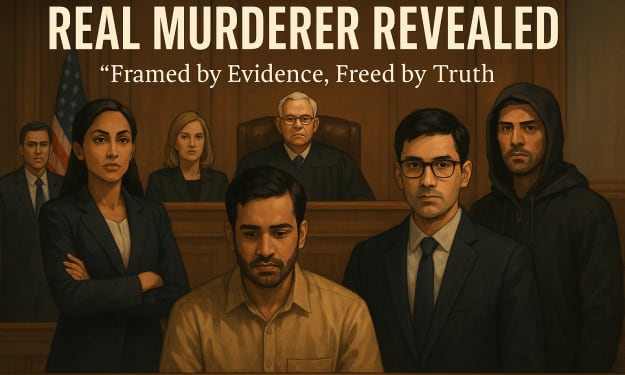
The Real Murderer Revealed
In the heart of Washington, D.C., amid a city buzzing with politics and power plays, a gruesome murder shocked the local media. A young man named Aamir Shaikh — a freelance consultant with a history of shady deals and more enemies than allies — was found dead in an abandoned warehouse on the outskirts of the city.
By Engr. Mansoor Ahmadabout a year ago in Criminal
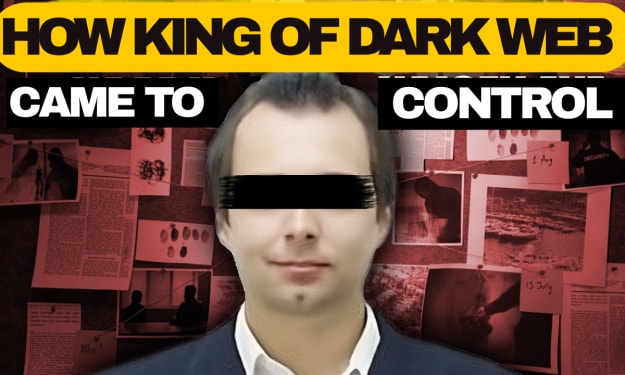
How One Mistake Trapped the Dark Web King
A man was sitting inside his luxurious Bangkok villa, browsing on his laptop, when suddenly, a loud crash echoed from outside. Unaware that the luxurious life he had built was moments away from its end, he left his laptop open and rushed outside.
By Chronicle of Powerabout a year ago in Criminal
The Impossible Prison Break - Alcatraz Escape
FBI officers were stunned. Even if a prisoner was left completely unguarded inside this prison, there was no way to escape. So how had three inmates slipped out right under the nose of the authorities—and not just that, but it took 10 hours for anyone to even realize they were missing?
By Chronicle of Powerabout a year ago in Criminal
Too Beautiful to Keep: The Crime of Cutting Noses in the Name of Honor
In some far-off tribal lands where mountains meet tradition, a dark chapter of history whispers through the silence. It is not written in textbooks. It is not shown in films. But it is real — and heartbreaking.
By Muhammad Adilabout a year ago in Criminal
The Final Confession
Daniel Malik had everything a lawyer could dream of — success, money, power. His name was etched in gold outside a firm that defended the city’s most dangerous men. And he had a reputation: if Daniel was your attorney, you walked free — no matter how guilty you were. He told himself it was just the job. Everyone deserved a defense. But deep down, he knew he’d bent the law more than once to protect criminals. It never bothered him much. Until the letters started coming. The first one arrived in a plain envelope. No return address. Inside was a single sentence typed in all caps: > “A man will die under the wheels of a 7:42 train at Silverpoint Station.” Daniel tossed it aside. Probably some protestor trying to scare him. But two days later, the exact death was reported on the evening news. The same train. The same time. Even the victim’s description matched the note. He felt a chill. Coincidence? Maybe. Then the second letter came. It described a woman in a red dress, strangled in a downtown hotel. “Room 415. Red silk scarf around her neck. Wedding ring missing.” That murder happened the next day — exactly as written. --- By the time the third letter arrived, Daniel’s hands were shaking. > “The judge who traded justice for money will meet the weight of his own gavel.” And just like clockwork, Judge Harlan — the very same man who had once helped Daniel’s client avoid a life sentence — was found dead in his home. Blunt force trauma to the skull. The weapon? His ceremonial gavel. But what haunted Daniel the most was what the police didn’t release to the press. A cufflink was found at the scene. Silver. With Daniel’s initials engraved. It was his. --- Sleep left him. Food had no taste. He locked his office door and combed through his old case files. It didn’t take long to see the pattern: the victims of these murders weren’t random — they were tied to his past. Each one had helped protect or release a guilty man Daniel had defended. And then he found the Gaines case. A rich businessman, drunk behind the wheel, had struck and killed a young mother. Her son survived, but barely. Daniel had crushed the prosecution and smeared the mother’s reputation. The client walked. Daniel won. Another trophy on the shelf. But the child who lost everything? He was never mentioned again. --- The fourth letter arrived. > “You wore the robe of justice, but your hands were red. Now it’s your turn.” Enclosed was a photo. A young man in his twenties, standing outside Daniel’s office. Cold eyes. Familiar face. The boy from the Gaines case. He was all grown up — and he wanted justice. --- Daniel ran to the police. He told them everything — the letters, the patterns, the murders. But they didn’t buy it. His fingerprints, they said, were being found at scenes. Evidence was stacking against him. His story sounded like panic. Like guilt. And maybe it was. Then, a private message arrived at Daniel’s door. > “Meet me. Alone. No police. Bring nothing but the truth.” He followed the instructions, arriving at an abandoned courthouse late at night. Inside, Elias — the boy he had forgotten — stood waiting. “I know what I did,” Daniel said. “I thought I was doing my job. I never thought of what it cost others.” “You thought about winning,” Elias replied. “That’s all.” Then he handed Daniel a folder. Inside was a typed confession — a detailed account of every case Daniel had twisted, every criminal he’d helped go free. It was all written out like a legal affidavit, ready for public release. “Sign it,” Elias said. “Let the world see what justice looks like.” Daniel stared at the pages, heart pounding. He knew what would happen if this went public. He’d lose his license, his firm, his legacy. But maybe that’s what he deserved. He signed. --- Daniel disappeared the next day. No trial. No arrest. But news broke anyway — leaked documents, anonymous tips, media frenzy. His fall was complete. And Elias? Vanished. But the city remembers. And somewhere, another envelope is being sealed.
By Ubaid Ur Rehmanabout a year ago in Criminal
A Deadly Obsession: The Live Stream That Ended in Blood
Part 1: The Rise of Ai Mogami At around 9:15 AM, in the quiet streets of Tokyo's Shinjuku district, a young female streamer named Ai Mogami was setting up her IRL (In Real Life) live stream. The chill of winter was just leaving the city, and most people were already at work or school, making the streets unusually empty. She had attached her phone to a tripod and logged into her streaming app—HuWatch—a popular Japanese platform similar to Twitch or YouTube Live.
By 🕵️♂️ True Crime Enthusiast | Storyteller of the Dark Side 🔍about a year ago in Criminal
The man who changed the ways of crime and first made the term serial killer popular.. Content Warning.
Bob Howard, a patrol officer in Salt Lake City, Utah, was sitting in his car in front of his house on Hogan Street on June 18, 1975. He had just finished his shift when a beige Volkswagen Beetle passed by without its lights on. He felt something was off. He knew his area well and knew that this car didn’t belong to anyone in the neighborhood. He decided to check it out and followed the car. The car stopped in front of his neighbor’s house, which was empty at the time; the parents were not home, and their two daughters (aged 17 and 19) were inside alone. Howard turned on his high beams to read the car’s license plate. The driver got scared and sped away, and of course, Howard chased him immediately. The driver ran through one stop sign and then another, and Howard continued following him because he sensed something was wrong. After a while, Howard managed to corner the car and stopped it at an abandoned gas station. The driver got out with his hands raised, wearing jeans, a black hoodie, and sneakers. His hair was dark and long, reaching his shoulders, and he smelled like marijuana. Howard pointed his gun at him. The man claimed he was a lost college student who had been watching a movie at an outdoor cinema but got lost on the way. However, Howard had passed by the cinema earlier, and the movie the man mentioned wasn’t playing. Howard knew he was lying and decided to search the car. Upon searching, he found something strange: the passenger seat was missing and replaced by an open bag containing very suspicious items — a ski mask, crowbar, ice pick, garbage bags, gloves, women’s underwear, rope, and wires. In the trunk, there were handcuffs. Howard told the man, “I’m going to arrest you tonight for fleeing the police, and I’ll ask the prosecutor to charge you with possession of burglary tools.” They went to the station, registered his data, and took photos. But after all procedures, there was no direct evidence linking him to a crime, so he was released on bail. Howard was very suspicious and believed this man was planning to break into his neighbors’ house where the two daughters were alone. But what Howard didn’t know at the time was that this man was no ordinary person — he was the most notorious serial killer in American history: Ted Bundy. Arresting him a second time wasn’t easy, because Ted Bundy was a monster. He didn’t scream or attack wildly; he was smart, organized, charismatic, but at the same time, he beat his victims to death. He appeared normal to everyone, but he was a serial killer inside. During the 1970s and 1980s, Ted Bundy committed kidnappings and murders of young girls. He appeared as a handsome, educated man, but he deceived everyone. He would approach his victims in public places pretending to have an injury or illness, ask for help, then hit them until they lost consciousness, and take them to isolated places where he abused and killed them. Over time, the number of missing girls increased, and the police began to notice a pattern, but they had no strong evidence. Bundy chose his victims carefully and knew how to hide his traces well. In November 1974, he committed a crime that left eyewitnesses who helped the police identify him. A girl named Carol DaRonch had been abducted but managed to escape and reported detailed information about him and his car. In 1975, Ted Bundy was arrested after a police chase, and tools indicating his intention to commit crimes were found in his possession. He was released on bail due to lack of sufficient evidence. Later, he was arrested again and put on trial. He tried to defend himself but escaped from prison twice using clever and deceptive methods. During his second escape, he committed murders in Florida, including killing women at a sorority house at the University of Florida. In February 1978, he was finally arrested after resisting a police officer. In 1979, he was sentenced to death for killing several victims. Before his execution, he confessed to killing 36 women, but it is believed that the number of his victims may exceed 100. His trial was the first to be televised nationally in the U.S., where millions watched the case details. He was executed in January 1989. Ted Bundy’s story is considered one of the most famous serial killer stories in history, teaching us the importance of caution, watching over children, and teaching them not to trust strangers, even if they seem friendly.
By Ink pulse(different angle)about a year ago in Criminal
80 Years Old Mystery of 5 Missing Kids
It was Christmas Eve, 1945. In the small town of Fayetteville, West Virginia, the Sodder family was celebrating with joy and laughter. George Sodder, his wife Jenny, and their ten children filled their home with holiday cheer. The fireplace crackled, presents lay opened, and the children played happily with their new toys.
By Chronicle of Powerabout a year ago in Criminal
El Chapo's Unbelievable Prison Escape
Inside a maximum-security prison in Mexico, a man was being watched around the clock by CCTV cameras. His cell had no windows, no skylight—only a small shower stall in the corner. And yet, despite all this security, he vanished without a trace.
By Chronicle of Powerabout a year ago in Criminal