capital punishment
Weigh the pros, cons and controversies surrounding the grave issue of capital punishment; should the death penalty be allowed?
OJ Simpson and the Trial of the Century: Fame, Race and the American Justice System. AI-Generated.
In the summer of 1994, America was transfixed by a slow-moving white Ford Bronco. Inside it, former football icon and Hollywood actor Orenthal James “OJ” Simpson was pursued by a convoy of police cars, while millions watched the surreal event unfold live on national television. Just days earlier, Simpson had been named the prime suspect in the brutal murders of his ex-wife Nicole Brown Simpson and her friend Ron Goldman. What followed would be dubbed “The Trial of the Century” a legal, media, and cultural earthquake that would divide the nation and leave a legacy still debated to this day.
By Nowshad Ahmadabout a year ago in Criminal
"American Idol" Tragedy: Beloved Music Executive and Husband Killed, Suspect Had Troubled Past
By Asad Taizai | True Crime Enthusiast A chilling double homicide has shocked fans of the long-running show American Idol, as music supervisor Robin Kaye and her husband, musician Thomas Deluca, were found murdered in their Los Angeles home. Authorities have arrested 22-year-old Raymond Boodarian in connection with the killings, raising serious questions about mental health, legal gaps, and early intervention.
By 🕵️♂️ True Crime Enthusiast | Storyteller of the Dark Side 🔍about a year ago in Criminal
AppDog The Bounty Hunter's 13-Year-Old Step-Grandson Accidentally Shot Dead By Stepson
The Chapman family, particularly Duane "Dog the Bounty Hunter" Chapman, is once again in the throes of a profound tragedy following the accidental shooting death of 13-year-old Anthony. Anthony was Dog's step-grandson, the son of Gregory Zecca, who is the biological son of Dog's current wife, Francie Frane, from a previous marriage. The incident, which occurred on Saturday night in Naples, Florida, at Gregory Zecca's apartment, has sent shockwaves through the family and garnered significant media attention due to Dog Chapman's public profile. According to reports from multiple news outlets, including TMZ and NDTV, law enforcement was called to the scene around 8:00 PM ET on Saturday, July 19th. The Collier County Sheriff's Office is investigating the shooting as an "isolated accident," and as of the most recent updates, no arrests have been made. This suggests that investigators believe the shooting was unintentional and not indicative of malicious intent. However, the investigation remains ongoing, and further details may emerge as authorities delve deeper into the circumstances surrounding Anthony's death. The relationship dynamics within Dog Chapman's extended family are complex, a common theme that has played out on his various reality television series over the years. Duane Chapman married Francie Frane in 2021. Both had previously lost their spouses to cancer – Dog's beloved wife Beth Chapman passed away in June 2019, and Francie's husband, Bob Frane, died in December 2018. Their shared experience of grief brought them together, and they found solace and a new beginning in their relationship. Francie's son, Gregory Zecca, has been actively involved with Dog Chapman's bounty hunting operations since Dog and Francie married. This connection meant that Anthony, Gregory's son, was not just Francie's grandson but had also formed a bond with Dog, reportedly even calling him "Grandpa Dog." This adds another layer of emotional complexity to an already devastating situation, as Dog is now grieving the loss of a young family member he had welcomed into his life. The tragedy underscores the devastating impact of accidental shootings, particularly those involving firearms in homes. While specific details of how the gun was handled or stored leading to the accident have not been publicly disclosed, the incident serves as a grim reminder of the importance of gun safety and responsible firearm ownership. Statistics from organizations like Brady United highlight the sobering reality of unintentional shootings, reporting an average of hundreds of deaths annually in the United States, including a significant number of children. For Duane Chapman, this accidental death is another heartbreaking chapter in a life that has been marked by personal losses and challenges. He has faced numerous family tragedies throughout his life, including the death of his daughter, Barbara Katie Chapman, in a car accident in 2006, just a day before his wedding to Beth. His public persona as "Dog the Bounty Hunter" has always been intertwined with his personal life, making these family crises intensely scrutinized by the public eye. The joint statement released by Dog and Francie through a family representative conveyed their profound grief: "We are grieving as a family over this incomprehensible tragic accident and would ask for continued prayers as we grieve the loss of our beloved grandson, Anthony." They have also appealed for privacy as they navigate this intensely painful period. The incident is still unfolding, and as the investigation continues, more information about the exact sequence of events that led to Anthony's death may come to light. Regardless of the details, the accidental shooting of a 13-year-old boy by a close family member is a profoundly sorrowful event that will undoubtedly leave an indelible mark on the lives of Duane "Dog the Bounty Hunter" Chapman, Francie Frane, Gregory Zecca, and their entire extended family. It serves as a stark and tragic reminder of the fragility of life and the unforeseen circumstances that can shatter a family in an instant. The outpouring of sympathy and support for the Chapman family reflects the shared human experience of grief and the collective shock at such an untimely loss.
By Faheem ullahabout a year ago in Criminal
Viral Video of Woman and Man's Killing in Balochistan: "Tribal Chief Ordered the Execution"
In Pakistan’s province of Balochistan, a video has gone viral showing a man and a woman being killed allegedly on the orders of a local tribal chief over accusations of Karo-Kari (a form of honor killing). Following this, the police have registered a case. According to the FIR received from the police, the incident occurred in a remote area called Sanjidi Degar, located about 40 to 45 kilometers from the Hina Police Station in Quetta. The FIR has named 15 individuals. Earlier, Chief Minister Sarfaraz Bugti claimed on social media that the video showing the killing of the man and woman was recorded a few days before Eid. He further stated that 11 suspects have been arrested so far. However, police have not officially confirmed any arrests yet and have said the incident took place three days before Eid and the video surfaced 35 days after the event.
By Ikram Ullahabout a year ago in Criminal
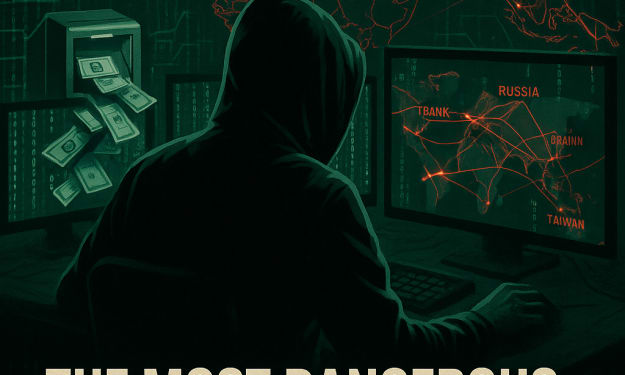
The most dangerous hacking operation in the history of banks | Kings of the Dark Web?
On September 13, 2017, the IT director of a Russian bank was living a normal life with everything going well. But at exactly 3 a.m. on that date, he called the bank’s accounts manager with a trembling voice and said, “Contact the IT team immediately because the situation is very serious.” Without asking for details, the IT employee contacted Kaspersky and requested that they send a specialist to the bank immediately. He told them, “It seems the problem that has baffled the world has now reached Russia.” Indeed, Kaspersky sent an IT expert to the bank within fifteen minutes. The expert met with the bank’s IT employee, and the surprise was that someone had managed to control the primary domain controller—the unit that controls all the bank’s computers. To clarify, if you control this unit, you control everything in the bank. The IT director and Kaspersky expert sat in front of the main server and watched the hacker sending data to China without any logical reason. The Kaspersky expert was shocked by the strength and scale of the breach and initially lost hope of stopping it, but he began searching for malicious software to minimize the damage. After a long search, he found a program that allowed the hacker to monitor and control the computer remotely. At one strange moment, the expert opened Microsoft Word and typed “Hello” in Russian. For minutes, nothing changed, then suddenly the mouse pointer moved, and a message appeared on the screen. The hacker replied in Russian, “You will never catch us.” The expert responded, “We will catch you.” The hacker answered, “No, my friend, you won’t.” This marked the start of a psychological war between professional hackers and the cybersecurity team. This was the beginning of one of the most dangerous hacking operations in history. But who won in the end? The hackers or the banks, security forces, and investigators? The entire story is highly classified, and only limited names and data have been disclosed because revealing the details of such a theft could cause a global economic crisis. The story began in 2014 when the group’s sole mission was to quietly monitor internal banking systems and gather information without carrying out any real hacking—just testing vulnerabilities and waiting for the right moment. On April 8, 2014, they started their plan by sending a phishing email with an infected Word document to a low-level employee at a Ukrainian bank. The document exploited a vulnerability in Microsoft Word, unleashing malware that opened a backdoor into the entire banking system. They were then able to watch everything on that employee’s computer, recording every keystroke and password entered. The employee was unaware his device was compromised. This employee effectively became the gateway to a much larger breach, gradually spreading into all the bank’s servers and devices. After nearly two years of surveillance, the hackers executed their first major theft on July 10, 2016, in Taipei, Taiwan. During this theft, two gang members wearing surgical masks entered a bank. One stood at the entrance observing, while the other stood calmly at an ATM machine without withdrawing cash or entering a PIN. Suddenly, the ATM started dispensing money continuously. The gang member calmly collected the cash into his bag and fled before a stranger approached the ATM. The stranger, who attempted to withdraw money, was shocked to see cash strewn all over the floor but didn’t take any. This wasn’t an isolated event; the exact operation occurred simultaneously at 20 locations worldwide, causing confusion among bank managers who initially thought it was a software glitch or a coincidence. The gang was highly organized with specific teams for each phase: reconnaissance, penetration testing, monitoring, data collection, analysis, planning, and execution. Their theft methods were sophisticated. They transferred money from fake accounts into their own while manipulating balances so the bank’s internal systems wouldn’t notice any suspicious activity. They also collaborated with on-the-ground “cash handlers” who physically collected the money from ATMs. In one month, they stole over $50 million using this method. After stealing billions from over 100 banks in 30 countries, Kaspersky, Taiwanese police, and various international security agencies began tracking the gang. In 2018, authorities raided the home of the gang’s Ukrainian leader, Denis, who lived a lavish life in Spain. They confiscated his possessions, including two BMW cars, half a million dollars in jewelry, and 15,000 bitcoins worth over a billion dollars today. Denis was a programming genius but used his skills more as a personal challenge than just for wealth. Authorities arrested several gang members, but the network remains large and complex. Some sources suggest the gang is part of the Russian cyber army, though no official evidence confirms this. The key lesson: never open suspicious links or log in to unknown websites, even if sent by trusted people, because hackers are everywhere.
By Ink pulse(different angle)about a year ago in Criminal
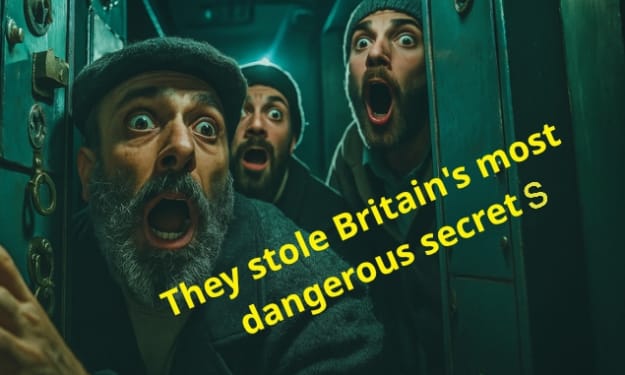
The story of the Lloyds Bank robbery | They stole Britain's most dangerous secrets by accident
On January 13, 2006, in the city of Acassuso near Buenos Aires, the largest bank in Argentina was hit in an armed robbery. The gang stormed the bank and took customers and employees hostage. Just fifteen minutes later, it seemed like the plan had failed: one robber tried to escape with a hostage but was met with a full police blockade. He returned inside, seemingly cornered along with his accomplices. But this was all part of a masterfully crafted illusion. The gang leader was actually executing what would later be known as the most brilliant bank heist ever—“The Heist of the Century.” It began on May 15, 2005, when Fernando Araujo told his psychologist that he wanted to do something to reignite his passion for life. When asked what, he said, “I want to rob a bank.” The psychologist laughed. He wasn’t joking. Araujo was a bright man: a legal assistant and part-time actor. He began riding his motorcycle around Acassuso, scouting banks. Banco Río stood out—a major bank where most Argentines kept their savings, with a secure vault full of safe deposit boxes storing cash, gold, diamonds, and more. He weighed two options: robbing employee safes during a stickup (a risky move with limited payoff), or breaking into the underground vault (high reward but nearly impossible). Cameras and heat sensors connected directly to the police made it seem hopeless. Then he noticed a pattern: manhole covers leading to a large sewer system 160 meters from the vault. If he could reach the bank through there, it might work. For 35 days, he studied every detail. He recruited Sebastián Bolster, an engineer who hated banks after his family’s savings were wiped out. They called each other “The Leader” and “The Engineer.” The Engineer entered the bank pretending to be a wealthy client, using a hidden camera to film the vault. But the operation needed money, so The Leader brought in “The Doctor,” a mysterious mastermind who recruited the rest of the crew: “The Financier,” a silver-tongued con man; “The Fierce One,” a hardened ex-con; and “The Kid,” a trusted operative. The plan was bold: dig a 30-meter tunnel from the sewer to the vault. The Engineer designed a heat-insulated suit to beat the sensors, but it proved too restrictive. So they switched strategies — enter the bank in disguise, fake a failed robbery, then escape with the loot through the sewer. Weapons were required, but they used plastic toy guns. The Engineer also built a special compressed-air tool called “The Gun” to break vault locks in seconds. On the morning of January 13, a vintage Volkswagen pulled up to Banco Río. Four men in gray uniforms, blonde wigs, and ski masks entered and took control. Inside, they acted nervous and clumsy to sell the illusion of a botched job. Outside, the police quickly surrounded the bank. One robber, The Financier, pretended to try and escape with a hostage, only to be "forced" back inside—again, part of the act. Meanwhile, The Engineer emerged in the vault after tunneling through the wall, beginning to crack open hundreds of safe deposit boxes with “The Doctor.” The Leader used the hostages to delay the police, even ordering pizza to buy more time. Once done, they loaded bags of cash, jewelry, and gold into the tunnel. They left toy guns and a fake bomb behind to confuse the police and delay their entry. They floated the loot through the sewer on inflatable rafts to an exit 200 meters away. “The Kid” waited above in the Volkswagen, modified with a hidden trapdoor for the escapees. They drove off, leaving the police still negotiating with ghosts. Hours later, the police stormed the bank—and found nothing. No robbers. No real weapons. Just silence. The crew split the money and agreed to disappear. But betrayal came from within. The Financier’s wife took $100,000 worth of the loot and, after a fight, reported everything to the police. One by one, the gang was arrested: The Financier, The Leader, The Engineer, and The Fierce One. The Doctor and The Kid escaped the country. None of the money was recovered. The bank absorbed the loss. Each received sentences of 9–15 years, but none served more than three thanks to clever legal defenses and public sympathy. Years later, their story became a hit movie. In a surprising twist, they donated 30% of the film’s profits back to the bank. And thus, "The Heist of the Century" became known as the smartest robbery ever pulled off in modern history.
By Ink pulse(different angle)about a year ago in Criminal
Nirbhaya: The Crime That Awoke Nation's Conscience. AI-Generated.
On the chilling night of December 16, 2012, a 23-year-old physiotherapy student boarded a private bus in South Delhi with her male friend. What happened next would shock not just India, but the entire world.
By Nowshad Ahmadabout a year ago in Criminal
💔 A Modern-Day Execution: Couple Murdered in Balochistan in the Name of 'Honour'
By Asad Taizai | July 20, 2025 A haunting video recently surfaced from the coal-mining region of Sanjdi Deghari, near Quetta, Balochistan, sparking shock and outrage across Pakistan and beyond. The footage shows a young couple—later identified as Bano Satgzai and Ehsan Samalani—being executed in what has now been confirmed as an honour-based killing.
By 🕵️♂️ True Crime Enthusiast | Storyteller of the Dark Side 🔍about a year ago in Criminal
Murder at Lake Bodom: Finland's Cold Case That Haunts Generations. AI-Generated.
The Night It Happened On the early morning of June 5, 1960, four Finnish teenagers 15 year olds Maila Björklund and Anja Mäki, and 18 year olds Seppo Boisman and Nils Gustafsson camped near Lake Bodom in Espoo, Finland. Between 4:00 and 6:00 a.m., a violent attack struck them in their sleep. A passerby discovered the blood soaked tent and three bodies by 11 a.m.Gustafsson survived with significant injuries, but the others were fatally wounded.
By Nowshad Ahmadabout a year ago in Criminal
The greatest black butcher in history | He terrorized the United States of America for more than 30 years . Content Warning.
On June 13, 2002, a Black man walked into a police station in the state of Florida. From his appearance, it was clear he was not just any ordinary person. He looked exhausted, regretful, and said in a pained, sorrowful voice:
By Ink pulse(different angle)about a year ago in Criminal
Jeffrey Epstein: The Ghost That Haunts Trump's White House Return
For the first time in Donald Trump's political career, a narrative is taking shape that even his most loyal supporters are unwilling to buy. That narrative centers around a man who died six years ago—Jeffrey Epstein. As Trump seeks a return to the White House, Epstein's legacy has emerged as a potent force shaking the very foundation of Trump’s authority and the unity of the MAGA movement. Outside the U.S. Chamber of Commerce building in Washington D.C., a woman recently held a placard demanding the release of all files related to Epstein by President Trump. This is not an isolated protest. It symbolizes a growing unrest, not among liberals or left-wing activists, but among Trump's own MAGA loyalists. The red "Make America Great Again" (MAGA) hat is not just merchandise—it's a movement, a belief system, and, until now, a symbol of unity. Trump, who has always claimed ownership over this ideology, once silenced critics by declaring that he created MAGA, and therefore he defines it. This tactic has worked time and again—until now. --- Epstein: The Unwanted Phantom in Trump’s Comeback Jeffrey Epstein, the disgraced financier and convicted sex offender, died in 2019 under mysterious circumstances while awaiting trial. His death, ruled a suicide, only intensified conspiracy theories that he was murdered to protect powerful individuals linked to his alleged crimes. Trump’s supporters were once enthusiastic promoters of this theory, which claimed Epstein had a "black book" containing names of elite figures—some allegedly involved in heinous activities on his private island involving underage girls. Many MAGA voices, including Vice President J.D. Vance and Trump’s own son, Donald Trump Jr., gave life to this theory. It became a cornerstone of their narrative: that an elite liberal cabal was abusing power and silencing threats. Yet now, the same supporters are outraged to find Trump and his administration seemingly stepping back from that narrative. Attorney General Pam Bondi, once vocal about the need for full transparency in the Epstein case, has shifted tone. She now insists there is “nothing more to see” and urges the public to move on. Trump himself recently referred to the Epstein story as “boring” and accused those pushing it of being “bad people.” On his social platform, Truth Social, he dismissed Epstein-related theories as "nonsense" and referred to those who still believe in them as "former supporters." This shift has triggered an internal rebellion. Devoted allies and staunch loyalists are now questioning Trump's intentions. MAGA influencers who once praised him are now expressing anger and suspicion. The trust that Trump spent years building is showing rare signs of fracture.
By Ikram Ullahabout a year ago in Criminal