capital punishment
Weigh the pros, cons and controversies surrounding the grave issue of capital punishment; should the death penalty be allowed?
Unveiling Horror: The Night Milwaukee Police Entered Jeffrey Dahmer's Apartmen
On a fateful evening in July 1991, Milwaukee police officers made a discovery that would shock the world and unveil one of the most gruesome serial killers in history. Jeffrey Dahmer, who had managed to evade capture despite a history of disturbing behavior, was finally exposed. What the police found in his apartment was beyond any nightmare, cementing Dahmer's name in the annals of criminal history. The Discovery The investigation began with the routine questioning of Tracy Edwards, a man who had narrowly escaped Dahmer's clutches. Edwards led the officers to Dahmer’s apartment, where they were met with an overwhelming stench. It wasn't long before they noticed a suspicious 57-gallon drum sitting in the corner of Dahmer’s bedroom. The overpowering odor emanating from it signaled something deeply wrong. When they opened the drum, they were horrified to find three dismembered human torsos dissolving in an acid solution. As the search continued, the apartment yielded even more macabre discoveries. The kitchen held four severed heads, carefully preserved. Seven skulls were found in the bedroom and closet, each a grim trophy of Dahmer's reign of terror. The refrigerator revealed an even more grotesque sight: two human hearts, alongside other body parts intended for consumption. The Man Behind the Monstrosity Jeffrey Dahmer’s gruesome activities were the culmination of years of unchecked deviance and mental illness. Born on May 21, 1960, in Milwaukee, Wisconsin, Dahmer exhibited troubling behavior from a young age. His fascination with death and dismemberment began in his teens, escalating as he matured. By the time he reached adulthood, Dahmer had honed his predatory skills, targeting young men, particularly from marginalized communities, whom he lured to his apartment with promises of money or alcohol. Dahmer’s modus operandi involved drugging his victims, strangling them, and then performing twisted post-mortem rituals. He engaged in necrophilia, cannibalism, and dismemberment, keeping parts of his victims as gruesome souvenirs. His ability to blend into society despite his heinous crimes made him an especially terrifying figure. The Macabre Collection The 57-gallon drum found in Dahmer’s apartment was perhaps the most disturbing element of his grisly collection. This industrial container, typically used for storing chemicals, had become a vessel for dissolving human remains in acid. Dahmer’s choice of this method was both practical and symbolic, aiming to obliterate the evidence of his crimes while indulging in his grotesque fascination with death and decay. Further inspection of the apartment revealed a nightmarish array of human remains. The severed heads and skulls were meticulously preserved, suggesting a ritualistic aspect to Dahmer’s killings. The human hearts in the refrigerator hinted at his cannibalistic urges, with Dahmer later confessing that consuming his victims made them feel like a permanent part of him. The Psychological Profile Understanding Jeffrey Dahmer requires delving into his psyche, which was as complex as it was disturbed. Numerous psychological evaluations revealed Dahmer suffered from a variety of mental health issues, including borderline personality disorder, schizotypal personality disorder, and a severe psychotic disorder. His lack of empathy, coupled with his compulsive need to control and dominate his victims, drove his actions. Dahmer’s killings were not just acts of violence but expressions of his inner turmoil and need for control. His choice of victims – often young, vulnerable men – allowed him to exert ultimate power over them. The preservation of body parts served as a way to maintain that control even after death, creating a perverse sense of companionship. The Legal Proceedings Following his arrest, Dahmer faced a barrage of charges for the murders of 17 young men. The trial, which began in January 1992, was a media sensation, drawing public attention to the horrific details of his crimes. Dahmer pleaded guilty but insane to the charges, leading to a contentious legal battle over his mental state and culpability. The prosecution argued that Dahmer was fully aware of his actions and their consequences, while the defense sought to prove his insanity. Ultimately, the jury found Dahmer legally sane and guilty of all charges, sentencing him to 15 consecutive life terms without the possibility of parole. This ensured he would spend the rest of his life in prison, away from society. The Aftermath Jeffrey Dahmer’s incarceration did little to quell the public’s fascination and revulsion towards him. He became a morbid figure in popular culture, inspiring books, documentaries, and films that sought to understand his monstrous behavior. Dahmer himself expressed a desire to die, haunted by his actions and the pain he had caused. In November 1994, Dahmer met a violent end in prison, beaten to death by a fellow inmate. His death, while providing a grim sense of closure, left many questions unanswered about the nature of his crimes and the depths of human depravity. Conclusion The discovery of Jeffrey Dahmer’s apartment in 1991 remains one of the most horrifying moments in criminal history. The gruesome findings, including the 57-gallon drum filled with dismembered torsos and the meticulously preserved body parts, revealed the extent of Dahmer’s monstrous acts. His ability to evade capture for so long, coupled with his horrific methods, makes his story a chilling reminder of the darkness that can lurk within the human psyche. As society continues to grapple with the legacy of his crimes, Dahmer’s story serves as a cautionary tale about the need for vigilance and the importance of mental health awareness in preventing such atrocities.
By Deji Akomolafe2 years ago in Criminal
The Mismanagement in the Arab World
It is perplexing to observe the financial management strategies employed by some Arab nations today, especially when considering their illustrious history as pioneers in fields such as mathematics and astronomy between the 9th and 15th centuries. Their seminal contributions to algebra and astronomy were so significant that they have influenced modern mathematical language, with terms like "algorithm" and "algebra" directly stemming from their work.
By Massinissa Amrane2 years ago in Criminal
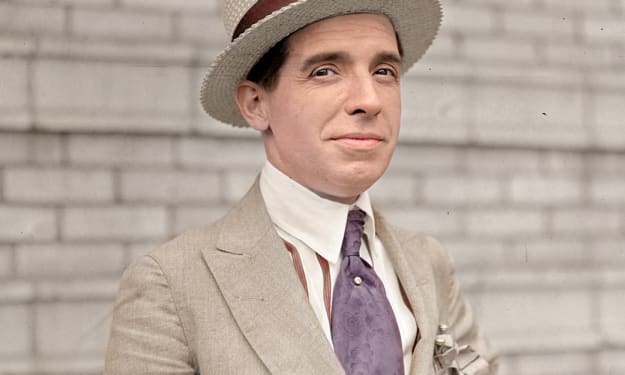
Ponzi Scheme Origin: Unraveling the Legacy of Charles Ponzi
The term "Ponzi scheme" has become synonymous with financial fraud and deception, originating from the audacious schemes of one man during the early 20th century. Charles Ponzi, an Italian immigrant to the United States, captured the public imagination with promises of extraordinary returns on investments in a remarkably short time. His story, marked by initial success and ultimate downfall, serves as a cautionary tale about the allure of easy wealth and the consequences of financial deceit. Charles Ponzi was born on March 3, 1882, in Italy. He immigrated to the United States in 1903, seeking fortune and opportunity. Initially, Ponzi struggled to establish himself, working odd jobs and even spending time in prison for petty crimes. However, his entrepreneurial spirit and confidence soon led him down a path that would captivate the nation. In the early 1920s, Ponzi discovered what he believed to be a lucrative arbitrage opportunity involving international postal reply coupons. These coupons, used for purchasing return postage, could be bought cheaply in one country and redeemed for a higher value in another due to exchange rate discrepancies. Ponzi promised investors massive returns—often as high as 50% in just 90 days—by exploiting these differences. Ponzi's scheme relied on a continuous influx of new investor funds to pay returns to earlier investors. Initially, the returns were paid as promised, and news of Ponzi's success spread rapidly, attracting more and more investors eager to capitalize on his seemingly foolproof system. His charisma and persuasive abilities further fueled the scheme's growth, with investors pouring in their life savings in pursuit of quick riches. As word spread, Ponzi's investment scheme grew exponentially. He established the Securities Exchange Company and began receiving millions of dollars from investors, promising them effortless wealth through his intricate web of promises and assurances. Ponzi's meteoric rise attracted significant media attention, turning him into a celebrity of sorts. Newspapers hailed him as a financial wizard who had cracked the code to endless prosperity, further boosting investor confidence and fueling the frenzy. Despite Ponzi's outward success, questions soon arose about the sustainability of his operations. Financial experts and journalists began scrutinizing his methods, questioning how such high returns could be consistently delivered. The Boston Post published an exposé in July 1920, detailing the financial discrepancies and raising alarms about Ponzi's legitimacy. By mid-1920, the cracks in Ponzi's scheme were becoming increasingly apparent. His financial reserves were insufficient to meet the growing demands of investors seeking their returns. Efforts to stall withdrawals and reassure panicked investors only exacerbated suspicions. In August 1920, Ponzi's empire collapsed spectacularly. Ponzi was arrested and charged with multiple counts of fraud and larceny. Investigations revealed that his operation was essentially a classic pyramid scheme—using new investor funds to pay returns to earlier investors without any legitimate source of income or profit generation. In November 1920, Ponzi was declared bankrupt. His investors lost an estimated $20 million (equivalent to hundreds of millions today), with many left financially devastated. Ponzi himself faced years of legal battles, convictions, and additional fraud charges throughout his life. Although Ponzi did not invent the concept of financial fraud, his scheme and subsequent exposure brought the term "Ponzi scheme" into the public lexicon. It has since been used to describe any fraudulent investment scheme that promises high returns with little risk, relying on a constant flow of new investor funds to sustain payouts. The story of Charles Ponzi offers several enduring lessons about greed, trust, and the dangers of chasing unrealistic returns. Ponzi schemes promise unattainable returns, exploiting investors' desire for quick wealth. Investors should be wary of any investment offering high returns with little risk, as they often come with hidden dangers. It is crucial for investors to conduct thorough research and due diligence before committing funds. Understanding the legitimacy of an investment opportunity and verifying its claims can prevent falling victim to fraudulent schemes. Charles Ponzi's name lives on not as a symbol of financial success but as a cautionary tale of unchecked ambition and deceit. His scheme, while financially ruinous for many, serves as a reminder of the importance of transparency, honesty, and ethical conduct in financial dealings. The term "Ponzi scheme" continues to be used to describe fraudulent schemes worldwide, highlighting the enduring impact of Ponzi's brief but infamous reign as a financial impresario. In conclusion, Charles Ponzi's rise and fall illustrate the timeless allure of get-rich-quick schemes and the devastating consequences they can have on individuals and communities. His story underscores the need for vigilance, skepticism, and informed decision-making in the realm of investments—a lesson that remains as relevant today as it was a century ago.
By Deji Akomolafe2 years ago in Criminal
The Great Alcatraz Escape: A Tale of Daring and Mystery
On June 11, 1962, three inmates at Alcatraz Federal Penitentiary executed one of the most daring prison escapes in history. Frank Morris and brothers John and Clarence Anglin left homemade dummy heads in their beds to fool the guards before vanishing from the infamous island prison. This escape has since captivated the public's imagination, sparking debates about the fate of the escapees and the possibility that they lived free for decades. This blog post delves into the details of the escape, the subsequent investigation, and the enduring mystery surrounding the fate of the three men. The Inmates Frank Morris, the mastermind behind the escape, was known for his high intelligence and previous escape attempts from other prisons. Born in 1926, Morris had a troubled upbringing and turned to a life of crime early on. His rap sheet included armed robbery and burglary, and he was considered a flight risk. After repeated escapes from less secure institutions, he was sent to Alcatraz, deemed inescapable due to its location on a rocky island surrounded by the cold, swift currents of San Francisco Bay. The Anglin brothers, John and Clarence, shared a similar background. Born into a large family of seasonal farmworkers, they grew up in poverty and turned to crime during their teens. Known for their close bond and loyalty to each other, the brothers had also attempted several escapes from previous prisons. Their combined experience and determination made them ideal accomplices for Morris. Planning the Escape The escape plan was meticulously devised over many months. Morris and the Anglins, along with another inmate, Allen West, began by widening the ventilation ducts in their cells using makeshift tools such as spoons and saw blades smuggled from the prison workshop. They covered the holes with cardboard and paint to avoid detection. The escapees created dummy heads from a mixture of soap, toothpaste, concrete dust, and toilet paper, painting them with flesh-toned paint and adding real human hair collected from the prison barber shop. These heads were crucial in deceiving the guards during nightly bed checks. Behind their cells, the men set up a secret workshop in an unused utility corridor. They constructed life vests and a makeshift raft from over 50 raincoats, stitched together and sealed with heat from the steam pipes. The escapees also prepared wooden paddles to navigate the treacherous waters of San Francisco Bay. The Escape On the night of June 11, 1962, the escape plan was put into action. Morris and the Anglins crawled through the holes they had carved in their cells and made their way to the utility corridor. From there, they climbed up a ventilation shaft to the roof. Allen West, however, encountered difficulties with his ventilation duct and was unable to join them in time. Once on the roof, the trio moved to the northern edge of the cellhouse and descended 50 feet to the ground using a makeshift rope made from sheets. They then climbed over the perimeter fence and made their way to the shore. There, they inflated their raft using a concertina, an accordion-like musical instrument, and set off into the bay, disappearing into the night. The Aftermath The following morning, guards discovered the dummies in the beds and sounded the alarm. A massive manhunt ensued, involving multiple agencies, including the FBI, Coast Guard, and local police. Despite extensive searches, no trace of the escapees was found. The official investigation concluded that the men likely drowned in the frigid waters of the bay. However, the case remained open, and over the years, tantalizing clues emerged suggesting that the men might have survived. Family members of the Anglins reported receiving unsigned postcards and messages, and there were alleged sightings of the men in various locations, including Brazil. The 2013 Letter In 2013, the San Francisco Police Department received a letter purportedly from John Anglin. The writer claimed that he had lived under an assumed name for decades and was now suffering from cancer. The letter offered a deal: in exchange for medical treatment, the writer promised to reveal more details about the escape. The FBI analyzed the letter for fingerprints and DNA but could not conclusively determine its authenticity. This letter reignited public interest in the case, leading to renewed speculation and investigation. While some experts remain skeptical, arguing that the letter is likely a hoax, others believe it could be genuine, given the detail and plausibility of the account. The Enduring Mystery The Alcatraz escape has become a part of American folklore, inspiring books, documentaries, and movies, including the 1979 film "Escape from Alcatraz," starring Clint Eastwood as Frank Morris. The escape is a testament to human ingenuity and determination, illustrating how even the most secure institutions can be outwitted. The fate of Morris and the Anglins remains one of the greatest mysteries in criminal history. Did they perish in the icy waters of San Francisco Bay, or did they manage to reach the mainland and start new lives? Despite the passage of time and extensive investigation, definitive answers elude us. Advances in technology, including DNA analysis and modern forensics, continue to offer hope that new evidence might one day emerge to solve this mystery. Until then, the story of the Alcatraz escapees endures as a captivating tale of daring and the enduring human spirit. Conclusion The 1962 Alcatraz escape is a story of meticulous planning, incredible daring, and an enduring mystery. Frank Morris and the Anglin brothers' bold bid for freedom has captured the public's imagination for decades, symbolizing the lengths to which individuals will go to attain liberty. While the official narrative suggests they drowned, the possibility that they survived and lived out their lives in secret continues to intrigue and inspire. The tale of the Alcatraz escape is a fascinating chapter in the annals of American criminal history, a reminder of the complex interplay between human ingenuity and the quest for freedom.Start writing...
By Deji Akomolafe2 years ago in Criminal
The Mysterious Disappearance Of The Jamison Family. Content Warning.
Up until October 8, 2009, Bobby Dale Jamison, his wife Sherilynn, and their six-year-old daughter Madyson seemed to be enjoying regular lives in Eufaula, Oklahoma. All three of them vanished from their house that day mysteriously, leaving no trace of their whereabouts. The family’s pickup truck was found by the police after several days of searching, but this discovery left more questions than it did answers.
By Victoria Velkova2 years ago in Criminal
On October 24, 1946, Kurt Daluege, a high-ranking Nazi official and war
On October 24, 1946, Kurt Daluege, a high-ranking Nazi official and war criminal, was executed at Pankrác Prison in Prague. As the former Chief of the Ordnungspolizei (Order Police), Daluege was instrumental in enforcing the brutal policies of the Nazi regime during World War II. His execution marked a significant moment in the post-war efforts to bring Nazi war criminals to justice. Kurt Daluege: The Man Behind the Uniform Born on September 15, 1897, in Kreuzburg, Silesia, Kurt Daluege quickly rose through the ranks of the Nazi Party. He joined the NSDAP (Nazi Party) in the early 1920s and became a member of the SA (Sturmabteilung) before transferring to the SS (Schutzstaffel), where he found his true calling. Known for his ruthlessness and unwavering loyalty to Adolf Hitler, Daluege was appointed as the Chief of the Ordnungspolizei in 1936. In this capacity, he oversaw the German uniformed police and played a crucial role in the implementation of Nazi policies. The Crimes of Daluege Daluege's tenure as Chief of the Ordnungspolizei was marked by widespread atrocities. His forces were responsible for numerous acts of brutality, including the suppression of resistance movements and the deportation of Jews and other persecuted groups to concentration camps. Daluege was also deeply involved in the planning and execution of mass murders in occupied territories. One of the most notorious incidents linked to Daluege was the Lidice massacre in 1942. Following the assassination of Reinhard Heydrich, the acting Reich Protector of Bohemia and Moravia, by Czech resistance fighters, Daluege ordered a brutal reprisal. The village of Lidice was razed to the ground, and its male inhabitants were executed while women and children were either murdered or sent to concentration camps. This act of collective punishment shocked the world and underscored the sheer brutality of the Nazi regime. Arrest, Trial, and Execution After the fall of Nazi Germany in 1945, Daluege was captured by Allied forces and extradited to Czechoslovakia to stand trial for his war crimes. His trial was held in Prague, where he faced charges related to his involvement in the Lidice massacre and other atrocities committed under his command. Throughout the proceedings, Daluege showed no remorse, steadfastly claiming he was merely following Hitler's orders. The court found Daluege guilty of crimes against humanity and sentenced him to death. On October 24, 1946, he was executed by hanging at Pankrác Prison in Prague. His execution was a moment of justice for the countless victims of his actions and a reminder of the horrific consequences of blind obedience to a tyrannical regime. Legacy and Reflections The execution of Kurt Daluege was part of a broader effort to hold Nazi war criminals accountable for their actions. The Nuremberg Trials and other post-war tribunals sought to establish a precedent for international justice and ensure that those responsible for the Holocaust and other war crimes faced consequences. Daluege's case highlights the complexities of justice in the aftermath of mass atrocities. His defense—claiming he was simply following orders—was a common refrain among Nazi officials, yet it failed to absolve them of responsibility. The principles established during these trials emphasized individual accountability and rejected the notion that obedience to orders could excuse heinous crimes. Today, the story of Kurt Daluege serves as a grim reminder of the dangers of authoritarianism and the capacity for human cruelty under totalitarian regimes. It underscores the importance of vigilance, moral courage, and the rule of law in preventing such atrocities in the future. As the world continues to grapple with issues of justice and reconciliation, the lessons from the trials of Nazi war criminals remain relevant. They remind us of the enduring need to confront and address crimes against humanity, to honor the memory of the victims, and to strive for a world where such horrors never occur again. Kurt Daluege's execution at Pankrác Prison was a small but significant step towards justice in the aftermath of one of history's darkest chapters. It stands as a testament to the resolve of the international community to hold perpetrators of gross human rights violations accountable and to ensure that the legacy of their victims is never forgotten.Start writing...
By Deji Akomolafe2 years ago in Criminal
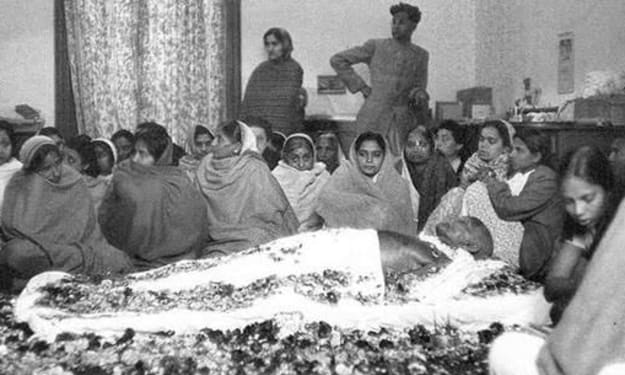
The Assassination of Mahatma Gandhi
On January 30, 1948, the world was shaken by the assassination of Mahatma Gandhi, one of the most prominent figures in the struggle for Indian independence. This tragic event not only marked the end of an era but also left an indelible scar on the fabric of Indian society. Gandhi, revered as the Father of the Nation, was a beacon of peace, non-violence, and unity. His assassination was a shocking act of violence that contrasted sharply with the principles he championed throughout his life. The Fateful Day The evening of January 30, 1948, began like many others for Mahatma Gandhi. He was at Birla House in New Delhi, preparing for his customary evening prayer meeting. Gandhi's prayer meetings were gatherings where people of different faiths came together to reflect and pray, embodying his vision of religious harmony and tolerance. As he made his way to the prayer ground, a crowd gathered around him, as it often did. Among the crowd was Nathuram Godse, a Hindu nationalist with a deep-seated grudge against Gandhi. Godse, armed with a semi-automatic pistol, approached Gandhi on the pretext of seeking his blessings. As he bent down, ostensibly to touch Gandhi’s feet, he drew his weapon and fired three shots at point-blank range. The bullets struck Gandhi in the chest and abdomen. He collapsed to the ground, uttering "Hey Ram" – a phrase that would later be remembered as his final words. Despite immediate medical attention, Gandhi succumbed to his injuries within minutes. The news of his assassination spread rapidly, plunging the nation into grief and disbelief. Nathuram Godse: The Assassin Nathuram Godse was a member of the Hindu nationalist organization Rashtriya Swayamsevak Sangh (RSS) and a staunch follower of Vinayak Damodar Savarkar's ideology of Hindutva. Godse and his associates believed that Gandhi's policies of non-violence and his insistence on accommodating Muslims during the partition of India were detrimental to Hindu interests. They perceived Gandhi’s efforts to maintain Hindu-Muslim unity as a betrayal, especially after the creation of Pakistan. Godse’s disillusionment and anger culminated in the assassination, an act he believed would save India from Gandhi's "appeasement" of Muslims. In his trial, Godse articulated his motivations, claiming that Gandhi’s actions were responsible for the partition of India and the subsequent violence. He argued that Gandhi’s influence over the Congress party and the Indian government was leading the country down a path of destruction. Despite his defense, Godse was found guilty and sentenced to death. He was executed on November 15, 1949. His act of violence, intended to silence Gandhi’s influence, ironically amplified the very ideals he opposed. The Aftermath and Impact Gandhi's assassination sent shockwaves throughout India and the world. Leaders and citizens alike mourned the loss of a man who had dedicated his life to the principles of truth, non-violence, and communal harmony. His death led to an outpouring of grief and a nationwide period of mourning. The assassination also sparked widespread violence, particularly against Hindu nationalist groups like the RSS, which was temporarily banned by the Indian government. Gandhi’s death marked a critical juncture in Indian history. It underscored the deep-seated communal tensions that had been exacerbated by the partition. The nation faced the daunting task of healing and rebuilding in the wake of such a profound loss. Jawaharlal Nehru, India's first Prime Minister and a close associate of Gandhi, addressed the nation with a heavy heart, urging unity and peace. He reminded the people that Gandhi's ideals must continue to guide the nation’s path forward. Internationally, Gandhi's assassination highlighted the global struggle for peace and justice. Leaders from around the world expressed their condolences and acknowledged Gandhi’s immense contribution to the global discourse on non-violence and civil rights. His philosophy of non-violent resistance influenced numerous movements and leaders, including Martin Luther King Jr. and Nelson Mandela. The tragedy of his death reinforced the relevance and urgency of his message. Legacy of Mahatma Gandhi Despite the tragic end to his life, Mahatma Gandhi’s legacy endures. His principles of Satyagraha (truth and non-violence) continue to inspire movements for social justice and political change worldwide. Gandhi’s vision of an inclusive and harmonious society remains a guiding light for India and the global community. His teachings on self-reliance, simplicity, and environmental sustainability are increasingly relevant in today’s world, grappling with issues of inequality, conflict, and ecological degradation. Gandhi's assassination serves as a stark reminder of the perils of intolerance and the destructive power of hatred. It underscores the importance of vigilance in safeguarding democratic values and promoting dialogue and understanding among diverse communities. The ideals that Gandhi lived and died for – non-violence, truth, and justice – are more pertinent than ever in a world often torn apart by violence and discord. In commemorating Mahatma Gandhi, it is essential to reflect not only on his life and achievements but also on the circumstances surrounding his death. The lessons from that fateful day in January 1948 continue to resonate, urging us to strive for a world where peace and compassion prevail over hatred and violence. Gandhi’s life was a testament to the power of the human spirit to overcome adversity and achieve greatness through humility and perseverance. His legacy is a call to action for each of us to contribute to a more just and peaceful world.
By Deji Akomolafe2 years ago in Criminal
The most terrifying places on our planet
On our planet, you can find places so creepy that they can horrify even the most experienced enthusiast. Some of them can chill your blood, while in others, you might easily go insane. So, let me tell you about the scariest places on our planet.
By Vitalii Petrov2 years ago in Criminal
The system is rigged for you to fail. That's why being different guarantees success
That's a bold statement, but it's true. We live in a world where the system is designed to keep things as they are. The education system, the job market, the media, and even our own families and friends can all be seen as forces that are trying to push us into conformity.
By Hovelander2 years ago in Criminal