


Piracy in the Caribbean originated from 16th-century European geopolitical rivalries. Desiring a share of Spain's New World wealth, England, France, and the Netherlands initially sponsored "privateers"—state-sanctioned pirates holding letters of marque. When peace treaties ended official sponsorship, these unemployed sailors turned to independent piracy, finding perfect cover in the region's hidden coves and island.
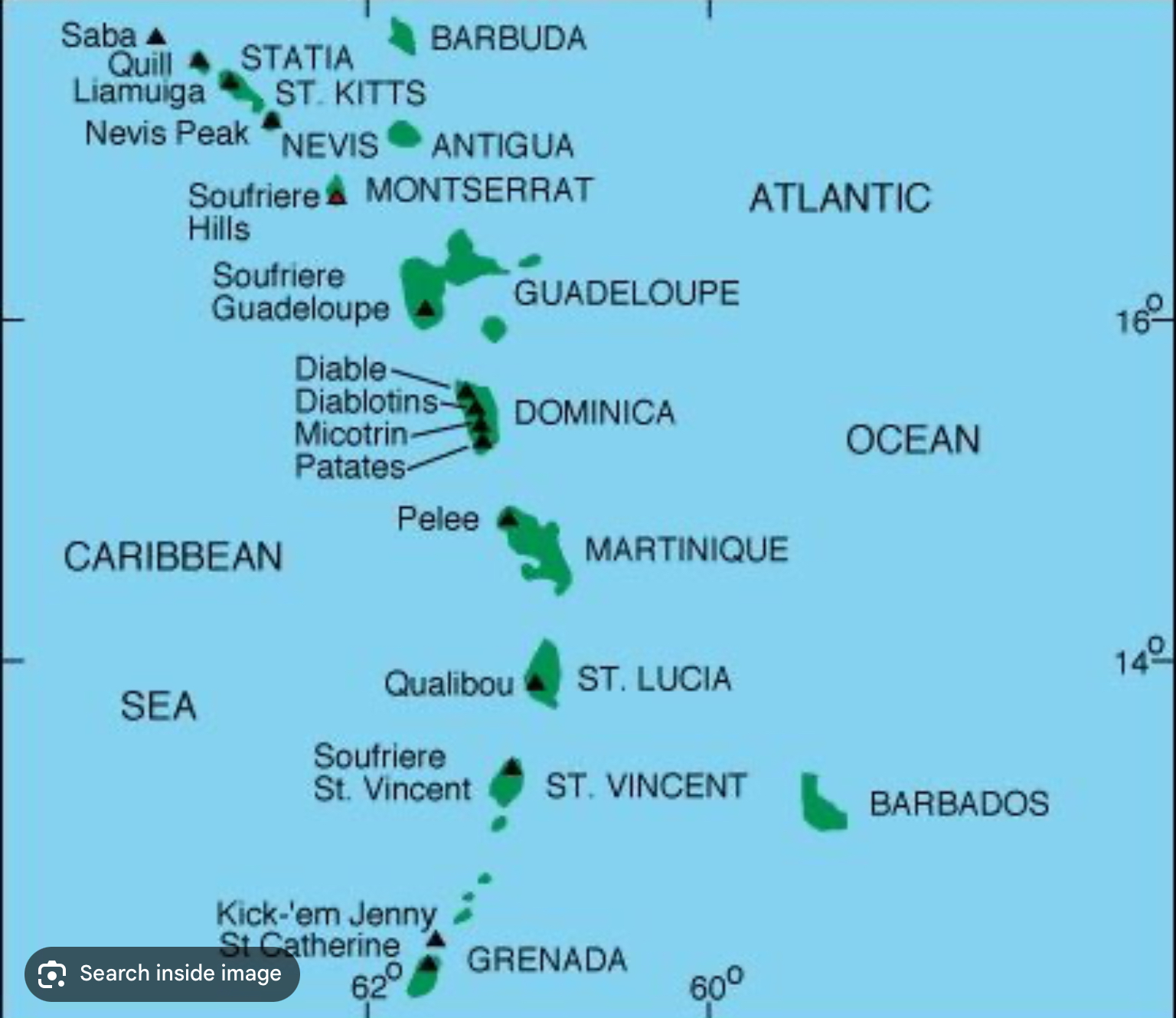
The Era of Privateers (16th Century)Spain claimed a monopoly on the Caribbean, extracting vast amounts of gold and silver from its American colonies and transporting them back to Europe on heavily laden galleons. To weaken Spain's dominance, European rivals like England and France authorized privateers. Queen Elizabeth I famously employed figures like Sir Francis Drake to raid Spanish ports and treasure fleets. These men were treated as national heroes rather than criminals as long as they shared their plunder with the Crown.
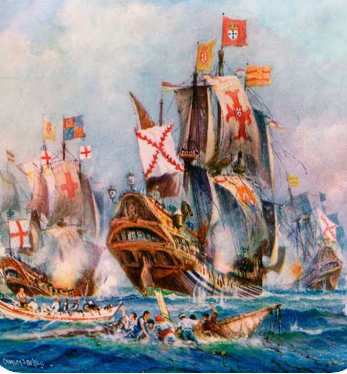
The Buccaneers of Tortuga (Early-to-Mid 17th Century)When wars in Europe temporarily paused, many privateers were left stranded. Some settled on the islands of Hispaniola (modern-day Haiti and the Dominican Republic) and nearby Tortuga.The Buccaneers: These men started out as hunters who survived by shooting wild cattle and pigs and smoking the meat using an indigenous method called boucan.The Brethren of the Coast: As the Spanish attempted to wipe out these hunters, the buccaneers turned to piracy. They formed loosely organized outlaw societies known as the "Brethren of the Coast," adopting strict internal codes of conduct and democratically electing their captains.
The Golden Age of Piracy (1650s–1730s)Piracy exploded into what is known as the "Golden Age" following the end of the War of the Spanish Succession in 1713. Thousands of naval sailors and privateers were suddenly unemployed. With European economies in ruin, many of these experienced mariners flocked to the Caribbean.Several factors sustained this massive outbreak of piracy:Colonial Havens: Lawless, booming port cities like Port Royal, Jamaica, and Nassau, Bahamas, offered safe havens where pirates could spend their loot, recruit crews, and sell stolen goods.Profitable Trade Routes: The burgeoning European plantation system in the Caribbean created highly lucrative shipping lanes filled with sugar, rum, and tobacco, which proved much easier to plunder than heavy Spanish galleons.Harsh Working Conditions: Many sailors and indentured servants joined pirate crews to escape the brutal, disease-ridden conditions of life in the Royal Navy or on merchant and plantation ships.Ultimately, piracy in the Caribbean began to wane in the 1720s and 1730s when European powers sent heavily armed naval fleets to the region, actively hunted down pirate ships, and established stricter colonial governance.
The most famous, historical pirates of the Caribbean operated during the "Golden Age of Piracy" (1650s–1730s), with Blackbeard (Edward Teach) being the most feared. Other notorious figures included Welsh buccaneer Henry Morgan, "Black Bart" Bartholomew Roberts (most successful by ship captures), and Calico Jack Rackham, famous for having female crew members Anne Bonny and Mary Read.
Most Notorious Caribbean PiratesBlackbeard (Edward Teach): Known for his fearsome appearance, often tying lit fuses into his beard during battle. He captured over 45 vessels."Black Bart" Bartholomew Roberts: Considered the most successful pirate of the era, he captured over 400 ships.Sir Henry Morgan: A Welsh privateer who attacked Spanish cities (such as Panama) before becoming the Deputy Governor of Jamaica.Calico Jack Rackham: Known for his colorful calico clothing and for having two famous female pirates, Anne Bonny and Mary Read, in his crew.Anne Bonny & Mary Read: Infamous female pirates who fought alongside Calico Jack.Benjamin Hornigold: A mentor to Blackbeard who later became a pirate hunter.Charles Vane: A notoriously violent and unrepentant English pirate."El Draco" Sir Francis Drake: A 16th-century privateer authorized by Queen Elizabeth I to attack Spanish ships and cities.Key Locations and ContextNassau, Bahamas: Acted as a "Republic of Pirates" and a primary base of operations.Port Royal, Jamaica: Known as a notorious pirate haven before Henry Morgan helped stabilize it.Dominican Republic: A significant hotbed for piracy during this period.
Piracy in the Caribbean originated from 16th-century European geopolitical rivalries. Desiring a share of Spain's New World wealth, England, France, and the Netherlands initially sponsored "privateers"—state-sanctioned pirates holding letters of marque. When peace treaties ended official sponsorship, these unemployed sailors turned to independent piracy, finding perfect cover in the region's hidden coves and island.
The Era of Privateers (16th Century)Spain claimed a monopoly on the Caribbean, extracting vast amounts of gold and silver from its American colonies and transporting them back to Europe on heavily laden galleons. To weaken Spain's dominance, European rivals like England and France authorized privateers. Queen Elizabeth I famously employed figures like Sir Francis Drake to raid Spanish ports and treasure fleets. These men were treated as national heroes rather than criminals as long as they shared their plunder with the Crown.
The Buccaneers of Tortuga (Early-to-Mid 17th Century)When wars in Europe temporarily paused, many privateers were left stranded. Some settled on the islands of Hispaniola (modern-day Haiti and the Dominican Republic) and nearby Tortuga.The Buccaneers: These men started out as hunters who survived by shooting wild cattle and pigs and smoking the meat using an indigenous method called boucan.The Brethren of the Coast: As the Spanish attempted to wipe out these hunters, the buccaneers turned to piracy. They formed loosely organized outlaw societies known as the "Brethren of the Coast," adopting strict internal codes of conduct and democratically electing their captains.
The Golden Age of Piracy (1650s–1730s)Piracy exploded into what is known as the "Golden Age" following the end of the War of the Spanish Succession in 1713. Thousands of naval sailors and privateers were suddenly unemployed. With European economies in ruin, many of these experienced mariners flocked to the Caribbean.Several factors sustained this massive outbreak of piracy:Colonial Havens: Lawless, booming port cities like Port Royal, Jamaica, and Nassau, Bahamas, offered safe havens where pirates could spend their loot, recruit crews, and sell stolen goods.Profitable Trade Routes: The burgeoning European plantation system in the Caribbean created highly lucrative shipping lanes filled with sugar, rum, and tobacco, which proved much easier to plunder than heavy Spanish galleons.Harsh Working Conditions: Many sailors and indentured servants joined pirate crews to escape the brutal, disease-ridden conditions of life in the Royal Navy or on merchant and plantation ships.Ultimately, piracy in the Caribbean began to wane in the 1720s and 1730s when European powers sent heavily armed naval fleets to the region, actively hunted down pirate ships, and established stricter colonial governance.
Gold, silver and slavery
From the 16th century, large Spanish ships, called galleons, began to sail back to Europe, loaded with precious cargoes that pirates found impossible to resist. So many successful pirate attacks were made that galleons were forced to sail together in fleets with armed vessels for protection.
Spain’s European rivals especially the French and British spent the next few hundred years in various shifting alliances and both would either rob the Spanish ships directly or issue warrants or ‘letters of marque’ to private ships (privateers) to do so without fear of being hung as pirates (unless of course they were caught by the Spanish).
What made the Caribbean so pirate-friendly?
Pirates, like smugglers need convenient hide-aways and the Caribbean with its many islands and thousands of bays provided the perfect terrain for raiders.
The local population had been largely killed off by accidentally imported European diseases to which they had no resistance. With constant malaria and frequent epidemics of yellow fever raging through the Caribbean, official navies were at a significant disadvantage to seasoned crews making naval action that much more difficult.
The existence of thriving land bases such as Nassau where pirates could sell their ill-gotten (or officially-approved) gains was crucial to the pirate economy.
How did it all end?
While the Caribbean was primarily a staging post for Spanish treasure on its way to Madrid, there was little incentive for the British, French or Dutch to do much to discourage piracy. As Spanish power declined and Britain and France asserted themselves as the dominant regional powers it became obvious that potentially lucrative colonies where slaves were growing tobacco or sugar were threatened by uncertainty at sea and something had to be done to stamp out piracy.
In 1670, the Royal Navy had just two ships in the Caribbean, by 1718 the presence had swelled to 124 and piracy had become a shadow of its former self. A hundred years after that and the French had lost Haiti (their main Caribbean possession) to a slave revolt and Britain had double its number of ships there. The Navy hunted down pirates ruthlessly and dispatched quick and summary justice to anyone they caught.
Outright piracy and the use of pirates as privateers for European states would occasionally flair up but rarely would it remain a significant problem for long. The use of privateers was largely abandoned after the signing of the Treaty of Paris in 1856.
The word "pirate" still evokes images of swashbuckling rogues brandishing swords, but modern-day pirates are a far cry from Captain Jack Sparrow.
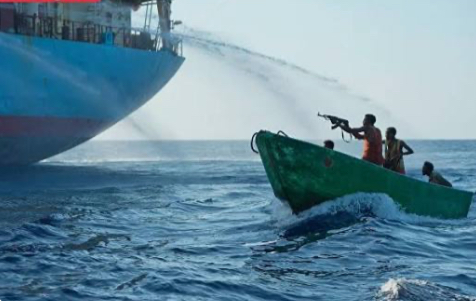
Gone are the corsairs, buccaneers and privateers that date back to the 14th century; today, pirates armed with assault rifles attack cargo ships, take hostages, and threaten maritime imports around the world.
In the first half of 2024 alone, the International Maritime Bureau's Piracy (IMB) Reporting Centre received 60 reports of piracy and armed robbery, and 85 crew members were kidnapped.
What are pirates of today?
The IMB defines piracy today as "an act of boarding a ship to commit theft or any other crime, with the intent or ability to use force to facilitate that act".
The International Maritime Organisation (IMO), on the other hand, defines it as an attack that occurs on the high seas or in areas outside the jurisdiction of any country's laws.
What do real-life, modern-day pirates do?
Pirates in the 21st century, or modern pirates, typically attack cargo ships from speed boats, usually operating off captured fishing or merchant vessels.
Modern pirates usually steal merchandise being transported on cargo ships, or attempt to take over the ship and charge a ransom for it.
Some also take the crew hostage for ransom.
Around 80 per cent of world trade is carried out by sea, meaning there are plenty of targets and a great deal of money to be made from modern piracy.
In 2020, the IMO estimated that it costs the global economy about $US25 billion ($37 billion) annually.
Are pirates still active today?
Modern pirates are still active in 2024, though attacks appear to be on the decline.
In 2023, the IMB reported 120 incidents of maritime piracy and armed robbery against ships, much lower than the 298 reported a decade prior in 2013.
Incidents of piracy spiked in the early to late 2000s, but have been steadily declining since 2010 according to data from Crime at Sea: A Global Database of Maritime Pirate Attacks.
Modern piracy in the Caribbean is a real, localized threat involving organized criminal networks targeting yachts and commercial vessels, primarily driven by the economic crisis in Venezuela. While not a widespread threat to all tourists, high-risk areas include the coast of Venezuela, Trinidad and Tobago, and parts of the Gulf of America, with attacks involving theft of engines, cargo, and kidnapping.
Modern Caribbean Piracy:Target Areas: The most dangerous waters are near Venezuela (specifically Sucre state) and the area between Venezuela and Trinidad, where gangs often use speedboats to ambush vessels.Nature of Attacks: Modern pirates are often armed with machetes or automatic weapons. Instead of gold, they target fuel, electronics, engines, and personal valuables, often stealing cargo from docked or grounded vessels.Impact of Regional Crisis: The economic collapse in Venezuela has driven many into piracy, with incidents often involving kidnappings for ransom (frequently demanding payments in US dollars) and smuggling of drugs and guns.Safety Status: Most of the Caribbean is safe, and incidents are relatively isolated, but sailors are advised to exercise high caution, particularly near the South American coast.Recent Activity: Reports indicate a rise in maritime crime, with some instances of violent robberies reported in the eastern Caribbean, including St. Vincent and the Grenadines and St. Lucia.High-Risk Tips for Mariners:Avoid Venezuelan Waters: The coast of Venezuela is considered high-risk due to political and economic instability.Use Secure Marinas: Choose well-lit and secure marinas with active security for overnight stays.Be Vigilant: Monitor local reports and avoid navigating in isolated areas near the coast.While the romanticized, large-scale piracy of the past is gone, the current situation presents a significant security challenge to local fishermen and the cruising community in specific, localized regions.
About the Creator
Guy lynn
I’m interested in history, space travel and the possibilities, Americana,( where I live now), Africa (Southern Africa, where I was born and raised), and I write about things that interest me ( bead history) and I hope will interest you.
Enjoyed the story? Support the Creator.
Subscribe for free to receive all their stories in your feed.
Comments
There are no comments for this story
Be the first to respond and start the conversation.