Latest Stories
Most recently published stories in Criminal.
What the Witness Never Said
They say every crime has a witness. But no one talks about the witness who stays silent. The night it happened, the street was too quiet—one of those cold evenings when even the wind refuses to move. I was walking home from my late shift, keys between my fingers, heartbeat steady, mind blank. It was supposed to be an ordinary night. It almost was. Until I heard the argument. At first, it sounded like any late-night dispute—low voices behind the old hardware store, sharp tones cutting through the dark. I kept walking. Not my business. Not my problem. But then something clattered against the pavement. A bottle? A metal pipe? I don’t know. What I do know is that it stopped me cold. I told myself, Don’t look. Just go. But curiosity has a way of gripping your collar and dragging you closer. I edged near the alley, staying half-hidden behind the rusted dumpster. The dim light flickered overhead, revealing two figures—one tall and rigid, the other trembling like he was made of paper. I couldn’t hear everything they said, just fragments. “You think I don’t know?” “Please… I didn’t—” “You already did.” And then the tall one raised something metallic. It caught the light like a flash of cold lightning. My breath froze. The smaller man tried to back away, but he didn’t stand a chance. A dull thud echoed against brick, so soft it almost didn’t sound real. Then came another. And another. Each one slower, heavier. I should’ve screamed. Should’ve run. Should’ve done anything. But I just stood there. Watching. Frozen into the kind of silence that feels like drowning. When it was over, the tall man dropped whatever weapon he held. It clinked faintly, rolled, and stopped near my foot. A wrench. Stained. He didn’t notice me. Didn’t sense my shaking breath in the air. He walked away calmly, like he’d just closed a door behind him instead of a life. I stayed until the body stopped twitching. Until I couldn’t pretend I didn’t know what dead looked like. The police called me the next morning. Someone had seen me walking past the alley. They asked when I saw the body. What time I heard noises. Whether I noticed anyone else near the scene. I told them everything— except the part that mattered. I described the wrench. The alley. The faint arguing. I even mentioned the flickering light. But I never described the man who did it. Because I recognized him. And that was the part I could never say. His name was Daniel Corbin. Three houses down. Kind neighbor. Proud father. The guy who shoveled snow without being asked. The man who brought homemade pie to every block party. And here’s the thing—he wasn’t a monster. Not the kind you expect, anyway. A week before the murder, his teenage daughter had gone missing. The whole neighborhood searched for her. We taped posters to lampposts. We joined search groups. We whispered theories late at night. Then they found her backpack near the river. Then they found her shoe. Then nothing. I later learned that the man Daniel killed—the trembling one—was the last person to see her alive. He had a record. He was questioned once and released. And Daniel snapped. People expect me to say he looked unhinged that night, like a man possessed by rage. But he didn’t. He was heartbreak carved into human shape. And something about that broke me. How do you testify against a man who has already lost more than anyone else ever will? How do you condemn someone when part of you understands him too deeply? I couldn’t do it. Weeks passed. The case stalled. Police knocked on doors, asked questions, followed leads that went nowhere. Every time they came back to me, I kept my story simple. “I heard arguing, but I didn’t see who it was.” “I only saw the body after.” “It was too dark.” Lies, thin and trembling, but still lies. They thanked me for my time. Told me to call if anything else came to mind. Then they left. And I never called. I still see Daniel sometimes. He nods at me politely when our paths cross. He looks older—like someone who lives with a ghost sitting on his chest. But he also looks… at peace, in a strange, jagged way. As if a part of him believes he protected his daughter, even in death. And me? I live with what I saw. With what I shielded. With what I never said. Because maybe justice is complicated. Maybe grief rewrites the rules. Maybe silence can be a crime—or a kindness. I don’t know which mine was. All I know is that sometimes the story isn’t about the murder at all. Sometimes the real crime is the truth a witness keeps buried. And sometimes… that truth never sees daylight.
By LUNA EDITH10 months ago in Criminal
Reason First: D4vd Is Now Being Viewed As A Suspect In Celeste Rivas' Death
So there it is….A case rife with mystery still nowhere near being solved but with the main character in the story now a suspect, what to do next? According to reports D4vd is on thinner ice.
By Skyler Saunders10 months ago in Criminal
Reason First: Autopsy Confirms Cop Shot Rapper 17 Times In The Back, Family Calls For Arrest
This whole business about undercover cops shooting anyone in the back is heinous. It just triggers something else when it is a black rapper who received seventeen shots to the back.
By Skyler Saunders10 months ago in Criminal
The Dust of a Ghost. AI-Generated.
They say everyone has a breaking point. Mine wasn't a loud, dramatic snap. It was a slow, quiet crumble, like plaster turning to dust. And it ended with me standing in Arthur Finch's study, the cold weight of his bronze bookend in my hand, and his body at my feet.
By The 9x Fawdi10 months ago in Criminal
Epstein Emails Reveal a Lost New York
After lawmakers released more than 20,000 of Jeffrey Epstein’s emails, Washington erupted in controversy, forcing the White House to respond aggressively. Much of the public attention focused on Epstein’s interactions with President Donald Trump, but the emails also revealed a deeper portrait of a long-vanished New York elite. The emails primarily span from 2009—when Epstein left county jail after serving a reduced sentence—to the summer of 2019, just before his arrest on sex-trafficking charges and subsequent death in federal custody. They document Epstein’s embedded presence in a tightly knit world of billionaires, media executives, politicians, and socialites who populated Manhattan’s upscale circles during the 2000s and early 2010s. Epstein’s inbox shows his involvement with well-known New York figures. He exchanged messages with Mortimer Zuckerman, the media mogul then owning the New York Daily News, and with journalist Michael Wolff, as they explored potential joint ventures—including past attempts to buy New York Magazine and Radar. Emails depict dinner plans at famous institutions like Rao’s, invitations to events such as the New York Observer’s 25th-anniversary party (co-hosted by Michael Bloomberg and Jared Kushner), and a guest list that included names like Matt Lauer and Harvey Weinstein—major figures at the time whose reputations later collapsed. A significant portion of Epstein’s communications involved Peggy Siegal, once a major society publicist. Her frequent emails—sharing articles, relaying gossip, or inviting Epstein to Manhattan hotspots like The Monkey Bar—capture a glamorous social landscape that has largely disappeared. Siegal’s later downfall due to her association with Epstein is also noted. Epstein’s emails reveal his ongoing attempts to manage his public image after registering as a sex offender. In 2011, publicist R. Couri Hay warned Epstein that Tina Brown had commissioned a Newsweek article about his reemergence. Hay suggested helping shape the coverage by connecting the reporter with influential friends such as Leon Black, Leslie Wexner, and Donald Trump. Hay now claims he was unaware of the extent of Epstein’s misconduct at the time and felt misled by Ghislaine Maxwell. Epstein also pushed Siegal to help secure favorable coverage from outlets like The Huffington Post. Siegal later claimed she told him what he wanted to hear simply to get him off the phone. Other emails show Epstein interacting with New York Times reporter Landon Thomas Jr., who eventually left the newspaper after ethical violations involving Epstein. As negative coverage grew, Epstein hired a digital consultant to bury damaging search results, though emails show his frustration when those efforts failed. Michael Wolff regularly advised Epstein on media strategy, offering suggestions for op-eds, sympathetic reporters, and even television appearances on shows like Charlie Rose’s. Ironically, Rose himself would later lose his career over sexual-harassment allegations during the #MeToo movement. As #MeToo intensified, Epstein exchanged emails discussing the downfall of powerful men, reacting to allegations against figures like Brett Ratner and observing how widespread scandals were reshaping the cultural environment. He commented that many disgraced men were contacting him for advice, claiming his own reputation seemed relatively improved because others were facing worse accusations. The emails also show discussions about cultural events, including the Women in the World Summit run by Tina Brown, which highlighted stories of male misconduct. In response, physicist Lawrence Krauss jokingly suggested creating a “Men of the World” conference featuring figures such as Kevin Spacey, Bill Clinton, Al Franken, and Woody Allen—all of whom faced public allegations at the time. Krauss himself soon left his university position after sexual-misconduct accusations. In one exchange with Joi Ito of MIT—who later resigned due to his links with Epstein—Epstein commented on how the wave of sexual-harassment cases ironically boosted his relative status, saying he was being approached regularly for guidance. Many of the figures filling Epstein’s inbox have since left public life, either voluntarily or due to scandal. But the president remains a central figure. After the emails’ release, Trump publicly distanced himself, insisting that Epstein was aligned with Democrats and pointing to figures like Bill Clinton, Reid Hoffman, and Larry Summers as the ones with deeper ties. Trump asserted that the issue belonged to his political opponents, not him.
By DigitalAddi10 months ago in Criminal
The Case That Crumbled: Why Bryan Kohberger’s Guilty Plea Feels Like Justice Denied
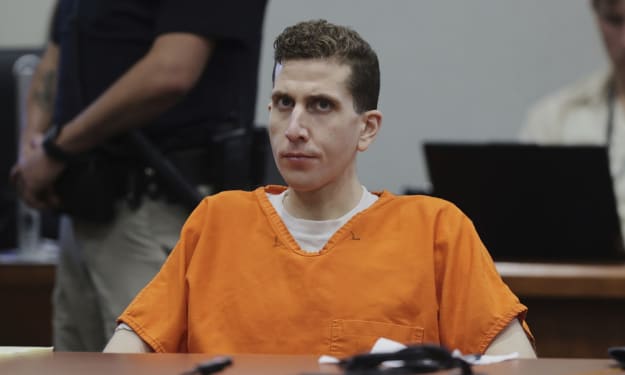
Three years ago, Bryan Kohberger left the Poconos to study at Washington State University. He wasn't your average graduate student, he had been accepted into their prestigious PhD program in criminal justice. On paper, it was the perfect start to a future career in law enforcement. Instead, it was the start of a freefall into darkness.
By Lawrence Lease10 months ago in Criminal