
He Says He Can’t Pay RM50 Million. Malaysia Has Heard This Before.
A frozen-asset defence, a fine meant to hurt, and a country still paying the bill.
The RM50 million blank
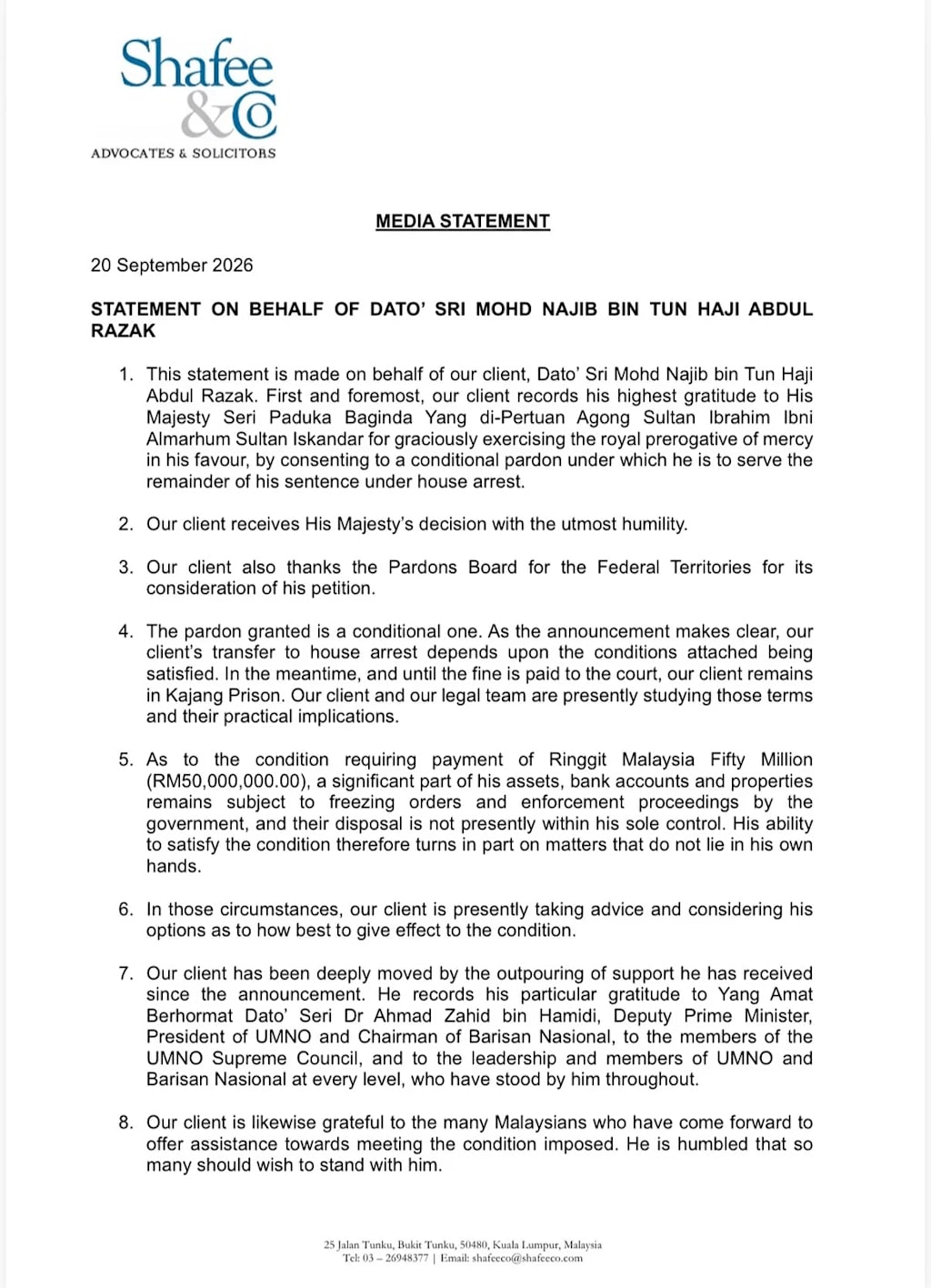
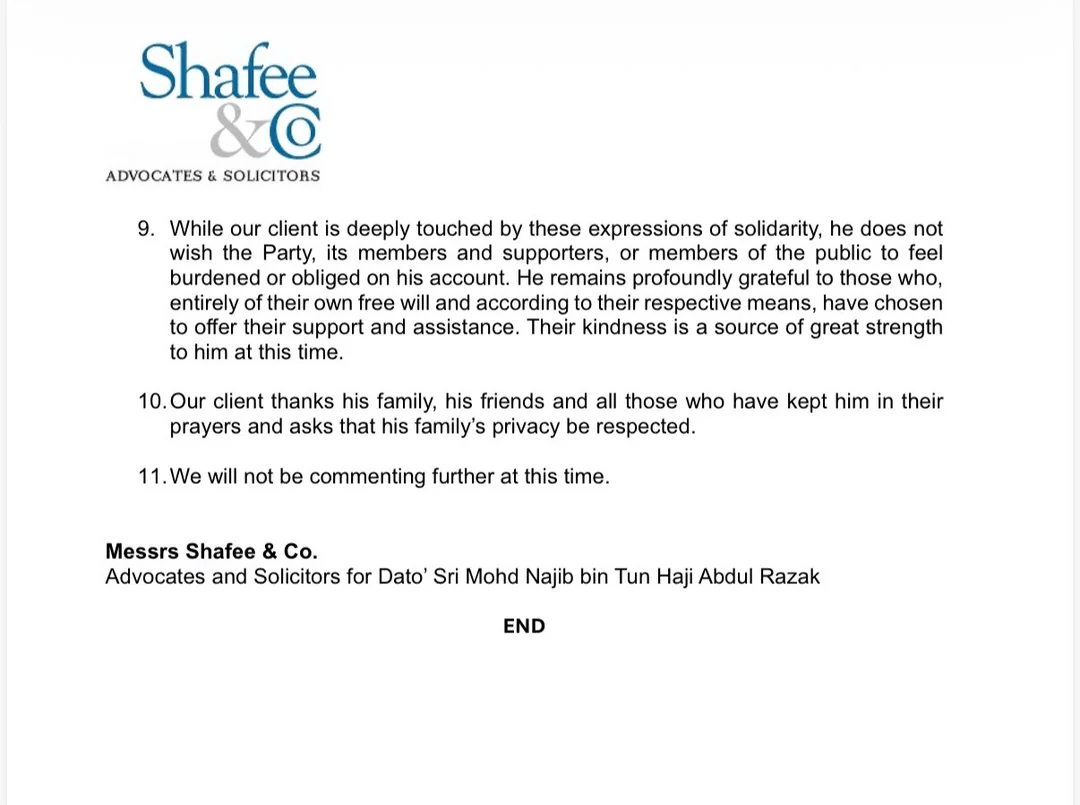
The lawyer finished the sentence. The air-conditioning in the courtroom kept humming. RM50 million. Payment difficult. Most assets under freezing orders. In the gallery, someone looked down at a phone. News comments were already filling. First line: He must have money hidden. Otherwise how does he pay all those lawyers?
That line had no legal force. It moved faster than the statement.
What the freezing order does and does not do
A freezing order restricts disposal, transfer, sale. It does not turn assets into government property. It does not prove the person has no money. It is a procedural hold. The lawyer's claim can be legally coherent. If most assets are frozen, writing a cheque for RM50 million becomes harder.
But assets wear clothes. One coat is a company. Another is a trust. Another is a nominee. Another is a spouse, a child, a distant relative, a family friend. The freezing order grabs names. It may not grab control. So the public has reason to doubt. A man who can keep a large legal team, who can move through courts for years, who can maintain a public profile, is not living on nothing. The frozen assets are the visible layer. The invisible layer is what no freezing order can see.
If payment is impossible, the law has routes. Installments. Seizure. Auction. Bankruptcy. Imprisonment in default. The routes exist. They are slow. Slow enough that ordinary people suspect the routes are closed for the rich and open for everyone else.
Three audiences for one statement
The lawyer's statement was not only for the court. Supporters heard one message. Potential donors heard another. The court heard a third.
Supporters heard “assets frozen” as “persecuted.” They heard “difficulty paying” as “they will not even leave him his money.” The base does not need details. It needs a feeling to hold on to.
Potential donors heard an opening. If the fine cannot be paid, a donation may appear. An anonymous benefactor. A religious gift. A friend's help. A political contribution. Once the money arrives, the fine is settled and the network continues. Comment sections fill with “anonymous donor” jokes because the script has been performed before. People remember it.
The court and enforcement agencies heard something else. First, plant the idea of frozen assets. Later, when payment is demanded, apply for installments, reduction, or an alternative. This is positioning. In legal procedure, position matters.
The weight of numbers
RM50 million. For an ordinary person, several lifetimes. For 1MDB, a rounding error. For taxpayers, another line on a bill they have already paid. Malaysia has paid billions toward 1MDB-related debt. The public remembers the debt and compares the numbers.
Someone mentions Rosmah's pink diamond necklace, valued at RM100 million. Someone mentions Shafee's RM9.5 million Bukit Tunku house. Someone mentions three wives. Someone mentions the line that he has three wives to come home to. These details roll through the comments like a photocopier outside the courtroom, spitting paper. On the paper are numbers. Behind the numbers are lives.
An ordinary taxpayer with a fine has no legal team. A frozen account comes with no trust. An installment plan comes with no political network. The ordinary taxpayer gets a letter, makes a call, stands in line, pays. The elite gets a statement, a news cycle, and time.
The performance and the enforcement
People call it wayang kulit. Shadow play. The phrase is not only an insult. It describes a method. A statement goes out. Sympathy gets tested. Supporters get activated. Donors get a reason. The court gets a future argument. Every part moves at once.
The law allows a person to say he cannot pay. The problem is that the law allows the performance to replace the enforcement. If assets are frozen, liquidate them. If assets are held by nominees, trace control. If payment cannot be made at once, schedule it. If the schedule is ignored, seize. If seizure is impossible, bankrupt. If bankruptcy does not satisfy the penalty, impose the default sentence. The procedure is written. It does not need a new law. It needs execution.
Sympathy is private. Law is public. When public rules start to consider identity, private sympathy becomes privilege. The RM50 million blank sits in the execution. Inside the blank stands one man, and behind him stands an entire system.
The comparison that will not go away
The public does not forget the debt. They paid. They are still paying. The 1MDB scandal took billions. The fines and sentences that followed have been reduced, negotiated, delayed. Each reduction is explained as legal procedure. Each delay is explained as due process. The explanation is technically possible. It also widens the gap between the law on paper and the law in practice.
A country can survive a scandal. It has a harder time surviving the belief that the rules are only for some. A former prime minister is convicted but remains free pending appeal. A fine is announced but payment is described as difficult. Assets are frozen but a legal team remains active. The public sees a hierarchy. It is not written in the Federal Constitution. It is written in the daily news.
What the fine is for
A fine is a penalty, not a fee or a subscription to remain in public life. It is meant to hurt. It is meant to be difficult. If it were easy, it would not be a punishment. The lawyer's statement, in that sense, is not a scandal. It is a description of a penalty working as intended.
But the public does not believe the pain is real. They see the lawyers. They see the house. They see the necklace. They see the political visits. They see the comments. They see the delay. The fine is difficult. The life is not.
If the money cannot be paid, the cell can be occupied. If the money can be paid but is hidden, the cell can be occupied. If the money is frozen, the assets can be sold. If the assets are owned by others, the control can be traced. The law has tools. The question is whether the hands that hold the tools will use them.
The next date
Outside the courtroom, the rain has not stopped. Reporters wait for the next hearing. A photocopier jams. A staff member taps it. The paper comes out. On it is a date. After the date, another date.
The RM50 million remains. So does the statement. The comments keep coming. The country moves on, carrying the number like a stone in its shoe. It is small enough to ignore, large enough to feel with every step.
About the Creator
Jin
Writer of reamstories
https://reamstories.com/jin
Enjoyed the story? Support the Creator.
Subscribe for free to receive all their stories in your feed. You could also become a paid subscriber, letting them know you appreciate their work.
Comments
There are no comments for this story
Be the first to respond and start the conversation.