
He Saved for 20 Years. It Took 6 Days to Lose It All.
One man, 7.89 million yuan, a fake fund manager, and a loneliness that cost him everything.
How a Custom‑Built Scam Broke a Man Who Had Saved His Whole Life
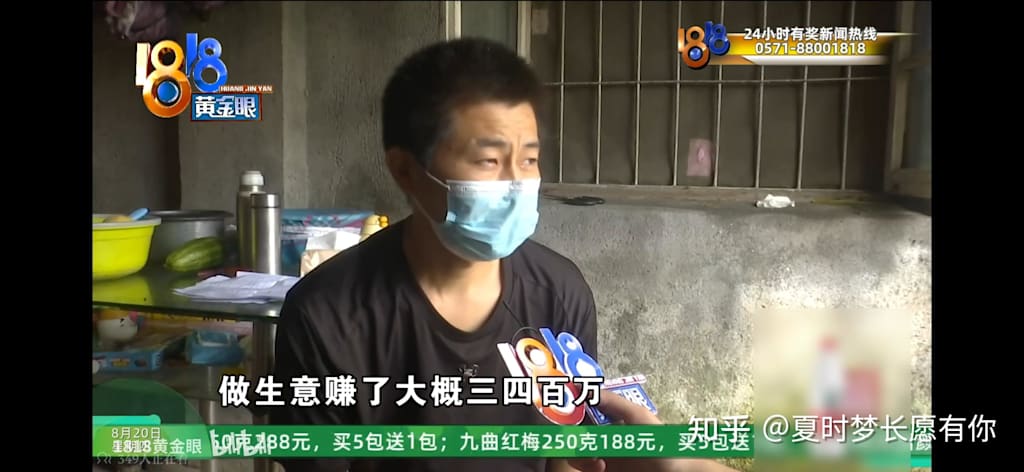
In the summer of 2026, in Haiyan County, Zhejiang, a middle‑aged man named Mr. Chen sat in front of a news camera and cried.
He wore a grey‑blue T‑shirt with a small hole near the collarbone. The camera panned down to his feet: a pair of trainers with worn‑down edges, his son’s castoffs, he later said. Behind him, the walls of his house were cracked. The concrete floor had no tiles. In one corner sat plastic boxes stuffed with delivery receipts from his Lalamove work.
Nothing in that room suggested he had nearly 8 million yuan in savings.
That money was twenty years of his life—compressed into a number.
The last week of May, he checked his bank balance and found it empty. 7.89 million yuan gone. From the first transfer to the last, only six days had passed. Six days—enough to finish a dream and wake up to find it was real.
No one had robbed him. No one had threatened him. Every yuan left his account by his own hand, at a bank counter or through his mobile app.
To understand why, you need the whole chain.
The Hoard
Where did the money come from?
In the interview, Mr. Chen laid it out. During the garment‑accessories boom, with help from relatives and friends who gave him leads and credit, he made his first pot—three to four million. That was his seed capital. The rest came from driving for Lalamove, trip by trip, and from the tiny interest on his bank deposits, accumulating penny by penny.
He had been rich, but he never lived like it.
His spending stayed at subsistence level. Clothes cost ten or twenty yuan. He lived in an old country house with no renovation, no new furniture. His only pastime was opening his banking app and watching the number tick up. Every rise made him feel safer.
But somewhere along the way, he crossed the line from frugality to hoarding. He wasn’t saving money anymore. He had turned that number into the sole proof that his life mattered.
The Hook
Then a stranger called.
A woman introduced herself as an administrator at a Shanghai private equity fund. Her voice was young and polite. When she said “Brother Chen,” it sounded warm but not sticky.
Their first call was about the market. Mr. Chen didn’t understand, but he listened. She didn’t push. She just said, “Brother, if you’re curious, I can show you around.”
For the next month, she messaged him every day—morning greetings, evening market updates, a photo of her office window at night. Her WeChat feed showed a coffee cup with a faint lipstick smudge on the rim.
Mr. Chen later told the reporter: “It was nice to have someone to talk to.”
He had no friends. For twenty years, he had poured everything into earning and saving. His social circle was close to zero. Now here was someone who appeared daily, called him “Brother,” and spoke as if she cared.
That is emotional manipulation. And it works better than any promise of high returns.
So when she said, “Try a small investment—I’ll guide you,” he barely hesitated. He downloaded her app and sent a small sum.
The next day, his account showed a profit of over 40,000 yuan.
He withdrew it. The money landed in his bank.
That was the turning point. That 40,000 wasn’t profit. It was proof. Proof that she was right, that the path was real, that he could trust her.
From then on, every call tightened the net. “Brother, a great opportunity—limited spots.” “Brother, I got you a fee waiver—but the funds have to go through a custodian account.” “Brother, if you don’t top up today, you’ll miss it.”
May 14 to 19—six days, six transfers, 7.89 million yuan. After the last one cleared, he got a text: “Brother Chen, you are the biggest client I’ve ever had.”
Then her number went dead. The app wouldn’t open.
Mr. Chen sat in that bare living room, staring at his phone, through the whole night. When dawn came, he dialed 110.
Why It Chills
It’s not that the scam was clever. The fake‑investment routine has been explained ten thousand times. If Mr. Chen had ever read one warning, he wouldn’t have fallen.
What chills is this: at no point did the scam ask him to violate his own rules.
He wasn’t unusually greedy. He just responded to a bit of warmth from someone who seemed to care, and he followed that warmth to the end.
He wasn’t a gambler. He trusted the app and the woman because his first small bet had paid off—and he had the receipt. That’s a normal reaction. An ordinary person, given evidence, acts on it.
He didn’t even do anything exotic. Download an app, test a small deposit, withdraw a profit, add more—this sequence, in today’s phone‑first world, barely registers as dangerous.
He was simply too lonely. Lonely enough that a daily voice became friendship. Lonely enough that after a month of being called “Brother,” he believed she wouldn’t hurt him.
That is the worst part. He wasn’t defeated by greed. He was defeated by having no one else to talk to.
His Own Hand
But does he share responsibility? Yes.
Twenty years of his lifestyle had a fatal flaw: he turned saving into his only way of thinking.
When you systematically refuse to spend, refuse to socialise, refuse to improve your own conditions, you are also refusing to stay connected to the world. When your only goal is a bigger bank balance, then anything that promises to grow it faster becomes an almost religious temptation.
The scammer wasn’t selling an investment. She was selling a faster version of what he was already doing. In Mr. Chen’s mental model, that looked like progress—just sped up.
He had no other cognitive tools. He never learned to recognise the logical trap because he never learned anything beyond save more.
He guarded his money for twenty years, but he never learned how to use it. People who don’t know how to use money can’t keep it either. That is not a moral judgement. It is a fact.
When the money vanished, he realised he had nothing else. No friends to consult. No hobbies to turn to. Not one thing he had spent money on that made him better.
His life had been defined by that number. Then the number was gone.
That is what “overnight ruin” means. The scammers took six days. But Mr. Chen had spent twenty years making himself breakable in six.
The Real Warning
So the lesson is not “don’t trust strangers” or “don’t chase high returns.”
Those are true, but they are too shallow.
The real warning is this: if you live as an island, any passing ship can decide your fate.
Mr. Chen built his island with two words: frugality. He built it for twenty years, thick and airtight—so thick that even he couldn’t get out. Then the scammer arrived, a ship carrying the name “administrator” and one word—“Brother”—and docked.
He thought someone had finally come. He opened the door and loaded everything he had onto that ship.
Then the ship sank.
Three Fixes
None of this is deep, but each has to be in place before trouble comes.
First, draw a bottom line for frugality. Frugality is a virtue only if you are still living. If you are too afraid to spend, too afraid to socialise, too afraid to replace a broken lightbulb, then virtue has become a prison. Spend a fixed amount each month on yourself. Buy a decent shirt. Replace a worn‑out switch. Eat one meal you used to deny yourself. Not for pleasure—as a reminder that you are alive for more than a number.
Second, make a mandatory‑consultation rule. Any investment decision above one month’s income must go to a second person. If you have no friends, talk to family. If you have no family, walk into a police station and ask. When you decide alone, your brain automatically filters out counter‑evidence—that is how we are wired. A second person, even if they know nothing, can break that self‑reinforcing loop.
Third, admit to yourself that you might be scammed. Most victims reach a point where they think, “Could this be fake?”—and then choose to keep believing, because admitting it would mean all earlier judgments were wrong. That cost feels too high. So make a rule in advance: if the thought “this couldn’t be a scam, right?” crosses your mind even once, force a three‑day pause. Make the decision after three days. By then, the scam will have expired.
The Last Detail
After the interview, Mr. Chen went to the bank and withdrew the few hundred yuan left in his current account. He said he wanted to buy a new pair of shoes.
The report never said whether he actually bought them.
I like to think he did. And if he walked down the road wearing those new shoes, with the sun on the leather and his toes stretching inside—that feeling might have been closer to being alive than any of those twenty years of watching a number tick upward.
I hope he wore them.
And I hope that story does not stop with him.
About the Creator
Jin
Writer of reamstories
https://reamstories.com/jin
Enjoyed the story? Support the Creator.
Subscribe for free to receive all their stories in your feed. You could also become a paid subscriber, letting them know you appreciate their work.
Comments
There are no comments for this story
Be the first to respond and start the conversation.