
David Koresh and the Waco Siege Explained: The Shocking True Story of the Branch Davidians and the 1993 Texas Tragedy
How a self-proclaimed religious prophet, an armed compound and a 51-day confrontation with federal agents ended in one of America’s most controversial tragedies.

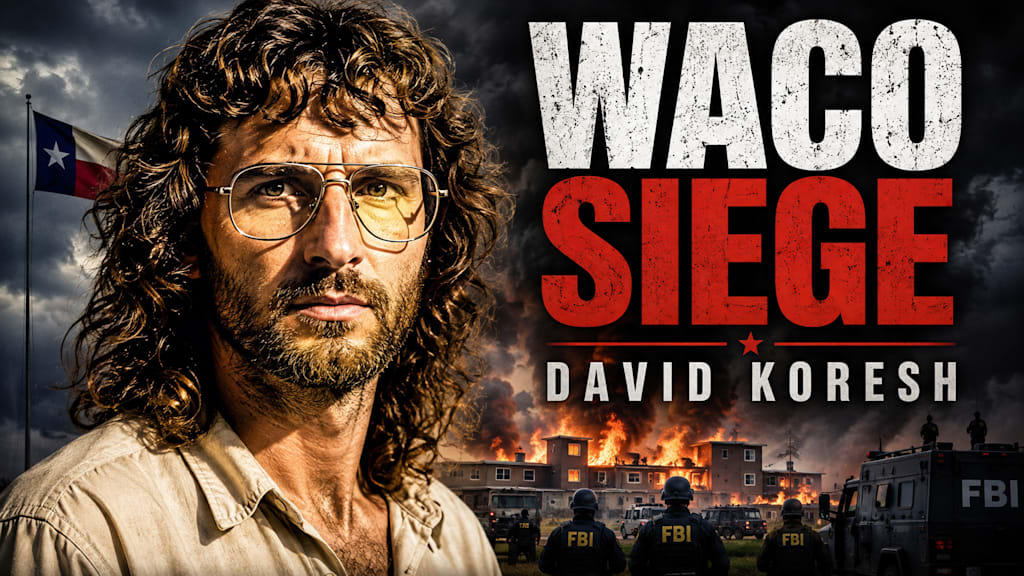
Some true stories become so disturbing that decades later, people are still debating what really happened. The Waco Siege of 1993 is one of them.
At the centre of the tragedy was David Koresh, the controversial leader of the Branch Davidians. What began as a federal investigation into alleged illegal weapons eventually turned into a deadly gun battle, a 51-day siege and a catastrophic fire that killed dozens of people.
Even more than three decades later, searches for David Koresh, the Waco Siege and the Branch Davidians continue because the case raises difficult questions about religious extremism, manipulation, law enforcement tactics and blind devotion.
Who Was David Koresh?
David Koresh was born Vernon Wayne Howell in Houston, Texas, in 1959. As a young man, he became involved with the Branch Davidians, a religious group that had developed from an earlier movement connected historically to Seventh-day Adventism.
Koresh gradually became one of the group's most influential figures and eventually took control.
He presented himself as a divinely chosen prophet with a unique ability to interpret the Bible, particularly the Book of Revelation. His followers believed that he could explain the mysterious Seven Seals and prepare them for events surrounding the end of the world.
His authority extended far beyond ordinary religious leadership. Life inside the Mount Carmel compound near Waco, Texas, revolved heavily around Koresh and his teachings.
Why Did Federal Agents Investigate the Branch Davidians?
American authorities became concerned about the large quantity of weapons connected to the group.
The Bureau of Alcohol, Tobacco and Firearms, or ATF, began investigating Koresh and the Branch Davidians in 1992. According to the agency, investigators discovered large quantities of firearms, ammunition and weapon-related equipment while examining possible violations of federal firearms laws.
Federal search and arrest warrants were eventually obtained.
On February 28, 1993, ATF agents arrived at the Mount Carmel compound to execute those warrants.
What happened next transformed the investigation into a national crisis.
The Gun Battle That Started the Waco Siege
Soon after federal agents arrived, gunfire erupted.
Exactly who fired the first shot has remained disputed, but the confrontation became extremely violent.
By the time a ceasefire was reached, four ATF agents and six Branch Davidians had been killed. Several others were wounded.
The FBI then took control of the federal response.
Rather than ending quickly, the confrontation became a tense 51-day standoff watched by television audiences around the world.
51 Days Inside the Mount Carmel Compound
Federal negotiators repeatedly attempted to persuade Koresh and his followers to surrender.
Some people, including children, were allowed to leave during negotiations. But many followers remained inside with Koresh.
The situation became increasingly complicated because Koresh's religious beliefs were closely connected to ideas about persecution, prophecy and an approaching final confrontation.
Negotiators and tactical teams also disagreed over the best way to resolve the crisis.
While negotiators hoped continued communication might bring more people out peacefully, authorities became increasingly frustrated as the siege continued.
April 19, 1993: The Final Operation
On the morning of April 19, 1993, federal authorities began an operation designed to force the remaining Branch Davidians from the building.
FBI vehicles inserted CS tear gas into the compound.
Hours later, fires broke out in different areas of the structure.
The Mount Carmel compound was soon engulfed in flames.
Only nine Branch Davidians escaped the fire. Investigators later recovered 76 bodies, including children and David Koresh. Some of the dead had suffered fatal gunshot wounds.
Koresh was only 33 years old.
Who Started the Waco Fire?
This remains one of the most controversial questions surrounding the Waco Siege.
Official investigations concluded that people inside the compound deliberately started the fires rather than FBI agents directly igniting them.
A Justice Department review also concluded that the fire was deliberately set from inside the compound, while acknowledging that questions remained about whether everyone who died had chosen to stay or whether some had been prevented from escaping.
Nevertheless, the government's tactics before and during the final operation have been heavily criticized.
Investigations conducted after the siege found that some decisions and tactics used by authorities had been poorly executed.
That combination of official findings, disputed details and enormous loss of life is one reason Waco remains controversial today.
Why Did So Many People Continue Following David Koresh?
Perhaps the most disturbing part of the David Koresh story is the level of loyalty he inspired.
Charismatic leaders can create environments in which followers gradually accept beliefs or behaviour they might previously have rejected.
Koresh convinced many followers that he possessed special spiritual knowledge and that events happening around them were connected to biblical prophecy.
When people become socially isolated and are repeatedly told that outsiders are enemies, questioning the leader can become extremely difficult.
The Waco tragedy therefore became more than a story about guns or a police operation. It also became a warning about unchecked authority, extreme religious control and the psychological power a charismatic leader can hold over a group.
The Legacy of the Waco Siege
The Waco Siege remains one of the most debated law-enforcement confrontations in modern American history.
For critics of the government, it became an example of excessive federal force. For law-enforcement agencies, it became a case studied for lessons about negotiations, intelligence and tactical decision-making.
Its consequences reached even further.
Two years later, Timothy McVeigh carried out the Oklahoma City bombing on April 19, 1995, deliberately choosing the second anniversary of the end of the Waco Siege. The attack killed 168 people.
That connection ensured that Waco would remain deeply embedded in American history.
Final Thoughts
The story of David Koresh and the Waco Siege is frightening not simply because so many people died.
It is frightening because it demonstrates how belief, fear, authority and isolation can combine until ordinary boundaries disappear.
David Koresh convinced followers that he possessed extraordinary spiritual authority. Federal authorities believed an armed and dangerous situation could no longer continue indefinitely. When those two forces collided, the result was catastrophic.
On April 19, 1993, the burning Mount Carmel compound became the final image of a crisis that had lasted 51 days.
Decades later, the same question continues to make the Waco tragedy compelling:
How did one man's influence become powerful enough to lead so many people toward such a devastating end?
About the Creator
parwinder singh
🎬 Movie & Entertainment Writer sharing reviews, ending explanations, story breakdowns, plot twists and hidden details from Bollywood, Hollywood, South Indian cinema, Korean dramas and OTT releases.
Enjoyed the story? Support the Creator.
Subscribe for free to receive all their stories in your feed.
Comments
There are no comments for this story
Be the first to respond and start the conversation.