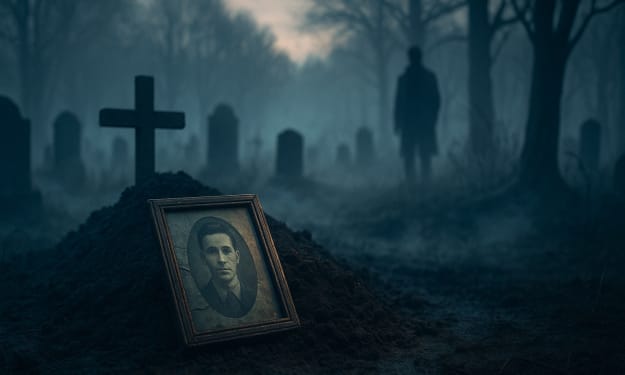
Secrets
All My Crushes Ignored Me — Until the One Who Came Back
1. The DM That Shook My Stability I’m 29 now. Life’s solid — decent job in Dubai, my own apartment, a gym routine I pretend to enjoy, and a golden retriever named Chai who thinks every human exists to throw his ball. Then came that Instagram DM. > "You're still the same… just more beautiful now." I squinted at the name. Meher Siddiqui. And just like that, 2016 came crashing back — the girl I once adored, the girl who called me her “best friend” and then went to prom with someone else. The DM was simple. But it unlocked a door I’d welded shut. 2. My Degree in Romantic Rejection If rejection were a college major, I’d have graduated with honors. Every crush in college was a new assignment. And every semester? A reminder that effort doesn't equal affection. I wrote poetry for Neha. > She replied: “So sweet, bro!” Made an actual presentation for Ayesha on “Why We’d Make a Great Couple.” > She used my slides… to teach her juniors. And then — there was Meher. Late-night texts. Inside jokes. Chai breaks between classes. Spotify playlists with hidden meanings. I felt like I’d finally found someone who saw me. So I told her. > “I think I’m falling for you.” She paused. Smiled gently. > “Arman, you’re my person… but not like that.” The friend zone. Final level. No cheat codes. 3. Seven Years of Silence After college, Meher and I didn’t fight. We didn’t block or unfollow. We just… stopped. I moved on — physically, at least. New job, new city, new routines. I built myself from the heartbreak up. One gym session, one work promotion, one late-night playlist at a time. Until she popped back in. Out of nowhere. Her message carried a softness — like nothing had changed. But I had. 4. Sarcasm on Ice I typed and deleted three replies. Then finally: > "Wow. Meher remembers me. Is Mercury in retrograde?" She laughed in a voice note. > “Saw your reel randomly. You look different… in a good way. Calmer.” Her tone was playful, nostalgic — but it stirred something sharp. Part of me wanted to ignore her. The other part — the one still haunted by "what ifs" — whispered: “You need closure, Arman.” 5. Coffee and Confessions We met at a familiar café. The café. The one where we “studied” but mostly joked, flirted, and stole glances over laptops. Meher looked different — older, more grounded. Her eyes still held that mischievous spark, but her posture said she’d been through life too. After a few sips of chai and awkward small talk, she sighed. > “I owe you an apology.” > “For?” “For not choosing you. You were genuine. The others were… noise.” I stirred my coffee. Once, that confession would’ve made me leap into dreams. Now? I just nodded. > “It wasn’t your job to choose me. But it was mine to stop waiting.” 6. The Reintroduction We talked more over the next few weeks. DMs turned into calls. Calls turned into dinners. She wasn’t trying to impress me. And I wasn’t trying to win her anymore. For the first time, we were just two people — not the roles we used to play. One evening, sitting in her car, she asked: > “Do you think we could… start again?” I paused. The old me would’ve said yes in a heartbeat. But this version? > “I don’t know. I’m not chasing anything anymore. But I’m willing to listen — without expectations.” She smiled. It wasn’t enough for her. But it was enough for me. 7. Replays and Realizations Some moments felt like déjà vu. Laughing over random memes. Arguing about the best chai spots. Playing music and driving around like time hadn’t passed. But I wasn’t that lost kid anymore. I didn’t spiral into feelings with every glance. I didn’t imagine futures from fleeting gestures. One night, Meher said: > “You’re different. You don’t need me anymore, do you?” I looked at her. Long and quiet. > “I think I still care. But I love myself more now.” 8. Closure Doesn't Always Announce Itself Closure isn't a scene from a movie. It doesn’t always involve shouting or slamming doors. Sometimes, it’s a smile on a quiet street, where you realize the ache is gone. I forgave her. Not because she earned it, but because I did. She once told me: > “You’re still the same Arman… just stronger.” She was right. But I wasn’t stronger because she returned. I was stronger because I stopped needing her to. 9. A Polite Goodbye Meher still sends me the occasional message. A “Hi.” A “Congrats.” A heart on a story. I respond with a single emoji — 🙂. Not out of spite. But out of peace. I’m not the backup plan. Not the what if. I’m no longer a side character in someone else’s arc. I’m my own plot twist. Epilogue: For Anyone Waiting on a Return If someone you once loved comes back, here’s what I’ve learned: Their return doesn’t make you whole. Your healing already did that. You weren’t invisible. You were just visible at the wrong time. And now? You don’t need a perfect ending. You just need your beginning — written by you, for you, without apology. 💬 Have you ever had someone return after rejecting you? Tell your story in the comments. Let’s talk closure, confidence, and comeback arcs.
By Arshad khanabout a year ago in Confessions
The Day I Walked Away From My Best Friend
Start writing.I never thought I’d say this, but I walked away from the one person who knew me best — and I don’t regret it. Sarah and I had been best friends since the sixth grade. We did everything together: sleepovers, crying over crushes, pulling all-nighters during finals, and laughing so hard we cried. She was like the sister I never had. We promised we’d be in each other’s weddings and name our kids after one another. But people grow, and sometimes they grow in different directions. It started small. She began canceling our meetups. She’d reply to my messages after days with one-word answers. At first, I made excuses for her — maybe she was busy with work, or life was just overwhelming. But slowly, I began to notice a pattern. Whenever she needed something — advice, help moving apartments, someone to vent to — I was the first call. But when I needed her? Silence. I remember the exact moment everything changed. It was my birthday last year. I had invited just a few close people for a quiet dinner. Sarah promised she’d be there. I even saved a seat for her beside me. But she didn’t show up. No call. No message. Just a blank space where she used to be. A week later, she texted, “Sorry, I was tired.” That was it. Something inside me broke that day. I realized I was holding on to a version of her that no longer existed. I thought about all the times I’d been there for her — listening to her heartbreaks, standing by her during family problems, defending her when others talked behind her back. And now, when I needed someone to just show up, she couldn’t be bothered. It wasn’t about the birthday. It was about feeling invisible to someone I considered family. So, I made a choice. I stopped reaching out. I didn’t block her or make a scene. I just… stepped back. I stopped sending long texts. I stopped checking her stories. I stopped waiting for her to care. Weeks turned into months. And with every passing day, I felt lighter. Letting go of someone you love is painful. But loving someone who doesn’t value you is even worse. Sometimes, we hold on to people because of history. But history doesn’t guarantee a future. Today, I have fewer friends — but they’re real. They show up. They check in. They value me the way I value them. I still think of Sarah sometimes. I wonder if she ever misses me. Maybe she does. Maybe she doesn’t. But that’s no longer my burden to carry. Walking away wasn’t easy. But it was necessary.
By Arshad khanabout a year ago in Confessions
They Say 'Move On' Like I Know Where to Go
The house still smelled like her—lavender and old books, sun-warmed cotton and something faintly citrus. He hadn’t opened the windows since the day she left. Or maybe since the day she stopped breathing. Time had become viscous, days slipping past like water through fingers, leaving behind only salt and ache. Liam sat on the edge of the bed they used to share, staring at the closet. Her clothes still hung inside, neatly arranged, untouched. People had told him it was unhealthy, that he needed to “move on.” But no one told him where “on” was supposed to lead. There was no road map out of love. No guide to surviving the silence of a life interrupted. “She wouldn’t want you to be like this,” they said. They didn’t know her. Not really. She had been all laughter and light, an orchestral swell in his otherwise muted world. Anna hadn’t just lived—she had filled rooms, like music, like color. When she walked in, even tired, the air changed. And when she smiled at him, that rare, knowing smile she saved only for him, the world paused in reverence. He remembered the last time she smiled like that. It was raining, a rare warm rain in late October. They had danced on the porch barefoot, like kids, like fools. She’d laughed when he slipped, pulling him up by the collar of his wet shirt. Her hair clung to her face, and she pushed it away, grinning, pressing her forehead to his. “We’re ridiculous,” she had whispered. “We are,” he agreed. “Let’s stay ridiculous forever.” But forever had been short. The accident had come like a thief in the dark—unwarned, undeserved, unfixable. One moment he was texting her to pick up milk. The next, he was identifying her body under fluorescent lights that buzzed too loudly and made the world tilt sideways. He didn’t cry that day. Not then. He didn’t have the shape for grief yet. That came later, in pieces. It came in the grocery store when he reached for her favorite tea. It came on his birthday when the mailbox was empty. It came in the mirror, when he saw himself still standing, still breathing, and hated that it was possible. And every time, someone said it. “You need to move on.” Move on, like she was a missed bus. Like grief was a neighborhood you moved out of. Like his love had an expiration date that had finally come. He’d smile politely. Nod. Say, “I’m trying.” But he wasn’t. Not really. Not in the way they meant. He was trying, though. Trying to wake up. Trying to eat. Trying to live a day without forgetting and then remembering all over again. Trying to find something worth stepping into when every step moved him further from the last day she was alive. Moving on sounded like betrayal. Like closing a chapter he hadn’t finished reading. Like saying she didn’t matter anymore. But what if moving on didn’t mean forgetting? What if it meant carrying? What if the destination wasn’t “away from her,” but “forward with her”? That thought came slowly, like a sunrise. Soft. Quiet. Almost imperceptible. One morning, he opened the window. Just a crack. The wind stirred the curtains. The scent of rain drifted in, the kind she loved. He didn’t cry. Not then. Instead, he made a cup of her favorite tea and sat on the porch. Listened to the wind. Closed his eyes. Maybe “move on” didn’t mean leaving her behind. Maybe it meant learning to live with the ache. Learning to live through the absence. To find her not just in the photos and the clothes, but in the part of himself that had changed because of her. The part that still knew how to dance in the rain. That still smiled at stupid jokes. That still paused for beauty. He would never “get over” Anna. But maybe—just maybe—he could grow around the hole she left. A few weeks later, he boxed up some of her things. Kept the scarf that still smelled like her. Donated the rest to a shelter she used to volunteer at. He started walking to the coffee shop again. The barista didn’t ask where he’d been. Just smiled, handed him the usual. One cream, two sugars. There was a girl with kind eyes who sometimes sat by the window. She reminded him of Anna, but not too much. Just enough to not look away. He wasn’t ready for new beginnings. But he was beginning to believe they might be possible. That life could stretch forward without erasing what came before. People still told him to move on. Now, he just nodded and thought: I am. Just not in the way you think.
By Azmat Roman ✨about a year ago in Confessions
This Person is Dead
Chapter 1: The Announcement "This person is dead." Those words hit like a bullet. I was sitting right there when the doctor said it to my parents. “Your son, Ahmed… he's no longer alive mentally. His identity… his mind… has collapsed.” But I was right there. Breathing. Awake. Watching. Listening. Alive. Yet, the world had already declared me dead. --- Chapter 2: Collapse Ahmed. 23 years old. A gifted computer science student, rising content creator, thinker, writer — a young man people once looked up to. But the internet is ruthless. One night, his name flooded social media. Hashtags. Accusations. Cancel culture at its ugliest. AI-generated screenshots showed him saying things he never said. Deepfake voice notes. Fabricated conversations. It was a digital assassination. Friends distanced themselves. Teachers stopped replying. Strangers hurled abuse. "This person is dead." Not physically. But digitally. Reputationally. Spiritually. --- Chapter 3: Ghost Mode Ahmed disappeared. No status updates. No last post. No farewell. He deleted everything — Instagram, Twitter, TikTok, YouTube. And himself. He wandered far from the city, renting a decaying cottage in a forgotten village surrounded by mountains and silence. Every night, he wrote in a leather notebook by candlelight: > “If the world accepts a lie as truth, does truth die… or does it sleep?” --- Chapter 4: The Knock Three months passed. One rainy night, a knock echoed through the empty cottage. It was Asad — Ahmed’s old friend, the only one who had dared to believe he might still be alive. "You really disappeared, man," Asad whispered. "Everyone thinks you're gone." “I am,” Ahmed replied. “At least… the version of me the world knew is gone. Killed by pixels and silence.” But Asad didn’t come to mourn. He came with a plan. > “We’ll tell the world your story. But this time, we’ll fight fiction with truth.” --- Chapter 5: Ghosts Don’t Stay Quiet Together, they created a nameless YouTube channel. No face. No names. Just truth. Each video exposed the dark mechanics of digital misinformation: How AI can fabricate reality. How deepfakes blur the line between lie and life. How cancel culture crucifies the innocent without a trial. They showed digital forensics. They broke down Ahmed’s case piece by piece, not as victims — but as architects of clarity. At first, nobody cared. But then… one clip went viral. > "If a lie is well told, people kill the truth. But when truth returns, it doesn't knock — it breaks the door." --- Chapter 6: Resurrection Ahmed’s name re-entered public discourse. This time, not as a villain — but a mystery. Who was this person? Why did the story suddenly seem fake? Investigators took notice. Independent journalists dug into the original scandal. Slowly, the truth unraveled: The screenshots were fake. The voice notes were AI-generated. The people who orchestrated it had motives — competition, jealousy, revenge. Ahmed was innocent. But he wasn’t the same man anymore. --- Chapter 7: Return of the Dead He finally revealed himself on camera. The video was simple. No background music. Just his voice and his face. > “My name is Ahmed. Three months ago, the world killed me with lies. Today, I return — not to prove I’m alive… but to ask: why did truth die so easily?” Millions watched. The world paused. News channels ran specials. Legal action began against the people who faked his downfall. He was no longer a victim. He had become a movement. --- Final Chapter: The Person Who Died "This person is dead." Ahmed repeated those same words in a TED-style talk months later. “Yes, he died. The version of me who stayed quiet… who believed truth always wins on its own… he’s gone. The new me? I speak. Loud. Sharp. Clear. Because if you don’t own your truth — someone else will write your death.” --- 🔷 Closing Note > “Death isn't always in the grave. Sometimes, it’s when the world buries your truth. But if you can dig deep enough — you can come back from the dead.”
By TrueVocalabout a year ago in Confessions
The Lie I Told Myself After He Died
I still remember the moment I heard the news. The sharp crackle of the phone line, the hurried voice on the other end, the rush of disbelief that slammed into me like a wave. He was gone. Just like that. The man I loved, the person I thought I could never live without, was gone. For weeks after his death, I told myself a lie—a lie so deeply ingrained that it became my shield against the unbearable pain. I told myself he wasn’t really gone. He was just... somewhere else. Somewhere I couldn’t see yet, but he was still there. Watching. Waiting. I lived in that lie. It wrapped around me like a warm blanket during the coldest nights, numbing the ache in my chest and silencing the screaming void inside. I imagined him waking up, coming back through the door, smiling like nothing had changed. But the truth? The truth was a jagged, cruel thing. It shattered every hope, every dream, every promise. He was dead. And I was left behind. --- For the first few days, I couldn’t sleep. Every time I closed my eyes, I saw him—his laugh, his touch, his face lighting up when he looked at me. I heard his voice whispering things only we knew, felt the warmth of his hands holding mine. But every morning, the harsh reality came crashing back as I woke up alone, the bed cold and empty. I found myself avoiding the places we used to go, afraid that if I stood still long enough, I’d see him there, waiting for me like he never left. I refused to pack away his things or erase the reminders that filled our apartment. Instead, I left his clothes hanging, his books on the shelves, his scent lingering in the air. "I’ll be okay," I whispered to myself every day, clinging to the lie. --- But denial is a fragile fortress. One day, a letter arrived—one he had written before he died. It was meant for me, a goodbye that I wasn’t ready to receive. In his handwriting, I found the words I had been too afraid to hear. "I’m sorry for leaving you," he wrote. "But I want you to live, really live. Don’t wait for me in the shadows. Find your light again." That letter was a reckoning. It cracked open the lie I’d been telling myself, and suddenly, I had no place to hide. --- The days that followed were the hardest I’ve ever faced. I cried more than I ever thought possible. I screamed into pillows, punched walls, and felt like my heart was breaking into a million pieces. But somewhere in the chaos, I realized something—he didn’t want me to be trapped in grief. He wanted me to heal. And healing meant facing the truth, no matter how painful. --- I started small. I picked up his favorite book and read it aloud, pretending he was there beside me. I cooked his favorite meal, imagining sharing it with him again. I visited the places we loved, not to look for him, but to find myself. Slowly, the lie faded. It didn’t disappear overnight, but each day, I chose truth over denial. I chose to remember him not just in sorrow, but in joy, in laughter, in the moments we shared. --- The night I finally let go of the lie, I felt something I hadn’t felt since his death—peace. I understood that he was gone, yes. But he wasn’t really gone. He lived in me, in the memories we made, in the love we shared. And by living fully, by embracing truth instead of hiding from it, I honored him more than any lie ever could. --- I still miss him every day. That pain never truly leaves. But I don’t live in the shadow of loss anymore. I live in the light of what we had—and what I still carry forward. The lie I told myself after he died was a refuge, a temporary escape from unbearable grief. But the truth? The truth set me free.
By Azmat Roman ✨about a year ago in Confessions
Everyone Says Time Heals. No One Talks About the Waiting.
Everyone says time heals. No one talks about the waiting. When Maya lost her mother, the world around her didn’t suddenly become easier. The advice poured in like rain: “Time will heal you,” her friends said, “Just give it some time.” But no one warned her about the long, silent hours spent waiting—waiting for the pain to dull, for the sharp edges of grief to soften, for the moments of unbearable sorrow to pass. Maya’s mother was her anchor. They had shared everything—the kind of unspoken bond that only mothers and daughters know. When the cancer came, it didn’t just steal her mother’s health; it stole the certainty in Maya’s life. Suddenly, every plan was suspended, every future moment rewritten. And yet, the hardest part wasn’t the loss itself. It was the waiting—the endless stretch of days that followed. In the beginning, the world felt like it was moving too fast. Friends, family, coworkers—they all seemed to expect Maya to “move on,” to be “strong,” to find closure. But inside, she was trapped in time, caught in a liminal space where yesterday was too painful to revisit, and tomorrow too uncertain to embrace. She remembers sitting in the quiet of her apartment, the clock ticking loudly on the wall. Each second dragged as if time had slowed just for her grief. She thought the waiting was passive, just a pause before healing would finally begin. But it was something else entirely—a trial of endurance. Maya watched the seasons change from her window. Autumn leaves turned fiery and fell, winter snow blanketed the streets, and spring flowers bloomed—yet inside her heart, the seasons were frozen. She wasn’t sure when the thaw would come, or if it ever would. At night, the silence was the loudest. It echoed with memories—her mother’s laughter, her gentle advice, the way she always knew exactly what to say. But with each memory came the sharp sting of absence. It was a cruel kind of waiting, filled with ghosts and shadows. She tried to fill the waiting with distractions. Books, music, work—anything to dull the ache. But grief was relentless. It seeped through everything, a constant undercurrent pulling her down. Friends grew impatient. “You need to get back to normal,” they said, as if normal was a switch she could flip. One day, Maya met Lena, a woman in the same grief support group. Lena told her something that changed her perspective: “Time doesn’t heal. Time just shows us how to live with the wounds.” Maya clung to those words. It wasn’t about forgetting or moving on. It was about learning to carry the pain differently. Through the months, Maya discovered that waiting wasn’t just about passing time. It was about waiting for herself—waiting to find strength she didn’t know she had, waiting for the courage to face each day anew. Healing was not a sudden fix; it was a slow, painstaking journey marked by moments of breakthrough and setbacks. She began to write letters to her mother, pouring out everything she couldn’t say aloud. Letters filled with love, regret, hope, and anger. Writing became a way to bridge the waiting—a way to reach through the silence and keep her mother close. Maya also started volunteering at a hospice, helping others who were waiting too—their own waiting different, yet somehow the same. She learned that grief was a shared experience, a universal struggle that connected people across different stories. In the act of giving, she found a small light in the dark. One spring afternoon, as she sat beneath a blooming cherry tree, Maya finally felt something shift. The waiting was still there, but it felt lighter, less like a prison and more like a quiet companion. She realized that healing wasn’t about forgetting or erasing the pain. It was about living with it, carrying her mother’s memory forward while carving out a new life. Time did not erase the loss. But the waiting—the long, hard waiting—had taught her something no one talks about: that healing is not a destination, but a process. And sometimes, the most courageous thing is simply to keep waiting, keep breathing, keep hoping. Because in the waiting, we find the space to grieve, to grow, and eventually, to heal.
By Azmat Roman ✨about a year ago in Confessions
I Left Without a Word. Here's Why I Never Went Back
It was a Tuesday morning—gray, indifferent. The kind of day that never makes the headlines of memory. I remember zipping up my backpack, making sure it didn’t make too much noise. I remember the slight creak in the floorboard outside my room and how I paused before stepping over it, almost out of respect for the silence I was leaving behind. I didn’t slam the door. I didn’t write a note. I didn’t send a message to anyone—not even to the one person who would have noticed the tremble in my voice if I had tried to lie my way through another “I’m okay.” The truth was, I wasn’t okay. I hadn’t been for a long time. You don’t just wake up one day and decide to disappear. It builds slowly. Like water leaking into the foundation of a house—quiet, corrosive. I had spent years convincing myself that things would change. That the way they spoke to me would soften. That the manipulative guilt, the subtle shaming, the conditional love—it would all be temporary. Just a bad season. But some winters never thaw. The last real conversation I had with my mother ended with her saying, “You always take things too personally.” I had been telling her that I needed space—real, emotional space. That I couldn’t be her emotional punching bag anymore. That I was tired of being the family’s invisible fixer, the one expected to keep peace by swallowing pain. She rolled her eyes. Told me I was dramatic. Told me that if I didn’t like it, maybe I shouldn’t come around so often. So I didn’t. I left. No announcement. No breakdown. No second chances. At first, the silence was unbearable. I waited for someone to notice. A phone call. A message. Something. But the longer the silence stretched, the more I realized they weren’t wondering where I was. They were just adjusting to the absence—just like I was. That hurt more than anything. You think when you leave a place that shaped you—when you walk away from the people who raised you—it’ll feel like freedom. Like ripping off a heavy coat in summer. But it doesn’t. Not at first. It feels like guilt. Like betrayal. Like you’re abandoning people who once fed you, clothed you, held you when you had fevers. But memory is tricky. It edits out the yelling. The slamming doors. The quiet punishments. The way love was always something I had to earn, not something freely given. The guilt still visits sometimes, like a stray cat scratching at the window. But I don’t let it in. Because I know this now: leaving was the kindest thing I ever did for myself. I never went back because there was nothing to return to. Not really. The house was still there. The people were still there. But the version of me that tolerated all of it—she was gone. And the new version—the one I’ve built in the years since—isn’t welcome there. She asks too many questions. She sets boundaries. She doesn’t say “yes” just to avoid conflict. I built a life on the outside. Quietly. Intentionally. With friends who see me. With work that doesn’t drain my soul. With routines that feel like rituals, not obligations. Sometimes people ask, “What happened with your family?” And I tell them the truth, as best I can: “It wasn’t one thing. It was everything.” Because that’s the reality of toxic love. It’s not the big explosions that do the damage. It’s the steady erosion. The way your self-worth gets chipped away one sarcastic comment, one dismissive glance, one manipulative guilt-trip at a time. I don’t tell this story for pity. I tell it because someone else needs to hear it. Someone who’s packing a bag in silence. Someone who’s been told they’re too sensitive, too selfish, too difficult. Let me say this, to whoever you are: You’re not too much. You’re just in the wrong place. And leaving doesn’t make you cruel—it makes you brave. I left without a word. Because sometimes, the loudest act of self-love is walking away without needing to explain yourself. And I never went back. Because I finally knew I was worth more than staying where I was never truly seen.
By Azmat Roman ✨about a year ago in Confessions
The Secret That Saved My Life. AI-Generated.
I’ve always believed that secrets are dangerous. That they weigh you down, like rocks sewn into your pockets as you wade deeper into the ocean. But some secrets—some rare, quiet secrets—don’t drown you. They teach you how to breathe underwater.
By Zain Ul Abidin Khanabout a year ago in Confessions
This Is the Lie I’ve Been Living With for 10 Years
Most people think surviving a tragedy makes you a hero. They look at your scars, hear your story, and they admire your strength. But no one ever wonders if the survivor might be the reason the tragedy happened in the first place. For the past ten years, everyone has believed that I narrowly escaped the house fire that killed my parents and younger brother. The official report blamed faulty wiring. The insurance company paid out. Neighbors brought casseroles and condolences. I was seventeen. Everyone just assumed I was lucky to be alive. But it wasn’t luck. And it wasn’t faulty wiring. It was me. --- It was a Tuesday night in early spring when everything changed. My parents were fighting—again. The walls in our house seemed to echo with anger more than laughter. I used to keep a list taped to my bedroom door of the days we went without yelling. By that week, it had been fifteen days since a “peaceful” day. That night, the shouting got worse than usual. My dad had been drinking. My mom was crying, which always set my little brother off. He hated the noise. I was in my room with my headphones on, but I could still hear the crashes. The breaking. The slamming. I did something I never thought I would do. I lit a match. Not because I wanted anyone to die. Not even close. I just wanted to scare them. Make them stop. I thought maybe if they saw what could happen, they’d finally see what they were doing to us—to me. I dropped the match on a pile of newspapers in the laundry room. I stayed for a few seconds, watching the flames climb. Then I panicked. I ran upstairs to get everyone out. But by the time I got to the top of the stairs, smoke was already pouring into the hall. Everything happened so fast after that. Too fast. I tried to open my brother’s door, but the heat was unbearable. I called his name. I screamed. I screamed until my throat burned. I don’t even remember how I got out. The firemen said I jumped from my bedroom window. Said it was a miracle I survived. They called me a miracle. But I knew better. --- The investigation took weeks, but in the end, the fire marshal ruled it an accident. No signs of accelerants. The house was old. The electrical system was outdated. It was a believable story, and I didn’t correct them. I moved in with my aunt in another state. Started over. Finished school. Went to college. Got a job. Every year, on the anniversary, people would message me: Thinking of you. You’re so strong. They’d be so proud. If only they knew. I tried to confess once. I was in therapy during my sophomore year of college. I told my therapist I had a “recurring dream” that I had started the fire. I expected her to press me, dig into the guilt. But instead, she said, “Dreams are often symbols. Maybe you feel responsible for something you couldn’t control.” I laughed so hard I cried. --- Over time, I learned to live with it. Sort of. I became obsessed with fire safety. I volunteer at fire departments now, help install smoke detectors in low-income neighborhoods. I donate every year to burn victim charities. I’ve done everything I can to rewrite the narrative—to become the person everyone thinks I am. But I can’t sleep with the lights off. I can’t look at candles without my hands shaking. And every time I see a news story about a house fire, I wonder how many other “survivors” are living with secrets like mine. --- Last month, I went back to what’s left of the house. It’s just an empty lot now, wildflowers growing where our kitchen used to be. I brought one of those old safety matches with me. The kind I used that night. I held it in my hand for a long time. And then I broke it in half. Maybe that means something. Maybe not. --- So yes—this is the lie I’ve been living with for ten years. It’s the weight behind every “thank you,” every “you’re so brave,” every kind word that makes my stomach twist. I didn’t survive the fire. I caused it. And no one knows. Except you. Now.
By Azmat Roman ✨about a year ago in Confessions
The Day Everything Fell Apart (and What Came After)
It was a Thursday, though I didn’t know that at the time. Days had blurred into each other, colored only by panic, emails marked “urgent,” and the constant static hum of anxiety. I was pacing the hallway between my bedroom and the kitchen when the phone call came—the final push that sent everything tumbling. “Layoffs,” my manager said. “I’m so sorry. It’s not personal.” It never is, until it is. I had been with the company for six years. I’d stayed late, missed birthdays, and answered emails from hospital waiting rooms. I had built my identity around that job. So when it was gone—just like that—I felt like someone had erased me. And the worst part? That wasn’t even the only blow that day. Two hours later, my landlord called. A notice had been sent a month ago—missed in the storm of notifications I hadn’t opened. Rent was going up. Way up. With no income and dwindling savings, I couldn’t afford to stay. That night, I sat on my kitchen floor with a half-eaten sandwich and a thousand-yard stare. The walls felt like they were closing in, but maybe it was just me folding inward, trying to disappear. I didn’t cry. I didn’t scream. I just... stopped. --- What came after wasn’t a miracle. There was no sudden job offer. No anonymous check in the mail. Instead, there was silence. Stillness. And for the first time in years, no noise to cover the sound of my own thoughts. The next morning, I woke up early. Not because I had to, but because I didn’t know what else to do. I put on sneakers and went for a walk. It was cold, and the sky was still the color of regret, but something about moving forward—even if aimlessly—felt right. That walk became a routine. Each day, I walked farther. Past the shuttered bookstore. Past the playground. Past who I used to be. I saw things I hadn’t noticed in years: how the ivy curled up the brick of Mrs. Langley’s house, how the bakery opened before dawn, how the sunrise always came—even if I didn’t watch. I started journaling. Just small things at first. “Walked 2 miles today.” “Felt sad but made tea anyway.” But slowly, it grew into something else. Memories. Hopes. The pieces of me I thought I had lost. With time, I took a hard look at what my life had been before it fell apart. I had been living on autopilot, chasing promotions and paychecks like they were the finish line. But I hadn’t been present. Not really. I had friends I hadn’t called in months. A sister I barely saw. A dog-eared novel on my nightstand I’d always meant to read. So I started calling people. I read that novel. I found a part-time job at the library shelving books—humble, yes, but steady. I shared meals with neighbors I’d never spoken to. I planted basil in a cracked pot and watched it grow. I volunteered at the food bank. I wrote short stories and submitted one to a local magazine. Most were rejected. One wasn’t. --- The day everything fell apart was also the day a door opened. I just didn’t know it yet. It wasn’t dramatic. There was no montage of triumph or soaring music. It was quiet. Honest. Messy. But for the first time in my adult life, I wasn’t building my worth on titles or bank accounts. I was building it on connection. On resilience. On breath. And you know what? Things got better. Slowly. Then faster. I found a new job—not in tech, but in a nonprofit, helping under-resourced schools set up digital learning tools. It paid less but gave more. I moved into a small studio with creaky floors and morning light. I fell in love with someone who didn’t care about my resume, just my laugh. I started writing more. And I never stopped walking. --- There are still days that ache. That’s life. But I’m not afraid of things falling apart anymore. Because I know now: it’s what comes after that really counts. Sometimes the wreckage clears the path. Sometimes the end is just where you begin again.
By Azmat Roman ✨about a year ago in Confessions
The World Was Ending, So I Wrote This. Content Warning.
They said it would happen gradually. Then suddenly. And it did. No alien invasion. No meteors. No big-budget explosions in the sky. Just… silence, growing wider. Cities going dark. Systems breaking down like the slow unraveling of a thread you didn’t notice had frayed.
By Hasham Khanabout a year ago in Confessions
🏷️ “I Lived Like a Billionaire for One Day — Here’s What Really Happened”
For most of my life, I’ve seen rich people living a life full of comfort, style, and freedom. I always wondered: What does it really feel like to be rich? Not just watching it on social media, but actually living it — even for one day. So I made a plan. I saved up some money, borrowed expensive clothes, and rented a luxury car. I wanted to know what it feels like to live like the rich — not just to watch it, but to experience it. This was my one-day experiment. --- Morning: Driving a Dream I started my day early. Instead of taking the bus or auto like I usually do, I picked up the keys to a rented black Lamborghini. When I turned the key, the engine made a loud, powerful sound. I had never driven a car like this before. It felt like a rocket on wheels. As I drove through the city, people looked at me. Some smiled, others pointed, and a few even took photos. For the first time in my life, I felt noticed. I wasn’t invisible. I felt important. I was wearing a sharp blazer, stylish sunglasses, and a gold watch I borrowed from a cousin. I looked in the mirror and barely recognized myself. I didn’t feel like the usual me — I felt like someone new. Someone rich. --- Afternoon: Fancy Food, Fake Identity For lunch, I went to a five-star hotel. The restaurant was on the rooftop, and the view was beautiful. The staff opened the door for me, pulled out my chair, and treated me like I was a VIP. The menu had dishes I had never heard of. I chose a steak that cost more than what I usually spend in a week. The waiter called me “sir” and kept asking if I wanted anything else. I felt like I was in a movie. Other guests at the restaurant were talking about travel, business, and expensive things. One man looked at me and asked, “What do you do?” For a moment, I panicked. Then I smiled and said, “I run a tech startup.” It was a lie, but he believed me. He nodded and smiled. That’s when I realized — people don’t always ask for proof. If you look rich and sound confident, people accept you. But deep inside, I was scared. What if they found out I was faking? What if my card didn’t work? I smiled on the outside, but I was nervous the whole time. --- Evening: Parties and Pretending In the evening, I went to a private party at a fancy club. Everyone was dressed in expensive clothes. Some wore designer shoes, others had diamond watches. People were laughing, drinking champagne, and taking selfies. I spoke with a woman who said she had just come back from Paris. Another man said he was buying a house just for fun. Everyone seemed rich, but something felt strange. I noticed that many people kept checking their phones or looking around to see if others were watching them. Some tried too hard to impress. I realized that many of them were not happy — they were performing. They were trying to look rich, not just be rich. That’s when it hit me: being rich isn’t only about money — it’s also about showing off, playing a role, and always trying to be perfect. --- Night: Back to Reality By the time I returned home, I was completely tired — not from driving or walking, but from pretending all day. The clothes, the smile, the lies… it was exhausting. I took off the watch, the blazer, and the shoes. I sat in my small room, wearing my normal t-shirt and slippers. I ate simple food and felt a strange peace inside. Yes, being rich felt powerful. People treated me better. I got attention, smiles, and respect. But I also had to hide who I really was. I had to play a role all day long. I couldn’t laugh too loudly or be too honest. That’s when I learned something very important: 👉 Freedom is the real luxury. The freedom to be yourself. The freedom to wear what you want, speak how you feel, and not worry about what others think. Would I want to be rich one day? Sure, who wouldn’t? But now I know that true happiness doesn’t come from cars, clothes, or money. It comes from living honestly and being proud of who you are.
By Muhammad Riazabout a year ago in Confessions