Secrets
The Closet That Holds Us Both
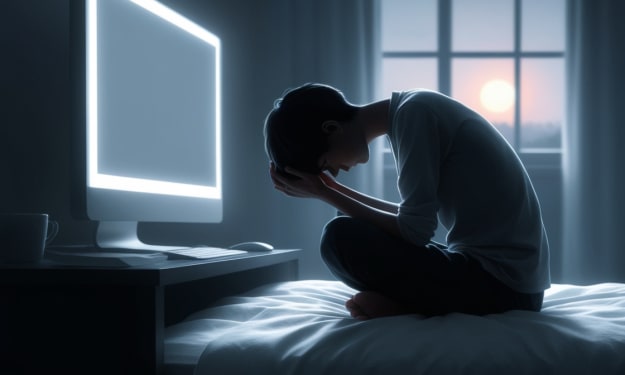
His clothes still hang in the closet. So does my guilt. I walk past that closet every day, hearing the faint rustle of fabric that’s no longer worn, no longer lived in. But the emptiness inside those shirts and jackets feels heavier than any weight I’ve ever carried. It’s a silence so loud it drowns me out. We used to say that our home was built on love and laughter. But love, I’ve learned, can crumble silently like dust settling on forgotten memories. --- It wasn’t always like this. When we first moved in, the closet was a sanctuary for both of us. I remember his hands folding his favorite flannel, how he’d hum softly while arranging his ties. Those clothes told a story—Friday nights at the pub, Sunday mornings at the farmers’ market, quiet evenings when he’d wear his old blue sweater that smelled faintly of cedarwood and hope. I wish I could go back to those days, before the storm settled between us. Before the silence grew so thick it swallowed our words whole. --- He left without a fight, without a warning. Just a note on the kitchen table and the echo of footsteps down the hallway. “I’m sorry,” he wrote, but the words felt empty. They couldn’t fill the space he left behind. And so the clothes remained. Shirts still hanging on their hangers, his worn-out jeans folded neatly on the shelf, the faint scent of his cologne trapped in the fabric. Each morning, I stand in front of the closet and wonder if he’ll come back. If he’ll walk through the door and laugh, like nothing happened. But he never does. --- The guilt started creeping in after the silence. A slow, suffocating fog that clouded every memory. I remember the arguments—small things that spiraled out of control, the harsh words thrown like knives. I remember the nights I stayed awake, staring at the ceiling, replaying every moment I wished I’d handled differently. The missed calls, the forgotten anniversaries, the times I put work ahead of us. Could I have stopped him from leaving if I’d just been better? More patient? More loving? The closet became a mirror reflecting all the “what ifs” that haunt me. --- Friends say I should clear it out, move on. But how do you throw away pieces of someone you loved so deeply? Last week, I found his favorite jacket buried under a pile of laundry. I held it close, the fabric soft against my skin. It smelled like him — a mix of rain, tobacco, and something indefinably familiar. And tears came, unbidden and unstoppable. That jacket holds more than just fabric. It holds our history. Our laughter. Our broken promises. --- One night, as rain tapped against the window, I sat on the floor of the closet, surrounded by his clothes. I whispered into the quiet, “I’m sorry.” Maybe he’s heard me. Maybe not. But in that moment, something shifted. The guilt didn’t disappear. It never will. But it softened. Because guilt is the shadow of love. It means something was real. --- I’ve started wearing one of his old shirts around the house sometimes. It’s too big, the sleeves swallowing my hands. But it’s a reminder — not just of loss, but of what we had. The closet is still full. The guilt still lingers. But maybe, just maybe, I’m learning how to live with both. To carry them gently, like fragile glass. Because love, even when it ends, never truly leaves us.
By Azmat Roman ✨about a year ago in Confessions
Whispers from the Grave: My Mother-in-Law's Final Words Changed Everything
I never expected her to speak again. My mother-in-law, Gloria, had been battling cancer for months. The once-vibrant woman who had ruled her home with elegance and a touch of tyranny was now frail, ghostly pale, and tethered to machines in a hospice bed. Her eyes, once sharp and calculating, now fluttered open with a softness I had never seen. I didn’t love her. That sounds cruel, I know, but honesty has become my closest companion since that day. She never fully accepted me. To her, I wasn’t “wife material” for her only son, Adam. Too artistic. Too emotional. Too... unpredictable. She was a woman of order and tradition. I was a painter who once dyed my hair blue and forgot anniversaries. Oil and water, everyone said. Still, I was there in her final hours, not out of duty, but for Adam. He had stepped out to speak with the doctor when she suddenly gripped my hand. Her eyes met mine. Clear. Intentional. "Check the blue box," she whispered. Her voice was cracked like old glass. "In the attic. Behind the water heater." I leaned closer, unsure I heard right. "Blue box. Adam... he needs to know. You need to know." Then, her hand went limp. She was gone. --- Grief has a strange way of dulling urgency. It wasn't until after the funeral, after the guests had gone and the casseroles had cooled in our freezer, that her words came back to me. I didn’t tell Adam right away. Maybe part of me wanted a secret of my own. Or maybe I was afraid of what I might find. I climbed into the attic one rainy morning. The air was thick with dust and insulation. I shoved aside old luggage and plastic bins until I saw it: a weathered blue metal box, hidden exactly where she'd said. It was locked. Frustrated and trembling, I pried it open with a screwdriver. Inside, I found a stack of letters, a small velvet pouch, and a photograph that made my blood run cold. Adam... with another woman. Her face was angled, but familiar. She looked like me. No. Not like me—like us. And in the corner of the photo stood a girl, maybe eight or nine, with Adam’s smile. My hands shook as I opened the letters. The first was dated 10 years ago. The handwriting was Gloria’s. > “You promised you would tell her. Keeping this from your wife is not protecting her—it’s condemning her to love a half-truth.” More letters followed—pleas from Gloria to Adam. Begging him to come clean about “her.” About the daughter. I couldn’t read them all at once. I sobbed. I screamed. I felt the betrayal rise in my throat like bile. He had a child. With someone else. Before me, yes—but he never told me. And Gloria knew. All these years, she had hated me not just because I was different—but because I was unknowingly standing in the place of another woman. A woman who had borne his child. When I finally confronted Adam, he didn’t deny it. “She died in a car accident,” he said, eyes swollen. “Before we met. I was going to tell you. I just… didn’t know how. And Mom—she made me swear to raise Lily privately, with her help. That’s why we sent money. Why she always avoided trips.” “Lily?” I repeated. “Where is she?” “In Oregon. With her aunt. She’s fifteen now.” The shock turned to numbness. Then to anger. Then to something else—grief, perhaps—for a family I never knew I had. For a girl who could’ve been part of our lives. “You lied to me every day,” I said, voice flat. “I know,” he whispered. “And I’ve hated myself for it every day. But you deserved the truth. She was right to tell you.” That night, I couldn’t sleep. I wandered the house and stopped at our wedding photo. Smiling faces. A hollow truth beneath. But Gloria’s words echoed in my mind—not just a confession, but a gift. She could’ve died with the secret. Instead, she gave me the choice she once took from me: to decide, fully informed, whether to stay or walk away. --- It’s been six months. Lily came to visit us last month. She has her mother’s eyes and Adam’s wit. We talk often now. Slowly, painfully, our marriage is rebuilding. Honesty is our daily vow. Sometimes, the truth shatters the life you thought you had. But sometimes—just sometimes—it builds a stronger one from the ruins. Gloria was many things, but in her final moment, she gave me the one thing I never expected: clarity. And with that, the strength to begin again.
By Azmat Roman ✨about a year ago in Confessions
Lost Love Found: A Beautiful Second Chance Romance
Chapter 1: The Day Everything Changed Sophie and Daniel met when they were sixteen. They were neighbors who became best friends, sharing secrets, dreams, and first love. Everyone in town knew they were perfect for each other. They walked to school together, spent summers by the lake, and talked for hours under the stars.
By Waqar Khanabout a year ago in Confessions
The First Time I Laughed After He Died, I Felt Like a Traitor
The first time I laughed after he died, I felt like a traitor. It wasn’t a polite chuckle or a weak smile. It was real—genuine and loud. The kind of laugh that escapes your chest before your brain can catch it. The kind of laugh that feels like life itself. And the moment it ended, guilt crashed over me like a wave. How could I laugh? How could I feel anything but broken? It had been 47 days since my husband, Aaron, died. A heart attack in the middle of a Thursday. No warning. No goodbye. One minute we were texting about groceries, and the next, I was standing in an emergency room under flickering fluorescent lights, listening to a doctor say words that made no sense. They said "passed away.” But it felt more like disappeared. I moved through the following weeks in a blur. Friends dropped off casseroles. My mother stayed for a while. Our dog, Remy, stopped sleeping in his usual spot at the foot of the bed. Everything in our home felt too still, like even the walls were holding their breath. Then came the day I laughed. It was a Sunday afternoon. My best friend, Elise, had finally convinced me to leave the house and take a walk in the park. “You don’t have to talk,” she said, “Just breathe.” We were sitting on a bench near the duck pond, watching two toddlers feed bread to a group of aggressive geese. One of the geese lunged for the bag of bread, and the toddler screamed and fell backward—completely unhurt but dramatically offended. The way his face contorted in betrayal, the theatrical way he looked to his mom, made something inside me crack. And I laughed. I laughed so hard I cried. Then I stopped, mid-breath, as if I had been caught doing something shameful. Elise noticed the change. “It’s okay,” she whispered. “You’re allowed.” But I wasn’t so sure. That night, I stood in the bathroom staring at myself in the mirror. I looked tired. Thinner. Older. And in the middle of my grief-ravaged face, I could still feel the ghost of that laughter lingering on my lips. I wanted to scrub it off, like it was a stain. Because part of me believed that if I let joy in—even for a second—I was letting go of him. And letting go felt like betrayal. Aaron and I had been together twelve years. We met at a bookstore, fell in love over coffee and cheap wine, built a life from mismatched furniture and inside jokes. We didn’t have children—just dreams we were slowly working toward. A road trip up the Pacific Coast. A fixer-upper house we’d turn into a home. A future that was taken away in an instant. For weeks after his death, I wore my grief like armor. It protected me. Defined me. Made me feel closer to him, in some strange way. I thought: if I hurt enough, maybe he’d know I hadn’t forgotten. If I smiled too soon, maybe he’d think I had. But grief doesn’t work like that. Love doesn’t disappear when laughter returns. It took time—months—for me to understand that. That laughter didn’t mean I was moving on. It meant I was still here. Still living. That the love we had wasn’t buried with him; it was planted in me. Growing roots in everything I did. In the way I still sang off-key in the car. In the way I talked to his photo every morning. In the way I eventually learned how to smile without shame. Some days I still feel the ache. In the grocery aisle where I find his favorite brand of cereal. In a movie line he would have quoted. In the space beside me at night that no one else can fill. But grief, I’ve learned, is not a straight line. It's a spiral. You return to the pain again and again—but each time with more strength, more softness, more room to let the light in. The first time I laughed after he died, I felt like a traitor. But now, I know better. Now, I understand that laughter is not a betrayal—it’s a rebellion. A small, defiant way to say: I’m still here. I still carry you. I still feel joy. Because of you. In spite of you. With you. And somewhere, somehow, I believe he's smiling too.
By Azmat Roman ✨about a year ago in Confessions
People Think I’m Healing. I Just Got Better at Hiding It
I wake up before the sun rises. It’s quiet. Peaceful, almost. But inside me, it feels like a hurricane still roars, even after all this time. People say I look better now. They say it like it’s a compliment. “You seem so much happier lately.” “I’m glad to see you doing well again.” “You’ve really bounced back.” I nod. I smile. I thank them. But if they knew how much energy it takes just to pretend, they’d understand this isn’t healing—it’s hiding. And I’ve gotten really, really good at it. It started after I lost my brother. He was everything to me—my anchor, my mirror, my best friend. His death wasn't a slow, understandable decline. It was sudden. Violent. A car crash, and that was it. No goodbye. No closure. Just emptiness. In the beginning, people gave me space. They let me cry, fall apart, grieve loudly. It was acceptable. Expected, even. But grief has an expiration date in the eyes of the world. After a few months, people stopped asking how I was doing. And when they did ask, they wanted the short answer. So I started giving it to them. "I'm good, thanks for asking." "Yeah, taking it one day at a time." "Better now." Better now. What a lie. The truth is, I’ve mastered the art of existing while crumbling inside. I’ve learned to laugh at the right times, keep my posture straight, and reply to texts like nothing’s wrong. But it’s all a performance. A delicate balancing act where one wrong step might bring the whole thing crashing down. At work, I’m efficient, focused. I even got a promotion last month. My boss says I’m thriving. I suppose that’s what it looks like from the outside—emails answered, meetings led, deadlines met. But what she doesn’t see is me staying late just so I don’t have to go home. Or me crying silently in the restroom because a playlist shuffled into a song that reminds me of him. Socially, I’ve rebuilt. Sort of. I go to dinners, post pictures, laugh at jokes. People like me again. They invite me places because I seem fun again. Normal. But they don’t see me come home and sit in the dark for hours. They don’t hear the silence that follows me everywhere, like a shadow I can’t outrun. Everyone thinks I’ve healed. And maybe it’s easier for them to believe that. Maybe it’s easier for me, too. Because the alternative? The truth? It’s ugly. It’s inconvenient. It makes people uncomfortable. Nobody wants to hear that someone still feels broken after all this time. They want inspiration, a comeback story. They want the phoenix rising from the ashes—not the bird still crawling through them, wings burned and useless. So I fake it. I fake it because I’m tired of seeing people flinch when I tell the truth. I fake it because I don’t want to be a burden. I fake it because somewhere along the way, pretending started to feel safer than being honest. But here’s the thing about hiding pain: it doesn’t make it disappear. It just festers in the dark corners of your soul. It grows roots in your chest and wraps around your heart like ivy. You learn to live with it, but it never stops hurting. Sometimes, late at night, I wonder if this is just who I am now—someone who can’t let go, who can’t move on. But other times, I realize something else: I’m not weak for feeling this way. I’m not broken because I still miss him. I’m just human. And maybe that’s the real truth behind the lie: I’m not healed. But I’m still here. Still breathing. Still trying. Still showing up. And maybe, for now, that’s enough.
By Azmat Roman ✨about a year ago in Confessions
When Autumn Brought You Back
Chapter 1: The First Goodbye The last time Emily saw Noah, the park was on fire with autumn colors. Leaves drifted down like golden rain, covering the paths they had walked together since they were fifteen. They were eighteen now, standing under the same oak tree where they’d first kissed. But this time, they were saying goodbye.
By Waqar Khanabout a year ago in Confessions
The Secret Addiction I Hid for Years
It’s strange how something can start small—harmless, even—and turn into a storm that quietly takes over your life. My secret addiction wasn’t to alcohol or drugs. There were no empty bottles rolling under the couch or strange white powders in the drawer. What I was addicted to hid behind a screen, behind silence, behind smiles I learned to fake with terrifying skill. For years, no one knew. That was part of the power it had over me.
By Muhammad Asimabout a year ago in Confessions
The Forgotten Letter . AI-Generated.
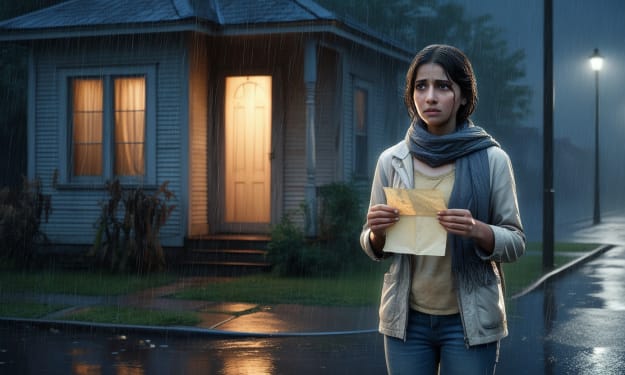
A faint knock echoed through the small apartment. Zara stirred from her thoughts, placing her half-finished cup of tea on the windowsill. Rain tapped steadily against the glass, matching the rhythm of her restless heart. It had been two weeks since she returned to Karachi after six long years in London. The city hadn't changed much—the same narrow streets, the smell of rain-soaked concrete, the familiar sounds of rickshaws and distant horns. But Zara had changed, and she wasn’t sure if the city—or her father—would accept that. A second knock came, firmer this time. She opened the door to find her old neighbor, Mrs. Khalid, standing in the dim hallway, holding a weathered envelope. “This came for you, beta,” the woman said with a faint smile. Her eyes lingered, curious but kind. Zara frowned, reaching for the envelope. It was yellowed with age, the corners soft and frayed. Her name was scrawled across the front in familiar, shaky handwriting. Her father’s. “Thank you,” she whispered, her voice dry with surprise. As the door closed, she stared at the envelope in her hands. She hadn’t seen or spoken to her father in years. Their last conversation echoed in her mind—the shouting, the slamming of doors, the bitterness that pushed her away. He had wanted her to stay, to follow the traditional path. Marriage, family, stability. But Zara wanted more—education, independence, the chance to see the world. She chased her dreams across continents… but left behind silence, regrets, and unanswered letters—until now. With trembling fingers, she opened the envelope. --- My Dearest Zara, I don’t know if this will reach you. I’m not even sure if you’ll want to open it. But I had to try. You know I’ve always been stubborn. Maybe I was wrong. Maybe I didn’t listen when I should have. I’ve seen your photos. Your aunt shows me everything. You looked so happy when you graduated… and when you got that job. I wish I had been there. I wish I had been proud out loud, not just quietly in my heart. The house feels empty now. Your mother’s garden is overgrown. Her favorite roses barely bloom. I’m not as strong as I once was, beta. I miss you. If you ever find your way back home… the door is open. No questions. No anger. Just me. Waiting. Love always, Baba --- Tears blurred the words as Zara pressed the letter to her chest. A thousand memories flooded her mind—the smell of her mother’s cooking, the sound of cricket matches on TV, her father’s quiet humming as he watered the plants. She had stayed away for too long. The silence between them, once thick with pride and pain, now felt fragile… breakable. The rain outside slowed to a drizzle. Grabbing her jacket and umbrella, she stepped out into the wet streets. Her father’s house was only ten minutes away—a short walk, but one that carried the weight of six years. The city felt alive despite the hour. Water pooled in the potholes, streetlights reflected off the pavement, and distant laughter floated from balconies. Every step pulled her closer to the memories—and the possibility of forgiveness. Finally, she reached the familiar gate. The small garden was untidy, plants drooping from neglect. But the house stood solid, weathered by time, stubborn like its owner. Before she could knock, the door creaked open. There he stood—older, frailer, his eyes wide with disbelief and hope. For a moment, neither of them spoke. “Zara?” His voice cracked. She nodded, fighting back tears. “I got your letter,” she whispered. A pause. Then, a smile—the same, soft smile that used to greet her after school. “Welcome home,” he whispered, opening the door wider. And with that, the years melted away. The past couldn’t be changed, but tonight, they had found their way back—one forgotten letter at a time. --- Call to Action: If this story touched your heart, please tap the ❤️, leave a comment, or share it with someone who needs a reminder: it's never too late to come home.
By FAZAL HAQabout a year ago in Confessions
All My Exes Hate Me Part 4: The One Who Almost Showed Up
By Gail F. Published June 2025 · 4 min read I used to think closure meant having a final conversation. Something tidy. One last exchange where we both say what we need to say and walk away better, wiser, cleaner. But maybe closure is quieter than I thought. Maybe it looks like nothing at all. This is about the one who almost showed up—but didn’t. Or maybe, in his own strange way, he actually did. --- When I decided to continue this little series—my personal mess aired out like a Netflix docuseries nobody asked for—I didn’t expect him to reach out again. Part of me hoped he would. Another part of me knew better. Still, it was 2:47 a.m. when his name flashed across my screen. Just a heart emoji and a voice note. I didn’t open it for two days. I wasn’t scared of what he’d say. I was scared of what I might feel. Let me take you back for a second. He was the one I trusted the most. Not because he earned it, necessarily—but because I needed to. Because he was the only one who made the chaos of my twenties feel like it had meaning. We weren’t perfect, and that’s not a poetic understatement. We were messy and impulsive, sometimes even cruel in our silence. But we got each other in a way that made everything else blur. That’s why I chose him first when I started this project. That’s why I was so shaken when he ghosted me right after agreeing to talk. I felt like I was being abandoned all over again. Like history, on repeat. --- The voice note? It was short. Scratchy. Like he recorded it from bed. > “I’ve been thinking about everything. And I know I messed up. But I’m proud of you. Really. I just couldn’t do it... not on tape.” I didn’t know how to respond. I didn’t respond. But I listened to it again the next night. And then again the next week. --- People always talk about bravery like it’s this loud, disruptive thing. Like it comes wrapped in confrontation or declarations. But what if it’s something smaller? What if bravery is saying, I can’t talk about that yet—and meaning it? What if it’s knowing you’ve done harm, and deciding to be quiet rather than make it about your redemption arc? I thought I wanted him to participate in this story so I could finally tell the truth. But maybe what I really wanted was for him to acknowledge what we were, and what we weren’t. And that one voice note? It might’ve been enough. --- I kept writing. I kept talking to exes, some who were brutally honest, some who dodged my calls, and others who tried to rewrite history in their favor. But he was different. His absence held weight. His silence felt like punctuation, not avoidance. Every time someone asked, “Did you ever talk to him again?” I said no. Because technically, I didn’t. We never exchanged another word after that night. But I think about him every time I open my voice memo app. Every time I replay his message, I hear something new. Fear. Regret. Respect. Maybe even love, in its most diluted, exhausted form. --- This isn’t the explosive story people expect when they see the title of this series. There’s no betrayal, no screaming match, no karmic payback. It’s just two people who were once something—trying not to make things worse. And if I’m honest, that’s more powerful than any plot twist I could write. --- So, no. He never gave me the full interview. He never let me record a conversation or jot down notes from a cathartic sit-down. But he gave me a sentence. A moment. A softness I didn’t realize I needed. And maybe that’s the real story. Maybe it always was. --- Coming soon: Part 5 – “The One I Still Think About” when the past doesn’t stay in the past ---
By fazilat bibiabout a year ago in Confessions
The Broken Promise: How a Youth Leader Sold Out His Generation
I remember the first day I saw Tunde speak. We were gathered in the dusty courtyard of the community hall, restless and worn out from years of silence. We had all suffered — no jobs, no hope, no voice. Our leaders treated us like numbers. But when Tunde stood on that makeshift stage with nothing but a microphone and fire in his eyes, something shifted. Something awakened.
By Oguntade Hafeez Olalekanabout a year ago in Confessions
The Day I Realized I Wasn't Broken—Just Unseen
A simple moment that changed the way I looked at myself forever I never thought much of myself growing up. Not in a dramatic or self-pitying way—just quietly. I was the kind of person who could sit in a room full of people and still feel invisible. I wasn’t the loud one, the funny one, or the star of any story. I was always just... there. I got used to blending in. In school, I wasn’t the top student or the worst. I wasn’t bullied, but I wasn’t celebrated either. I was the kind of kid who turned in homework on time and didn’t cause trouble. I smiled when people talked to me. I nodded along in conversations. But deep down, I often wondered if anyone truly saw me. That feeling followed me into my teenage years. At home, I was the dependable one. I didn’t ask for much. I didn’t make waves. I did what was expected—no more, no less. No one meant to ignore me. But when you always do what’s expected, people stop asking how you really feel. I remember once staring at my reflection in the mirror, wondering what would happen if I just disappeared for a day. Would anyone notice? Would anyone care? That thought didn’t come from a place of despair. It came from numbness—from years of feeling like background noise. Then, something small happened that changed me. It was during my second year of college. We were assigned a group project in a communications class—something I normally dreaded. I would usually take a behind-the-scenes role, like handling the PowerPoint or writing the outline. But this time, our group leader surprised me. “You’re really thoughtful,” she said. “Why don’t you lead this one?” I stared at her. I’d never been called thoughtful before—not in a way that felt genuine. People often said I was “nice,” but thoughtful? That word felt different. Like she had actually noticed something about me beyond the surface. I hesitated but said yes. That night, I poured everything I had into the project—not because I wanted praise, but because someone finally believed I could do more. I stayed up late organizing ideas, writing my parts carefully, and rehearsing what I would say. And when the day came to present, I stood in front of the class with shaking hands and a fast heartbeat. But I did it. And something happened that I didn’t expect: people listened. They nodded. They made eye contact. Afterward, a classmate said, “That was really clear—you made it easy to understand.” It was such a small comment. But to me, it felt like the first drop of rain after a long drought. I walked out of that classroom lighter. Not because I suddenly thought I was special—but because, for the first time, I realized I wasn’t broken. I was simply unseen. And maybe... I had a right to be seen. From that day on, I started showing up a little differently. I still wasn’t loud, but I stopped hiding. I started raising my hand more, speaking up in group chats, offering my opinion without second-guessing it. I even started writing again—something I used to love as a child but had given up because I didn’t think my voice mattered. Now, when I look at people who seem quiet or overlooked, I see myself in them. And sometimes, I take the chance to say the thing I once needed to hear: “I see you. And what you bring matters.” Because it does. Because sometimes all it takes is one moment, one sentence, one person who sees you, to make you believe in yourself again. I wasn’t broken. I was waiting—for someone to see me, and for me to see myself. Now I do. And I hope you will too.
By Amelia Smith about a year ago in Confessions
All My Crushes Ignored Me — Until the One Who Came Back
1. The DM That Shook My Stability I’m 29 now. Life’s solid — decent job in Dubai, my own apartment, a gym routine I pretend to enjoy, and a golden retriever named Chai who thinks every human exists to throw his ball.
By Arshad khanabout a year ago in Confessions