Secrets
I Got a Message From My Dead Brother on Instagram
It was 2:13 a.m. when my phone buzzed, lighting up the darkness beside my bed. Half-asleep, I reached for it, expecting another spam DM or maybe one of those “are you awake?” texts from someone who shouldn’t matter anymore. But when I saw the name, I stopped breathing.
By Ava Writes Truthabout a year ago in Confessions
What If the Titanic Was Sunk on Purpose?
I can’t get the image out of my head, the Titanic, that monstrous ship everyone worships as a tragedy of fate, not a crime. My friend Mark’s obsession with this theory has been haunting me lately, and I swear, it’s like peeling back a layer of a nightmare I never wanted to see.
By Ava Writes Truthabout a year ago in Confessions
Smiling Through the Storm: Escaping the Grip of a Toxic Friendship
I used to think soulmates came in the form of romantic partners. I thought love was the only bond powerful enough to hurt, heal, and haunt. I never realized that friendships—especially the toxic kind—can scar you just as deeply. It started innocently. Her name was Maya. She was smart, funny, the kind of girl who lit up a room just by entering it. When we met in our first year of college, I was in awe of her. She had this magnetic charm that made everyone want to be around her. And somehow, she chose me as her best friend. At first, it was bliss. Late-night chats, impulsive road trips, deep conversations about life, dreams, and heartbreaks—we were inseparable. She knew all my secrets, and I thought I knew hers. People called us sisters. For a while, I believed we were. But slowly, things began to change. Maya started making passive-aggressive comments about my appearance. "You’re brave for wearing that dress with your body type," she’d say with a sweet smile, knowing it would sting. When I aced a class or got attention from a guy she liked, she'd downplay it or suddenly stop talking to me for days. If I confronted her, she'd say, "You're too sensitive" or "You always twist things." It was confusing. This was the person who once comforted me through my darkest moments. The one who held my hand when I cried over my parents' divorce. How could someone who loved me also hurt me so much? I started second-guessing myself. Was I overreacting? Was I the toxic one? But then came the isolation. She didn’t like me hanging out with other friends. She’d get jealous, possessive even, and guilt-trip me into canceling plans. "Why do you need them when you have me?" she'd ask, eyes glistening with mock sadness. And so, I stayed. I stayed even when she embarrassed me in public under the guise of jokes. I stayed when she revealed personal things I told her in confidence. I stayed when I started losing pieces of myself just to keep her happy. The breaking point came on my birthday. She forgot. Or rather, she pretended to. No call. No message. No post. Nothing. The same person who made me plan elaborate parties for her birthdays for three years in a row didn't even send me a "happy birthday" text. That evening, I found out she was out with another group of friends, celebrating someone else’s birthday. I cried—not because she forgot, but because I realized how little I meant to someone I had given so much of myself to. A week later, she texted me as if nothing had happened. "Hey! Let’s catch up. It’s been forever." And that’s when I knew. I was just a placeholder in her life. A convenient emotional outlet. Someone she could pull close when she was lonely and push away when she didn’t need me. It took me a long time to respond. I sat with the pain. I reread our old messages, replayed memories like a broken film reel. Part of me wanted to run back—because toxic friendships aren't just painful; they’re addictive. But I didn’t. I replied with one sentence: "I need to choose peace, even if it means letting go of the person I thought was home." And then I blocked her. It wasn’t dramatic. There were no screaming fights, no tearful goodbyes. Just silence. The kind of silence that follows a long, exhausting storm. For a while, I felt empty. Lonely. Even guilty. But then... I felt lighter. I started reconnecting with old friends, focusing on my mental health, and rediscovering hobbies I had abandoned. I didn’t have to filter my thoughts or walk on eggshells anymore. I could breathe. Looking back, I don’t hate Maya. I think she was deeply insecure, and maybe, in her own way, she did care. But that doesn’t excuse the damage she caused. Not all wounds are visible. Some are etched into your self-worth, your trust, your ability to let people in. To anyone reading this and wondering if your friend is toxic—listen to your gut. Real friendship doesn’t make you feel small. It doesn’t make you question your worth or cry yourself to sleep. Real friends cheer you on, lift you up, and respect your boundaries. Letting go of a toxic friendship isn’t betrayal. It’s self-preservation. You don’t owe anyone access to your soul just because you shared memories. Choose peace. Choose healing. Choose you.
By Azmat Roman ✨about a year ago in Confessions
Men Are from Mars, Women Are from Venus by John Gray: One book that change my emotional psyche
I'll be honest with you – when I first picked up this book, I was skeptical. Another relationship guide promising to decode the mysteries between men and women? I'd heard it all before. But there's a reason this masterpiece has sold over 15 million copies and sparked countless conversations around dinner tables worldwide. After diving deep into its pages and applying its principles in real life, I can confidently say this isn't just another self-help book gathering dust on your shelf.
By Soibifaaabout a year ago in Confessions
Maybe, One Day — A Story of Survival and the Long Road to Hope
This story is dedicated to every soul who ever had to start over, not by choice, but by force. It was a winter morning. The kind where the frost bites at the edges of your window and the world feels still — like it’s holding its breath. But that morning, something shattered. Not the glass, not the silence. My life.
By Angela Davidabout a year ago in Confessions
I Wasn’t Too Much—They Just Weren’t Enough: Unlearning the Myth of Being 'Difficult
For the longest time, I believed I was the problem. I was “too sensitive,” “too emotional,” “too outspoken,” “too needy.” That word—too—haunted me. It followed me like an unwanted nickname. In relationships, at work, in friendships, I constantly felt like I was walking on eggshells just to keep everyone comfortable. And when I finally spoke up about my boundaries, discomforts, or needs, I was met with blank stares, raised eyebrows, or the classic passive-aggressive sigh. I internalized it. I wore it like a badge. I was difficult. I was hard to love. I was “a lot.” But turns out—I was never difficult. I was just loud about my needs in a world that benefits from my silence. It started with small things. I remember being 8 years old and asking a teacher if I could sit away from the window because the sunlight gave me headaches. She waved me off with a, “You’ll be fine, don’t be dramatic.” So I learned to shrink into discomfort. I learned early that voicing my needs made me annoying. Fast forward to my twenties, and this played out everywhere. In relationships, I was the girlfriend who “overanalyzed” when I asked for more emotional availability. I’d express how being left on read for days made me feel insignificant, and I’d hear, “Why do you always have to make a big deal out of everything?” In jobs, when I spoke up about being overworked or about needing more time to complete a project, I was seen as “not a team player.” I watched others stay quiet and get ahead, while I stayed honest and got sidelined. For years, I molded myself to fit. I spoke softly. I made myself agreeable. I praised others before myself. I tolerated discomfort so others wouldn’t have to. Until one day—I burned out. Emotionally, physically, spiritually. I was running on fumes. I was living a version of myself that was palatable but painfully inauthentic. Then something changed. It wasn’t a grand epiphany or a dramatic wake-up call. It was a quiet realization during a therapy session. My therapist asked, “What would happen if you believed that your needs are valid?” I didn’t know how to answer. That sentence sat with me like a seed in soil, and over the next few months, it grew into something I hadn’t felt in years: permission. Permission to take up space. Permission to stop apologizing for having needs. Permission to ask, without shame, for what would make me feel safe, heard, valued. So I started small. I said no to a social gathering when I felt drained—and didn’t make up an excuse. I asked my partner to communicate daily—not because I was clingy, but because connection matters to me. I told my boss I wasn’t available after work hours—and didn’t flinch when it made her uncomfortable. I started standing up for the little girl who wasn’t allowed to move her seat by the window. It wasn’t easy. The first few times I was met with confusion or defensiveness. But slowly, something incredible happened: I began attracting people who didn’t make me feel like too much. People who saw my honesty as strength, not annoyance. Spaces where being direct wasn’t rude—it was respected. I used to think being “easygoing” made me lovable. But now, I know being authentic is what makes me magnetic. And I’ve learned that people who benefit from your silence will always call you difficult when you begin to speak. I share this story not because I’ve mastered it—there are still moments when I hesitate before expressing myself, still flashes of that old fear of being “too much.” But now, I remind myself: I’m not too much. I’m just clear. I’m just aware. I’m just worthy. Being loud about your needs isn’t a flaw—it’s a sign of self-respect. And I wish someone had told me sooner that you don’t have to earn that right. So to the person reading this, wondering if you're too complicated, too demanding, or too expressive—I offer you this: You’re not difficult. You’re not broken. You’re not too much. You’re just finally showing up as someone who won’t shrink anymore. And that’s a beautiful, powerful thing.
By Azmat Roman ✨about a year ago in Confessions
I Became a Stranger to Stay Alive
I never imagined I’d wake up one day and not recognize the person staring back at me in the mirror. The eyes were mine. The scars were mine. But the soul? That was someone else’s—someone I had to become just to make it through. Before everything changed, I was a teacher. A mother. A wife. A friend. I had a loud laugh and an open door. People said I made a home feel like safety. But when the war came, when the air itself turned to ash and fear, I learned that love and laughter weren’t enough. Not when survival demanded silence. Not when the walls had ears, and names on paper could mean death. We lived in Syria—Aleppo—once beautiful, ancient, breathing history in every street. I used to take my daughter Mariam to the citadel on weekends, feeding the pigeons, telling her stories of queens and warriors. Then came the bombings. The checkpoints. The disappearances. The first time I truly felt like a stranger to myself was the night my husband didn’t come home. He had gone out to find bread. Just bread. Hours passed. Then days. The phone never rang. The door never opened. That’s when I knew. And something inside me began to die—not just the hope of seeing him again, but the woman who believed life still made sense. Soon, the threats came. They said I was teaching “the wrong history.” They said my name was on a list. I had two choices: stay and die as the woman I was—or disappear and live as someone else. So I chose life. Or at least, a version of it. I left everything behind. My clothes, my books, even my name. I dressed in garments I never wore before, wrapped my identity in layers of silence. Mariam stopped calling me “Mama” in public. I stopped speaking to strangers. I stopped laughing. We fled north, then west. Walking. Hiding. Running. At night, I whispered old lullabies to her, my voice cracking with fear. She was only six, but she carried the weight of survival on her tiny shoulders better than I ever could. We reached Turkey. A refugee camp. A different world. There, I met a woman named Amal. She gave me her extra scarf. Shared her bread. She had also lost a husband. Also had a daughter. We cried in silence the first time we sat together. We didn't need words. We were mirrors. In the camp, I taught again—under a makeshift tent, with paper scraps and chalk pieces. The children called me "teacher," but I didn’t feel like one. I didn’t feel like anything. Just a ghost in borrowed skin. Then one day, a little boy in class asked, “Teacher, what was your name before the war?” I froze. Before the war. It felt like a lifetime ago. I almost said it—my real name. The one my mother gave me. The one my husband whispered in love. But I caught myself. That name belonged to a life I had buried. “I don’t remember,” I lied, forcing a smile. That night, I cried harder than I had in months. Not because of the lie—but because it was starting to feel true. But here’s the strange thing: even in that emptiness, life grew. I became stronger. Sharper. I learned how to navigate embassies. How to protect my daughter. How to advocate for others. I became a woman who knew how to disappear—and yet be seen. Eventually, we made it to Europe. A resettlement program. A new apartment with white walls and locked windows. Mariam started school. I found work cleaning offices at night and translating during the day. I was nobody. And yet, I was everything my daughter needed. A year later, during a citizenship interview, the officer asked me, “Do you feel you’ve adapted to your new life?” Adapted. I smiled politely and nodded. But inside, I thought: No, I haven’t adapted. I’ve transformed. I’ve become someone else entirely. And yet, the strangest thing? This stranger I became—this quiet, resilient, invisible woman—I learned to love her. Because she kept my daughter alive. Because she buried the past and built a future. Because she endured. I don’t know if I’ll ever return to Syria. I don’t know if the old me still exists. But I’ve made peace with my reflection now. With the stranger in the mirror. Sometimes, to survive, you have to let go of who you were. Sometimes, the only way to stay alive… is to become someone else entirely.
By Azmat Roman ✨about a year ago in Confessions
I Didn't Know Who I Was Until I Lost Everything
I used to think I had it all figured out. A steady job in finance, a penthouse apartment with a skyline view, and a social circle that toasted to success every Friday night. From the outside, my life looked perfect. But in truth, it was all a carefully crafted illusion—a mask I wore so well I forgot it wasn’t me. Then, in the span of six months, everything unraveled. It started with the market crash. The investment firm I worked for began downsizing, and despite my performance, my position was deemed “non-essential.” They let me go with a severance package and a polite thank you. I told myself it was temporary. I’d bounce back. I always did. But I didn’t. My savings dwindled faster than I expected. Job interviews turned into dead ends. My resume, once impressive, now felt outdated in a rapidly shifting world. Rent became impossible to keep up with, and eventually, I had to give up the apartment. I moved in with a distant cousin, swallowing the bitter pill of pride. Then came the next blow—my girlfriend of four years left me. She said I wasn’t the man I used to be. She wasn’t wrong, but the man I used to be was built on ego, materialism, and a false sense of identity. One morning, I found myself staring at my reflection in the mirror of my cousin’s guest bathroom. I barely recognized the hollow eyes looking back. No job. No home. No love. No direction. I had nothing left—except time. So I started walking. It sounds strange, but I walked for hours each day. Through neighborhoods I’d never seen. Past schools and shops and parks filled with laughter. I walked until the ache in my legs numbed the noise in my mind. During one of these walks, I wandered into a small local library. It wasn’t intentional—I just needed a place to sit. The librarian, a silver-haired woman with gentle eyes, asked if I needed help. I told her I didn’t know. She smiled and said, “That’s okay. Sometimes the best stories start with not knowing.” That sentence stayed with me. Over the next few weeks, I kept coming back. I read books—not financial reports or business articles, but real stories. Fiction, memoirs, philosophy. I read about people who lost everything and found purpose. I read about simplicity, about mindfulness, about living with less and feeling more. Each page was a mirror, slowly showing me the pieces of myself I had ignored for years. I started volunteering at a local shelter, not out of charity, but because I needed to feel useful. For the first time in years, I listened to people without thinking about how to respond. I learned their stories—real stories filled with pain, resilience, humor, and hope. And then, one day, it clicked. All my life, I had built my identity around what I owned, who I knew, and how successful I appeared. But when all of that was stripped away, what remained was raw and real—my curiosity, my empathy, my desire to connect. I wasn’t the polished finance guy anymore. I was someone who had been broken open—and through that break, something new began to grow. Today, my life looks very different. I work for a nonprofit that helps displaced families rebuild their lives. I rent a modest studio apartment that I’ve made my own, filled with books and plants and a quiet kind of peace. I write in the mornings—journals, short stories, even articles like this one. And I walk every day, just to remember how far I’ve come. Losing everything didn’t destroy me. It introduced me to myself. If you’re reading this and feel like your world is falling apart, I want you to know something: sometimes the breaking is the beginning. Sometimes what looks like the end is just life gently ripping away the layers that no longer serve you. You are not your job. You are not your relationship. You are not your bank account. You are the stories you tell, the kindness you give, the resilience you build in the silence between the noise. I didn’t know who I was until I lost everything. But now, I wouldn’t trade that loss for anything. Because in the wreckage, I found the truth—and that truth set me free.
By Azmat Roman ✨about a year ago in Confessions
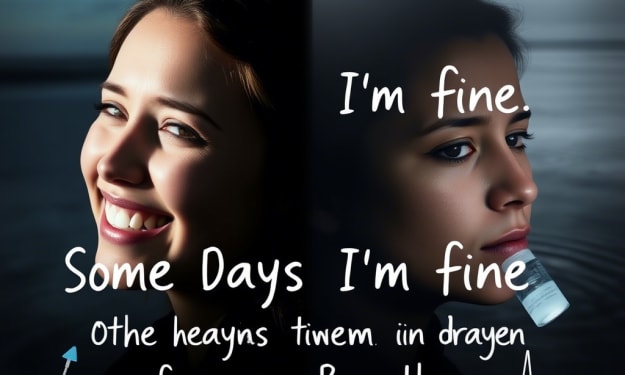
Some Days I’m Fine. Other Days I Forget How to Breathe.
I wake up to sunlight filtering through the blinds. It’s a beautiful morning. Birds are chirping, the world seems peaceful, and for once, I feel okay. I shower, make my bed, and even hum to a song playing on the radio. These are the "fine" days — days when I can smile without forcing it, when the air doesn’t feel like it weighs a hundred pounds. But then, there are days when I forget how to breathe. It doesn’t happen suddenly. It starts subtly, like a quiet shift in the wind. A strange heaviness settles on my chest — invisible, but suffocating. My thoughts spiral. I try to focus, but my mind becomes a crowded highway of fear, self-doubt, and voices telling me I’m not enough. That I’ll never be enough. My name is Leena. I’m 28, a graphic designer by profession, and a master of pretending everything is okay. From the outside, no one would know. I laugh at the right jokes, hit deadlines, smile in selfies. But beneath that surface is a story I rarely share — a daily wrestling match with anxiety that feels like drowning while everyone else is breathing just fine. --- The First Time I Couldn’t Breathe I was 15 when I had my first panic attack. I remember sitting in algebra class, my hands trembling, heart racing. It felt like the walls were closing in. I tried to raise my hand, but couldn’t. My throat tightened. I couldn’t speak. I couldn't breathe. Everyone thought I was sick. Maybe I was. But not in a way that could be cured with Tylenol or sleep. The doctors said it was “just anxiety.” Like it was small. Like it was temporary. But anxiety doesn’t leave quietly. It becomes a roommate, an unwelcome shadow that follows you into every room. It steals your breath, your confidence, your peace. --- Living in Two Worlds Living with anxiety means existing in two worlds. In one world, I’m productive, put-together, a “high-functioning adult.” In the other, I’m unraveling. I cancel plans at the last minute. I replay conversations in my head, convinced I sounded stupid. I cry without knowing why. My brain is constantly playing defense — what if I fail? What if they hate me? What if something bad happens? What if I’m just... broken? And then there’s the guilt. Because I should be fine, right? I have a job, a roof over my head, people who care. What right do I have to feel like this? That’s the thing about mental health — it doesn’t care about logic. --- The Mask We Wear Social media doesn't help. It’s filled with highlight reels — friends getting promoted, traveling, falling in love. Meanwhile, I’m proud if I can make it out of bed and eat something that isn’t instant noodles. I used to think I was alone in this. But slowly, I learned that many people are quietly suffering behind filters and curated captions. Smiling doesn’t mean healing. Productivity doesn’t mean peace. The strongest people I know are often the ones hiding their pain the deepest. --- A Turning Point The turning point came when I hit what people call “rock bottom.” It was a cold November evening. I sat on my apartment floor, sobbing, surrounded by unopened mail, dirty laundry, and silence. I felt so tired. So invisible. That night, I reached out. Not to a friend. Not to social media. But to a therapist. It took everything in me to make that call, but it changed my life. Therapy didn’t “fix” me — but it helped me understand myself. I learned tools to navigate the storm. I learned it’s okay to not be okay. I learned how to breathe again, even when it feels impossible. --- Healing Isn’t Linear Recovery isn’t a straight line. Some days I laugh freely. Other days I cancel everything and lie in bed. But I’ve stopped shaming myself for the bad days. Because healing isn’t about perfection — it’s about resilience. It’s about choosing to stay. To keep going, even when your mind tells you not to. I’ve also started journaling, meditating, walking more. I keep a sticky note on my mirror that says, “You’ve survived 100% of your worst days.” Some days, that’s enough. --- If You’re Reading This... If you’re reading this and you’ve ever felt like you’re drowning — please know you're not alone. There is no shame in struggling. There is no weakness in asking for help. You are not broken. You are human. And some days, being human is incredibly hard. But you're still here. And that matters more than you know. --- Final Words “Some days I’m fine. Other days I forget how to breathe.” That sentence used to feel like defeat. Now, it feels like truth. And in truth, there’s power. Because acknowledging the struggle is the first step to healing. If you feel seen by this story, I hope it gives you the courage to speak your own. To reach out. To hold on. Because even on the worst days — especially on the worst days — your story still matters. You still matter.
By Azmat Roman ✨about a year ago in Confessions
Healing Isn’t Pretty—It’s a Fight You Don’t Post About
They said healing would feel like peace. Like finally exhaling. Like warm baths and yoga mats and closing toxic doors with a graceful smile. They lied. Healing, as I experienced it, was raw. Ugly. Messy. It looked nothing like the gentle images on Pinterest boards or the soft affirmations spoken by women in calm voices over lavender fields on Instagram Reels. No one prepared me for what it actually feels like to rebuild yourself from the inside out. It started when I left him. To the outside world, we were fine. A little unstable maybe, but who isn’t? I had learned to wear the right makeup over bruises, both on my skin and in my soul. I had learned how to laugh on cue and pose for pictures with just enough sparkle in my eyes to convince others — and maybe myself — that it wasn’t that bad. But it was. And I broke. Quietly, completely, and without ceremony. The night I left, I didn't feel brave. I felt terrified. I didn’t feel empowered. I felt like a fraud, walking out the door with a garbage bag of clothes and a panic attack in my throat. That wasn’t peace. That wasn’t healing. That was survival. The weeks that followed weren’t romantic either. I wasn’t journaling and meditating under moonlight. I was sleeping on a friend’s couch, crying so hard in the shower that I had to sit down. I was losing weight not because I was taking care of my body, but because anxiety made food taste like sand. I had panic attacks in grocery stores and flashbacks in the middle of work calls. I didn’t feel like a phoenix. I felt like ashes that forgot how to burn. I started therapy — reluctantly, skeptically, because I wasn’t sure what I’d even say. But that first session? I sobbed like a child. My therapist didn’t hand me solutions. She handed me tissues and silence — and somehow, that was more healing than anything else. For once, someone let me fall apart without rushing me to “get better.” That’s when I realized something they never tell you: healing is not linear. It’s not a steady climb to a glorious mountaintop. It’s jagged. Some days you feel free and alive. Other days, you’re on the bathroom floor, wondering if you made a mistake. There were nights I wanted to go back. Just to feel something familiar. Just to not be alone. But I held on — sometimes barely, sometimes resentfully, but I held on. I started to understand that healing meant looking in the mirror and facing the parts of myself I had ignored. The codependency. The people-pleasing. The way I confused pain with love. That wasn’t just hard — it was humiliating. I had to forgive myself for all the times I silenced my instincts. All the times I stayed too long. All the times I betrayed myself in the name of loyalty. Healing looked like setting boundaries and feeling guilty about them. It looked like crying after saying no, and still holding the line. It looked like building a new life brick by shaky brick, with no applause, no milestone posts, no one really seeing the battle I fought daily just to stay whole. But slowly — painfully — things changed. I found an apartment. My own. Just a small studio, but it smelled like lavender and freedom. I started sleeping through the night without waking up in a cold sweat. I picked up books I used to love, started cooking again, called my mom more. Little things. Quiet victories. And one day, I laughed. A real laugh. The kind that bubbles up from your chest without asking permission. And I realized: this is healing too. Not the polished kind. Not the aesthetic kind. But the kind where your soul starts breathing again. I still have bad days. There are still triggers, flashbacks, shame spirals. But I don’t drown in them anymore. I’ve learned to ride the waves instead of getting swept under. Healing looks like trusting yourself again. Like saying, “I deserve better,” and meaning it. Like finally — after everything — choosing yourself without apology. So no, healing isn’t pretty. It’s not always peaceful. It doesn’t come wrapped in self-help quotes or bath
By Azmat Roman ✨about a year ago in Confessions
The Day I Packed a Bag and Never Looked Back
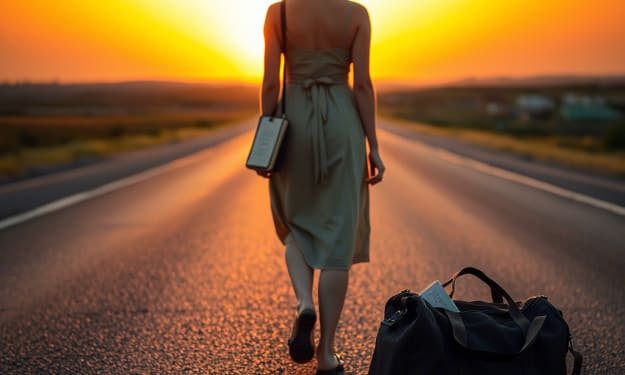
The Day Everything Changed It was a Tuesday. Tuesdays are rarely revolutionary. They’re the sleepy cousins of Mondays—unremarkable, predictable. But that one? It was the day I stopped pretending everything was okay. The day I zipped up a single bag, walked out the door barefoot, and didn’t look back. I remember the sound of the zipper, the way it cut through the silence like a decision being made in real-time. Final. Irrevocable. No one was yelling. No one was crying. That was the scariest part—how quiet everything was. Like the moment before a storm, when the wind dies and the air holds its breath. I didn’t plan to leave. Not really. Not like this. There had been fantasies, sure—quiet moments in traffic where I’d imagine taking the next exit and never coming home. Mornings where the shower masked silent sobs. But I told myself it wasn’t that bad. We weren’t that unhappy. I wasn't that stuck. But denial is a heavy thing to carry. That morning, I poured his coffee. I even made toast. We talked about nothing—the weather, the cat, whether the washing machine was making a funny noise again. And then he left. With a kiss on the cheek that felt like an apology for something he hadn’t done yet. Or maybe for all the things he had. The moment the door clicked shut, I stood there holding the empty mug like it was a question I couldn’t answer. And then I moved. I grabbed the blue duffel bag from the top shelf of the closet. The one we used for beach trips when we still had those. I threw in a few clothes, a worn paperback, my journal, and the necklace my grandmother gave me that I hadn't worn in two years. I didn’t leave a note. I didn’t take the framed photos off the wall. I didn’t even bring a charger. I just walked. I didn’t know where I was going, only where I wasn’t going back to. --- The Weight I Didn’t Know I Was Carrying Freedom doesn’t feel like fireworks. Not at first. It feels like nausea. Like guilt with nowhere to land. Like an echo in your chest where certainty used to live. I spent the first night in a cheap motel off Highway 29, where the wallpaper curled at the corners and the sheets smelled like bleach. I stared at the ceiling fan until dawn, replaying the past ten years like a film I never auditioned for. There was no abuse. No scandal. Just a million tiny compromises. A thousand silences. A creeping numbness that settled into my bones so slowly, I didn’t notice I was frozen. People think leaving means you're brave. The truth is, sometimes it means you’re broken enough to finally stop trying to fix something that isn’t meant to be whole again. --- The Road to Myself The weeks that followed were a blur of motion. I couch-surfed. I slept in my car once. I applied for jobs I’d never imagined doing, just to feel the pulse of something new. I cried in grocery store parking lots and laughed with strangers over gas station coffee. Slowly, I began to feel like a person again. Not someone’s partner. Not a role I had been performing. Just… me. And she was someone I hadn’t met in a long time. I started journaling every day, like therapy on paper. I wrote down things I liked—fresh mango, indie folk music, rainy mornings, the way my hair curled when I stopped straightening it to please someone else. I found a room to rent in a little town near the ocean. The landlord was a retired nurse who baked bread on Sundays and didn’t ask too many questions. We’d sit on the porch and drink tea. Sometimes silence was the kindest sound. --- The Truth I Found The hardest part wasn’t leaving him. It was leaving the version of myself that believed I had to stay. That staying made me noble. That enduring unhappiness made me strong. But what I learned is this: courage doesn’t always roar. Sometimes it whispers. Sometimes it packs a bag in the quiet and walks away while the world is still asleep. And sometimes, the best thing you can do—the most sacred act of self-love—is to begin again. So yes, it was a Tuesday. But to me, it will always be the day I finally came home—to myself.
By Azmat Roman ✨about a year ago in Confessions