Family
Secret Letter
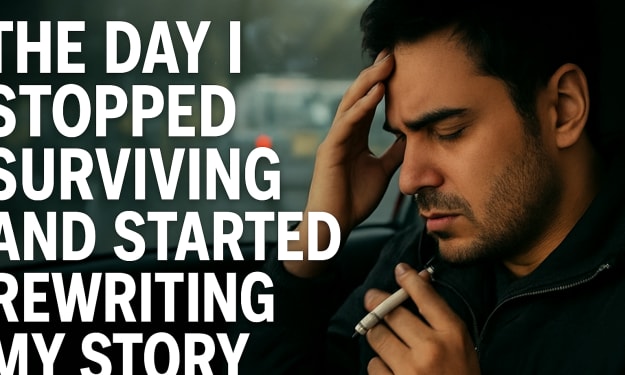
What Jake Became I gave his moment to the ether in my mind. Between 2007 and 2009, while others buried Jake and marked the date he died, I let him dissolve into something larger. I didn't trap him in grief or fix him to a gravestone. Instead, I released him into the atmosphere of my consciousness - not as an ending, but as a beginning. In doing that, something unexpected happened: we became one. Not in a way that erased him or made him less real, but in a way that let him breathe through me, move through me, become woven into how I understood the world.
By Parsley Rose 12 months ago in Confessions
What Happened When I Finally Stood Up for Myself
What Happened When I Finally Stood Up for Myself BY: Ubaid For most of my life, I convinced myself that being quiet was the safest option. I told myself that peace was more important than pride, that swallowing my words made me “easy to deal with,” and that avoiding conflict meant avoiding pain. But the truth is, silence can become its own kind of prison. It starts small—letting someone talk over you, laughing off insults, agreeing when every part of you wants to say no. And then one day you wake up realizing that the version of you inside your head is nothing like the version the world sees. For me, that moment came on an ordinary Tuesday. I was working at a small marketing firm, the kind of place where the coffee is always burnt and the deadlines arrive before the brief. I’d been there for almost two years and had quietly taken on extra tasks, extra pressure, and extra stress without ever speaking up. My supervisor, Daniel, had a talent for delegating his responsibilities to anyone who wouldn’t complain—and I was his favorite target. That Tuesday morning, he strolled into the office with his usual half-smirk. “Ubaid, I need you to finish the Rivera proposal. It’s due today.” I felt a knot tighten in my chest. “But I don’t even have the project files,” I said carefully. “Oh, they’re in my inbox somewhere,” he waved dismissively. “Just figure it out.” Figure it out. The same words he always used. The same expectation that I would magically create results from thin air, while he enjoyed the credit. I opened the email chain and felt my frustration rise. He hadn’t given me anything—no notes, no drafts, not even the client’s requirements. I had been pushed before, but this time something in me clicked differently. Maybe it was exhaustion. Maybe it was the way he didn’t even look at me when he dumped the work. Or maybe I had simply reached the point where staying quiet hurt more than speaking up. I took a deep breath and walked to his office. He didn’t even look up. “Yeah?” “Daniel,” I said, steadying my voice, “I’m not doing the Rivera proposal.” That got his attention. He looked up sharply. “What do you mean you’re not doing it?” “I mean it’s your responsibility,” I replied. “You haven’t given me the files or the briefing. I can’t produce a full proposal from nothing. And even if I could, it shouldn’t always be my job to fix things you leave unfinished.” He stared at me like I had suddenly started speaking in another language. “Are you seriously refusing a task?” “For the first time,” I said. “And only because it’s not mine to begin with.” His eyes narrowed. “Careful, Ubaid. This attitude won’t look good.” Something inside me hardened—not anger, but clarity. “What won’t look good,” I said calmly, “is the pattern of you reassigning your projects to juniors and taking credit for their work. If you want to talk about attitude, we can bring HR into it.” There it was. Words I had been too afraid to say for months. The room felt quiet, heavy, but I didn’t shrink. I held his gaze for the first time instead of looking at the floor. He blinked. His tone shifted. “Fine,” he muttered. “I’ll handle it.” I walked out of the office, my heart pounding so loud I could feel it in my fingertips. I expected fear, regret, or anxiety—but what I felt instead was freedom. A strange, exhilarating freedom I had denied myself for years. The rest of the day passed quietly, but something interesting happened. Coworkers who had never spoken more than a polite hello suddenly approached me. One whispered, “I heard what you told Daniel… good for you.” Another said, “He does that to everyone. You finally called it out.” I realized something shocking: I wasn’t the only one suffering in silence—I was just the only one who finally said something. Later that afternoon, HR asked me to drop by. My stomach tightened, but they weren’t there to scold me. They wanted to “understand the recurring pattern in the department.” Apparently, I wasn’t the first complaint they’d heard about Daniel—but I was the first one willing to attach my name to it. Standing up for myself didn’t just shift my own life; it shifted the entire environment around me. That night, as I walked home under the soft glow of streetlights, I felt like I was breathing fully for the first time. I kept replaying the moment I said no. The moment I chose myself over fear. It wasn’t loud or dramatic. It didn’t come with applause. It came quietly, the way truth often does. But it changed everything. I realized that courage isn’t the absence of fear—it’s the decision that your voice matters more than your comfort. That speaking up isn’t about confrontation; it’s about protecting your dignity. That boundaries aren’t walls; they’re respect. Most importantly, I learned that the world treats you the way you teach it to treat you. When I finally stood up for myself, I didn’t become someone new—I simply let the real me step into the light. And once you taste that kind of freedom, you never let yourself shrink again.
By Ubaid 12 months ago in Confessions
Becoming the Woman They Couldn’t Break
There comes a point in a woman’s life when she stops hoping things will get easier… and decides she will get stronger. I’m standing in that moment now—fierce, focused, and done letting anything hold me back from what I was meant to become.
By Karen Sanderson12 months ago in Confessions
A Choice I Never Thought I’d Have to Make
A Choice I Never Thought I’d Have to Make BY: Khan I always believed life moved in a straight line. You study, you work, you earn, you build something that feels like stability. That’s what I thought adulthood was. But life has a strange way of revealing its real syllabus only when you least expect it. My real lesson came the day I had to make a choice I never imagined would be placed in my hands. It started on an ordinary Tuesday morning. The city was already awake—honking buses, vendors lifting shutters, motorbikes weaving through traffic. I was sipping my coffee by the office window when my phone buzzed. The number flashing on the screen stopped my heartbeat for a second. It was the hospital. My mother had been admitted. I rushed out immediately. For the entire drive, my mind replayed the same fear: Please, let her be okay. My father had passed away years ago, and it had always been just the two of us. She was the strongest person I knew—she had survived grief, loneliness, sleepless nights working double shifts, and raising me with more love than money. She didn’t deserve more pain. When I reached the hospital, the smell of antiseptic and the cold quietness of the hallway made my stomach twist. A doctor approached me with a file in her hand, her expression calm but serious. “She needs immediate surgery,” she said. “But there is a complication.” My heart sank. Complication meant cost—something I was already struggling with. My salary barely covered rent and bills. I had savings, but they were small. Still, I told myself I would do anything for her. Then came the part that shattered me. “She is stable for now,” the doctor continued, “but another patient in critical condition needs the same specialist. Only one surgery can be performed today.” It felt like the world tilted. “So… you’re asking me to choose?” The doctor nodded slowly. “Both patients need the operation urgently. Your mother is older, but her chances of recovery are good. The other patient is a young boy… only eight years old.” A boy. Someone’s son. Someone’s whole world. My legs went weak. I sat down on the bench, feeling like all the air had left the room. How could I possibly choose between my mother and a child? This wasn’t a decision any human being should have to make. I walked into the ward where my mother was resting. Her eyes opened when she heard my footsteps. Even lying there, pale and exhausted, she gave me the same warm smile that had comforted me my whole life. “What did the doctor say?” she asked softly. I told her everything. I didn’t hide anything—I couldn’t. She listened quietly, and then she reached for my hand. “My child,” she whispered, “if the boy needs it more… let them save him.” “No!” I shook my head fiercely. “I’m not losing you too. Not like this.” She squeezed my hand, her grip weak but full of meaning. “I have lived my life,” she said. “But that boy… his life is just beginning. We don’t get to choose the tests life gives us. We only choose how we respond.” Her words cut through me like a blade. I felt anger, helplessness, love, and heartbreak mixing inside me. Part of me wanted to fight for her with everything I had. Another part of me felt a painful pull toward the innocent child whose future depended on my decision. I stepped outside again, leaning against the cold wall. Every scenario ran through my mind. If I chose my mother, I saved the person I loved most. But if I chose the boy, I saved a life that hadn’t even started yet. What kind of person would that make me? What kind of son would I be? What kind of human? Time was running out. The doctor approached again. “We need an answer.” I closed my eyes. My mother’s voice echoed in my heart: We only choose how we respond. With trembling hands, I nodded. “Save the boy.” The words felt like they ripped something out of me. The doctor touched my shoulder gently and rushed away. I slumped into the chair, feeling hollow. When I returned to my mother’s room, she smiled proudly, even though tears glistened in her eyes. “You made the right choice,” she whispered. “I made the hardest choice,” I whispered back. She pulled me close, brushing my hair like she used to when I was a child. “Hard choices shape us. Easy ones teach us nothing.” The hours that followed felt endless. Every beep, every footstep in the hallway tightened the knot in my chest. Finally, the doctor returned. “The boy is safe,” she said with relief. “And… your mother will be scheduled for surgery tomorrow morning.” I stared at her, stunned. “Tomorrow? But you said—” “We managed to get another specialist to return early from leave,” she explained. “Your mother will still get her chance.” My knees almost buckled. I rushed to tell my mom, and when I did, she simply smiled and said, “See? When you do the right thing, the world finds a way to meet you halfway.” The next day, her surgery was successful. She recovered slowly but beautifully. And I realized then that sometimes life tests you not to break you, but to reveal the strength you didn’t know you had. That day changed me forever. I learned that true courage isn’t about fighting for what you want—it’s about choosing what’s right, even when it hurts you most. It was a choice I never thought I’d have to make… and one I’ll carry with me for the rest of my life.
By Ubaid 12 months ago in Confessions
The Civilians Who Wouldn’t Leave
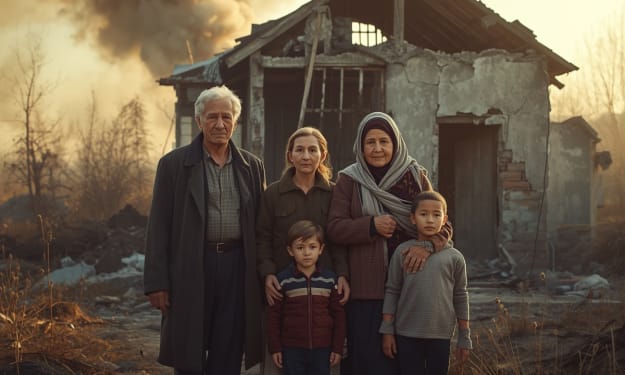
A Human Story in the Middle of War The world had changed in a single night. What was once a quiet border village—full of wheat fields, tea stalls, evening laughter, and the rhythm of normal life—was now trapped between two armies exchanging fire. The war had arrived without permission, and the first sound that greeted the sunrise was not the azaan, but a distant boom that shook the earth beneath their feet.
By Wings of Time 12 months ago in Confessions
You can’t please everyone
By all means when you try to be at peace with everyone and do everything right, you soon realize that you can’t please everyone and its just an impossible task. The main reason being that people have different understanding of the world, when you find yourself in the middle trying to appeal to everybody, you almost always become a hypocrite because you have to change your positions based on the person in front of you. On one end you have people who expect you to move a certain way, and on the other end you have another set of people who expect you to move a certain way, this ultimately leads you to have to make a choice and since you try to appeal to everybody, you find yourself switching your opinions one way or the other.
By real Jema12 months ago in Confessions
The Salute That Broke a Nation’s Heart
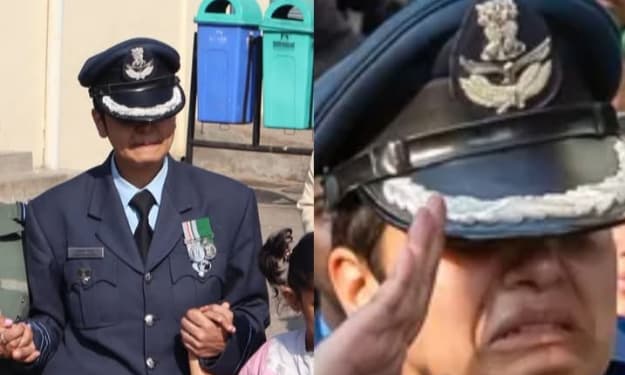
The sun was bright, almost uncomfortably so, on the morning when the officer stepped forward in full uniform. The crisp blue fabric, the gleaming badges, the medals pinned neatly to the chest—everything about the uniform spoke of discipline, duty, and decades of service. But the officer’s trembling hands and tear-filled eyes spoke of something far deeper: a heartbreak the world could barely imagine. Surrounded by fellow officers, relatives, and a crowd of grieving citizens, the officer stood at attention, trying to hold steady. Cameras clicked in the distance, capturing a moment that would travel across the nation—an image of bravery wrapped in sorrow. The officer was saying goodbye to a spouse who had fallen in the line of duty, a pilot who had taken to the skies one last time and never returned. The world often sees soldiers as symbols—of strength, discipline, and unwavering loyalty to their country. But behind every uniform is a human being who feels joy, worry, and grief just like anyone else. And behind every soldier is a family that also serves silently. Parents who wait for news. Children who sleep without a goodnight hug. Spouses who live each day with the knowledge that a single call could change their world forever. That morning, it was the officer’s turn to face that terrible call. The officer’s spouse—an accomplished military aviator—had died during a routine training mission. It was the kind of mission that pilots perform hundreds of times in their careers. The kind that seems predictable, repetitive, almost safe. But aviation does not always forgive a moment’s error, a sudden mechanical fault, or a shift in weather. In the skies, even those who are the very best can be claimed by fate. When news of the crash reached the officer, the world seemed to stop. In the early hours of dawn, instead of a familiar voice on the phone, a team of senior officials arrived at the door. Their solemn expressions and silent posture told the officer everything before a single word was spoken. The days that followed were filled with rituals—the kind of rituals military families know too well. Arrangements. Procedures. Documents. Condolences that come in waves, but never fill the emptiness left behind. The officer remained composed, as soldiers learn to do, but grief has a way of finding its path regardless. And so, on the day of the official tribute, when the coffin draped in the national flag was brought forward, the officer’s composure began to crumble. Not out of weakness, but out of the very strength it takes to love someone who risks everything for their duty. As the ceremony began, the officer reached out to hold the hands of two young children—perhaps their own children, perhaps children of a close relative. The gesture was instinctive, protective. Even in grief, the officer was a caretaker, a pillar. But when the time came to salute the fallen spouse, the officer’s body shook. The hand rose slowly, almost painfully. The lips trembled. Tears streamed freely, cutting through the stern silence of military formality. It was a salute given not as an officer, but as a partner whose world would never be the same again. Those watching—soldiers, civilians, officials, family members—felt their hearts crack. Grief, when it is honest and unguarded, touches everyone. And this was grief in its purest form. The children pressed closer. Support officers took a step forward, ready to steady the officer if needed. But the salute was completed with dignity, even in heartbreak. In that single moment, the image captured more than sorrow—it captured devotion. Devotion to duty. Devotion to country. Devotion to a love that continued even after the final goodbye. The officer’s tears reminded the world of something we often forget: Soldiers are brave, but so are the ones who wait for them. The ones who watch them leave, again and again. The ones who keep the home strong while their partners guard the nation. The ones who know that pride and fear can live in the same heart. As the ceremony ended, the officer lowered the hand slowly, placed it over the heart, and whispered a final goodbye. No cameras could capture the words, but everyone could feel them. This was more than a military ritual. It was a love story interrupted. A tribute that echoed through a country. A reminder of the price paid not only by those who serve, but also by those who love them. And long after the ceremony ended, long after the crowds left and the sun dipped below the horizon, the officer’s silent strength continued—a reminder that true courage often appears not on the battlefield, but in the moments when we stand face-to-face with loss and still choose to honor love.
By Hasbanullah12 months ago in Confessions
Here I Sit, My Foot Tap-Tap-Tapping
I don't know what I expected, but it wasn't the quiet, dense, anxious space between breaths I found myself waiting in. My arms are tired from the clenching of my fists and holding my elbows to the sides of my body in an effort to shore up what is soft with what strength I can muster. My feet are bouncing in a chaotic anti-rhythm of panic as I play the words over and over in my head where they echo in my heart. His pleas, my goodbyes.
By Maia Gadwall the metAlchemistabout a year ago in Confessions
Thanks Ma
Dear Ma, aka Ruby Lee So I know it’s been a minute but I’m writing this letter hoping that the angels pass it along to you in heaven. Guess what mama? You won’t believe what I just did recently. I actually wrote and published my first book. Crazy right? I felt like you of all people needed to hear this good news because if it wasn’t for you none of this would’ve been possible.
By Joe Pattersonabout a year ago in Confessions