Family
Why Communication Shapes Every Moment of Love
A healthy relationship is based on communication. All moments of intimacy, all stages of development, and all the mutual feelings rely on the way in which two individuals exchange their thoughts and express each other. Words form meaning, help overcome emotional distances, and make the feeling of togetherness which any relationship should have. With a good communication there is ease of love, peace and much more satisfying.
By Grace Smith10 months ago in Confessions
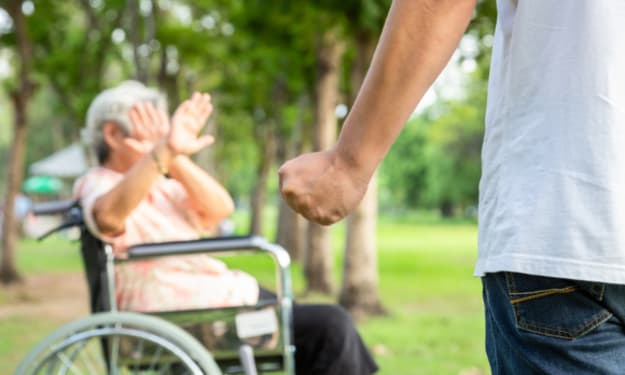
The Quiet Side of Elder Abuse: What I Witnessed Working in a Lab
Elder abuse doesn’t just happen in nursing homes. It happens in cars, waiting rooms, doctor offices, and in public — right in front of people who have no power to stop it. I learned that the hard way when I was a Site Lead at Labcorp.
By Tarsheta (Tee) Jackson10 months ago in Confessions
The Secret I Carried for Years
The Secret I Carried for Years BY: Khan The secret began as something small—so small that I convinced myself it didn’t matter. But secrets grow. They twist themselves around your thoughts, tangling everything until you cannot separate the truth from the fear of being found out. Mine stayed with me for years, tied to every decision I made and every person I let close. I thought I could outrun it. I thought silence would protect everyone, including myself. I was wrong. It started the summer I turned fifteen. My father lost his job, and our home slowly fell apart—first emotionally, then physically. The bills piled up, arguments grew louder, and the warmth that once lived inside our walls began to fade. My mother tried to pretend everything was fine, but even her smiles sounded tired. I began working after school, tutoring younger kids, babysitting, doing anything that brought in a little money. Then one evening, while walking home from a late tutoring session, I witnessed something I should never have seen—something that changed me and held me hostage for years. A neighbor, Mr. Hale, a man respected by everyone on our street, dragged a boy—his own nephew—into the house by the collar. The boy’s face was bruised, his eyes wide with fear. Their door slammed, but not before I heard a desperate whisper: “Please… don’t.” Every instinct in me screamed to run back and knock on that door, to call someone, to scream for help. But fear rooted me in place. I was young, alone, and terrified of accusing a man everyone admired. What if I was wrong? What if no one believed me? What if my own broken family couldn’t handle more chaos? So I did nothing. And that “nothing” became my secret. Over the years, the boy—Evan—grew quieter. His once bright personality faded. I saw him less often, and when I did, he always walked with his shoulders pulled inward, like he was trying to disappear. Every time our eyes met, I felt the weight of my silence pressing harder on my chest. When I left for college, I thought I could start over. New city, new people, new life. But the secret followed me like a shadow. I couldn’t escape it. I avoided conversations about home. I kept people at arm’s length. Whenever someone mentioned bravery or honesty, I felt my stomach twist. I had neither. Years passed. My family eventually recovered, my father found work again, and our home repaired itself in ways that homes often do—not perfectly, but enough. But I remained the same: a person who had looked away when someone needed help. Then, one winter morning, everything changed. I received a message from a girl I vaguely remembered from childhood—a friend of Evan’s. She wrote only two lines: “Evan tried to take his own life yesterday. He said he told you once. Did you know?” My heart stopped. I stared at the screen, replaying every moment of that night years ago. The bruises. The whisper. The fear. He had tried to tell someone—maybe not in words, but in the only way he knew how. And I had ignored it. The guilt that had lived quietly inside me suddenly roared awake. That day, for the first time in years, I returned home. The house looked smaller than I remembered, the street quieter. I walked to the hospital with trembling hands, unsure what I would say or how he would react. I rehearsed a dozen apologies in my head, each more inadequate than the last. When I entered his room, Evan looked fragile, pale, and tired. But he recognized me instantly. His eyes widened for a moment, then softened, not with anger—but with exhaustion. “I’m sorry,” I whispered, my voice breaking. “I should’ve helped you. I should’ve said something.” He stared at me for a long time before replying, “I knew you saw. I hoped you would tell someone. But… I didn’t blame you. No one ever said ‘no’ to him.” The simplicity of his words shattered me. We talked for hours—about the years we had survived, the fear he had carried, the shame I had held onto. He told me the abuse had continued long after I left for college. He told me he had spoken up recently, and for the first time, someone listened. Mr. Hale had finally been confronted, exposed, and removed from the community. I found myself crying—not only for Evan, but for the younger version of me who had been too scared to do the right thing. For the years we both lost because silence felt safer. Before I left, Evan said something I never expected: “Thank you… for coming back. Most people never look back.” That night, I realized something important. A secret doesn’t lose its power when you hide it; it loses power when you name it. When you confront it. When you refuse to let it define you anymore. I carried the secret for years, thinking it protected me from guilt. But speaking it out loud—facing it—became the first step toward healing. Not just for me, but for him too. In the end, the secret didn’t destroy me. Silence almost did. But truth—raw, painful, and imperfect—finally set us both free.
By Khan 10 months ago in Confessions
Motherhood
I lie on the couch and try to get some rest while my newborn is finally asleep, while my toddler plays on the floor beside me. My ears are filled with sirens, not real, but from a toy. Man, I miss silence. What I would give for a nap without the white noise of toys being thrown in the background and the wet blanket of breast milk I now have on tap. I lay still, almost in a peaceful state of mind. WHACK!! You have got to be kidding me! I jump up as my toddler has just walked up and assaulted my temple with an ambulance. “We don’t hit people with trucks,” I say. That's a phrase I never thought I’d say in my life. This is my reality now. Once a bright, organized young adult, now a mobile milk dispenser with toddler counseling abilities. This is motherhood, folks, and I’m here to tell you the good, bad, heartfelt, and ugly parts that come with it.
By Isidora Patrick10 months ago in Confessions
The Last Letter of a Silent Night
The night had grown still. The room was dim, lit only by a weak bulb hanging in the corner. I sat on the bed with my phone in my hand, scrolling without purpose. My mind was heavy, and sleep felt far away. Suddenly, the screen lit up with a new message.
By Salman Writes10 months ago in Confessions
When the Mirror Finally Spoke Back
here’s a strange kind of silence that settles when you hit your forties. A silence no one warns you about. Not the loud, jarring kind—more like the soft hum of a life that suddenly asks if you’re paying attention. For me, the quiet came at 42, not on a birthday or any dramatic anniversary, but on an ordinary Tuesday morning while brushing my teeth.
By nawab sagar10 months ago in Confessions
Secret Letter
What Jake Became I gave his moment to the ether in my mind. Between 2007 and 2009, while others buried Jake and marked the date he died, I let him dissolve into something larger. I didn't trap him in grief or fix him to a gravestone. Instead, I released him into the atmosphere of my consciousness - not as an ending, but as a beginning. In doing that, something unexpected happened: we became one. Not in a way that erased him or made him less real, but in a way that let him breathe through me, move through me, become woven into how I understood the world.
By Parsley Rose 10 months ago in Confessions
What Happened When I Finally Stood Up for Myself
What Happened When I Finally Stood Up for Myself BY: Ubaid For most of my life, I convinced myself that being quiet was the safest option. I told myself that peace was more important than pride, that swallowing my words made me “easy to deal with,” and that avoiding conflict meant avoiding pain. But the truth is, silence can become its own kind of prison. It starts small—letting someone talk over you, laughing off insults, agreeing when every part of you wants to say no. And then one day you wake up realizing that the version of you inside your head is nothing like the version the world sees. For me, that moment came on an ordinary Tuesday. I was working at a small marketing firm, the kind of place where the coffee is always burnt and the deadlines arrive before the brief. I’d been there for almost two years and had quietly taken on extra tasks, extra pressure, and extra stress without ever speaking up. My supervisor, Daniel, had a talent for delegating his responsibilities to anyone who wouldn’t complain—and I was his favorite target. That Tuesday morning, he strolled into the office with his usual half-smirk. “Ubaid, I need you to finish the Rivera proposal. It’s due today.” I felt a knot tighten in my chest. “But I don’t even have the project files,” I said carefully. “Oh, they’re in my inbox somewhere,” he waved dismissively. “Just figure it out.” Figure it out. The same words he always used. The same expectation that I would magically create results from thin air, while he enjoyed the credit. I opened the email chain and felt my frustration rise. He hadn’t given me anything—no notes, no drafts, not even the client’s requirements. I had been pushed before, but this time something in me clicked differently. Maybe it was exhaustion. Maybe it was the way he didn’t even look at me when he dumped the work. Or maybe I had simply reached the point where staying quiet hurt more than speaking up. I took a deep breath and walked to his office. He didn’t even look up. “Yeah?” “Daniel,” I said, steadying my voice, “I’m not doing the Rivera proposal.” That got his attention. He looked up sharply. “What do you mean you’re not doing it?” “I mean it’s your responsibility,” I replied. “You haven’t given me the files or the briefing. I can’t produce a full proposal from nothing. And even if I could, it shouldn’t always be my job to fix things you leave unfinished.” He stared at me like I had suddenly started speaking in another language. “Are you seriously refusing a task?” “For the first time,” I said. “And only because it’s not mine to begin with.” His eyes narrowed. “Careful, Ubaid. This attitude won’t look good.” Something inside me hardened—not anger, but clarity. “What won’t look good,” I said calmly, “is the pattern of you reassigning your projects to juniors and taking credit for their work. If you want to talk about attitude, we can bring HR into it.” There it was. Words I had been too afraid to say for months. The room felt quiet, heavy, but I didn’t shrink. I held his gaze for the first time instead of looking at the floor. He blinked. His tone shifted. “Fine,” he muttered. “I’ll handle it.” I walked out of the office, my heart pounding so loud I could feel it in my fingertips. I expected fear, regret, or anxiety—but what I felt instead was freedom. A strange, exhilarating freedom I had denied myself for years. The rest of the day passed quietly, but something interesting happened. Coworkers who had never spoken more than a polite hello suddenly approached me. One whispered, “I heard what you told Daniel… good for you.” Another said, “He does that to everyone. You finally called it out.” I realized something shocking: I wasn’t the only one suffering in silence—I was just the only one who finally said something. Later that afternoon, HR asked me to drop by. My stomach tightened, but they weren’t there to scold me. They wanted to “understand the recurring pattern in the department.” Apparently, I wasn’t the first complaint they’d heard about Daniel—but I was the first one willing to attach my name to it. Standing up for myself didn’t just shift my own life; it shifted the entire environment around me. That night, as I walked home under the soft glow of streetlights, I felt like I was breathing fully for the first time. I kept replaying the moment I said no. The moment I chose myself over fear. It wasn’t loud or dramatic. It didn’t come with applause. It came quietly, the way truth often does. But it changed everything. I realized that courage isn’t the absence of fear—it’s the decision that your voice matters more than your comfort. That speaking up isn’t about confrontation; it’s about protecting your dignity. That boundaries aren’t walls; they’re respect. Most importantly, I learned that the world treats you the way you teach it to treat you. When I finally stood up for myself, I didn’t become someone new—I simply let the real me step into the light. And once you taste that kind of freedom, you never let yourself shrink again.
By Ubaid 10 months ago in Confessions
Becoming the Woman They Couldn’t Break
There comes a point in a woman’s life when she stops hoping things will get easier… and decides she will get stronger. I’m standing in that moment now—fierce, focused, and done letting anything hold me back from what I was meant to become.
By Karen Sanderson10 months ago in Confessions
A Choice I Never Thought I’d Have to Make
A Choice I Never Thought I’d Have to Make BY: Khan I always believed life moved in a straight line. You study, you work, you earn, you build something that feels like stability. That’s what I thought adulthood was. But life has a strange way of revealing its real syllabus only when you least expect it. My real lesson came the day I had to make a choice I never imagined would be placed in my hands. It started on an ordinary Tuesday morning. The city was already awake—honking buses, vendors lifting shutters, motorbikes weaving through traffic. I was sipping my coffee by the office window when my phone buzzed. The number flashing on the screen stopped my heartbeat for a second. It was the hospital. My mother had been admitted. I rushed out immediately. For the entire drive, my mind replayed the same fear: Please, let her be okay. My father had passed away years ago, and it had always been just the two of us. She was the strongest person I knew—she had survived grief, loneliness, sleepless nights working double shifts, and raising me with more love than money. She didn’t deserve more pain. When I reached the hospital, the smell of antiseptic and the cold quietness of the hallway made my stomach twist. A doctor approached me with a file in her hand, her expression calm but serious. “She needs immediate surgery,” she said. “But there is a complication.” My heart sank. Complication meant cost—something I was already struggling with. My salary barely covered rent and bills. I had savings, but they were small. Still, I told myself I would do anything for her. Then came the part that shattered me. “She is stable for now,” the doctor continued, “but another patient in critical condition needs the same specialist. Only one surgery can be performed today.” It felt like the world tilted. “So… you’re asking me to choose?” The doctor nodded slowly. “Both patients need the operation urgently. Your mother is older, but her chances of recovery are good. The other patient is a young boy… only eight years old.” A boy. Someone’s son. Someone’s whole world. My legs went weak. I sat down on the bench, feeling like all the air had left the room. How could I possibly choose between my mother and a child? This wasn’t a decision any human being should have to make. I walked into the ward where my mother was resting. Her eyes opened when she heard my footsteps. Even lying there, pale and exhausted, she gave me the same warm smile that had comforted me my whole life. “What did the doctor say?” she asked softly. I told her everything. I didn’t hide anything—I couldn’t. She listened quietly, and then she reached for my hand. “My child,” she whispered, “if the boy needs it more… let them save him.” “No!” I shook my head fiercely. “I’m not losing you too. Not like this.” She squeezed my hand, her grip weak but full of meaning. “I have lived my life,” she said. “But that boy… his life is just beginning. We don’t get to choose the tests life gives us. We only choose how we respond.” Her words cut through me like a blade. I felt anger, helplessness, love, and heartbreak mixing inside me. Part of me wanted to fight for her with everything I had. Another part of me felt a painful pull toward the innocent child whose future depended on my decision. I stepped outside again, leaning against the cold wall. Every scenario ran through my mind. If I chose my mother, I saved the person I loved most. But if I chose the boy, I saved a life that hadn’t even started yet. What kind of person would that make me? What kind of son would I be? What kind of human? Time was running out. The doctor approached again. “We need an answer.” I closed my eyes. My mother’s voice echoed in my heart: We only choose how we respond. With trembling hands, I nodded. “Save the boy.” The words felt like they ripped something out of me. The doctor touched my shoulder gently and rushed away. I slumped into the chair, feeling hollow. When I returned to my mother’s room, she smiled proudly, even though tears glistened in her eyes. “You made the right choice,” she whispered. “I made the hardest choice,” I whispered back. She pulled me close, brushing my hair like she used to when I was a child. “Hard choices shape us. Easy ones teach us nothing.” The hours that followed felt endless. Every beep, every footstep in the hallway tightened the knot in my chest. Finally, the doctor returned. “The boy is safe,” she said with relief. “And… your mother will be scheduled for surgery tomorrow morning.” I stared at her, stunned. “Tomorrow? But you said—” “We managed to get another specialist to return early from leave,” she explained. “Your mother will still get her chance.” My knees almost buckled. I rushed to tell my mom, and when I did, she simply smiled and said, “See? When you do the right thing, the world finds a way to meet you halfway.” The next day, her surgery was successful. She recovered slowly but beautifully. And I realized then that sometimes life tests you not to break you, but to reveal the strength you didn’t know you had. That day changed me forever. I learned that true courage isn’t about fighting for what you want—it’s about choosing what’s right, even when it hurts you most. It was a choice I never thought I’d have to make… and one I’ll carry with me for the rest of my life.
By Ubaid 10 months ago in Confessions