Bad habits
True Friendship: The Story of Zaman Ali’s Sacrifice
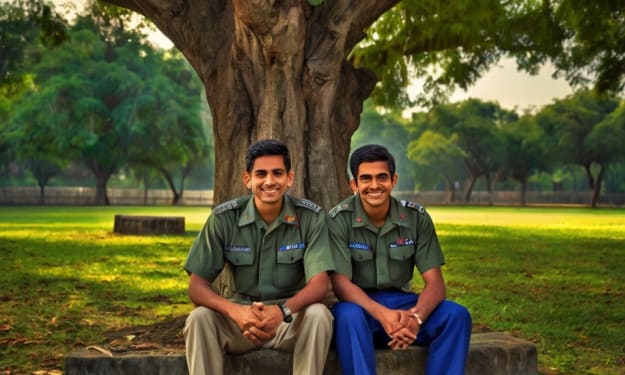
True Friendship: A Bond Beyond Time BY:Khan Friendship is a five-letter word, yet within these letters lie countless mysteries, secrets, and values. Only those who have experienced true friendship can truly understand its depth. Genuine friendship is not merely a bond; it is a sacred relationship that often surpasses ties like those of siblings, parents, or even children. When hearts are bound with the pure essence of friendship, even the most difficult tasks become easier. In such a relationship, there is no space for greed, jealousy, deceit, or malice. Instead, it paves the way to success and makes strangers feel like family. The story I am about to share is not a figment of imagination but a reality that I lived. It is about me and my dearest friend, Zaman Ali. We grew up in the same neighborhood, our homes standing side by side. His father was a respected government officer, known for his honesty and integrity. Among his five siblings, Zaman was the youngest, the most cherished child of his family, loved dearly by everyone. From childhood, Zaman and I were inseparable. We studied at the same school, passed our matriculation exams together, and even enrolled in the same college. Our bond was so deep that everything we owned seemed like a reflection of each other—our uniforms, our school bags, and later our college belongings. Even our favorite foods and flowers were the same. In school, we used to ride matching bicycles, pedaling side by side on our way to classes. Later, when we joined college, we would take the same bus. Our classmates often looked at our friendship with admiration, some even with envy, for such loyalty and purity were rare. During breaks, we would bring food from home. Sometimes, Zaman would bring something prepared by his mother, and other times, I would bring a dish from my house. Together, we would sit beneath an old, majestic tree in the college garden, sharing our meals and our dreams. That tree became our special place—a silent witness to our laughter, secrets, and studies. Zaman was not only a cheerful soul but also a kind-hearted person. He treated everyone around him with love and respect. The poor neighbors of our community adored him because he always greeted them warmly. Often, he helped needy families secretly, never seeking recognition or praise. His compassion was genuine, and his sincerity touched every life he encountered. Outside academics, Zaman had a deep passion for sports. He excelled in horseback riding, archery, swimming, and martial arts like judo and karate. Wherever he participated, he returned with the first prize. Over the years, he collected numerous awards, each a testament to his talent and dedication. Among all these sports, swimming fascinated him the most. He would dive into the deepest parts of the river or pool, staying underwater for long stretches of time. I often warned him about the risks, urging him not to push his limits, but he would always smile and say, “My dear friend, the day of death is already written. When the time comes, no one can stop it. Until then, let us live with courage.” One day, Zaman arrived at my home, his face glowing with excitement. After greeting my family, he came straight to my room and handed me an envelope. Inside, I found a letter—it was an interview call from the Pakistan Air Force. My eyes lit up with pride as I told him how wonderful it would be if he became an Air Force officer. But Zaman, in his usual way, added a condition: “Moazzam, I will only go for this interview if you come with me.” Naturally, I agreed. The next morning, we both went to the Air Force office. Dozens of candidates were waiting, each with dreams in their eyes. Zaman’s turn came fifteenth. After a while, he emerged from the interview room with a bright smile, announcing his success. My heart swelled with joy at his achievement. Soon after, Zaman received his official training letter. Before leaving, he came to see me. With a serious tone, he said, “Promise me, Moazzam, that you will write to me every single day.” I promised him wholeheartedly and reminded him that he too must reply to my letters. We embraced tightly, both of us unaware that it would be our last farewell. For almost two years, our friendship lived through letters. Each day, we wrote to each other, sharing our thoughts, experiences, and hopes. Then, one day, a devastating piece of news reached us. During a training exercise, Zaman’s aircraft crashed. He embraced martyrdom in the line of duty. The shock shook me to my very core. My childhood companion, my truest friend, was gone forever. His family was heartbroken, and I too felt as though a piece of my soul had been torn away. I often recalled his words: “The day of death is fixed; it will come when it must.” Even today, years later, I feel his presence around me. Sometimes I visit that old tree in the college garden, the one under which we shared our meals and dreams. Sitting there, I relive our memories, letting my heart find comfort in the echoes of our laughter. Zaman’s friendship was pure and selfless. He was more than a friend—he was a brother chosen by destiny. Though his body rests in the earth, his spirit lives on in my heart. May Allah grant my dearest friend, Zaman Ali, the highest place in paradise. Ameen.
By Khan about a year ago in Confessions
A Nation Under Pressure: America’s Converging Crises in 2025
A Nation Under Pressure: America’s Converging Crises in 2025 The United States in 2025 finds itself grappling with not one, but several crises unfolding simultaneously. Each challenge alone would be significant. Taken together, they reveal the immense strain on America’s political stability, economic credibility, and environmental resilience. From rising political violence to doubts about the reliability of official statistics and the escalating toll of climate disasters, the country faces a crossroads that will shape its future path.
By Wings of Time about a year ago in Confessions
My first and last letter to my mom. Top Story - September 2025.
Dear Mother, I don’t feel this form of address fits, since over the past months you have been everything to me and those around me except kind. Still, I will give you respect in this way, if no other remains—at least in the form of this letter. Though I believe, as with most of my gestures, that this one too will go unanswered by you. It is sad that, as a mother, you never managed to show me this fundamental principle: respect. Because respect is owed from child to parent and parent to child alike. Respect is a basic human norm. Many believe it must be earned, but that is not true. It is never right to approach someone with belittlement or contempt simply because of their appearance or background—for you never know what the other person is going through. But one thing is certain: they feel. And that is something that, whether you understood it or not, you disregarded for years—disregarded the feelings of four people in your family. I hate that whenever I voiced a different opinion in a calm tone, you always raised your voice, cut me off, and spoke over me. I hate that whatever I thought, if it didn’t match your view, I was the fool. I hate that I could never have an opinion around you, and therefore never be myself. I hate that I always had to identify with you, as though I were your little clone. I am not, and I never will be. But you never understood that. I had to do everything exactly the way you demanded, and for the smallest, most insignificant mistakes, you punished me physically. It was easy for you while I was a small, defenseless child. Easy to hit a ten-year-old when her father wasn’t home all day. But would you have dared to do the same if he had been there? Perhaps once or twice a month—but not every single day, as you did. You call it child-rearing, and to an extent, I agree. But hitting is not an effective method of raising a child, no matter how “necessary” you claim it to be. You didn’t raise me—you abused me. Day after day, when no one was looking. For a long time, I hated myself, hated what I had become. Now I hate the person who made me this way. I’ve learned to put myself first. I no longer try to make anyone else proud. I’m tired… I wasted years trying, but you were never proud of me. And if you were, you never let me know. Everything I do now, and everything I will do in the future, I do for myself. But I will never forget that version of me who desperately, cowardly curled up in the corner of a room, eyes shut, helplessly waiting for your hand to strike her back or face. That version of me no longer exists. And that seems to anger you, because now, instead of actions, you use words to wound me as deeply as possible. “Filthy bastard” and “pathetic wretch” are just a tiny fraction of the disgusting, inhuman curses you have thrown at me. After all that, how can you expect me to smile as I accept the gifts you buy for special occasions? As if nothing ever happened? I am not that kind of person. If someone so clearly does not want me around, I leave—forever. I will not put on a mask, pretending we are on good terms. Because we are not. Saying otherwise would be a lie. And I will not tell a lie this big—to myself, to others, or to you. And neither should you… Words cannot describe the hell you—not my father, as you were always saying, but you—created out of what was once called a home. You always insisted on your own truth. You never accepted anything else, unless everyone did exactly as you commanded. But life cannot be lived that way. Even a marriage is built on compromises. You never once agreed to discuss anything with the rest of us. You always felt superior. You wanted to control every movement of every family member, never thinking that what we needed was a wife and mother at home—not a boss. But your goal was always power. You wanted everyone to submit to you, to control us emotionally, financially, mentally—any way you could. Or, in your own words, you considered yourself a “black sheep” who had to lead the other “white sheep.” But you are no more special than anyone else you look down on as “ordinary, brainwashed” people. That arrogance and egocentrism is all that shines through you. And to call another person crazy, insane, or stupid simply because their view of the world differs from yours—even slightly—that is nothing but childish behavior. Everyone makes mistakes. But not you. At least that’s how you always presented yourself in every disagreement. You could say endless bad things about everyone else, but never about yourself. You “always did everything perfectly; you never made mistakes.” And if the conversation ever turned to you, you always deflected it—no matter how, even if it meant dragging someone else through the mud. Only your words mattered. You “never made mistakes.” And you never apologized. You could not allow a stain on your pride, or a flaw in your perfection. I hate how easily you throw around hurtful words, as if you had no idea how heavy they are. I would not wish the treatment you gave us on anyone. You broke and crippled this family. Not my father. You. You were the one. And for that I cannot forgive you. You blackmailed my siblings and my father with their own emotions. You completely twisted my sister out of herself. Look at what you raised her into, Mother… Exactly what you once held up to me as a warning example. A spoiled, whining, demanding, arrogant girl, with zero respect even for her own parents and siblings. A little queen, isn’t she? And if that weren’t enough, you even gave her a new personality: your own. Because what I once refused to accept, you found a perfect candidate for. And now you have your little replica, who repeats only what you whisper in her ear, sees the world only as you describe it, and acts as your informant—passing on word-for-word every conversation and event in your absence, whether it concerns you or not. I doubt you’ve made it this far in my letter. I’ve never had much of your attention, and I don’t expect it now either. But if I am wrong, and you are reading these last lines… why should I go on? There is no point. Your ego is too big for you to reflect on anything written above. You are too arrogant to look within yourself and weigh things honestly. You are too proud to admit and change. Because no matter how much you preached the opposite and tried to project it onto everyone else for years, the biggest problem here has always been you.
By Anna about a year ago in Confessions
The betrayal was so loud, but the apology didn’t make a sound.
“Your biggest supporter is a stranger. Your biggest hater is someone you know.” “The saddest thing about betrayal is that it never comes from your enemies, it comes from those you trust the most.”
By Zakir Ullahabout a year ago in Confessions
War Rooms and Parades: A World in Transition
Beijing’s Grand Display of Power On September 3, 2025, Beijing became the stage for one of the largest military spectacles in recent history. The 80th anniversary of the end of World War II in Asia, marked by the defeat of Japan, was commemorated with a massive military parade at Tiananmen Square.
By Samanthaabout a year ago in Confessions
Vladimir Putin’s Global Power Play: From Forum Speeches to Strategic Summits
Introduction Vladimir Putin continues to dominate the international stage in 2025, balancing military strategy, peace negotiations, and economic initiatives—even amid growing geopolitical tension and global scrutiny.
By KAMRAN AHMADabout a year ago in Confessions
The Lost Lunchbox: A Lesson in Honesty
The Lunchbox and the Lesson BY:Ubaid Sara, Umar, Imran, and Changez were all classmates in the same school. Though they studied together, their upbringing and behavior were quite different. Imran had been raised with discipline, good manners, and values. His parents had left no stone unturned in his training. Changez, on the other hand, had grown up spoiled. Because of constant pampering at home, he had developed a habit of ignoring advice, rejecting rules, and always following his own whims. He was stubborn, mischievous, and often careless about the consequences of his actions. One ordinary morning, Imran came to school carrying a lunchbox packed with delicious samosas that his mother had prepared for him. The savory aroma filled the classroom and caught Changez’s attention immediately. As soon as he realized that Imran had samosas for lunch, his mouth watered. A strong craving grew inside him. He began thinking about how he could taste those samosas. But there was one problem—Imran never offered food without being asked, and Changez, due to his ego and pride, never liked to ask anyone for anything. He preferred taking things in his own way. Instead of politely requesting Imran to share his lunch, Changez’s mischievous mind started plotting. “Why not steal his lunchbox?” he thought. “If I manage to get hold of it, I can eat all the samosas by myself without anyone knowing.” The idea excited him, and from that very moment, he started waiting for the right opportunity. When the bell rang for the lunch break, Imran placed his lunchbox on his desk and went to wash his hands, as was his habit. Changez immediately noticed this chance. With a sly smile, he sneaked to Imran’s desk, picked up the lunchbox, and quickly threw it out of the classroom window. The window opened into the back field of the school, a place not often visited by students. That area was used mostly for dumping old school furniture and equipment, and usually only the janitor went there. By the time Imran returned, the classroom was nearly empty. He looked around in confusion. His lunchbox was gone. He checked under the desk, searched his bag, and asked a few students, but no one seemed to know. His heart sank. All his excitement about eating the samosas disappeared, replaced with worry and sadness. For the first time, he realized what it felt like to lose something precious. He spent the rest of the lunch break sitting quietly, without eating anything, his face clouded with disappointment. Meanwhile, Changez had brought his own lunch that day—an egg paratha. Yet, his mind was not on it at all. He neither ate his paratha nor offered it to the hungry Imran. His only thought was about retrieving the hidden lunchbox and devouring the samosas secretly. After the break, Imran gathered courage and went to the teacher to report the theft. The teacher, surprised and concerned, immediately searched all the students’ bags. But the lunchbox was not found anywhere. Imran was heartbroken, but he kept quiet. He decided not to create more fuss and endured the rest of the school day silently. When the final bell rang, students rushed out toward their buses. Imran boarded his bus, still upset about his missing lunch. Changez, however, stayed behind, pretending to pack his things slowly. He was waiting for everyone to leave so he could go to the back field without being seen. At last, when the corridors became silent, Changez slipped out and walked all the way to the back field. The window was too high to climb out from, so he had to take a longer route. After some searching among the piles of discarded furniture, he found Imran’s lunchbox exactly where he had thrown it. Triumphantly, he picked it up, tucked it inside his bag, and turned back toward the buses. But fate had other plans. By the time he reached the bus stop, all the buses had already left. The school gate was locked, as the watchman assumed everyone had gone home. Changez froze. He was trapped inside the school premises. Panic rushed over him. He sat down on the ground, clutching the lunchbox, and tears filled his eyes. The plan that had seemed clever in the morning had now left him hungry, stranded, and guilty. He cried bitterly, realizing that he had not only ruined his own day but also caused pain to his classmate. Neither had he eaten lunch nor allowed Imran to enjoy his food. The desire for a few samosas had cost him dearly. At that moment, he raised his hands and prayed silently, promising Allah that he would never repeat such a mistake. Exhausted from crying, he eventually fell asleep in the empty field, the lunchbox still in his hands. Back at home, Changez’s absence created worry. His mother expected him to arrive on the school bus, but when he didn’t, she became anxious. She quickly phoned Imran’s house to ask if he had seen Changez. Imran’s parents explained that Imran had not seen him on the bus either, though he had been in school earlier. Concern grew, and Changez’s father returned from work. The family, along with Imran’s parents, went to the school to search for him. When they arrived, they persuaded the watchman to unlock the gate. Inside the back field, they finally spotted Changez lying asleep. In his hands, to everyone’s surprise, was Imran’s missing lunchbox. His father woke him gently, and Changez burst into fresh tears. He confessed everything—the theft, the plan, the missed bus, and his fear. He apologized deeply to both Imran and his own parents. Imran, though saddened by the day’s events, forgave him wholeheartedly. The teacher and parents explained the seriousness of his actions, reminding him that dishonesty and selfishness always lead to loss. Changez listened carefully, ashamed but also relieved that he was forgiven. From that day forward, he changed. He promised never to steal again and to respect the belongings of others. Imran and Changez reconciled, and in a heartwarming gesture, Imran shared his samosas with him. They both sat together, eating from the same lunchbox—not as enemies, but as friends who had learned an important lesson about honesty, kindness, and forgiveness.
By Ubaid about a year ago in Confessions
When Love Turns Blind
Every morning, the door of a narrow, dusty alley in Pakistan creaks open to reveal Razia Begum—a mother whose eyes no longer dream; they only wait. Her son, Faisal, was once her pride, the jewel among eight daughters. But love without guidance turned him into someone she barely recognizes today.
By Shehzad Anjumabout a year ago in Confessions
The Shoes I Couldn’t Throw Away
They sat in the corner of my closet, tucked behind a row of boots and dress shoes I never wore. Old sneakers, frayed at the edges, laces gray instead of white, and soles so thin they could barely hold together. Every time I tried to throw them out, I froze. My hand would linger on the torn fabric, my chest tightening as if I was about to give away more than just a pair of shoes.
By arsalan ahmadabout a year ago in Confessions
The Day I Stopped Answering Unknown Numbers
It started with one of those relentless calls that always seem to come during dinner. The phone buzzed against the table, lighting up with the words “Unknown Caller.” I remember staring at it, fork in hand, wondering if this would be the one time it mattered.
By arsalan ahmadabout a year ago in Confessions