Bad habits
Grandpa’s Nighttime Tale: The Thousand-Year-Old Al-Azhar
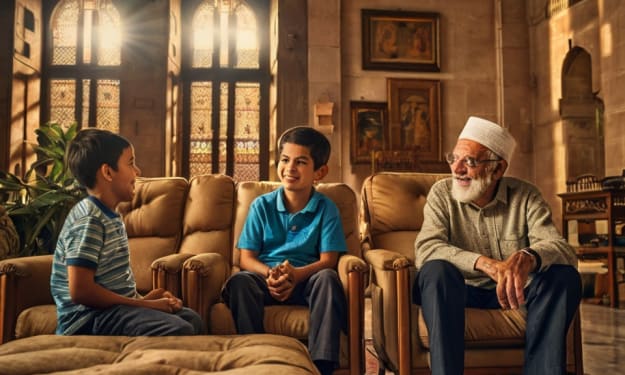
A Nighttime Tale: Grandpa’s Story About Al-Azhar BY:Ubaid “Hey children! You’re still awake?” Grandpa Aslam’s voice broke the silence of the living room. He had just walked in and found Maryam and Abdullah glued to a mobile phone, playing a video game with intense focus. His tone carried a mix of surprise and mild disapproval. “You two are usually good kids who go to bed early. What’s going on tonight?” he asked, raising his eyebrows. “Grandpa, we just can’t fall asleep,” Maryam replied quickly. “And tomorrow is a holiday, so we asked Mom and Dad if we could play some games a little longer. They said yes.” “Oh, I see,” Grandpa said with a smile. “But tell me, why must it always be games on your phone? You could read a book or a magazine instead.” Maryam shook her head. “But Grandpa, we’ve already read all the books and magazines we have.” This time Abdullah added, “Yes, we’ve finished them all. That’s why we’re playing games.” Grandpa chuckled softly. “Well then, no problem. How about tonight I tell you about a place that perhaps you’ve never read or heard about before?” The children’s eyes lit up instantly. They had grown tired of their game and loved the idea of listening to one of Grandpa’s stories. Maryam quickly put the phone aside and said with excitement, “Yes, Grandpa! Please tell us. We’re bored of playing anyway.” Both children turned their full attention to him. Grandpa adjusted his glasses, leaned back in his chair, and began. “All right then. Tonight, I’ll tell you about a thousand-year-old center of learning in the Islamic world, a place called Al-Azhar University. It’s located in Cairo, the capital of Egypt.” Maryam immediately interrupted. “Grandpa! Egypt? Isn’t that the same country where the Pyramids are? Our teacher told us that the pyramids are one of the wonders of the world.” “Yes! And Egypt has a huge river too,” Abdullah added proudly. “Our Quran teacher told us that the River Nile is even mentioned in the Holy Quran.” Grandpa nodded approvingly. “Exactly, my dear children. You both are right. Egypt is indeed the land of the pyramids and the Nile. Its history goes back thousands of years, and that’s why historians and travelers take such deep interest in its monuments and culture. Among these historical treasures is Al-Azhar, one of the greatest universities in the world.” The children leaned in closer, curiosity sparkling in their eyes. “You see,” Grandpa continued, “Muslims conquered Egypt during the caliphate of Hazrat Umar (may Allah be pleased with him) in the seventh century. Later, in the tenth century, a mosque was built in Cairo. This mosque was named Al-Azhar, after Hazrat Fatimah al-Zahra (may Allah be pleased with her), the beloved daughter of our Prophet Muhammad (peace be upon him). Alongside the mosque, a school was established, and with the passage of time, that school grew into what we now know as Al-Azhar University.” “Grandpa, what do they teach there?” Maryam asked eagerly. “Well, in the beginning,” Grandpa explained, “there were only thirty-seven teachers. They taught subjects like the Holy Quran, Islamic jurisprudence, and the Arabic language. But over the centuries, Al-Azhar expanded enormously. Today it has hundreds of professors, and students can study not only religious sciences but also modern subjects—astronomy, medicine, physics, chemistry, engineering, commerce, and many more.” Abdullah’s eyes widened. “That’s amazing! So people from all over the world study there?” “Absolutely,” Grandpa said. “Scholars who graduate from Al-Azhar are respected worldwide. Its religious rulings, or fatwas, are considered authentic and authoritative across the globe. That’s why Al-Azhar is one of the most influential universities in the Islamic world.” The children were now completely engrossed. Grandpa smiled, enjoying their attention. “And do you know?” he added. “Even non-Muslims recognize its greatness. When Napoleon Bonaparte led the French invasion of Egypt in 1798, he was astonished by the level of knowledge, discipline, and organization he found at Al-Azhar. In fact, he wrote about it in his diary, praising its teachers and students. Later, when he formed a consultative council to govern Egypt, he included Al-Azhar’s senior scholars in it. That shows you how much respect he had for this institution.” Maryam gasped in wonder. “Grandpa, can we visit Al-Azhar one day?” “Of course, my dear,” Grandpa said warmly. “Not only can you visit it as tourists, but if you wish, you can even study there. Students from all over the world come to Al-Azhar to seek knowledge.” “That’s wonderful!” Abdullah said with excitement. Maryam clapped her hands. “Thank you, Grandpa! You always tell us such amazing stories. Tonight we learned something so new and inspiring.” Grandpa smiled, his eyes twinkling with pride. “Remember, children, true knowledge is a treasure greater than any game or toy. Always value it, and never stop seeking it.” The children nodded eagerly, their earlier desire to play games long forgotten. That night, as they finally drifted off to sleep, their young minds were filled not with flashing screens but with dreams of pyramids, rivers, and the thousand-year-old halls of learning at Al-Azhar.
By Ubaid about a year ago in Confessions
The Promise That Shattered My Life
A Promise That Shattered My Life BY:Khan Every morning at seven, I arrived at the agency, ready to dive into the day’s work. One morning, around ten, the postman handed me a letter. As I opened it, I found myself reading the words of a woman who had written: “Assalamu Alaikum, son. I am a reader of your magazine. I’ve heard that you write about people’s pains and struggles. I too wish to share mine—so that perhaps others read, understand, and maybe, my sorrow becomes lighter.” The very next day, she sent me her full story. What follows is her account—raw, painful, and unforgettable. --- A Childhood of Neglect From as far back as I remember, my home was never peaceful. My parents rarely got along, and the greatest tragedy of our household was the preference for sons over daughters. Girls were treated like a burden, as though we were born only to tolerate neglect. This discrimination shook me deeply. My brothers were given importance, while I was invisible. I often wondered why our home wasn’t like others—why daughters couldn’t receive the same love as sons. Many nights, I cried myself to sleep, thinking, If only I had been born somewhere else. My mother, however, had one dream: that her children should study. She herself was denied education, and her in-laws constantly mocked her for being uneducated. Out of her insecurity, she pushed us toward books. Yet, how could a child flourish in a house full of tension? Though I was intelligent and hardworking, when it came to exams, I froze. My heart pounded, my hands shook, and the paper remained blank. Finally, my father realized I needed extra help. --- The Arrival of a Tutor Enter Buland Bakht, a young man who had just graduated and was searching for a job. To support himself, he gave tuition lessons to students—including my brothers. One day, my father asked him to also teach me. I needed more than a tutor—I needed kindness, care, and understanding. Buland Bakht became all of that. His gentle encouragement awakened my interest in studies, and slowly, he became the center of my world. What started as respect turned into affection, and soon, we crossed the threshold of love. He promised me that once he secured a job, he would speak to my parents and marry me. His words were my lifeline, and I believed him with all my heart. --- The Promise of Marriage My father admired him greatly. “He is like the son I never had,” he often said. With such praise, I was convinced that our path to marriage would be smooth. When Buland hesitated to approach my parents, I gathered courage and shared my feelings through my sister. To my surprise, my mother responded positively. “If this is true, then let him bring his parents to formally ask for your hand.” Buland looked uneasy when confronted, but eventually, his mother visited our home. To everyone’s surprise, she liked me instantly, and soon, our engagement was announced. My heart soared—I felt my dreams coming true. --- The First Betrayal But fate had other plans. Just days before the wedding, my brother spotted Buland at the railway station buying a ticket to Murree. When questioned, he casually replied, “I’m traveling with a friend.” My family laughed it off as a joke. That evening, when my mother went to his home, his parents looked worried. They explained that he had been offered a new job and had to leave immediately. “The wedding date will need to be postponed,” they said. Imagine our humiliation. Invitations had already been sent, relatives had started arriving, and suddenly, we had to call it all off. My parents faced endless embarrassment. Still, we waited patiently for him to return. --- The Shocking Truth Weeks turned into months. Each time, he gave excuses. Finally, another date was fixed. Guests gathered once more, preparations were made, and my bridal dress lay ready. But the night before the ceremony, devastating news arrived: Buland had returned—with a wife. As it turned out, while tutoring me, he had also been teaching the daughter of a wealthy businessman. He had lured her with the same promises. When her family discovered his upcoming wedding, she threatened to take her life unless he married her. Pressured and frightened, he chose her wealth and influence over his promise to me. My dreams collapsed in an instant. --- A Life Forever Changed That day marked the death of my innocence. My wedding canopy was never raised, and the yellow of my bridal henna turned into the yellow of mourning. Years passed, my hair turned white, but the scars remain as fresh as ever. Since then, I never married. Weddings now terrify me. The laughter, the music, the rituals—everything feels like a cruel reminder of betrayal. My sisters went on to live happy, stable lives. But I, being more sensitive, broke under the weight of deception. I often reflect: if my parents had given me love and attention, perhaps I wouldn’t have fallen so easily for the false affection of a stranger. --- Lessons Learned Parents often forget that not all children are the same. Some are strong; others, fragile. A tender heart needs extra care, or else it shatters. In my case, neglect at home made me vulnerable to the first person who showed me kindness. Buland Bakht—was he a coward, a fool, or a deceiver? I will never know. But what I do know is that his betrayal destroyed my chance at a normal life. Today, I wish to tell every parent: your love and harmony at home is the greatest gift you can give your children. If denied, they may seek it elsewhere—and sometimes, that search ends in tragedy.
By Khan about a year ago in Confessions
The Phone That Stole My Sister’s Life
The Phone That Stole My Sister’s Life BY:Khan Kiran woke Noor one morning with a scolding she meant as affection. “Kiran, get up — it’s morning. You stay up on your phone all night and then pretend you don’t hear the alarm. What do people even talk about on the phone all night? It’s nonsense, a waste of time.” Noor rubbed her eyes, used to Kiran’s teasing. They were only two daughters at home now; their father had died and their mother worked long hours cleaning houses to make ends meet. Kiran was restless by nature. She called late-night phone chatter “time-pass” and said it made people foolish. Noor worried about her sister — she prayed after each of the five daily prayers for Kiran’s safety. Noor kept the house in order and watched the bills while Kiran joked about romance and rebellion. “If only you had a boyfriend,” Kiran said one morning, “you’d be awake talking to him all night, whispering love vows. Life would be so much sweeter.” Noor only shook her head and asked her to eat breakfast. Two days later Kiran told Noor she would go out to celebrate a friend’s birthday and stay overnight. Noor’s eyes filled with tears. “If you don’t come back at night, I don’t want you to go at all,” she said bluntly. Kiran pushed back fiercely. “I’m not a child. This is my life and I’ll live it how I want. Please stop interfering.” Noor’s fear was not pious prudery; it was a sister’s worry. Their mother was ill and needed care. They had no brothers, no one else to rely on. Noor tried to reason, to remind Kiran that the world could be cruel, that strangers who praised could later hurt. “Once a woman’s honor is lost, it’s very hard to recover,” Noor murmured, prayers mixing with heartbreak. “If you go, be careful. Protect yourself.” Kiran laughed it off — till the night she met Samir. Samir was everything Noor had warned about: charming, well-dressed, used to winning trust and then vanishing. He was the kind of young man who courted girls on their phones, spent hours on flattery and promises, then discarded them when he was done. To Kiran, desperate for affection and excited by the secrecy, his attention felt like validation. At a five-star hotel where Kiran thought she was going to celebrate a friend’s birthday, Samir waited and smiled when she arrived. He wrapped her hand in his and whispered declarations. “You belong to me,” he told her, and Kiran, under the spell of sudden romance, believed him. They ate, they laughed, and later they left for a room where the storm outside seemed to make everything cinematic. Samir’s words were like a promise made to a gullible heart: “I’ll never leave you.” Kiran believed that, too. What happened that night was not spoken of in explicit detail, but it was enough. Samir took advantage of Kiran’s trust. He used her vulnerability and treated her like an amusement, then vanished when morning came. He left her ashamed and alone. He disconnected his number, and Kiran’s calls went unanswered. The texts stopped. It was the pattern of a predator: connect, consume, disappear. Kiran returned home with downcast eyes and a wounded conscience. Noor saw the shame in her sister’s face, but it was only when Kiran’s health began to fail that the full tragedy unfolded. Weeks after that night, Kiran grew weak and pale. She fell ill and when she was taken to the hospital, doctors discovered a pregnancy — and, shockingly, they found the baby had already died inside her. Emergency surgery was required. The surgeons warned Noor that Kiran’s life might be at risk. Noor prayed until her voice broke. She begged God to spare her sister. In the operating room, Kiran spoke with halting sincerity. “Forgive me,” she said to Noor. “This is my punishment. I ignored you. I thought I knew better. I was wrong. I am so sorry.” After hours of waiting, the surgeon emerged with the worst possible news: Kiran had not survived. The life that had caused so much grief, the girl who had been reckless and bold, who wanted to seize her freedom, was gone. Noor collapsed, grief swallowing her like an ocean. People murmured around her; she kept repeating only one thought, a single bitter, futile question: “If only she had not had a phone. If only she had listened.” The tragedy of Kiran and Noor is not just a private sorrow; it is a portrait of how social media and instant, intimate connections can be manipulated. Kiran trusted a voice on the phone and the warm glow of attention. Samir used that access to take advantage of her. Their story shows how easy it is for predators to present themselves as lovers, friends, or saviors online and then disappear when there are consequences. This is also a plea to families to talk — honestly, without shame — about risks and boundaries. Noor’s warnings were rooted in love, not control. Her sister’s defiance sprang from loneliness and a hunger for belonging. Social media, with its flattering comments and private chats, can make lies feel like truth. It can isolate the young from the protection of those who care, and it can turn a private betrayal into a catastrophe. Noor stayed behind to care for their mother, carrying the weight of loss and the bitter lesson that came too late. She became quieter, more protective of the people around her. She spoke up at neighbors’ gatherings about caution and compassion, asking families to watch their children’s late-night habits and to help rather than scold. She asked communities to teach young people how to spot false affection, how to value their bodies and choices, and how to seek help before a secret becomes a tragedy. Kiran’s story is a warning and a grief at once: the promise of connection can be a trap when it replaces real human anchors. Phones and social apps are tools — they can bring good, but in the wrong hands they can put lives at risk. Noor’s prayer did not save her sister, but her voice can still save others: speak to your loved ones, keep lines of trust open, and remember that no glowing screen is worth a human life.
By Khan about a year ago in Confessions
Scattered Thoughts of a 36 Year Old Woman
I’ve always been a woman with so much love to give, and so much love in my heart, I’ve just never known where to direct it. People don’t notice someone like me in the grand scheme of things, but maybe I think if I can at least touch one person’s heart, the world could be better. If only it were that easy.
By Slgtlyscatt3redabout a year ago in Confessions
Confessions of a Former Alcoholic Part 22
It is definitely a lesson for people to learn about the awful facts of life. I can honestly tell that the social experiment I performed on myself and my findings regarding the causes of alcoholism caused me a great deal of suffering.
By TheNaethabout a year ago in Confessions
The Village That Taught Me How to Breathe Again
Most of the world knows Vietnam through travel magazines, war documentaries, or postcard-like images of Ha Long Bay and lanterns in Hoi An. But Vietnam, for me, is not just about breathtaking landscapes or famous tourist spots. It is about a small, quiet village tucked away in the northern countryside—a place that taught me the meaning of stillness, patience, and peace.
By Quangabout a year ago in Confessions
True Friendship: The Story of Zaman Ali’s Sacrifice
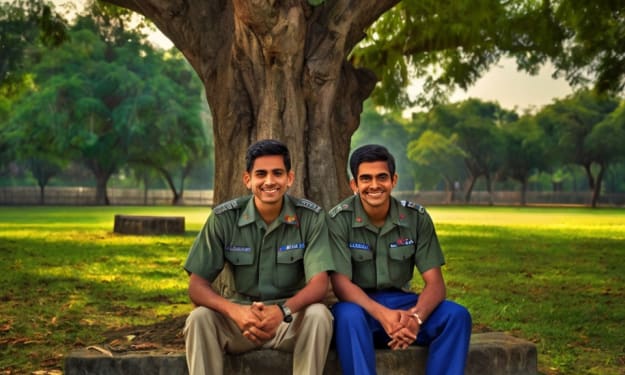
True Friendship: A Bond Beyond Time BY:Khan Friendship is a five-letter word, yet within these letters lie countless mysteries, secrets, and values. Only those who have experienced true friendship can truly understand its depth. Genuine friendship is not merely a bond; it is a sacred relationship that often surpasses ties like those of siblings, parents, or even children. When hearts are bound with the pure essence of friendship, even the most difficult tasks become easier. In such a relationship, there is no space for greed, jealousy, deceit, or malice. Instead, it paves the way to success and makes strangers feel like family. The story I am about to share is not a figment of imagination but a reality that I lived. It is about me and my dearest friend, Zaman Ali. We grew up in the same neighborhood, our homes standing side by side. His father was a respected government officer, known for his honesty and integrity. Among his five siblings, Zaman was the youngest, the most cherished child of his family, loved dearly by everyone. From childhood, Zaman and I were inseparable. We studied at the same school, passed our matriculation exams together, and even enrolled in the same college. Our bond was so deep that everything we owned seemed like a reflection of each other—our uniforms, our school bags, and later our college belongings. Even our favorite foods and flowers were the same. In school, we used to ride matching bicycles, pedaling side by side on our way to classes. Later, when we joined college, we would take the same bus. Our classmates often looked at our friendship with admiration, some even with envy, for such loyalty and purity were rare. During breaks, we would bring food from home. Sometimes, Zaman would bring something prepared by his mother, and other times, I would bring a dish from my house. Together, we would sit beneath an old, majestic tree in the college garden, sharing our meals and our dreams. That tree became our special place—a silent witness to our laughter, secrets, and studies. Zaman was not only a cheerful soul but also a kind-hearted person. He treated everyone around him with love and respect. The poor neighbors of our community adored him because he always greeted them warmly. Often, he helped needy families secretly, never seeking recognition or praise. His compassion was genuine, and his sincerity touched every life he encountered. Outside academics, Zaman had a deep passion for sports. He excelled in horseback riding, archery, swimming, and martial arts like judo and karate. Wherever he participated, he returned with the first prize. Over the years, he collected numerous awards, each a testament to his talent and dedication. Among all these sports, swimming fascinated him the most. He would dive into the deepest parts of the river or pool, staying underwater for long stretches of time. I often warned him about the risks, urging him not to push his limits, but he would always smile and say, “My dear friend, the day of death is already written. When the time comes, no one can stop it. Until then, let us live with courage.” One day, Zaman arrived at my home, his face glowing with excitement. After greeting my family, he came straight to my room and handed me an envelope. Inside, I found a letter—it was an interview call from the Pakistan Air Force. My eyes lit up with pride as I told him how wonderful it would be if he became an Air Force officer. But Zaman, in his usual way, added a condition: “Moazzam, I will only go for this interview if you come with me.” Naturally, I agreed. The next morning, we both went to the Air Force office. Dozens of candidates were waiting, each with dreams in their eyes. Zaman’s turn came fifteenth. After a while, he emerged from the interview room with a bright smile, announcing his success. My heart swelled with joy at his achievement. Soon after, Zaman received his official training letter. Before leaving, he came to see me. With a serious tone, he said, “Promise me, Moazzam, that you will write to me every single day.” I promised him wholeheartedly and reminded him that he too must reply to my letters. We embraced tightly, both of us unaware that it would be our last farewell. For almost two years, our friendship lived through letters. Each day, we wrote to each other, sharing our thoughts, experiences, and hopes. Then, one day, a devastating piece of news reached us. During a training exercise, Zaman’s aircraft crashed. He embraced martyrdom in the line of duty. The shock shook me to my very core. My childhood companion, my truest friend, was gone forever. His family was heartbroken, and I too felt as though a piece of my soul had been torn away. I often recalled his words: “The day of death is fixed; it will come when it must.” Even today, years later, I feel his presence around me. Sometimes I visit that old tree in the college garden, the one under which we shared our meals and dreams. Sitting there, I relive our memories, letting my heart find comfort in the echoes of our laughter. Zaman’s friendship was pure and selfless. He was more than a friend—he was a brother chosen by destiny. Though his body rests in the earth, his spirit lives on in my heart. May Allah grant my dearest friend, Zaman Ali, the highest place in paradise. Ameen.
By Khan about a year ago in Confessions
A Nation Under Pressure: America’s Converging Crises in 2025
A Nation Under Pressure: America’s Converging Crises in 2025 The United States in 2025 finds itself grappling with not one, but several crises unfolding simultaneously. Each challenge alone would be significant. Taken together, they reveal the immense strain on America’s political stability, economic credibility, and environmental resilience. From rising political violence to doubts about the reliability of official statistics and the escalating toll of climate disasters, the country faces a crossroads that will shape its future path.
By Wings of Time about a year ago in Confessions
My first and last letter to my mom. Top Story - September 2025.
Dear Mother, I don’t feel this form of address fits, since over the past months you have been everything to me and those around me except kind. Still, I will give you respect in this way, if no other remains—at least in the form of this letter. Though I believe, as with most of my gestures, that this one too will go unanswered by you. It is sad that, as a mother, you never managed to show me this fundamental principle: respect. Because respect is owed from child to parent and parent to child alike. Respect is a basic human norm. Many believe it must be earned, but that is not true. It is never right to approach someone with belittlement or contempt simply because of their appearance or background—for you never know what the other person is going through. But one thing is certain: they feel. And that is something that, whether you understood it or not, you disregarded for years—disregarded the feelings of four people in your family. I hate that whenever I voiced a different opinion in a calm tone, you always raised your voice, cut me off, and spoke over me. I hate that whatever I thought, if it didn’t match your view, I was the fool. I hate that I could never have an opinion around you, and therefore never be myself. I hate that I always had to identify with you, as though I were your little clone. I am not, and I never will be. But you never understood that. I had to do everything exactly the way you demanded, and for the smallest, most insignificant mistakes, you punished me physically. It was easy for you while I was a small, defenseless child. Easy to hit a ten-year-old when her father wasn’t home all day. But would you have dared to do the same if he had been there? Perhaps once or twice a month—but not every single day, as you did. You call it child-rearing, and to an extent, I agree. But hitting is not an effective method of raising a child, no matter how “necessary” you claim it to be. You didn’t raise me—you abused me. Day after day, when no one was looking. For a long time, I hated myself, hated what I had become. Now I hate the person who made me this way. I’ve learned to put myself first. I no longer try to make anyone else proud. I’m tired… I wasted years trying, but you were never proud of me. And if you were, you never let me know. Everything I do now, and everything I will do in the future, I do for myself. But I will never forget that version of me who desperately, cowardly curled up in the corner of a room, eyes shut, helplessly waiting for your hand to strike her back or face. That version of me no longer exists. And that seems to anger you, because now, instead of actions, you use words to wound me as deeply as possible. “Filthy bastard” and “pathetic wretch” are just a tiny fraction of the disgusting, inhuman curses you have thrown at me. After all that, how can you expect me to smile as I accept the gifts you buy for special occasions? As if nothing ever happened? I am not that kind of person. If someone so clearly does not want me around, I leave—forever. I will not put on a mask, pretending we are on good terms. Because we are not. Saying otherwise would be a lie. And I will not tell a lie this big—to myself, to others, or to you. And neither should you… Words cannot describe the hell you—not my father, as you were always saying, but you—created out of what was once called a home. You always insisted on your own truth. You never accepted anything else, unless everyone did exactly as you commanded. But life cannot be lived that way. Even a marriage is built on compromises. You never once agreed to discuss anything with the rest of us. You always felt superior. You wanted to control every movement of every family member, never thinking that what we needed was a wife and mother at home—not a boss. But your goal was always power. You wanted everyone to submit to you, to control us emotionally, financially, mentally—any way you could. Or, in your own words, you considered yourself a “black sheep” who had to lead the other “white sheep.” But you are no more special than anyone else you look down on as “ordinary, brainwashed” people. That arrogance and egocentrism is all that shines through you. And to call another person crazy, insane, or stupid simply because their view of the world differs from yours—even slightly—that is nothing but childish behavior. Everyone makes mistakes. But not you. At least that’s how you always presented yourself in every disagreement. You could say endless bad things about everyone else, but never about yourself. You “always did everything perfectly; you never made mistakes.” And if the conversation ever turned to you, you always deflected it—no matter how, even if it meant dragging someone else through the mud. Only your words mattered. You “never made mistakes.” And you never apologized. You could not allow a stain on your pride, or a flaw in your perfection. I hate how easily you throw around hurtful words, as if you had no idea how heavy they are. I would not wish the treatment you gave us on anyone. You broke and crippled this family. Not my father. You. You were the one. And for that I cannot forgive you. You blackmailed my siblings and my father with their own emotions. You completely twisted my sister out of herself. Look at what you raised her into, Mother… Exactly what you once held up to me as a warning example. A spoiled, whining, demanding, arrogant girl, with zero respect even for her own parents and siblings. A little queen, isn’t she? And if that weren’t enough, you even gave her a new personality: your own. Because what I once refused to accept, you found a perfect candidate for. And now you have your little replica, who repeats only what you whisper in her ear, sees the world only as you describe it, and acts as your informant—passing on word-for-word every conversation and event in your absence, whether it concerns you or not. I doubt you’ve made it this far in my letter. I’ve never had much of your attention, and I don’t expect it now either. But if I am wrong, and you are reading these last lines… why should I go on? There is no point. Your ego is too big for you to reflect on anything written above. You are too arrogant to look within yourself and weigh things honestly. You are too proud to admit and change. Because no matter how much you preached the opposite and tried to project it onto everyone else for years, the biggest problem here has always been you.
By Anna about a year ago in Confessions
The betrayal was so loud, but the apology didn’t make a sound.
“Your biggest supporter is a stranger. Your biggest hater is someone you know.” “The saddest thing about betrayal is that it never comes from your enemies, it comes from those you trust the most.”
By Zakir Ullahabout a year ago in Confessions
War Rooms and Parades: A World in Transition
Beijing’s Grand Display of Power On September 3, 2025, Beijing became the stage for one of the largest military spectacles in recent history. The 80th anniversary of the end of World War II in Asia, marked by the defeat of Japan, was commemorated with a massive military parade at Tiananmen Square.
By Samanthaabout a year ago in Confessions