Bad habits
Shattered Alibi
I learned early on that the truth has a way of finding you, no matter how carefully you try to hide from it. But I didn’t expect it to hit me on a Thursday night, in the middle of a casual dinner with friends, over something I swore was a “harmless” little lie. It all began with a party. Not the kind of party with neon lights and bass-heavy music, but the kind where everyone brought wine, snacks, and stories to make themselves sound cooler than they were. I had told my friends I couldn’t attend because of “family obligations.” In reality, I had gone to see someone I shouldn’t have—someone whose name alone could get me in trouble. The First Cracks At first, the lie felt safe. My friends didn’t ask questions; I didn’t volunteer details. But then came the group chat, innocent enough at first, full of memes and weekend plans. And then a photo appeared—a snapshot of me laughing, holding a drink, completely at the place I claimed to have missed. I froze. My phone buzzed, and my pulse raced. A simple screenshot could unravel everything. Panic Sets In I tried to laugh it off. “Haha, wrong group chat,” I typed, hoping no one noticed. But the damage was done. Texts started pouring in: “Wait, weren’t you with your family?” “This looks like fun… why didn’t you invite us?” Every notification felt like a hammer striking my chest. My carefully constructed alibi, built on half-truths and omissions, was crumbling. And the worst part? I realized that once you lie, every little detail becomes a potential trap. The Confrontation A few days later, my friend confronted me in person. Her expression was calm, but I knew the calm was worse than anger. “Why didn’t you just tell me the truth?” she asked. I wanted to give some clever excuse, some twisted logic about why I had to go, why it was harmless. But in that moment, I couldn’t. The lie had grown into a wall, and every attempt to explain only made it shakier. So I did something I rarely do: I admitted it. Every detail, every misstep, every attempt to cover my tracks. And as I spoke, something shifted. Her eyes softened, not with anger, but with the kind of understanding I didn’t expect. “Everyone screws up sometimes,” she said. “But the real issue is that you tried to hide it from me.” That one sentence hit harder than any punishment could. My alibi wasn’t just shattered—it had exposed a deeper fear I carried: the fear that being honest would make me look weak or disappointing. Lessons from a Broken Alibi The aftermath wasn’t dramatic. I didn’t get yelled at, grounded, or shunned. Instead, I got something much more valuable: clarity. I realized how exhausting it is to maintain a façade. Lies are like juggling knives; every small movement requires precision, and one slip can send everything flying. My shattered alibi taught me that honesty, no matter how uncomfortable, saves you from the stress of covering your tracks and the risk of losing trust. Since that night, I’ve tried to approach situations differently. If I can’t be completely honest, I pause and think: is this lie worth it? Most of the time, the answer is no. And even when honesty is scary, it’s infinitely easier than patching together a web of deceit that will eventually collapse. The Unexpected Freedom Interestingly, owning up to my mistake didn’t just repair friendships; it gave me a sense of freedom I hadn’t felt in years. There’s a strange relief in being seen as imperfect, in admitting you’re human, in realizing that mistakes aren’t the end—they’re part of the story. Since then, I’ve stopped constructing elaborate alibis, whether with friends, family, or even strangers. Life feels lighter, conversations feel easier, and trust feels more genuine. That Thursday night, when my little white lie exploded, I discovered a truth I’ll carry forever: honesty isn’t just a moral choice—it’s a survival skill for relationships. Final Thought A shattered alibi isn’t just a story about a lie; it’s a story about courage, vulnerability, and growth. Everyone makes mistakes, everyone tells fibs, and everyone has moments they’d like to hide. But it’s how we respond when the walls come down that defines us. The next time you’re tempted to cover a misstep with a clever excuse, remember: a small truth now can prevent a shattered alibi later. And sometimes, the truth doesn’t just protect you—it frees you.
By LUNA EDITH12 months ago in Confessions
Secret Letter. Content Warning.
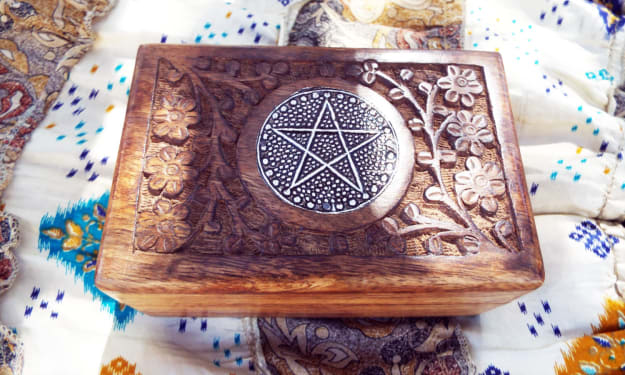
It started innocently enough. A simple scroll through TikTok at 2 AM, insomnia keeping me awake in my cramped studio apartment where I'd been freelancing for months without human contact. The algorithm, that omniscient digital deity, must have sensed something in my desperate thumb movements because suddenly my feed bloomed with candles and crystals, with young women whispering incantations into their phone cameras.
By Parsley Rose 12 months ago in Confessions
Something I need to tell you
Dear Aunt, I am sending this as an email because I need a clear place to say what I have been carrying for a long time. I will use “Aunt” here because that is what you are, even though, for many months, you have not acted like someone who cares gently for us. I will still show you respect in this message, because respect is all I can offer if nothing else remains. I know you may not answer. I know it may be ignored. Still, I need to be honest.
By Zidane12 months ago in Confessions
The Art of Saying “No” at Work
The first time I said “no” at work, my voice was barely more than a whisper. My palms were sweaty, my heart pounded in my chest, and I braced for the silence that followed. For years, I had trained myself to be the “yes” person, so speaking that one word felt like betrayal.
By BehindTheDesk12 months ago in Confessions
Just Wanted Bacon on My Burger
I went to Burger King with my wife. We ordered separately on the app so we could each earn our own points. I wanted to enjoy a nice cheeseburger, which was on sale through the Burger King app. It was a free cheeseburger if you bought something for a dollar. I added bacon to it and also ordered a side item.
By Joey Raines12 months ago in Confessions
Internet Fiber Blockade Disrupts Life in Afghanistan
Internet Fiber Blockade Disrupts Life in Afghanistan In recent months, Afghans have faced yet another crisis, one that is less visible than violence in the streets but just as damaging to daily life. The disruption and partial blockade of Afghanistan’s internet fiber network has cut off millions of people from reliable access to the digital world. This breakdown has affected businesses, education, healthcare, and communication, leaving many to feel isolated in an already fragile environment.
By Roman raufi12 months ago in Confessions
Two strangers seated side-by-side on a long overnight train ride. Content Warning.
The notebook feels cheap under my fingers, the cardboard cover flimsy. This pen is already starting to skip. But it’s midnight, and the train is a dark serpent sliding through the sleeping countryside, and I can’t sleep. The hum is in my bones. That low, metallic thrumming that feels like being inside a giant, moving creature. It’s the sound of distance being eaten. The sound of leaving.
By Chahat12 months ago in Confessions
The Things We Do in the Dark. Content Warning.
October 12th I saw him again today. It’s stupid, really. The way my body reacts. A full-system reboot from a thirty-second interaction in a coffee line. It’s not even about the words. It’s about the space between them.
By Chahat12 months ago in Confessions
The Prize Hunter and the Junkyard Trick
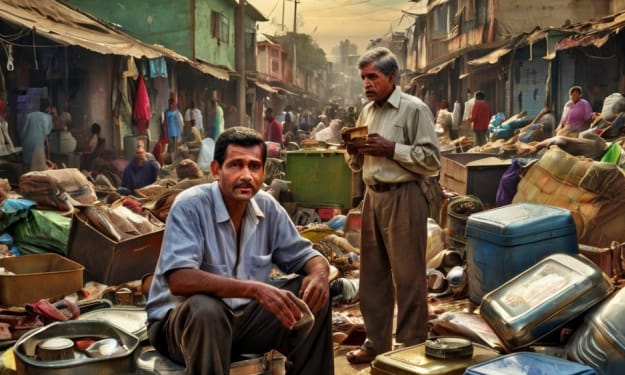
The Prize Hunter and the Junkyard Lesson BY:Khan Bashir Ahmed Bhatti, my old friend, has an unusual obsession. He is always chasing after prize schemes. Over the years, he has won several items through lucky draws—small and big prizes alike. A washing machine, a motorcycle, household appliances—he has collected them all, free of cost. The secret of his winnings lies not in luck alone but in his peculiar habit. He never throws away wrappers. Soap wrappers, tea packets, biscuit covers—even empty cigarette packs—he hoards them all in his house like a treasure trove. Whenever a company announces prizes through a lucky draw, he is the first one to pull out a stack of wrappers, scribble his name, ID card number, and mobile phone on them, and drop them into the entry boxes. Most people buy the products just to participate in the scheme, but my friend never spends a dime. He scavenges wrappers from wherever he can find them—at shops, in trash heaps, or even in the junkyard. For him, every wrapper is a lottery ticket, and the more entries he sends, the better his chances of winning. And indeed, his tactic often pays off. The companies, of course, are not blind to this trickery. They know many participants send in wrappers without purchasing the products. But since a wrapper carries no proof of whether it was bought or found, they are forced to honor the winner. A currency note works the same way: whether earned through hard work or picked up from the street, it holds its value everywhere. Similarly, a wrapper is valid as long as it isn’t torn or soiled. Still, some companies have become smarter. They now mark new products with a golden star, insisting that only star-marked wrappers qualify for the draw. Others insert coupons inside the packaging, forcing customers to purchase the item to participate. These innovations have reduced the tricks of people like my friend, but his passion remains undimmed. One pleasant afternoon, with cool breezes sweeping the city, my friend and I were strolling down a busy street. As we neared the bazaar, rows of junk shops came into view. On one side of the road stood two warehouses, and on the other, three more yards buzzing with business. Pushcart vendors were weighing scrap paper, bottles, and broken goods while the junk dealers, dressed in shabby clothes, sat lazily on their chairs, paying cash and recording tallies. Among the piles of junk, my friend’s sharp eyes caught sight of something—a shiny, almost brand-new tea tin lying on top of a mound of scrap. Its retail price would have been around 190 rupees. To him, it wasn’t just an empty container—it was a golden ticket. Without hesitation, he stepped forward, picked it up, and examined it with delight. But his small act didn’t go unnoticed. The junk dealer, sitting nearby, shouted in a harsh tone, “Uncle, please put that back. It’s not yours.” The words struck like a whip. My friend froze. All eyes turned toward him. The other junk dealers, sensing a moment of drama, began staring, eager to watch him squirm. The tin itself was worthless, but his mistake was in picking it up without permission. The dealer’s voice had exposed him, and embarrassment is heavier than any burden. For a moment, my friend looked shaken, but being clever and quick-witted, he recovered instantly. Saving face was now more important than saving the tin. He beckoned the junk dealer over with a mysterious smile. Curious, the man walked up. I, too, drew closer, wondering what trick my friend would pull this time. Holding the tea tin, my friend pointed at the printed word “Supreme.” “What does this say?” he asked. The dealer, who was literate enough, replied, “It says Supreme.” “Good,” said my friend. “Now tell me, if you remove the letters ‘Sup,’ what remains?” “Then it becomes ‘reme’—or rather ‘reme,’” the dealer answered hesitantly. “And if we add the letter K before it, what word do we get?” The dealer thought for a second. “That would make it ‘Kreme’—or ‘Cream.’” My friend leaned in dramatically. “Exactly. And cream sounds like ‘Kareem.’ Tell me, Kareem and Raheem—what are these names?” The dealer chuckled. “Kareem was my father’s name. Raheem was my uncle’s.” “Wrong!” my friend declared firmly. “No ordinary human is named Kareem or Raheem on their own. These are sacred names—attributes of Allah Himself. That is why our parents always prefix them with ‘Abdul,’ making them Abdul Kareem, Abdul Raheem. Without ‘Abdul,’ they belong only to God.” The dealer scratched his back nervously. “Yes… yes, you are right. My father’s real name was Abdul Kareem, and my uncle was Abdul Raheem.” My friend pounced on the moment. “So you see, this word on the tin—‘Supreme’—contains the sacred letters that form the word Kareem. And here you are, letting it lie in the dirt among scrap and filth. Do you realize what a grave sin that is? Words connected to the divine should be kept in a clean, elevated place, not tossed onto a junk heap.” The dealer’s eyes widened. He folded his hands apologetically. “You are absolutely right. I have made a big mistake. Please, take this tin and place it somewhere respectful. I don’t want to be guilty of disrespect again.” My friend nodded gravely. “Good. Learn from this. Never let sacred words fall into dishonor again.” He shook the dealer’s hand, tucked the tin under his arm, and walked away with me. Once we were at a distance, I turned to him and asked, half amused, half amazed, “What was that all about? You turned a scolding into a sermon and walked away with the prize.” He grinned slyly. “If I had simply put the tin back, I would have lost face. The dealer wanted to embarrass me, but I outsmarted him. And besides,” he winked, “I didn’t lie. Respect for sacred words is indeed our duty.” I couldn’t help but laugh. That was my friend—always cunning, always ready with a trick, and forever chasing prizes, even if it meant turning a junkyard lesson into a theological debate.
By Khan 12 months ago in Confessions
Secret Letter. Content Warning.
The fluorescent lights are too bright and they're humming secrets I can't quite catch. My feet are moving before my brain catches up—through the automatic doors, past the reception desk where the woman is staring (she knows something), into the parking lot where the air tastes like metal and fear.
By Parsley Rose about a year ago in Confessions
A House Divided: When a Father’s Betrayal Shattered a Family
A House Divided BY:Khan Khalid Mahmood Ashraf’s life took a turn the day his wife, Bushra, fell seriously ill. For years, she had been the heart of their home — the mother of five daughters and two sons, the anchor of a bustling household. But this time, when she was admitted to the hospital after her third heart attack, the doctors shook their heads grimly. “Pray for her recovery,” they told the family, “the rest is in God’s hands.” For three long months, Bushra lay in the hospital bed, her children constantly at her side, whispering prayers into the sterile air. Ashraf, however, was not as steadfast. Behind the façade of worry, he had already begun weaving a new plan for himself. Believing Bushra would not survive, he secretly married Salma, a distant relative — a divorced woman with a daughter from her previous marriage. He justified his decision by telling himself that his children needed a mother. But fate had other plans. Bushra survived. By what the family called nothing short of a miracle, she was discharged from the hospital and returned home. The children’s prayers had been answered. Yet, her recovery shattered Ashraf’s secret dreams. He had imagined welcoming a new bride into the house, but Bushra’s unexpected return meant his plans fell apart. From then on, peace left the home. Ashraf, a man with a weakness for women, found himself frustrated. Small arguments with Bushra turned into daily battles. The children, already traumatized by their mother’s illness, grew weary of their parents’ endless fights. One evening, when Bushra’s married daughters and their husbands came to visit, they confronted Ashraf. Why did he keep fighting with their mother? At first, he resisted, but then he blurted out the truth. “I want to divide this house into two parts,” he declared coldly. “Bushra will live in one part with her children. And Salma, my wife, will live in the other part with her daughter. I married Salma because I thought Bushra would not survive. I did this for the children, to give them another mother. And I gave shelter to a helpless woman. Now Bushra is standing in my way.” The room fell silent. His daughters and sons were stunned. They could neither oppose their father openly nor ignore the pain of their mother. His betrayal had already taken root, and there was no turning back. Tensions escalated until tragedy struck. Ashraf’s younger son, unable to bear the humiliation and family turmoil, consumed poison and ended his life. The loss devastated Bushra, who collapsed into a coma after her son’s funeral. A year later, she too passed away, unable to recover from her grief. The family home, once filled with love and laughter, became a place of sorrow. Yet Ashraf, hardened and obstinate, remained unchanged. He brought Salma openly into the house, dividing it as he had always wanted. But his eldest son, Javed, could no longer focus on his studies. Dropping out of school, he began driving a pickup truck to provide for his younger sisters. The burden of responsibility fell squarely on his young shoulders. Ashraf, unsympathetic, had further plans. One day, he summoned Javed and delivered an ultimatum: “If you want to stay in this house, you must marry Salma’s younger sister. If you refuse, you will be thrown out and cut off from my inheritance. Decide wisely.” Javed was horrified. To him, Salma was the reason his mother and brother were gone, the root of his family’s destruction. The thought of marrying her sister was unbearable. But Ashraf’s authority was ironclad. Resistance meant losing everything. For months, Javed stalled, avoiding his father’s demand. But eventually, under relentless pressure, he surrendered. With his sisters’ futures in mind, he reluctantly married Salma’s younger sister. His sacrifice was silent, but it tore at his soul. Life moved on. Javed devoted himself to supporting his sisters and caring for his new wife. Surprisingly, she turned out to be kind-hearted, and though he never loved the circumstances, he treated her with respect. In time, she too became a partner in his struggles. But Ashraf’s selfishness did not end there. With Salma by his side, he continued to control the family. Javed, however, grew stronger. He worked tirelessly, saving every rupee he could. Finally, he convinced his wife to demand that Ashraf transfer the house into Javed’s name. Desperate to appease them, Ashraf agreed. The day the papers were signed, Javed wasted no time. He tore down the dividing wall of the house. With tears streaming down his face, he remembered his mother and brother. The family wept together, grieving the home that had once been whole. A short while later, Javed sold the house. He gathered his sisters and wife and moved to the city, determined to build a new life away from his father’s shadow. Ashraf begged him not to go. “My job is here. My life is here. Don’t leave me alone,” he pleaded. But Javed’s heart had hardened. “When you were strong, you thought only of yourself,” he told his father. “Now that you are weak, you expect us to care for you? You must learn what helplessness feels like.” And so, Ashraf was left behind, an old man surrounded by silence. Even Salma eventually left to live with her daughter and son-in-law in the city. Ashraf, once proud and domineering, now faced the twilight of his life alone, haunted by the ruins of the family he himself had destroyed.
By Khan about a year ago in Confessions
My Long Battle with Excessive Sweating — and the 4 Life-Changing Hacks That Finally Worked
I am a 32-year-old man, and for more than a decade I carried a heavy secret that affected almost every part of my life: excessive underarm sweating. It started when I was around twenty, and at first, I thought it was just normal. But as the years went by, it became something that completely shaped my social life, my confidence, and even my career.
By zinatabout a year ago in Confessions