
She Kept Everyone's Darkest Secrets — Until One Destroyed Her
She was the girl everyone confided in — and the one no one ever truly knew.

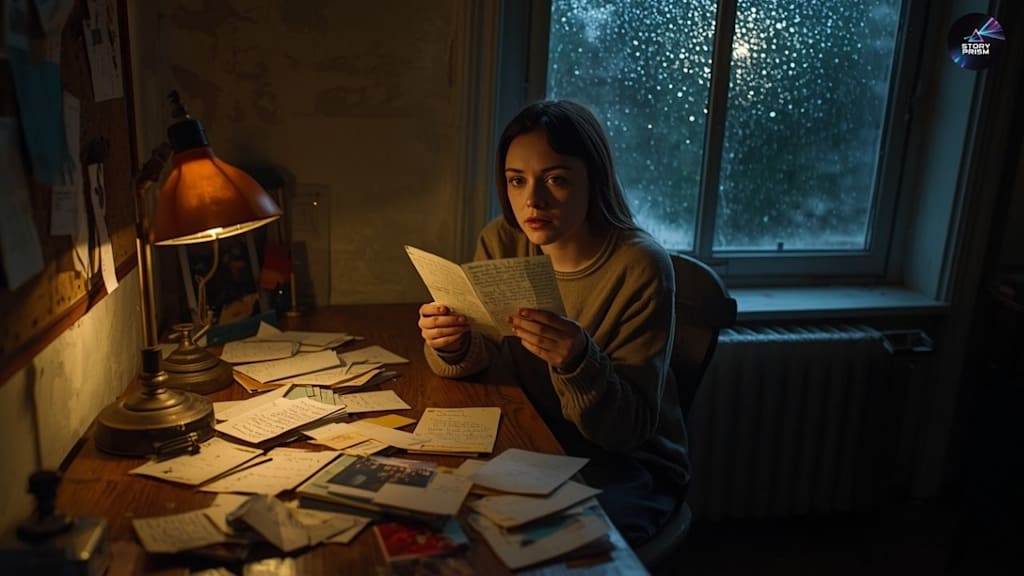
here was a girl in my neighborhood who knew everything about everyone. Not because she snooped. Not because she pried. Because people simply told her — at 2 a.m. over the phone, in the back of parked cars, in bathroom stalls at parties she hadn't even wanted to attend. They told her things they had never spoken aloud. And she listened. Every single time.
Her name was Nora. And she was, in every way that counts, invisible.
Not invisible the way ugly things are invisible. Invisible the way furniture is — always there, always useful, always overlooked until someone needs something placed just right.
The girl everyone trusted
Nora was seventeen when she first understood what she had become. It was a Tuesday — the unremarkable kind — when her classmate Dani sat across from her at the lunch table and, without preamble, said: "I think I might be in love with a married man. Don't tell anyone."
Nora didn't tell anyone. She never did.
By the time she was twenty-two, she had accumulated, without meaning to, an archive of human darkness that would have stunned a therapist. Infidelities. Addictions. Money stolen from parents. Pregnancies ended in secret. A brother who had hit his wife. A best friend who had lied on the stand. These were not rumors. These were confessions — given freely, received quietly, and stored somewhere deep inside Nora's chest where she kept things she did not know how to release.
"People don't tell you their secrets because they trust you. They tell you because they need to put them down somewhere — and you look like someone who won't drop them."
She had read that once in a book she forgot the title of. It had felt, in that moment, like someone had handed her a mirror.
What it costs to carry everyone else
There is a particular kind of loneliness that belongs only to people like Nora. It is not the loneliness of being alone — she was rarely alone. It is the loneliness of being known by no one, even while surrounded by people who believe they know you well.
Because when you are the keeper of secrets, you become something other than a person. You become a container. And containers don't get asked how they're doing. They don't get to overflow. They are simply expected to hold.
For years, Nora held. She held Dani's affair and Marcus's gambling debt and the thing that happened to Priya at university that Priya could not name out loud. She carried all of it the way you carry a full glass across a crowded room — carefully, always carefully, afraid of what would spill.
What she did not carry was her own story. Because no one had ever thought to ask for it.
The secret that broke the archive
It came the way the worst things always do — quietly, and from someone she loved.
Her closest friend, Jess, sat across from her at the same worn kitchen table where a hundred other confessions had been made, and told her something that reordered Nora's entire understanding of her own life. Not a betrayal. Not a crime. Something smaller and more devastating than that: the truth that Jess had been pretending, for years, that Nora was fine — because Nora being fine was more convenient than asking.
"I always figured you were okay," Jess said. "You never seem to need anything."
Nora stared at her for a long moment. And then she began to cry in a way she had not cried since childhood — not politely, not quietly, but in great heaving waves that surprised them both.
"You never seem to need anything." It was the loneliest sentence anyone had ever said to her.
What we do to the people who hold us
Nora's story is not unique. It is, in fact, extraordinarily common.
Psychology has a name for people like her: emotional containers, or sometimes, more clinically, individuals high in agreeableness and low in self-disclosure. They are the friends everyone calls in crisis. The siblings who mediate every family war. The coworkers who absorb the team's anxiety so quietly that no one notices the weight being transferred.
Research consistently shows that people who are trusted with others' secrets report significantly higher rates of emotional fatigue, anxiety, and what therapists call "vicarious trauma" — the damage done not by your own wounds but by witnessing everyone else's. Yet they are also the least likely to seek support themselves, precisely because they have been so thoroughly cast in the role of the supporter.
We do this to the strongest people in our lives without ever meaning to. We find them, we lean on them, and we forget — sometimes entirely — that they are also human beings who bleed.
The beginning of something different
After that night in the kitchen, Nora did something she had never done in twenty-two years of quiet, faithful keeping. She told Jess a secret of her own. Not a dramatic one. Not a confession of crime or catastrophe. Just a true thing — a small, tender truth about how lonely she had been, and for how long, and how strange it was to be the most trusted person in every room and yet feel entirely unknown.
Jess listened. Really listened, the way Nora had always listened to others. And when Nora finished, Jess said: "I didn't know. I'm sorry I didn't know."
It was not a cure. It was not a transformation. But it was, perhaps, the first time in a very long time that Nora existed as something other than a repository. The first time she was allowed to be a person with a story of her own.
A final thought
There are people in your life right now who carry your secrets. People who held things for you that you have long since forgotten you ever told them. They are still holding. Still carrying. Still listening to others the way they always have, the way they were somehow taught that love is supposed to look.
They are also — every single one of them — waiting, in ways they may not even consciously recognize, for someone to turn the question around.
So here is the only thing worth asking, after all of this:
Who are you carrying secrets for — and when did you last ask them how they were holding up?
About the Creator
Enjoyed the story? Support the Creator.
Subscribe for free to receive all their stories in your feed.
Comments
There are no comments for this story
Be the first to respond and start the conversation.