True Crime
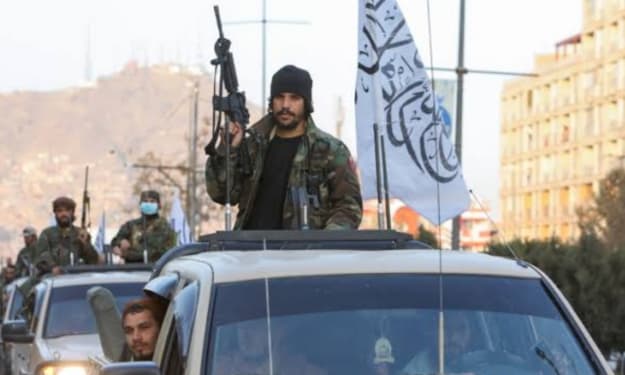
Pakistan–Afghanistan Border Tensions Escalate: Taliban Claims Retaliatory Strikes After Pakistani Airstrikes in Kabul, Kandahar
Taliban government spokesperson Zabihullah Mujahid announced in a post on X that Pakistani forces had carried out bombings in parts of Kabul, Kandahar, and Paktia. Mr. Mujahid wrote: “Cowardly Pakistani forces bombed several locations in Kabul, Kandahar, and Paktia, but thanks be to God, there were no casualties.” The Taliban government spokesperson also announced the resumption of “large-scale retaliatory operations” against Pakistani military centers. On his X social media account, Zabihullah Mujahid wrote: “Following the airstrikes in Kabul, Kandahar, and other provinces, large-scale retaliatory operations have once again begun against Pakistani military centers along the Kandahar and Helmand axis.” The operation resumed just hours after Pakistani military aircraft targeted several provinces, including Kabul, and eyewitnesses reported hearing multiple explosions following the attacks. Clashes between Pakistani soldiers and Taliban government forces began late Thursday night, with both sides claiming to have inflicted heavy casualties on each other. In a message on X, Mr. Mujahid said the attack was carried out in response to “repeated provocations and violations” by the Pakistani military. Reports from the eastern provinces of Nuristan, Kunar, Nangarhar, and the southeastern provinces of Paktia and Paktika indicate that Taliban government forces attacked Pakistani border guard posts. A military official of the Taliban government in eastern Afghanistan said the attacks began at 8 p.m. local time on Thursday. In a message on the X network, Pakistan’s Ministry of Information wrote: “The Afghan Taliban miscalculated and, without any prior provocation, opened fire at multiple locations along the Afghanistan-Pakistan border in Khyber Pakhtunkhwa province, to which Pakistani security forces responded immediately and effectively.” Islamabad regularly accuses Kabul of providing safe havens to militants, an allegation the Taliban deny. The escalation comes after Islamabad launched airstrikes inside Afghanistan following several deadly suicide attacks on its territory. The Taliban government said a few days earlier that late-night Pakistani airstrikes killed and injured dozens of people, including women and children. The Taliban condemned the attacks, saying multiple homes and a religious school were targeted. According to the Taliban Ministry of Defense, the Pakistani strikes targeted “civilian areas” in Nangarhar and Paktika provinces. Al Jazeera has also confirmed civilian casualties. The Taliban Ministry of Defense condemned what it called a “blatant violation of Afghanistan’s territorial integrity” and a “clear violation of international law,” warning that “at an appropriate time, these Pakistani attacks will receive an appropriate and severe response.” The Ministry of Defense also stated: “Attacks on civilian targets and religious institutions indicate the failure of the Pakistani military in the fields of intelligence and security.” In this regard, Pakistan said it had targeted seven camps and hideouts allegedly linked to militants near the Pakistan-Afghanistan border. Pakistani officials said they targeted objectives belonging to Tehrik-i-Taliban Pakistan (TTP) and ISIS-Khorasan, adding that the strikes were a “retaliatory response” to recent suicide bombings in Pakistan. Pakistan and Afghanistan share a 2,574-kilometer mountainous border. Confirmation from Pakistan regarding airstrikes in Pakistan allegedly carried out by the Afghan Taliban After claims by Afghanistan’s Ministry of Defense about airstrikes on various areas of Pakistan, Pakistani authorities confirmed drone incidents in the country. Pakistan’s Minister of Information, Atta Tarar, wrote on Twitter: “(Fitna al-Khawarij) terrorists attempted to launch small drones in Abbottabad, Swabi, and Nowshera.” He said: “The anti-drone system shot down all the drones and there have been no reports of casualties.” He added: “These incidents once again demonstrate the direct link between the Afghan Taliban government and terrorism in Pakistan.” One of the incidents occurred in the Swabi area of Khyber Pakhtunkhwa, where reports indicate a small drone crashed. Authorities said the drone crashed near a school. Swabi District Police Officer Waqar Rafiq said that although the drone crashed near a residential area, it did not cause significant damage, and it appears the school was not directly targeted. In a post from the official account of the Taliban Ministry of Defense, it was claimed that around 11 p.m. they bombed a military camp near Faizabad in Islamabad, Pakistan, and targeted military camps in Nowshera and Abbottabad. The attacks were said to have successfully hit their targets. The Taliban said these attacks were carried out in response to Pakistan’s airstrikes on Afghan territory.
By Real content8 months ago in Chapters
Afghanistan’s Taliban Penal Code: Hudud, Tazir, and the Expansion of Judicial Powers
In Geneva, the agenda of the 61st annual session of the United Nations Human Rights Council, which began today (Thursday, February 27), included the Taliban government’s penal code. The Council’s Commissioner, Volker Türk, referred to the Taliban’s criminal code and the punishments it contains. In the fourth year of its second term in power, the Taliban government issued a “criminal code” that many people inside and outside the country have described as vague and, in some parts, shocking. Taliban officials say the code is fully based on Hanafi jurisprudence, developed in consultation with legal and religious scholars, and that parts and concepts of the law have been reviewed. This criminal code, which consists of an introduction, three chapters, ten sections, and 113 articles, was signed by the head of the Taliban government, Hibatullah Akhundzada, on 15 Jaddi 1404 (Hijri calendar). Taliban government spokesperson Zabihullah Mujahid said these criminal laws had been applied in Taliban-controlled areas during the 20-year war against the United States and its allies, and that their “new and updated” version is now being implemented based on the same principles. According to Mujahid, the new law prescribes punishments for crimes that fall outside the framework of “Hudud Allah” (fixed divine punishments). The code grants broad powers to judges. Human rights organizations have widely criticized the content of this code. The Difference Between Hudud and Ta’zir A former judge in Kabul explained that in Islamic jurisprudence, “Hudud” or “Hudud Allah” are fixed and predetermined legal punishments that cannot be altered. Examples include the prescribed punishments for murder, adultery, drinking alcohol, highway robbery, and theft. These punishments are called “Hudud” because their type and amount are defined by Sharia. Mujahid says their courts will treat all people equally in cases involving “Hudud Allah” and “Haq al-Abd” (private rights between individuals). However, all other punishments are considered discretionary (ta’zir), meaning the type and amount of punishment vary according to the ruler’s or judge’s opinion and may take into account the defendant’s social character. Punishment Based on Character and Social Status Article 4 of the code states that in the implementation of hudud, qisas (retaliation), and diyah (blood money), only the crime is considered, not the personality of the offender. However, in ta’zir punishments, the “personality of the offender” is taken into account. Article 9 states that punishment is “classified” based on the individual circumstances of the offender: Punishment for scholars and high-ranking officials: a warning from the judge, such as, “I have been informed that you are doing such-and-such.” Punishment for nobles, such as tribal leaders and merchants: being summoned to court and formally notified. Punishment for the middle class: being summoned to court and imprisoned. Punishment for the lower class: threats, beating, and harsher physical punishment. Before the fall of the last republic, Afghanistan’s final Attorney General, Mohammad Farid Hamidi, said that over the past hundred years, modern Afghan laws had considered all citizens equal before the law. He stated that the entire content of this code is open to criticism and fundamentally different from Afghanistan’s prior legislative tradition. He added that such division before the law has no place in Afghanistan’s contemporary legal history and is not consistent with the values of Islam. According to Hamidi, during the time of the Prophet Muhammad and the first caliph, justice was applied equally regardless of status, lineage, social position, or wealth. He said the code appears to be “copied” from well-known jurisprudential books but contradicts the spirit of independent reasoning (ijtihad) in Islamic jurisprudence. The Afghan Penal Code Is More Severe A former Afghan Hanafi jurist and scholar said the code is based on Hanafi jurisprudence and is stricter than the penal code of the former republic. He explained that in Hanafi jurisprudence, ta’zir is left to independent reasoning, public interest, and the ruler’s or judge’s opinion. Differences among individuals are recognized, and judges may determine the type and amount of discretionary punishment based on the defendant’s condition and the public good. According to him, in Hanafi jurisprudence, sometimes advice is more effective for a noble person than lashes, while in other cases lashes may be the only deterrent. Influence of Deobandi Thought Zabihullah Mujahid said that high-ranking individuals in society are not limited to Taliban officials; others also hold social status. If such individuals commit a crime, merely informing them of it may suffice because their social position would prevent them from repeating it. The footnote to Article 9 cites “Fatawa al-Hindiyya,” also known as “Fatawa Alamgiri,” as a source. Afghan researcher Rostam Ali Sirat said this indicates that Taliban scholars are influenced by the Deobandi school of jurisprudence in the Indian subcontinent and that “Fatawa Alamgiri,” written in India in 1667 at the order of Emperor Aurangzeb, had a significant impact on the drafting of the code. Sirat noted that in the Indian subcontinent, converts from lower castes were sometimes referred to as “other Muslims,” while there were also Muslim elites, landlords, and scholars. He added that these issues were deeply influenced by Hindu culture and bore striking similarities to the caste system of that time. Another source cited in Article 9’s footnote is the sixth volume of “Radd al-Muhtar ‘ala al-Durr al-Mukhtar” by Ibn Abidin, a 19th-century Hanafi jurist from Syria. This book is a commentary on “al-Durr al-Mukhtar” by Ala al-Din al-Haskafi and is considered one of the most authoritative sources in Hanafi jurisprudence. “Public Interest” and the Death Penalty Article 14 states that if the death of offenders protects the “public interest,” a judge may issue the death penalty. Examples include persistent corruption, promoting corruption, defending and promoting anti-Islamic beliefs, and practicing sorcery. The second paragraph of Article 14 prescribes the death penalty for homosexuality and repeated theft. Hamidi said that under Afghanistan’s 2017 penal code, death penalty cases were very limited and subject to strict conditions. He argued that under this new code, the authority is granted to judges without specific conditions, disregarding accepted criminal and Islamic jurisprudential principles, and giving them broad discretion to impose the death penalty. Article 4, clause 6, grants authority to individuals—apparently including Taliban Ministry of Public Order officials and ordinary Taliban members—to administer punishment. It states that any Muslim who sees a sinner committing a sin has the authority to discipline them, as part of enjoining good and forbidding evil. Leaving Home, Looking at a Neighbor’s Wife, and Imprisoning Dancers Article 34 prescribes discretionary punishment for a woman who goes to her father’s or other relatives’ home without her husband’s permission. If a woman repeatedly goes to her father’s or relatives’ house without a legitimate reason and stays there, and does not return despite her husband’s request and a judge’s order, both the woman and the person sheltering her are considered offenders and each may be sentenced to three months in prison. Another article states that if a person engages in improper contact with a non-mahram woman (kissing, touching, or embracing), the judge shall sentence them to one year in prison. It also states that looking at a neighbor’s wife, gesturing at her, describing her body parts, or inquiring about her condition is a crime punishable by one month in prison. Article 59 prescribes prison sentences for dancing. Boys and girls who dance, and those who dance with them or watch them, are all considered offenders, and the judge shall sentence each to two months in prison. Mujahid said that a man who fails to provide his wife with her rights—such as housing, food, and clothing—is also punishable. He emphasized that the international community should respect Afghanistan’s laws and not question them, adding that their courts are 100 percent based on Sharia law and cannot incorporate foreign civil laws. He said that those who object to Islamic beliefs and laws have no right to object. Mujahid: “Innovator” Does Not Mean Shi’a
By Real content8 months ago in Chapters
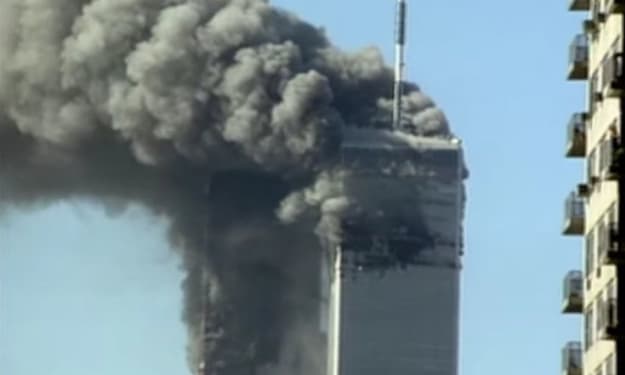
🏢💥 Unraveling 9/11 Conspiracy Theories: Understanding Claims, Evidence, and Public Debate. Content Warning.
The September 11, 2001 attacks on the United States remain among the most significant and tragic events in modern history. Nearly 3,000 lives were lost, the global economy was shaken, and the world witnessed the rise of a new era of geopolitical tension and security concerns. Alongside these events, a complex web of conspiracy theories has emerged, challenging the official narrative and sparking debate that spans governments, media, academia, and the public.
By Haroon Pasha8 months ago in Chapters
Adolf Hitler: A Historical Biography and the Rise of a Destructive Regime. Content Warning.
Few individuals in modern history have left a mark as catastrophic and far-reaching as Adolf Hitler. His actions reshaped the political landscape of Europe, ignited a global conflict, and resulted in unprecedented crimes against humanity. Studying Hitler is not an exercise in fascination, but rather an effort to understand how fragile democratic systems can collapse and how extremist ideologies gain influence.
By Haroon Pasha8 months ago in Chapters