True Crime
Has World War III Started?
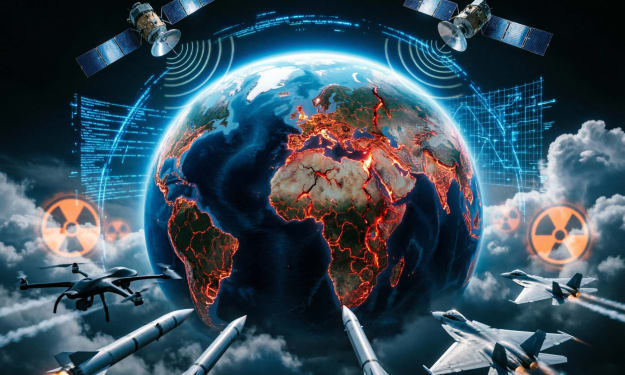
Has World War III Started? The question “Has World War III started?” is no longer limited to academic debate or fictional movies. It is now openly discussed in newsrooms, policy circles, and online platforms around the world. While the simple answer remains no, the conditions shaping today’s global environment are deeply alarming. The world is experiencing an unprecedented convergence of regional wars, technological disruption, and power competition that closely resembles the early stages of past global conflicts.
By Wings of Time 8 months ago in Chapters
Why Pakistan Erupted in Protests After Ali Khamenei’s Death: Curfews, Casualties, and Diplomatic Tensions
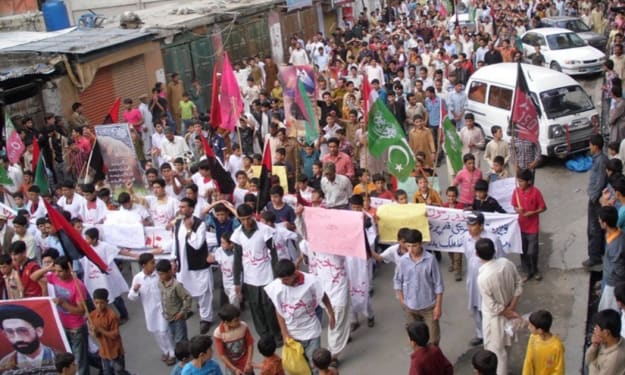
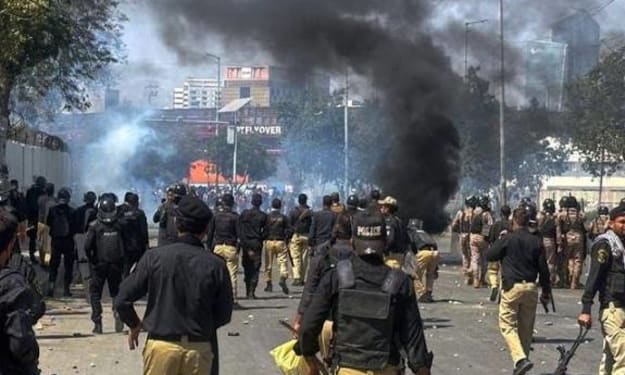
In Pakistan-administered Gilgit-Baltistan, following violent protests over the reported killing of Iran’s Supreme Leader Ayatollah Ali Khamenei in an alleged U.S.-Israeli attack, authorities have imposed a three-day curfew in the districts of Gilgit and Skardu and called in the army. It is worth noting that early Sunday morning, after Iran confirmed the killing of Ali Khamenei, large-scale protest rallies and demonstrations began across various cities in Pakistan as well as in Pakistan-administered Gilgit-Baltistan. Protesters attempted to march toward U.S. consulates, the embassy, and other locations in Pakistan. Clashes with police, Rangers, and other law enforcement personnel resulted in multiple deaths among protesters. The Government of Pakistan appealed to demonstrators to remain peaceful following Khamenei’s death, and Section 144 (which prohibits gatherings of five or more people) was imposed in several cities. In violent clashes with law enforcement agencies, confirmed fatalities so far include 10 in Karachi, three in the federal capital Islamabad, and five in Skardu. Although officials in Gilgit have not yet released an official figure for those killed in the previous day’s violent protests, senior police and health department officials have confirmed at least five deaths in Gilgit. Curfew Imposed in Gilgit and Skardu, Army Deployed Following the fatalities in Gilgit and Skardu, a curfew has been in effect in both districts since last night, and the army has taken over administrative control of these areas. The three-day curfew began at midnight on Sunday (March 2) and will remain in force until midnight on March 4. According to a statement issued by the Gilgit-Baltistan government, a complete curfew will be enforced in the districts of Gilgit and Skardu from midnight to noon between March 2 and March 4. There will be partial relaxation from noon to 4 p.m., after which the curfew will again be enforced from 4 p.m. until midnight. Inspector General of Gilgit-Baltistan Police Dr. Akbar Nasir Khan stated in a video message that the army has been called in and will oversee the administration of Skardu and Gilgit for the next three days (March 2–4), while police, FC, Rangers, and other law enforcement agencies will continue performing their duties. On Sunday, angry protesters vandalized and set fire to United Nations offices in Gilgit. Clashes between protesters and police at multiple locations in Gilgit and Skardu resulted in deaths, while the Deputy Superintendent of Police (DSP) Skardu, several police officers, and numerous protesters were injured. In Skardu, the SP House, Software Technology Park, and United Nations offices were vandalized, while in Gilgit, UNDP and other UN offices were damaged and some locations were set ablaze. Shia representative organizations in Gilgit have claimed that seven people were killed in the district and announced that collective funeral prayers for them will be held today at 11 a.m. Dozens of people, including police personnel, were injured in the violent protests nationwide. Police used tear gas, rubber bullets, and aerial firing to keep protesters away from U.S. consulates, the embassy, and other sensitive locations. Dr. Asif Raza, Medical Superintendent of the Regional Hospital Skardu, confirmed that five bodies were brought to the hospital following the violent protests, including one belonging to a security agency personnel. Dr. Raza said that injured individuals began arriving after 10 a.m. He confirmed that approximately 50 injured people were brought to the hospital. He stated that four of the deceased were civilians while one belonged to a security agency. According to Dr. Raza, two injured patients remain in critical condition. He claimed that all those brought to the hospital had gunshot wounds. Journalist Wajahat Ali from Gilgit reported that a large rally was held in the city on Sunday, initially peaceful, marching through various roads. He said the rally was intended to conclude outside the United Nations office, but before that, angry protesters surrounded and vandalized the UN office. He said police resisted, but after tear gas supplies were exhausted, police resorted to aerial firing. An eyewitness said that when police tried to protect the UN office, protesters also attacked the SP office and the Software Technology Park. Clashes between police and protesters continued for several hours, resulting in multiple injuries. Spokesperson for the caretaker government in Gilgit-Baltistan, Shabbir Mir, said that some unfortunate incidents occurred that should not have happened. He said, “Protesting is the right of demonstrators, but vandalism and damaging one’s own property is not appropriate. The government has placed security on high alert at all locations and is in contact with religious leadership to help calm public sentiments.” Attack on U.S. Consulate in Karachi: 11 Dead, 73 Injured Following confirmation of Ali Khamenei’s death, angry protesters in the provincial capital Karachi vandalized the U.S. Consulate and attempted to set it on fire. During clashes with police, 11 deaths have been confirmed so far. According to Police Surgeon Dr. Sumaiya, eight individuals were brought dead to the hospital, while two died during treatment. Nine critically injured individuals remain under treatment in two Karachi hospitals, three of whom are in critical condition. According to the Sindh government, a total of 73 people, including police personnel, were injured in the unrest. Clashes between protesters and police in Karachi took place in the areas of Numaish, Native Jetty, and Paposh. On Sunday, some angry protesters broke the main gate and entered the premises of the U.S. Consulate in Karachi, where they smashed windows in the reception area and security rooms. Karachi Police DIG East Zone said that some protesters managed to enter the consulate but police arrived and brought the situation under control. Police used tear gas and rubber bullets to keep protesters away from the consulate building. Police negotiated with protesters and offered them an alternative protest location at Bahria College away from the consulate, but protesters insisted on demonstrating outside the consulate. Protesters demanded that the American flag be lowered from the consulate building. Police stated this was beyond their authority, after which protesters demanded that the Prime Minister and Interior Minister be contacted to remove the flag, but it was not taken down. Due to rising tensions, police from various districts were called into Karachi. Protesters Attempt to March to U.S. Embassy in Islamabad, Two Killed
By Real content8 months ago in Chapters
After Khamenei: How the Middle East Crisis Could Redraw Global Politics
After Khamenei: How the Middle East Crisis Could Redraw Global Politics The confirmed death of Ayatollah Ali Khamenei after joint strikes by the United States and Israel has sharply intensified the ongoing conflict in the Middle East—turning what was a dangerous regional crisis into a moment with global implications. Khamenei, who led Iran for nearly four decades and wielded extraordinary political and military influence, was killed when missiles and airstrikes hit Tehran in the opening phase of a major military operation targeting Iranian leadership and strategic infrastructure. The impact of his death is already reverberating across the region and the world in ways that may last for years.
By Wings of Time 8 months ago in Chapters
The First Hours of World War III
The First Hours of World War III World War III will not begin with a formal declaration, a single invasion, or a dramatic announcement on television. If it comes, it will begin quietly—through alerts, miscalculations, automated systems, and decisions made under extreme pressure. The early hours of a global war will feel confusing, fragmented, and unreal, long before the world understands what has happened.
By Wings of Time 8 months ago in Chapters
How World War III Could Begin in Our Time
The First Sparks: How World War III Could Begin in Our Time World War III may not start with a single declaration or one massive attack. Instead, it could begin quietly, through a series of connected crises, misunderstandings, and power struggles already happening today. The world is more connected than ever, but that connection also makes global conflict easier to spread.
By Wings of Time 8 months ago in Chapters
Is This War Turning Into World War III?
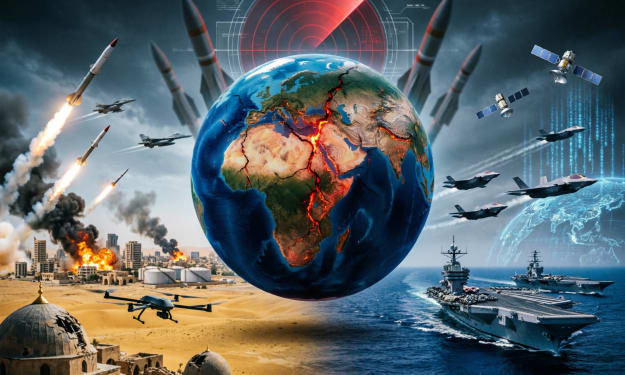
Is This War Turning Into World War III? The question many people around the world are quietly asking today is unsettling but unavoidable: Is the current war climate pushing humanity toward World War III? What once appeared to be localized conflicts in the Middle East are now entangled with global rivalries, advanced technologies, and fragile alliances. History shows that world wars rarely begin with a single dramatic declaration. Instead, they grow out of overlapping crises, miscalculations, and escalating power struggles—many of which are visible today.
By Wings of Time 8 months ago in Chapters
What impact could the death of Iran's Supreme Leader have on the Muslim world?
Following the killing of Iran’s Supreme Leader Ayatollah Ali Khamenei in US and Israeli attacks, Iranian President Masoud Pezeshkian said in a message that “this great crime will be answered” and that “with all our strength and determination, and with the support of the Muslim Ummah and the free people of the world, we will make those responsible for this great crime regret their actions.” Pezeshkian said that Khamenei had led “the front of Islam with wisdom and insight” for 37 years and that after his martyrdom Iran would go through a difficult period. The 86-year-old Khamenei was Iran’s Supreme Leader, but he also had a large number of followers among the Shia community in Pakistan and many other countries. In Iraq, Pakistan, Syria and other Muslim countries, Shia Muslims are often seen carrying Khamenei’s pictures during rallies. On Sunday in Pakistan, firing broke out outside the US Consulate in Karachi when protesters breached the outer security perimeter, entered the premises and carried out vandalism, resulting in nine deaths. In addition, during violent protests in Gilgit-Baltistan, United Nations offices and other properties were set on fire. This raises the question: what impact will Khamenei’s death in US and Israeli attacks have on the world?
By Real content8 months ago in Chapters
Tehran is doing what it promised: What does Iran want to achieve with missile attacks on Middle Eastern countries?
Iran’s Supreme Leader Ayatollah Ali Khamenei and several other Iranian officials had been warning for weeks before the American and Israeli attacks that in the event of any strike, not only Tehran but the entire region would be engulfed in a new war. On the occasion of the 47th anniversary of the Islamic Revolution in Iran, Khamenei clearly stated, “If the United States starts a war this time, it will spread across the entire region.” In response to Israeli and American attacks, Iran’s retaliation suggests that Tehran is putting those threats into action. On Saturday, following U.S. and Israeli strikes on Iran, Tehran launched missile attacks on targets in Saudi Arabia, Kuwait, Bahrain, Qatar, and the United Arab Emirates. The presence of U.S. military bases and American personnel in these countries is no secret. In August 2024, the U.S. Department of Defense stated that approximately 40,000 American troops are stationed in the Middle East. Al Udeid Air Base in Qatar is used by the United States, while American personnel are also deployed at “Tower 22” in Jordan. In addition to Qatar, U.S. forces are present in Bahrain, Kuwait, Saudi Arabia, the United Arab Emirates, Syria, Jordan, Egypt, Cyprus, and Iraq. The United States has multiple military bases in Kuwait and two in Saudi Arabia. Several Gulf countries affected by Iranian missile strikes have condemned the attacks and said they reserve the right to respond. In this context, the question arises: why is Iran targeting locations in Middle Eastern countries, and what impact will Tehran’s strategy have on the region? Iran is doing exactly what it had promised Omar Karim, a PhD researcher affiliated with the University of Birmingham, believes that for now, Middle Eastern countries will limit themselves to condemning the Iranian attacks. He said, “If such attacks remain limited to American targets and do not cause significant damage to these Gulf countries’ own infrastructure—especially oil facilities—then regional states will mostly restrict themselves to rhetorical condemnation.” Discussing Iran’s actions and their possible consequences, he added, “In the immediate term, we should expect a rise in oil prices, and we may also see some attacks in Iraq by Shiite armed groups against American and Israeli targets.” For other analysts, Iran’s response is not surprising at all. The U.S. think tank Stimson Center recently cited statements by Iranian officials, saying that “Iran is doing exactly what it had promised in the event of a possible American or Israeli attack.” They say that missile strikes on targets in Gulf countries will certainly affect Iran’s relations with those states. However, according to them, Iran had already warned these countries that “if they failed to prevent the Trump administration from launching attacks, this is what would happen.” Some analysts believe Iran aims to pressure Gulf countries through its attacks so they can persuade the Trump administration to end the war quickly. Dr. Aziz Alghashian of the Arab Gulf States Institute said, “It is quite clear that Iran does not want to confine this conflict to Israel and the United States but intends to expand it across the entire region.” He said Gulf Arab states were aware that they might face such a situation. When asked about Iran’s strategy of targeting Gulf states, he said, “Iran wants the costs of this war to rise, so that Gulf countries will pressure Trump to stop it. “Whether they succeed or not, no one knows, because what Iran has done cannot be defended, and that is why Arab countries have condemned it.” According to Dr. Aziz, media reports indicate that Iranian attacks damaged residential buildings in the UAE and targeted an airport in Kuwait, which “shows that Iran is in a desperate situation and feels it has nothing left to lose.” However, he believes Gulf countries will not retaliate but will instead focus on their own defense. What could happen next?
By Real content8 months ago in Chapters
US and Israel’s War with Iran: Preemptive Strike or War of Choice? Global Risks, Regime Change, and Middle East Crisis
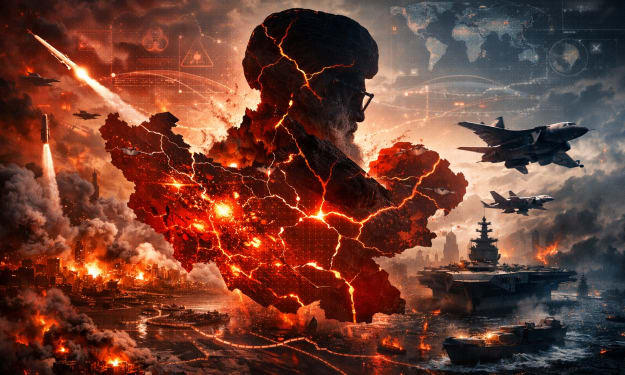
The decision by the United States and Israel to plunge into a new war with Iran has pushed the global landscape toward extremely dangerous and unpredictable consequences. Israel has attempted to justify its attack by describing it as a “preemptive action.” However, evidence suggests that this strike was not carried out in response to an imminent threat, as the term “preemptive” implies. In reality, they chose to fight this war a war of choice. The United States and Israel likely calculated that Iran’s Islamic government is currently extremely weak. The government is not only facing a severe economic crisis but is also dealing with the aftermath of a harsh crackdown on Iranian protesters. Additionally, Iran’s defense system was reportedly badly damaged following last summer’s conflict with Israel. The United States and Israel appear to have concluded that this opportunity should not be wasted. This action is also another heavy blow to the already fragile structure of international law. In their statements, President Donald Trump and Prime Minister Benjamin Netanyahu said that Iran poses a threat to their countries (the United States and Israel), while Trump even described Iran as a “global threat.” Certainly, Iran’s Islamic government is their staunch adversary, but it is difficult to understand how the legal justification of self-defense applies in a situation where two major powers (Israel and the United States) stand on one side and Iran on the other. War is a political act. Once armed conflict begins, it becomes extremely difficult to control. That is why leaders must have clear objectives. Netanyahu has, for decades, viewed Iran as Israel’s most dangerous enemy. For him, this is a major opportunity to inflict maximum damage on Tehran’s government and military capabilities. General elections are scheduled in Israel later this year, and Netanyahu believes that whenever Israel chooses the path of war, it strengthens his political position. On the other hand, Donald Trump’s objectives tend to shift over time. Last January, he assured Iranian citizens protesting in Iran that “help is coming.” However, at that time, much of the U.S. Navy was engaged in efforts to remove Venezuelan leader Nicolás Maduro from power and arrest him, limiting Trump’s military resources and options. A few weeks ago, when the United States was deploying two aircraft carriers to the Middle East, Trump spoke extensively about the dangers of Iran’s nuclear ambitions — despite having declared last summer, following U.S. bomber strikes on Iran, that Iran’s nuclear program had been “wiped off the face of the earth.” The Iranian government has consistently denied seeking nuclear weapons. However, it has enriched uranium to levels that have no use in a peaceful nuclear power program. At the very least, it appears that Iran wants to keep the option of building a nuclear bomb open. Nevertheless, Israel and the United States have not presented any evidence that Iran was on the verge of doing so. In a video message, Trump told the Iranian people that their “time for freedom” is near. Netanyahu made a similar statement on Saturday, suggesting that the current war could provide the Iranian people with an opportunity to overthrow their government. But that is far from certain. There is no precedent for regime change being achieved through airstrikes alone. In 2003, Saddam Hussein’s government in Iraq was toppled only as a result of a large-scale ground invasion led by the United States not merely airstrikes. In 2011, Muammar Gaddafi’s government in Libya fell only because rebel forces received sustained air support from NATO and several Arab states. In both cases, however, the outcome was state collapse. Civil wars erupted, and thousands were killed. Libya remains a failed state, while Iraq is still grappling with the consequences of the U.S. invasion and the widespread bloodshed that followed. Even if this were to become the first instance in which the United States successfully topples a government using air power alone, there is no reason to believe that Iran’s current Islamic government would be replaced by a liberal democracy that respects human rights. No credible alternative government in exile currently exists. Over nearly half a century, Iran’s ruling system has developed a complex political structure based on a mixture of ideology, corruption, and the ruthless use of force when necessary. Last month, the Iranian government clearly signaled that it was prepared to kill protesters. Iran’s hardline security forces have previously complied with orders to shoot and kill hundreds of their own citizens for challenging the existing system and demanding freedom. Perhaps the United States and Israel are attempting to assassinate Iran’s Supreme Leader, Ayatollah Ali Khamenei. Israel views its capacity for targeted killing as a strategic tool. But Iran’s Islamic government is a different matter. It is not merely an armed group or movement; it governs a state. It is not a one-man show. Even if Supreme Leader Khamenei were killed, he would be replaced immediately — most likely by another cleric backed by Iran’s Revolutionary Guards, who would continue defending the government against domestic and foreign threats with a clear strategy. Trump reportedly offered them immunity in exchange for surrender, but otherwise threatened certain death. There is little chance that the Revolutionary Guards would be tempted by such an offer. In the ideology of the Islamic Republic and within Shiite Islam, “martyrdom” is regarded as a form of enduring life. Trump tends to see politics and everyday life primarily through the lens of transactions and business, as described in his book “The Art of the Deal.” However, when dealing with Iran, the power of ideology and belief cannot be ignored and that is a force that is extremely difficult to measure. The current crisis has been unfolding since the beginning of this year, when the United States began shifting its military focus toward the Middle East. At that time, there were indications that Iran’s Islamic leadership believed war might be inevitable, prompting them to initiate indirect talks with Washington. Iranian leaders do not trust the United States or Israel. During his first term, Trump unilaterally withdrew from the Iranian nuclear agreement — the Joint Comprehensive Plan of Action (JCPOA) which had limited Iran’s nuclear program and was considered a major achievement of the Obama administration. Recently, there were signs that Iran might be willing to accept a “JCPOA II”-type agreement to buy time. However, it appears that the United States was also demanding strict limits on Iran’s missile program and an end to its support for regional allies opposed to Israel and the United States. For Iran, these demands were unacceptable, as they would amount to surrendering to the United States and Israel. Abandoning its missiles and regional allies would effectively pave the way for regime change. Iran’s leaders are now likely calculating how to survive this war, how to emerge from it, and how to manage its consequences. Meanwhile, neighboring countries — including Saudi Arabia — are deeply concerned about the uncertain and potentially far reaching outcomes of today’s events. Given the Middle East’s capacity to generate instability, and with the outbreak of yet another intense conflict, the existing instability in the region and the wider world — already turbulent, violent, and dangerous — is likely to deepen further.
By Real content8 months ago in Chapters
Will Pakistan be able to achieve its goals by attacking Afghanistan, or will further concerns arise?
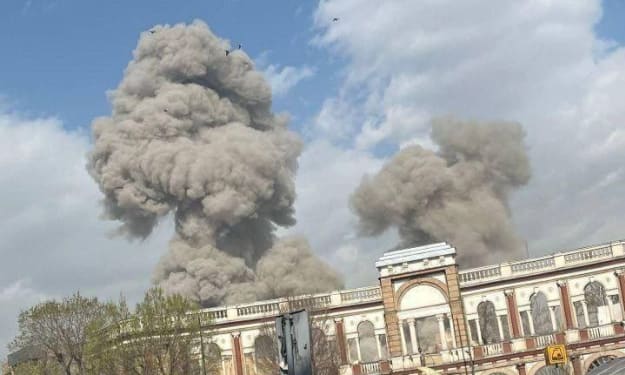
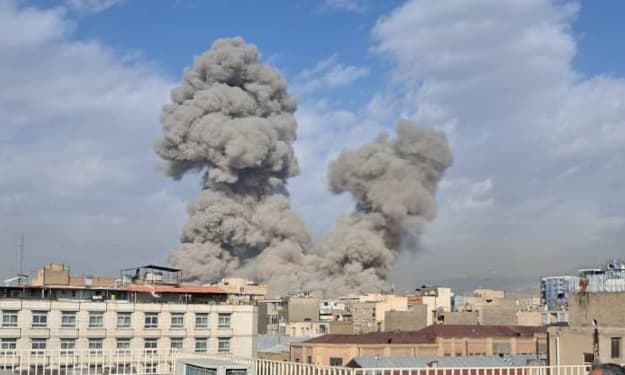
Pakistan carried out airstrikes on Friday in Afghanistan’s capital, Kabul, as well as in the key cities of Kandahar and Paktia near the Pak-Afghan border. Pakistani officials claimed that defensive targets were struck in these locations. Although Pakistan has previously conducted airstrikes inside Afghanistan, this is the first time during the recent tensions between the two countries that major cities such as Kabul and Kandahar have been targeted. Along with Kabul, Kandahar is a central city where the core political and military leadership of the Afghan Taliban government is based. The airstrikes came at a time when Pakistan’s Defense Minister Khawaja Asif stated that “our patience has run out.” Addressing the Taliban government, he said, “It is now open war between us.” In a post on the social media platform X, he wrote that Pakistan had made every effort to normalize the situation directly and through friendly countries, and had pursued extensive diplomacy. Afghan government officials claimed that more than 20 civilians were killed in the Pakistani airstrikes, a figure later confirmed by independent sources. Tensions remain high on both sides of the long Pakistan-Afghanistan border, and security forces are on high alert. Iran has offered to mediate to reduce tensions between the two countries, while the United Nations and several friendly nations have urged both sides to de-escalate and engage in dialogue. However, Kabul and Islamabad do not appear immediately willing to do so, and the core issue underlying the tensions remains unresolved—namely the matter of the Pakistani Taliban, or Tehrik-i-Taliban Pakistan (TTP). Pakistan has long demanded that the Afghan government prevent its territory from being used for terrorism against Pakistan. Islamabad alleges that the leadership of militant groups carrying out attacks inside Pakistan is sheltering in Afghanistan. The Afghan government denies these allegations, maintaining that its territory is not being used for terrorist operations against any other country. In such circumstances, how might Pakistan’s strategy of expanding the scope of airstrikes to Kabul and Kandahar affect the current tensions between the two countries? Can Pakistan achieve its objectives through this approach, or does it risk further escalation?
By Real content8 months ago in Chapters