True Crime
Is the Middle East War Turning Into World War III?
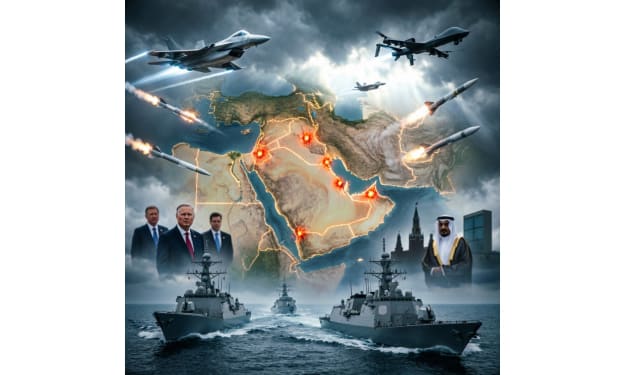
Is the Middle East War Turning Into World War III? The current situation in the Middle East has once again raised a serious question around the world: could this conflict grow into World War III? Tensions in the region have increased due to military strikes, political warnings, and the involvement of several global powers. While no country has officially declared a world war, the combination of regional conflicts and international alliances has made many experts worry about the possibility of a much larger confrontation.
By Wings of Time 8 months ago in Chapters
Why doesn't Iran target US bases in Turkey?
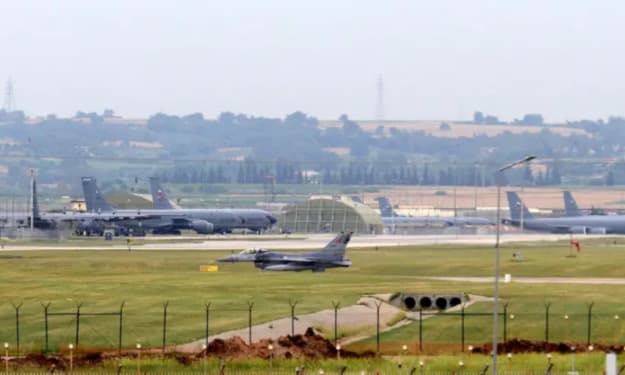
In the war that began on February 28 with attacks by the United States and Israel on Iran and continued with retaliatory strikes from Tehran, the intensity of casualties and destruction has been increasing every day. Iran and militia groups affiliated with Tehran have so far targeted military bases and civilian infrastructure in Kuwait, Saudi Arabia, Oman, Bahrain, Qatar, Jordan, the United Arab Emirates, and Iraq, all of which host American bases. In addition, a British base in Cyprus has also been targeted. In this war, which has spread from Turkey’s border neighbors to the Arabian Peninsula, Turkey is one of the few countries where air-raid sirens have not sounded. Experts say that despite hosting U.S. forces, Turkey has not been targeted because of its membership in the North Atlantic Treaty Organization (NATO). They emphasize that good relations between Ankara and Tehran also reduce the likelihood of any retaliatory action. However, in its recent position, Turkey has criticized the attacks by the United States and Israel as well as Iran’s retaliatory actions. Turkish President Recep Tayyip Erdoğan announced on February 28 that Ankara would increase its diplomatic efforts. Mr. Erdoğan said: “If rationality and wisdom do not prevail and no room is given for diplomacy, our region could be engulfed in widespread flames.” He added: “If Iran attacks Turkey, it will have to face all NATO countries.” Sinan Ülgen, head of the Center for Economics and Foreign Policy Studies (EDAM), says that what distinguishes Turkey from other countries in the region targeted by Iranian attacks is its NATO membership. He added: “Such an attack would fully fall under Article 5 of NATO. Therefore, if Iran were to take such an action, it would effectively face all NATO member states.” According to this fundamental NATO principle, an attack on any member state is considered an attack on all members, activating the alliance’s collective defense mechanism. Sinan Ülgen believes that Iran will not expand the conflict by attacking U.S. bases in Turkey. He said: “Iran is not willing to open a new front in its immediate neighborhood by attacking Turkey. I see no possibility that it would want to provoke a country like Turkey, which has strong military power and impressive deterrence capability. Therefore, I consider the likelihood of a direct Iranian attack on Turkey to be very low.” Mr. Ülgen also emphasized that the Incirlik Air Base in Adana was not used for attacks on Iran. Ural Toğa, a researcher at the Center for Iranian Studies (IRAM), also considers it unlikely that Tehran would include parts of Turkey among its targets in retaliatory strikes. He said: “Unless a group inside Iran decides to act independently, which I also consider unlikely, Iran would not want to complicate the situation at this stage by opening a new front against a NATO member country.” Mr. Toğa noted that Turkey and Iran, which share a 534-kilometer border, are mutually dependent in certain areas. He said: “Iranians, especially after the death of former President Ebrahim Raisi, have continuously sought to expand strategic cooperation with Turkey. I do not think they will reverse this trend or move relations in another direction.” Incirlik and Kürecik Turkey has announced that its airspace and air bases located on its territory that host U.S. forces were not used in U.S. or Israeli attacks against Iran. A statement issued on February 28 by the Center for Combating Disinformation, which is affiliated with the Presidential Communications Directorate, emphasized that Turkey will not allow its airspace or related facilities to be used for operational purposes in any conflict or war in which it is not involved. Another statement issued on March 2 by the same center denied claims of an attack on the Incirlik base, stating: “There are no military bases belonging to any foreign country in Turkey. The air, land, and maritime space of the Republic of Turkey, as well as its military installations, are fully controlled and owned by the country. No attempt has been made to directly attack the country’s port. Portraying Turkey as a party to regional conflicts is a clear attempt to spread misinformation.” The most important U.S.-related military bases in Turkey are the Incirlik Air Base and the Kürecik radar base in Malatya. According to information published on the Incirlik Base website, construction of the military facility began in 1951 by a team called the American Engineering Group. In 1954, an agreement was reached between the General Staff of the Turkish Armed Forces and the U.S. Air Force for the joint use of the base. The use of the base is regulated through the Defense and Economic Cooperation Agreement (DECA), which was signed between the United States and Turkey in 1980. The facility was initially called “Adana Air Base,” but in 1958 its name was changed to “Incirlik,” which is still in use today. Turkey’s Ministry of Defense emphasizes that the base is under the command of the Turkish Armed Forces and owned by the Republic of Turkey. The Kürecik radar base, located in the Akçadağ district of eastern Malatya province, is an early warning center established in 2012 and operates under NATO supervision. The command center of this facility is located at the Diyarbakır Air Base, and its mission is to transmit data related to identifying and intercepting long-range aerial threats to the THAAD missile defense systems in Romania and Poland. In 2011, the then-Iranian President Mahmoud Ahmadinejad criticized the establishment of the base, saying the installation was designed to protect Israel from possible Iranian missile attacks. After the Hamas attack on Israel on October 7, 2023, and the subsequent Israeli military operations, pro-Palestinian activists claimed that both bases were being used to support Israel and held rallies demanding their closure. Large-scale migration is very unlikely
By Real content8 months ago in Chapters
Will Russia and China Support Iran Against the US and Israel?
Britain has allowed the United States to use its airbases in connection with the ongoing attacks against Iran, sparking debate over what kind of support Tehran might receive from its allied countries. Both Russia and China maintain strong diplomatic, trade, and military ties with Iran. However, the current conflict will reveal how far they are willing to go in supporting this ally. Russia’s Rhetorical Support Sergei Gorishko says that although Moscow has made a great deal of noise over the joint U.S. and Israeli attacks on Iran, its response has largely been limited. Russia has expressed anger over the strikes and signaled solidarity with Tehran, but it has refrained from taking any steps that would risk direct involvement in the conflict. Kremlin spokesperson Dmitry Peskov expressed “deep disappointment,” saying that despite talks between Washington and Tehran, the situation had “turned into outright aggression.” He added that Moscow remains in constant contact with the Iranian leadership and Gulf states affected by the tensions. Russia’s Foreign Ministry condemned what it described as “unprovoked aggression” by the United States and Israel against Iran, calling it political assassination and a “hunt” for the leaders of sovereign states. On Sunday, Russian President Vladimir Putin sent a condolence message to his Iranian counterpart following the death of Iran’s Supreme Leader Ayatollah Ali Khamenei, describing it as a “blatant violation of human morality and international law.” Despite this, the Kremlin appears to be avoiding criticism of U.S. President Donald Trump and continues to thank Washington for mediation efforts regarding Ukraine. When asked on Monday how Russia could still trust Washington, Peskov said Russia “relies first and foremost only on itself” and ensures the defense of its own interests. When examining those interests, it becomes clear why Russia’s support for Iran remains largely rhetorical, even though Tehran has become one of Moscow’s closest allies since Russia’s invasion of Ukraine. Iran has been supplying drones to Russia and helping Moscow develop ways to circumvent Western sanctions. Iran also fits neatly into Russia’s vision of a multipolar world order in which state sovereignty outweighs human rights, and governments maintain complete internal control. The fall of such a government would be a setback for Russia’s global outlook. However, the Kremlin has already shown it is unwilling to take major risks for its allies whether in Venezuela, Syria, or during last year’s 12-day war between Iran and Israel. Russia is deeply entangled in the war in Ukraine and appears either unwilling or unable to provide assistance beyond diplomatic statements and limited military-technical cooperation. The strategic partnership agreement signed between Iran and Russia on January 17, 2025, falls just short of a mutual defense pact. Moscow and Tehran pledged information-sharing, joint exercises, and efforts to “ensure regional security.” However, they did not promise to defend each other in the event of an attack. Economic ties between the two countries are also modest, with trade totaling only four to five billion dollars. Nevertheless, military and industrial cooperation between them is increasing. In February, the Financial Times reported that the two countries had reached a major deal under which Russia would supply Iran with air defense systems worth 500 million euros. Russia has already provided Iran with Yak-130 training aircraft and Mi-28 attack helicopters, and Tehran is expected to receive Su-35 fighter jets soon. However, Russia has yet to deliver advanced defensive systems. The use of Iranian-made Shahed drones significantly altered Russian military tactics in Ukraine. But last year, Moscow rapidly expanded domestic drone production, reducing its reliance on Iranian weapons. For Moscow, Iran is too important to allow it to collapse but not important enough to fight for. This situation may change in the future, but for now, Russian intervention is likely to remain largely rhetorical. China: Tehran’s Economic Lifeline China strongly condemned the killing of Ayatollah Ali Khamenei. Historically, Beijing has opposed U.S. strategies of regime change around the world. The strongest pillar of China-Iran relations is their mutually beneficial economic partnership. China is Iran’s largest trading partner and its most important energy customer. Despite years of U.S. sanctions on Iran, Beijing has remained Tehran’s economic lifeline. With the support of its shipping fleet, China purchases large volumes of Iranian crude oil at discounted prices. For example, in 2025 China bought more than 80 percent of Iran’s exported oil. The revenue from these purchases has enabled Iran not only to stabilize its economy but also to fund its defense expenditures. In 2021, China and Iran signed a 25-year strategic agreement that further strengthened their relationship. Under the deal, China pledged billions of dollars in investment in Iranian infrastructure and telecommunications. China’s “Long Game Historically, China’s response to Iran-Israel and Iran-U.S. conflicts has been measured. Whenever disputes involving Iran have arisen—including during last year’s 12-day Israel-Iran war—China has called for “restraint” and blamed “external interference,” a reference to U.S. policy. During previous Iran-Israel confrontations, China has used—or threatened to use—its veto power at the United Nations Security Council to shield Tehran diplomatically and block resolutions against it. However, it has never offered direct military intervention. Beijing’s strategy has long been to keep the United States entangled in the Middle East while ensuring that the region does not descend into total chaos, which could drive up global oil prices. If a pro-Western government were to take power in Tehran, it would represent a major geopolitical setback for China, as Iran not only meets China’s energy needs but also helps counter U.S. influence in the region. Iran is a member of BRICS and the Shanghai Cooperation Organization and serves as a crucial geographic connector linking Central Asia, the Caucasus, and the Middle East. The collapse of the Iranian government could weaken the credibility of these multilateral mechanisms that Moscow and Beijing are trying to strengthen. It is widely believed that unless the United States and Israel launch a full-scale war against Iran and deploy ground troops on Iranian soil, the country’s political and military structures are unlikely to collapse. Beijing will likely continue playing its usual “long game,” cooperating with whoever succeeds Khamenei, regardless of who that may be. Meanwhile, Russia will look for opportunities that serve its own interests.
By Real content8 months ago in Chapters
AI, Nuclear Escalation, and Pakistan’s Critical Role
AI, Nuclear Escalation, and Pakistan’s Critical Role If World War III begins, it is unlikely to start with marching armies or formal declarations. Instead, it may begin silently—inside algorithms, early-warning systems, and automated decision tools powered by artificial intelligence. Nowhere is this risk more serious than in regions where nuclear weapons exist alongside historical rivalries, limited decision time, and high political tension. South Asia, especially Pakistan, sits at the center of this emerging danger.
By Wings of Time 8 months ago in Chapters
Has World War III Started?
Has World War III Started? The question “Has World War III started?” is no longer limited to academic debate or fictional movies. It is now openly discussed in newsrooms, policy circles, and online platforms around the world. While the simple answer remains no, the conditions shaping today’s global environment are deeply alarming. The world is experiencing an unprecedented convergence of regional wars, technological disruption, and power competition that closely resembles the early stages of past global conflicts.
By Wings of Time 8 months ago in Chapters