Resolution
Can the Taliban win a war against Pakistan? Retaliation for Pakistani airstrikes in Paktika, US weapons left in Afghanistan 2026
On February 22, separate airstrikes in Afghanistan’s Paktika and Nangarhar provinces killed and injured multiple people. Military sources in Pakistan claimed that seven hideouts of the TTP (Tehreek-e-Taliban Pakistan) or Pakistani Taliban and other militant groups were targeted across three provinces—Nangarhar, Paktika, and Khost. However, after visiting the affected areas, Al Jazeera’s team confirmed civilian casualties. It is worth noting that Al Jazeera is an impartial news organization. Following the Pakistani airstrikes on Afghan territory, the Taliban government’s Ministry of Defense warned of retaliation, stating that they would respond “at the appropriate time in an appropriate manner.” But what could such a response look like? In a recent interview, Taliban government spokesperson Zabihullah Mujahid said, “It will become clear then; no crime will go unanswered.” After the attacks in Nangarhar and Paktika, Afghan citizens have been seen in local media demanding that the Taliban government take action in “revenge.” The Taliban Government’s Military Strength and Weapons The Taliban government’s military equipment has largely been acquired from three sources: weapons and equipment from the former Afghan army, arms left behind after the withdrawal of U.S. and other foreign forces, and newly obtained weapons from various sources such as the black market. According to experts, videos of past clashes between Afghan Taliban forces and Pakistani troops show that the Taliban primarily used light weapons against Pakistan, with very little evidence of heavy or long-range weaponry. During the 20-year war, reports from the U.S. Special Inspector General for Afghanistan Reconstruction (SIGAR) and the country’s Ministry of Defense indicate that more than 1.6 million light and heavy weapons and pieces of military equipment were supplied to the former government. Approximately 70 percent over one million ultimately fell into Taliban hands. Currently, the Taliban government’s light weapons include Kalashnikovs, American M16s, M4s, and M249 light machine guns. They also possess heavy machine guns such as the M2 and M240, grenade launchers, RPG-7s, AT4 rocket launchers, and anti-tank missiles. According to U.S. Department of Defense (Pentagon) reports, the Taliban also have heavy armored vehicles, aircraft, and other heavy military equipment previously provided to the former Afghan army. Among these are 122mm howitzers known as D-30s. An estimated 100 to 120 of these guns remain in Afghanistan. Additionally, the Taliban possess approximately 155mm howitzers and various Russian weapons, such as the ZU-23(-2). In 2024, during a military parade at Bagram Air Base, the Taliban government displayed heavy weaponry, including Scud missiles R-17 and Elbrus R-300, with a range of about 300 kilometers. They also showcased Luna missiles (also known as “Frog-7”), Grad rocket launchers, Milan anti-tank missiles, Uragan rocket systems, and other weapons capable of striking targets up to approximately 35 kilometers away. These weapons have not been used in Afghanistan for at least three decades. Some were stored in Ministry of Defense warehouses, while others were kept in mountainous areas. Although the Taliban Ministry of Defense claims to have reactivated some of them, their technical condition and actual combat readiness remain unclear. One advantage Pakistan holds is its modern fighter jets and established air force, whereas the Taliban government does not possess comparable air power. Although the Taliban have repaired some helicopters inherited from the former Ministry of Defense and trained pilots, they cannot match the Pakistani Air Force. According to Pentagon reports, aircraft captured by the Taliban include C-280 planes, MD-530 helicopters, Black Hawks, A-29 aircraft, Mi-17 transport helicopters, Mi-24 attack helicopters, and MD-500 light attack helicopters. With these recent developments, the Taliban’s apparent willingness to engage in war with Pakistan seems beyond conventional calculation. Abdul Hadi Himmat, head of the Taliban government’s northeastern military court, speaking at a gathering in Kunduz on Tuesday (February 24), said, “If the Amir permits, we will spend the next night in Peshawar.” He insisted that if war breaks out, they will emerge victorious. A senior Taliban government official, speaking on condition of anonymity, said that while they may lack long-range missiles or air power, “our war with Pakistan is at hand. We have ground routes where air power is not as necessary.” The official emphasized the guerrilla warfare experience Taliban fighters gained against U.S.-led NATO forces and earlier during the war against the Soviet Union. Echoing this sentiment, Syed Irfan Ashraf, a university professor and researcher in Peshawar, said that while Pakistan has a well-organized military and equipment, “there is significant fear of guerrilla warfare from the Taliban side.” He noted that militant groups are already active in Pakistan. If direct fighting begins, these groups could exploit the situation for their own benefit, making it difficult for the Pakistani military—already engaged on multiple fronts—to control the conflict. According to him, “suicide attacks are another factor that strengthens the Taliban and spreads fear.” His assumption is that Pakistan is aware of all these aspects and is not attempting to organize a large-scale direct war. Instead, such strikes are being used to pressure the Taliban government to implement policies aligned with Pakistan’s preferences and to consider Islamabad’s strategic and geopolitical interests. Islamabad openly accuses the Taliban government of sheltering its enemies, such as the TTP, and providing them with safe havens. Ashraf further stated that a structured war requires a strong economy, and Pakistan does not wish to face such a conflict given its fragile economic condition. The Legal Dimension of the Conflict Two days after the strikes, the Taliban government’s Foreign Minister Amir Khan Muttaqi spoke by phone with UN Under-Secretary-General for Political Affairs Rosemary DiCarlo. According to a Foreign Ministry statement, Muttaqi said that Afghan civilians were killed in the recent Pakistani strikes and that “over the past four years, such repeated attacks by Pakistan have only targeted civilians. Moreover, no militants have ever been killed in these attacks, contrary to Pakistan’s claims.” Afghanistan’s Permanent Mission to the United Nations also submitted a “formal complaint” to the Security Council regarding the recent Pakistani airstrikes in Nangarhar and Paktika. Nasir Ahmad Faiq, who represented the former Afghan Republic at the UN and currently serves as Afghanistan’s fourth Permanent Representative to the organization, wrote on his Facebook page on February 23 that “women and children” were among the civilians killed in the recent Pakistani airstrikes. “Today, Afghanistan’s Permanent Mission submitted its official complaint to the UN Security Council,” Faiq stated. He added, “We demand the proper cessation of these violations, investigation, accountability, respect for territorial integrity, adherence to the UN Charter, and full compliance with international law. In a statement issued yesterday, Afghanistan’s Permanent Mission to the UN condemned Pakistan’s strikes as a “clear violation of the UN Charter” and of “recognized principles of international human rights. Analysts say the Taliban government, which lacks broad international diplomatic recognition and is reportedly recognized only by Russia, is unlikely to gain significant support. So far, only India has clearly condemned Pakistan’s attacks on Afghanistan; no other countries have issued formal condemnations. Nasrullah Stanekzai, a former Kabul University professor, stated that the complaint by Afghanistan’s former representative at the UN would be recorded as “moral outrage.” He said, “The Taliban may now realize the importance of membership in international organizations and engagement with them.” Regional players with close ties to Pakistan—such as China, Turkey, Qatar, and Saudi Arabia even though some have accepted Taliban diplomats, have remained largely silent. However, Turkey, Qatar, and Saudi Arabia have reportedly attempted mediation efforts.
By Real content8 months ago in Chapters
US-Iran Crisis: Trump Sets 10-Day Deadline as Geneva Nuclear Talks Resume
Iran has once again made it clear that any type of American attack would be considered “aggression” and would be met with a response. Iran’s Foreign Ministry spokesperson, Esmail Baghaei, said in a press conference that “aggression has no limits. Any kind of attack, even if limited, is an example of aggression and will have its own consequences.” Accusing the United States of making “contradictory claims,” the Iranian Foreign Ministry spokesperson said that Iran has no interest in prolonging negotiations. He added, “Whether it was the negotiations before June last year or the rounds of talks taking place in the current period, we have repeatedly announced that for meaningful progress we are ready to continue uninterrupted negotiations for days and weeks. Holding talks at intervals of ten or fourteen days is not our preferred method, and we have no interest in dragging out the negotiations.” It is worth recalling that three days ago U.S. President Donald Trump said that if a nuclear deal is not reached, he may consider a “limited” military strike on Iran. In an earlier statement last week, Trump also said that it would become clear within the next ten days what would happen with Iran, and that if no agreement is reached within that timeframe, the possible consequences would be very severe. Two rounds of indirect talks between the United States and Iran have taken place under Omani mediation. On Monday (February 22), Oman’s foreign minister confirmed that the third round of talks between the U.S. and Iran will be held in Geneva on Thursday. Oman, which is acting as a mediator between the two sides, said the talks were arranged as “an additional effort to finalize an agreement with positive progress.” It should be noted that after the second round of talks between the U.S. and Iran held in Geneva on February 17, both Washington and Tehran expressed concerns along with some encouraging statements. Following the February 17 meeting, U.S. Vice President J.D. Vance said that diplomatic talks between the U.S. and Iran had been good “in some respects” and that the parties had agreed to hold another meeting. Meanwhile, Iranian Foreign Minister Abbas Araghchi said that “an understanding on fundamental principles” had been reached with the United States. Vice President Vance also said that Iran is still not ready to accept “certain red lines” set by President Trump. He indicated that the U.S. would continue on the diplomatic path, but that President Trump would decide “when to abandon diplomacy.” He further said that Washington does not expect matters to reach that point, but if they do, the decision would be President Trump’s. On the other hand, Iranian Foreign Minister Abbas Araghchi described the second round of talks as more positive than the first and said that “both sides will prepare two draft documents of a possible agreement and exchange them. But this does not mean we will soon reach an agreement; however, we have certainly set out on the path toward one.” Prepared to defend the country On Tuesday, Iran’s Commander-in-Chief of the Army, Major General Amir Hatami, said that amid current tensions with the United States, “millions of soldiers are ready to sacrifice their lives in defense of the country.” According to the Tasnim News Agency, Major General Hatami said at a graduation ceremony for military officers that although the “enemy” believes it has superiority over the Islamic Republic of Iran, “great Iran cannot be swallowed.” He stressed that “resistance” is the most effective weapon against opponents. He also praised Supreme Leader Ayatollah Ali Khamenei’s February 17 warning that U.S. aircraft carriers “can be sent to the bottom of the sea.” He added that the Iranian people will remain steadfast and defeat this “dangerous plan,” which he described as American bullying. He argued that the U.S. is not invincible, as demonstrated in decades-long wars in Vietnam, Afghanistan, and Iraq. What is Oman’s role in mediating between Washington and Tehran? Following regional diplomatic efforts, Oman is trying to help both sides reach an agreement. Oman’s Foreign Ministry has emphasized the importance of returning to the negotiating table and resolving differences peacefully to help establish peace and security in the region and the world. It is worth recalling that under Omani mediation, Tehran and Washington began indirect talks in Muscat on February 6. Last year, talks between the two sides were halted when Israel launched a war against Iran in June. After that major impasse, this dialogue marks the first progress. Oman’s Foreign Minister Badr Hamad Al Busaidi has stressed in several official meetings the need to expand opportunities for compromise and coordination so that an agreement can be reached in line with the expectations of all parties. Military preparations and exercises Alongside negotiations, both Washington and Tehran appear to be taking steps to increase pressure on each other. U.S. officials have said that the American military is preparing for the possibility of operations against Iran that could last several weeks if President Donald Trump orders strikes following a failure of negotiations. Meanwhile, Iran said that on Tuesday its Revolutionary Guards had conducted military exercises in the Strait of Hormuz in recent days and temporarily closed parts of the strait for several hours as part of those drills. The Strait of Hormuz is a key international waterway and the main route for oil exports from Gulf Arab countries. On Monday, Iran began military exercises in the strait, which continued into Tuesday. In light of the situation, Gulf countries have called for a diplomatic solution to end the dispute. It should be noted that in January the United States deployed the aircraft carrier USS Abraham Lincoln along with other warships to the Gulf, and afterward the Gerald R. Ford was also deployed to the Middle East. On Monday, Mohammad Akbarzadeh, commander of the Revolutionary Guards Navy, said that all foreign warships in the region are “under full intelligence surveillance and within range of our defensive capabilities.” According to him, Akbarzadeh stressed that “the armed forces are fully prepared and monitoring enemy movements. No kind of threat will be ignored.” Do you like this personality?
By Real content8 months ago in Chapters
Pakistan Bombs Afghanistan: Nangarhar and Paktika Airstrikes Kill Civilians, Taliban Condemns Attack
Provincial officials in eastern Afghanistan’s Nangarhar province told the BBC that a house belonging to a man named Shahabuddin was targeted in the Gardai Kach area of Behsud district, killing and injuring around 20 people, including women and children. A member of the family said, “Everything is finished. My children are gone, my brother and my husband are gone, and my unmarried daughters have died.” Eyewitnesses said the house was targeted in a late evening airstrike. In addition to Behsud, strikes were also reported in the Khogyani and Ghani Khel districts of Nangarhar province. What happened in Paktika?
By Real content8 months ago in Chapters
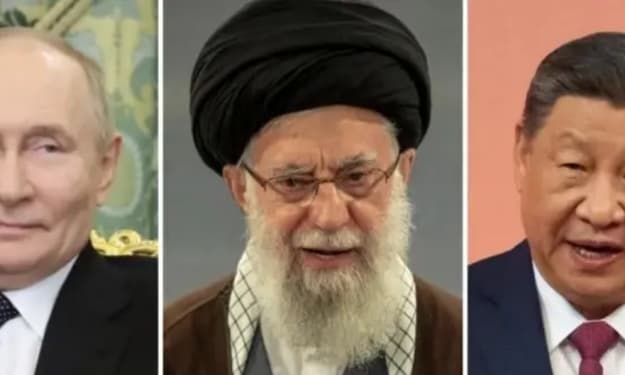
Iran-US War Scenario: Can Tehran Rely on China and Russia for Military Support?
With every new wave of tension between Tehran and Washington, the same question resurfaces: if the conflict escalates into war, what would China and Russia do? Can Iran truly rely on the support of these two powers, or are the relationships largely temporary and strategic rather than a firm alliance? The core issue lies in the nature of Iran’s relationships. Media narratives often use terms like “axis” or “bloc,” but in reality, Iran has no formal military alliance with either Russia or China. In international relations, an alliance means that if one country is attacked, the other is obligated to come to its defense. No such commitment exists between Iran and these two countries. However, “strategic partnerships” in certain areas have led some observers to speak of a new level of relations among Iran, China, and Russia. In the most recent example, the Iran–Russia strategic partnership agreement signed in January 2024 emphasized defense and security cooperation, yet it did not include any commitment to direct military intervention if one party were attacked. The agreement contains clauses preventing the use of either country’s territory against the other, but this differs significantly from a comprehensive defense pact. Yes, there is a “strategic partnership” in certain sectors, including defense and security cooperation, but it does not guarantee direct military assistance. International relations expert Hamidreza Azizi noted in an interview that alliances represent the highest level of relations between states, and in Iran’s case, no such alliance exists with China or Russia. He believes that even if war breaks out, the likelihood of direct military intervention by Russia or China is low, and their activities would mainly remain at the diplomatic level. Although some Western security reports and analyses portray Iran as part of an anti-Western alliance with Russia and China—or as an equal threat alongside them—many international relations analysts argue that Tehran’s alignment with Moscow and Beijing is more about “alignment of interests in the face of U.S. pressure” than a full security partnership. In other words, their shared opposition to Washington’s policies does not guarantee that Russia and China would be ready to directly confront the United States in defense of Iran. Why Direct Intervention Would Be Costly Another important dimension of this scenario is geopolitics. Both China and Russia have diverse and complex relationships in the Middle East. Beijing is a major economic partner of Saudi Arabia, the United Arab Emirates, and even Israel. Moscow, while aligned with Tehran, also maintains ties with Tel Aviv and several Arab countries. Entering a direct war alongside Iran could jeopardize these relationships. Russia is already entangled in the war in Ukraine, and its military and political resources are limited. China, strategically, is focused on its competition with Washington, particularly in East Asia and over Taiwan. Opening a new and risky front in the Middle East even indirectly does not align with their priorities. However, Professor Yulia Roknifard of Taylor’s University in Malaysia offers another perspective. She closely follows Iran–Russia relations. According to her, Russia and China may see recent developments as an opportunity to demonstrate support for a key partner. Iran is not only a member of BRICS but also of the Shanghai Cooperation Organization. Moscow and Beijing cannot afford to let the credibility of these cooperative frameworks be undermined or called into question through what they view as illegitimate processes. Nevertheless, most Russian observers emphasize that Moscow seeks to maintain the balance of power in the region, not to jump into a war that would create further instability. From China’s perspective as well, avoiding direct intervention and pursuing a political solution remains the priority. A similar approach was observed in the Ukraine war, where China provided Russia with behind-the-scenes political and economic support without directly entering the conflict or openly bearing the costs of overt backing. The Experience of the 12-Day War To better understand China and Russia’s role, one can look at the example of the 12-day war between Iran and Israel. During this brief conflict, neither Moscow nor Beijing offered Iran assistance beyond cautious rhetoric and political support. There was no military cooperation and no open political backing. Iran also made clear that it had not requested assistance from either country. After the war, in November 2025, a spokesperson for the Islamic Revolutionary Guard Corps stated that “we have no defense treaty with these two countries, and there was no need to request help.” According to Hamidreza Azizi, although there has been no fundamental shift in China and Russia’s broader strategy toward Iran, certain aspects have been reassessed. He argues that concerns about a potential U.S. attack disrupting the regional balance of power have compelled China and Russia to reconsider some of their policies. These reassessments have occasionally led to new developments, such as China supplying missile fuel to Iran or Russia and China providing Tehran with direct intelligence regarding U.S. military movements. Azizi believes that if tensions escalate, the more likely pattern will be continued limited informational, diplomatic, or technical support without direct involvement in the war. Professor Roknifard, however, suggests that Russia and China do not necessarily need to make their support public, much as Iran maintained ambiguity about the assistance it provided to Russia during the early stages of the Ukraine war. Fear of Regime Change Some analysts also argue that a regime-change scenario in Iran could alter Moscow and Beijing’s calculations. Iran is a member of BRICS and the Shanghai Cooperation Organization and serves as a crucial geopolitical link between Central Asia and the Middle East. From this perspective, a complete collapse or overthrow of Tehran’s political system could be seen by Moscow and Beijing as a blow to the credibility of the multilateral mechanisms they aim to strengthen. Meanwhile, concerns about a government in Iran more aligned with Western governance models represent another factor that could influence Chinese and Russian policy calculations. Roknifard noted that the prospect of Iran’s fragmentation or the rise of a new government could be perceived by Moscow and Beijing as a threat to their interests, given the possibility that such a scenario could transform Iran into a platform for pressure against Russia. However, many observers believe that even in this scenario, their response would not necessarily be military. Economic, intelligence, and arms cooperation might increase, but direct entry into war would still appear to be a costly option. The Economy what Iran Needs Most An essential part of the equation is economic. Relative economic stability could help the government in Tehran endure. China plays a significant role in this sphere, though recent experience suggests Beijing has been highly cautious in practice. Recent reports indicate that Beijing has significantly reduced its purchases of Iranian oil in recent months. According to tanker-tracking company data, China’s oil imports from Iran—which at times reached 1.4 million barrels per day last year—have recently fallen to around 800,000 to 900,000 barrels per day, a decline of roughly 30 to 40 percent. Some estimates suggest that at certain points last month, the figure dropped below 750,000 barrels per day. This decline followed increased pressure from U.S. sanctions and tighter insurance and shipping conditions for tankers. If tensions rise further, Iran’s ability to maintain foreign currency earnings could be directly affected. Since the autumn of 2025, the volume of Iranian crude accumulating in tankers and floating storage has reached record highs, signaling unusual pressure at the final stage of Iran’s oil export chain. Recent remarks by President Masoud Pezeshkian that certain Chinese financial projects have not been implemented serve as a reminder that even at the peak of pressure on Tehran, Beijing is unwilling to risk U.S. secondary sanctions. This has led some in Iran to speak of China’s “unfulfilled promises.” Russia, too, has demonstrated in recent years that its cooperation with Iran is largely driven by mutual and temporary interests. From the Bushehr power plant case to delays in supplying defense systems, political considerations have often played a role. Political and Diplomatic Backing—but Not Military Intervention
By Real content8 months ago in Chapters
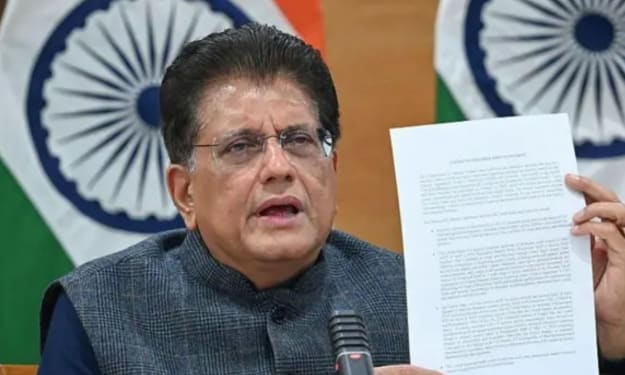
India vs Vietnam: Will 2026 Free Trade Agreements Transform India’s Export Economy?
From a commercial perspective, the year 2026 is likely to be considered historic for India. March has not even begun yet, and New Delhi has already concluded what is being called the “mother of all trade deals” with the European Union. At the same time, it has signed an agreement with the United States that is now being described as the “father of all trade deals.” Although many experts argue that the United States will benefit more from this agreement, there are serious concerns about the imbalanced nature of this interim deal. Even so, this is India’s tenth free trade agreement (FTA) since 2014. In the past, India’s cautious approach meant that negotiations with several countries remained stalled for decades. Immediately after these new agreements, India also agreed to begin negotiations with the six-member Gulf Cooperation Council (GCC), which accounts for 15 percent of India’s total global trade. Experts say that while this progress is positive, it does not offer a magic solution for rapidly increasing exports, nor can it replace deep structural trade reforms. Sumedha Dasgupta of the Economist Intelligence Unit said that the success of any FTA depends on how effectively it is utilized. Historically, India has shown a utilization rate of only 25 percent, compared to 70 to 80 percent in developed economies. This is because many Indian exporters, particularly small companies, fail to take advantage of tariff reductions due to the burden of paperwork, audit risks, and a lack of understanding of FTA provisions. History shows that this situation has long persisted. According to consultancy firm EY, between 2017 and 2022, India’s exports to countries with which it signed FTAs increased by 31 percent, while imports from those countries rose by 82 percent. EY described this large gap between exports and imports as a “concerning failure” to benefit from preferential market access. However, the government reviewed the situation, and after 2023, agreements signed with countries such as Australia and the United Arab Emirates showed an increase in exports. EY attributed this to steps such as improving the trade framework and establishing mechanisms for quicker dispute resolution. Experts say much still needs to be done. Kiran Kotla, CEO of export documentation assistance company Dista, said: “A free trade agreement creates opportunities on paper, but difficulties arise when it comes to implementation.” According to Kotla, major issues include proving that goods were produced domestically, high documentation costs, non-tariff barriers such as testing and labeling requirements, and frequent changes in customs authorities’ interpretation of rules. He added: “Many exporters are technically eligible to pay lower duties but still pay full duties because the process of proving eligibility for reduced tariffs is slow, risky, or expensive. Rules of origin are particularly controversial. Under these rules, exporters must prove that goods were genuinely manufactured or produced in India and not merely assembled there. Previously, these verification certificates were issued by the Indian government. However, according to New Delhi’s think tank Global Trade and Research Initiative (GTRI), under the new agreement with the European Union, exporters will now have to self-certify. According to Ajay Srivastava of GTRI, this means exporters will now bear the legal and financial risks themselves in case of mistakes. Since incorrect claims can result in penalties, the India-European Union FTA will only deliver benefits if rules of origin are properly understood and implemented. Beyond these complex reforms, there are also fundamental concerns that must be addressed if India is to compete with Asian rivals such as Vietnam in US and European markets. Kotla said: “Competition is not won through agreements, but through execution. Vietnam’s advantage comes not from tariff concessions but from speed, predictability of systems, and supply chain integration.” This means goods must move quickly, clear customs efficiently, infrastructure must be reliable, and transaction costs must remain low. “Without these, tariff parity alone will not increase market share. Priyanka Kishore, founder of the Singapore-based think tank Asia Decoded, said that Vietnam, and even Bangladesh, built export-led manufacturing models focused on designing export-promotion policies and attracting large-scale foreign investment. In contrast, “India’s industrial strategy is fragmented. It lacks urgency and hesitates to expose domestic companies to foreign competition. That needs to change quickly.” The success of Vietnam’s strategy is evident. According to World Bank data, Vietnam’s exports in 2010 were roughly one-third the size of India’s exports, and have now reached nearly the same level as India’s—despite Vietnam’s GDP being only about one-tenth the size of India’s. Asia Decoded notes that over the past decade, nearly all major Asian exporters—including Malaysia, Bangladesh, and Indonesia—have outperformed India in export growth rates. Although India has worked hard to carve out a space in high-tech manufacturing—for example, producing iPhones for Apple—it still lags in more labor-intensive sectors such as textiles, footwear, furniture, and other low value-added products. Priyanka Kishore said: “Even if Nike were to face higher tariffs in Vietnam, it would not automatically see India as the best alternative. India’s high logistics costs, import duties, and complex customs regulations remain burdensome.” Experts say that now that free trade agreements have been concluded, New Delhi must focus on removing these barriers. These are the steps that will help India attract more investment, create jobs, and achieve its annual export target of one trillion dollars.
By Real content8 months ago in Chapters