History
After Khamenei: How the Middle East Crisis Could Redraw Global Politics
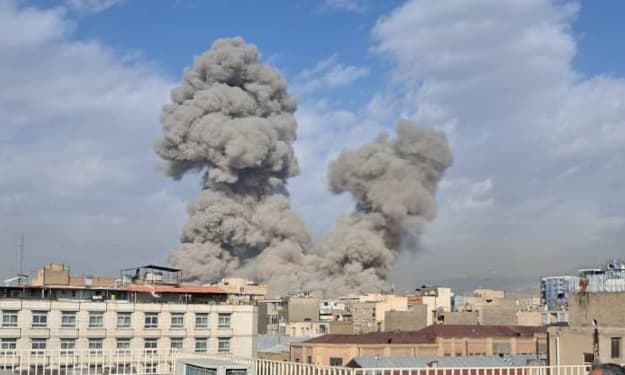
After Khamenei: How the Middle East Crisis Could Redraw Global Politics The confirmed death of Ayatollah Ali Khamenei after joint strikes by the United States and Israel has sharply intensified the ongoing conflict in the Middle East—turning what was a dangerous regional crisis into a moment with global implications. Khamenei, who led Iran for nearly four decades and wielded extraordinary political and military influence, was killed when missiles and airstrikes hit Tehran in the opening phase of a major military operation targeting Iranian leadership and strategic infrastructure. The impact of his death is already reverberating across the region and the world in ways that may last for years.
By Wings of Time 8 months ago in Chapters
The First Hours of World War III
The First Hours of World War III World War III will not begin with a formal declaration, a single invasion, or a dramatic announcement on television. If it comes, it will begin quietly—through alerts, miscalculations, automated systems, and decisions made under extreme pressure. The early hours of a global war will feel confusing, fragmented, and unreal, long before the world understands what has happened.
By Wings of Time 8 months ago in Chapters
How World War III Could Begin in Our Time
The First Sparks: How World War III Could Begin in Our Time World War III may not start with a single declaration or one massive attack. Instead, it could begin quietly, through a series of connected crises, misunderstandings, and power struggles already happening today. The world is more connected than ever, but that connection also makes global conflict easier to spread.
By Wings of Time 8 months ago in Chapters
Is This War Turning Into World War III?
Is This War Turning Into World War III? The question many people around the world are quietly asking today is unsettling but unavoidable: Is the current war climate pushing humanity toward World War III? What once appeared to be localized conflicts in the Middle East are now entangled with global rivalries, advanced technologies, and fragile alliances. History shows that world wars rarely begin with a single dramatic declaration. Instead, they grow out of overlapping crises, miscalculations, and escalating power struggles—many of which are visible today.
By Wings of Time 8 months ago in Chapters
What impact could the death of Iran's Supreme Leader have on the Muslim world?
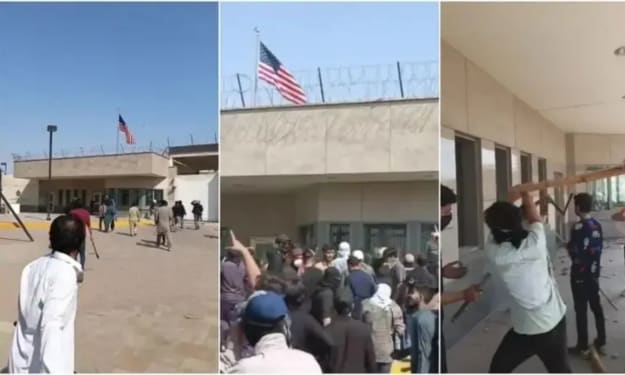
Following the killing of Iran’s Supreme Leader Ayatollah Ali Khamenei in US and Israeli attacks, Iranian President Masoud Pezeshkian said in a message that “this great crime will be answered” and that “with all our strength and determination, and with the support of the Muslim Ummah and the free people of the world, we will make those responsible for this great crime regret their actions.” Pezeshkian said that Khamenei had led “the front of Islam with wisdom and insight” for 37 years and that after his martyrdom Iran would go through a difficult period. The 86-year-old Khamenei was Iran’s Supreme Leader, but he also had a large number of followers among the Shia community in Pakistan and many other countries. In Iraq, Pakistan, Syria and other Muslim countries, Shia Muslims are often seen carrying Khamenei’s pictures during rallies. On Sunday in Pakistan, firing broke out outside the US Consulate in Karachi when protesters breached the outer security perimeter, entered the premises and carried out vandalism, resulting in nine deaths. In addition, during violent protests in Gilgit-Baltistan, United Nations offices and other properties were set on fire. This raises the question: what impact will Khamenei’s death in US and Israeli attacks have on the world?
By Real content8 months ago in Chapters
Karachi Violence During Anti-US Protests: 9 Killed as Pakistan Reacts to Iran Conflict Escalation
Protests are continuing in various cities across Pakistan, including Karachi and Islamabad, against the attacks by the United States and Israel on Iran and the killing of Supreme Leader Ayatollah Ali Khamenei. On Sunday, at least nine people were killed and several others injured in firing during a protest outside the US Consulate in Karachi. Angry protesters also set fire to United Nations offices in Gilgit and Skardu. Demonstrations were also held in Islamabad, Lahore, Peshawar, Pakistan-administered Kashmir, and other cities. Videos circulating on social media show some individuals breaking through the gate and entering the US Consulate in Karachi, after which they smashed the glass at the reception area and security rooms. The DIG of Karachi Police’s East Zone said that some agitated individuals managed to enter the consulate, but police arrived at the scene and brought the situation under control. A senior doctor at Civil Hospital Karachi said that nine bodies and at least 32 injured people were brought to the hospital following violent clashes with police. An official from the private rescue service Edhi Foundation also confirmed that they transported nine bodies and dozens of injured individuals to the hospital. Protesters Demand Removal of US Flag from Consulate Building
By Real content8 months ago in Chapters
Who Will Be Iran’s Next Supreme Leader?
On Friday, Iran’s Supreme Leader Ayatollah Seyyed Ali Khamenei, who was killed in a U.S. and Israeli attack on Tehran, was the most powerful figure in the country. Under Iran’s Constitution, the position of Supreme Leader was created after the 1979 Islamic Revolution under the leadership of Ayatollah Khomeini. He became the country’s first Supreme Leader on December 3, 1979. Ayatollah Khomeini held the position for nine and a half years. After his death in 1989, Ayatollah Ali Khamenei was chosen as the country’s second Supreme Leader, serving for 36 and a half years until his death on February 28, 2026. Who holds control until a new Supreme Leader is selected? According to Article 111 of Iran’s Constitution, from the death of the Supreme Leader until a new leader is introduced by the Assembly of Leadership (Assembly of Experts), a three-member council temporarily assumes leadership duties. This council consists of the country’s president, the head of the judiciary, and one jurist from the Guardian Council selected by the Expediency Discernment Council. However, this three-member council does not have full authority. In the following matters, its decisions can only be implemented with the approval of three-quarters of the members of the Expediency Discernment Council: Determining the general policies of the system Issuing a referendum decree Declaring war or peace Impeaching the president Dismissing or appointing the Chief of the Joint Staff, the Commander-in-Chief of the Islamic Revolutionary Guard Corps, or senior military and law enforcement commanders If the Supreme Leader is temporarily unable to perform his duties due to illness or an accident, the same council assumes responsibilities in the same capacity. The Assembly of Experts and the selection of the Supreme Leader Iran is currently the most powerful country in the world with a majority Shia population, and under the Constitution, the Supreme Leader can only be an Ayatollah, a religious authority within Shia Islam. However, when Ali Khamenei was selected, he was not an Ayatollah. The law was amended to enable him to assume the position. In Iran, an 88-member body of clerics known as the Assembly of Experts elects the Supreme Leader. Every eight years, millions of Iranians vote to elect members of this body. The last time this occurred was in 2016. However, any candidate for the Assembly of Experts must first be approved by the Guardian Council, whose members are directly or indirectly selected by the current Supreme Leader. It is evident that the Supreme Leader exerts influence over both the Guardian Council and the Assembly of Experts. Over the past three decades, Ayatollah Ali Khamenei ensured a conservative majority within these bodies. Currently, the chairman of the Assembly is Mohammad Ali Movahedi Kermani, while Hashem Hosseini Bushehri and Alireza Arafi serve as deputy chairmen. According to regulations, a meeting of the Assembly of Experts is valid if at least two-thirds of its members (59 individuals) are present. The selection of a new leader requires a two-thirds majority vote of those present. This means that if only 59 members attend, 40 votes would be sufficient to elect a new leader. The commission reviewing potential candidates A commission within the Assembly of Experts is tasked with assessing the qualifications of individuals who may be considered eligible for the position of Supreme Leader. Key members of this commission include Ahmad Hosseini Khorasani, a jurist member of the Guardian Council; Guardian Council members Alireza Arafi and Mohammad Reza Modarresi Yazdi; First Vice Chairman of the Assembly of Experts Hashem Hosseini Bushehri; former representative of Ayatollah Khamenei in Europe Mohsen Mohammadi Araki; Friday prayer leader in Isfahan Abolhassan Mahdavi; and Hassan Amoli, three-time member of the Assembly of Experts and Friday prayer leader in Ardabil. How long does the selection take? There is no fixed timeframe for selecting a new Supreme Leader. Since the three-member interim council has already been formed, at least on paper there will be no power vacuum. However, experience following the death of Islamic Republic founder Ayatollah Ruhollah Khomeini shows that members of the Assembly of Experts acted swiftly in choosing a successor under similar circumstances. Ayatollah Khomeini passed away after 10 p.m. on June 4, 1989, and the Assembly of Experts convened the following morning, making a decision on succession within a few hours. The importance of the position of Supreme Leader According to Article 57 of Iran’s Constitution, “The government of the Islamic Republic of Iran consists of three branches: the legislature, the judiciary, and the executive. These three branches function under the supervision of the absolute guardianship of the jurist and the leadership of the Ummah, in accordance with the provisions of the Constitution.” Although there is political diversity in Iran, from the first day the position of Supreme Leader has been the focal point of public and political movements due to perceived threats to national security and the Islamic Revolution. While the Constitution allows for oversight of the Leader and even disagreement, the Leader is regarded as a symbol of the Islamic Revolution, and opposition to him is often seen as opposition to the revolution itself. Under Article 91 of the Constitution, the Supreme Leader appoints six of the twelve members of the Guardian Council, and under Article 157, he appoints the Chief Justice. Article 110 grants him authority to determine Iran’s general policies in consultation with the Expediency Discernment Council and to oversee the entire system of government. He also has the authority to call referendums, appoint the heads of all armed forces including the Islamic Revolutionary Guard Corps, and is the sole authority empowered to declare war. After presidential elections, the decree appointing the winning candidate is issued by the Supreme Leader. He also has the authority to dismiss the president, but only if the Chief Justice finds the president guilty of a crime or if parliament declares the president incompetent under Article 89. If disputes arise between different branches of government, they are referred to the Leader. However, interpretation of the Constitution is referred to the Guardian Council. The Leader also appoints the head of Iran’s state broadcasting organization and has the power to pardon those convicted by the judiciary. Additionally, the Leader may delegate his powers to others. According to Article 60 of the Constitution, the president exercises executive authority with the assistance of ministers, except for those powers specifically reserved for the Leader. In practice, however, the Leader has delegated certain supreme command authorities over the armed forces to the president. The Supreme Leader and Iran’s armed forces Iran’s armed forces include the Islamic Revolutionary Guard Corps, along with its ground, naval, and air forces, as well as the Quds Force, a strategic unit. In addition, Iran’s conventional armed forces, known as the Artesh (Islamic Republic of Iran Army), are also part of the country’s military power. The Supreme Leader serves as the commander-in-chief of all these forces and appoints their leaders. It is said that Iran has more than ten million volunteers known as the Basij. Its formation was announced by Ayatollah Khomeini with the aim of “safeguarding the Islamic Revolution.” It is also known as the Resistance Basij Force, but its official name is the Organization for the Mobilization of the Oppressed. Initially, it was an independent body, but later it was incorporated into the Revolutionary Guards. Its head is also appointed by the Leader. The Basij has an administrative staff paid as state employees, while its ordinary volunteers serve without pay. Who could succeed Ayatollah Ali Khamenei? Following Ali Khamenei’s death, the most important question is who will be appointed as his successor. Like his predecessor Imam Khomeini, Ali Khamenei was unable to build a broad coalition beyond his supporters, but he maintained the backing of key commanders of the Revolutionary Guards. Therefore, it is likely that the leadership of the Revolutionary Guards could influence the selection of the country’s next Supreme Leader. During Khamenei’s lifetime, some believed that two individuals were particularly favored: his son Mojtaba Khamenei and the head of the judiciary, Ebrahim Raisi. However, Ebrahim Raisi was killed in a helicopter crash in 2024.
By Real content8 months ago in Chapters
Who was Ayatollah Seyyed Ali Khamenei and how powerful is his family?
Iran’s official news agency Tasnim has confirmed that the country’s Supreme Leader, Ayatollah Seyyed Ali Khamenei, has been killed in US and Israeli attacks. Earlier, Donald Trump had claimed that Ali Khamenei had been killed on the very first day of the joint US-Israeli strikes. Ali Khamenei was the second person to become Iran’s Supreme Leader after the 1979 Islamic Revolution. He assumed the position in 1989 following the death of Ayatollah Khomeini, and many young Iranians have only ever known him in that role. He was known for holding a central position in Iran’s power structure. As Supreme Leader, Khamenei had veto power over any government matter. He also had the authority to approve or disqualify candidates for public office. As head of state and commander-in-chief of the armed forces, he was regarded as the most powerful person in Iran. While Iranian presidents often made headlines abroad, in reality the reins of power within Iran remained in Khamenei’s hands. Khamenei: Iran’s “Most Powerful Man” Ayatollah Khamenei was born in 1939 in Mashhad, Iran’s second-largest city, into a religious family. He was the second of his siblings, and his father was a Shiite cleric. He received religious education in childhood and was qualified as a cleric by the age of 11. Like many clerics of his time, his work was both religious and political in nature. As an influential preacher, he became a critic of the Shah of Iran. Ultimately, the Shah was overthrown in the 1979 Islamic Revolution. Khamenei spent several years in hiding and also served time in prison. The Shah’s secret police arrested him six times, and he was subjected to torture. A year after the 1979 revolution, Ayatollah Ruhollah Khomeini appointed him as Tehran’s Friday prayer leader. In 1981, Khamenei was elected President of Iran, and in 1989, following Khomeini’s death, religious leaders appointed him as his successor. Khamenei rarely traveled outside Iran and lived a simple life with his wife in a compound in central Tehran. It is said that he enjoyed gardening and poetry. He was also known to have smoked cigarettes in his youth, which was unusual for a religious leader in Iran. Since an assassination attempt against him in the 1980s, Khamenei had been unable to use his right arm. Khamenei and his wife, Mansoureh Khojasteh Bagherzadeh, have six children four sons and two daughters. In the US attack, one of his daughters and his son-in-law were also killed. The Khamenei family rarely appeared in public or the media. Official and verified information about his children’s private lives is very limited. Among his children, his second son Mojtaba is the most well-known due to his influence and role within Khamenei’s inner circle. How powerful is Khamenei’s son Mojtaba? Mojtaba studied at Alavi High School in Tehran, a school traditionally attended by the children of Iran’s senior officials. He married the daughter of conservative figure Gholam Ali Haddad-Adel before becoming a cleric and while he was considering beginning religious studies. Mojtaba formally began religious education at a seminary in Qom at the age of 30. By the mid-2000s, Mojtaba’s influence within Iran’s political circles had grown considerably, though it was rarely discussed in the media. In 2004, Mojtaba first made headlines when presidential candidate Mehdi Karroubi accused him, in an open letter to Ayatollah Khamenei, of working behind the scenes to support Ahmadinejad. One of the most influential figures Since the 2010s, he has been regarded as one of Iran’s most influential personalities. It is believed that Khamenei saw him as a suitable candidate for succession, although some official sources deny this. An Ayatollah is not a king who can pass his throne to his son; however, Mojtaba wields significant influence within Khamenei’s inner circles, including the Supreme Leader’s office. It should be noted that the Supreme Leader’s office is in many respects more powerful than constitutional institutions. Khamenei’s eldest son is Mostafa Khamenei. His wife is the daughter of conservative religious leader Azizollah Khoshvaght. Mostafa and Mojtaba served on the front lines during the Iran-Iraq War in the 1980s. Ali Khamenei’s third son, Masoud, was born in 1972. He is married to the daughter of Seyyed Mohsen Kharazi, a cleric associated with the Qom Seminary Teachers Association. Masoud keeps away from political circles, and information about him is very limited. He previously headed the office that serves as an important propaganda center for Ayatollah Khamenei. This office is also responsible for preserving his father’s works. Masoud oversees the compilation of Khamenei’s biography and memoirs. Khamenei’s youngest son, Meysam, was born in 1977 and, like his three brothers, is also a cleric. His wife is the daughter of influential businessman Mahmoud Loulachian, who is said to have financially supported revolutionary religious leaders before the 1979 revolution. Meysam has worked alongside his older brother Masoud in the office responsible for preserving their father’s works. Who are Khamenei’s daughters? Very limited information is available about Khamenei’s daughters, Boshra and Hoda. They are the youngest among the siblings and were born after the 1979 Islamic Revolution. Boshra, born in 1980, is married to Mohammad Javad Golpayegani, the son of Gholam Hossein Mohammadi Golpayegani, who is the chief of staff in Khamenei’s office. Khamenei’s youngest child, Hoda, was born in 1981. She is married to Mesbaholhoda Bagheri Kani, who teaches at Imam Sadiq University.
By Real content8 months ago in Chapters
Tehran is doing what it promised: What does Iran want to achieve with missile attacks on Middle Eastern countries?
Iran’s Supreme Leader Ayatollah Ali Khamenei and several other Iranian officials had been warning for weeks before the American and Israeli attacks that in the event of any strike, not only Tehran but the entire region would be engulfed in a new war. On the occasion of the 47th anniversary of the Islamic Revolution in Iran, Khamenei clearly stated, “If the United States starts a war this time, it will spread across the entire region.” In response to Israeli and American attacks, Iran’s retaliation suggests that Tehran is putting those threats into action. On Saturday, following U.S. and Israeli strikes on Iran, Tehran launched missile attacks on targets in Saudi Arabia, Kuwait, Bahrain, Qatar, and the United Arab Emirates. The presence of U.S. military bases and American personnel in these countries is no secret. In August 2024, the U.S. Department of Defense stated that approximately 40,000 American troops are stationed in the Middle East. Al Udeid Air Base in Qatar is used by the United States, while American personnel are also deployed at “Tower 22” in Jordan. In addition to Qatar, U.S. forces are present in Bahrain, Kuwait, Saudi Arabia, the United Arab Emirates, Syria, Jordan, Egypt, Cyprus, and Iraq. The United States has multiple military bases in Kuwait and two in Saudi Arabia. Several Gulf countries affected by Iranian missile strikes have condemned the attacks and said they reserve the right to respond. In this context, the question arises: why is Iran targeting locations in Middle Eastern countries, and what impact will Tehran’s strategy have on the region? Iran is doing exactly what it had promised Omar Karim, a PhD researcher affiliated with the University of Birmingham, believes that for now, Middle Eastern countries will limit themselves to condemning the Iranian attacks. He said, “If such attacks remain limited to American targets and do not cause significant damage to these Gulf countries’ own infrastructure—especially oil facilities—then regional states will mostly restrict themselves to rhetorical condemnation.” Discussing Iran’s actions and their possible consequences, he added, “In the immediate term, we should expect a rise in oil prices, and we may also see some attacks in Iraq by Shiite armed groups against American and Israeli targets.” For other analysts, Iran’s response is not surprising at all. The U.S. think tank Stimson Center recently cited statements by Iranian officials, saying that “Iran is doing exactly what it had promised in the event of a possible American or Israeli attack.” They say that missile strikes on targets in Gulf countries will certainly affect Iran’s relations with those states. However, according to them, Iran had already warned these countries that “if they failed to prevent the Trump administration from launching attacks, this is what would happen.” Some analysts believe Iran aims to pressure Gulf countries through its attacks so they can persuade the Trump administration to end the war quickly. Dr. Aziz Alghashian of the Arab Gulf States Institute said, “It is quite clear that Iran does not want to confine this conflict to Israel and the United States but intends to expand it across the entire region.” He said Gulf Arab states were aware that they might face such a situation. When asked about Iran’s strategy of targeting Gulf states, he said, “Iran wants the costs of this war to rise, so that Gulf countries will pressure Trump to stop it. “Whether they succeed or not, no one knows, because what Iran has done cannot be defended, and that is why Arab countries have condemned it.” According to Dr. Aziz, media reports indicate that Iranian attacks damaged residential buildings in the UAE and targeted an airport in Kuwait, which “shows that Iran is in a desperate situation and feels it has nothing left to lose.” However, he believes Gulf countries will not retaliate but will instead focus on their own defense. What could happen next?
By Real content8 months ago in Chapters
US and Israel’s War with Iran: Preemptive Strike or War of Choice? Global Risks, Regime Change, and Middle East Crisis
The decision by the United States and Israel to plunge into a new war with Iran has pushed the global landscape toward extremely dangerous and unpredictable consequences. Israel has attempted to justify its attack by describing it as a “preemptive action.” However, evidence suggests that this strike was not carried out in response to an imminent threat, as the term “preemptive” implies. In reality, they chose to fight this war a war of choice. The United States and Israel likely calculated that Iran’s Islamic government is currently extremely weak. The government is not only facing a severe economic crisis but is also dealing with the aftermath of a harsh crackdown on Iranian protesters. Additionally, Iran’s defense system was reportedly badly damaged following last summer’s conflict with Israel. The United States and Israel appear to have concluded that this opportunity should not be wasted. This action is also another heavy blow to the already fragile structure of international law. In their statements, President Donald Trump and Prime Minister Benjamin Netanyahu said that Iran poses a threat to their countries (the United States and Israel), while Trump even described Iran as a “global threat.” Certainly, Iran’s Islamic government is their staunch adversary, but it is difficult to understand how the legal justification of self-defense applies in a situation where two major powers (Israel and the United States) stand on one side and Iran on the other. War is a political act. Once armed conflict begins, it becomes extremely difficult to control. That is why leaders must have clear objectives. Netanyahu has, for decades, viewed Iran as Israel’s most dangerous enemy. For him, this is a major opportunity to inflict maximum damage on Tehran’s government and military capabilities. General elections are scheduled in Israel later this year, and Netanyahu believes that whenever Israel chooses the path of war, it strengthens his political position. On the other hand, Donald Trump’s objectives tend to shift over time. Last January, he assured Iranian citizens protesting in Iran that “help is coming.” However, at that time, much of the U.S. Navy was engaged in efforts to remove Venezuelan leader Nicolás Maduro from power and arrest him, limiting Trump’s military resources and options. A few weeks ago, when the United States was deploying two aircraft carriers to the Middle East, Trump spoke extensively about the dangers of Iran’s nuclear ambitions — despite having declared last summer, following U.S. bomber strikes on Iran, that Iran’s nuclear program had been “wiped off the face of the earth.” The Iranian government has consistently denied seeking nuclear weapons. However, it has enriched uranium to levels that have no use in a peaceful nuclear power program. At the very least, it appears that Iran wants to keep the option of building a nuclear bomb open. Nevertheless, Israel and the United States have not presented any evidence that Iran was on the verge of doing so. In a video message, Trump told the Iranian people that their “time for freedom” is near. Netanyahu made a similar statement on Saturday, suggesting that the current war could provide the Iranian people with an opportunity to overthrow their government. But that is far from certain. There is no precedent for regime change being achieved through airstrikes alone. In 2003, Saddam Hussein’s government in Iraq was toppled only as a result of a large-scale ground invasion led by the United States not merely airstrikes. In 2011, Muammar Gaddafi’s government in Libya fell only because rebel forces received sustained air support from NATO and several Arab states. In both cases, however, the outcome was state collapse. Civil wars erupted, and thousands were killed. Libya remains a failed state, while Iraq is still grappling with the consequences of the U.S. invasion and the widespread bloodshed that followed. Even if this were to become the first instance in which the United States successfully topples a government using air power alone, there is no reason to believe that Iran’s current Islamic government would be replaced by a liberal democracy that respects human rights. No credible alternative government in exile currently exists. Over nearly half a century, Iran’s ruling system has developed a complex political structure based on a mixture of ideology, corruption, and the ruthless use of force when necessary. Last month, the Iranian government clearly signaled that it was prepared to kill protesters. Iran’s hardline security forces have previously complied with orders to shoot and kill hundreds of their own citizens for challenging the existing system and demanding freedom. Perhaps the United States and Israel are attempting to assassinate Iran’s Supreme Leader, Ayatollah Ali Khamenei. Israel views its capacity for targeted killing as a strategic tool. But Iran’s Islamic government is a different matter. It is not merely an armed group or movement; it governs a state. It is not a one-man show. Even if Supreme Leader Khamenei were killed, he would be replaced immediately — most likely by another cleric backed by Iran’s Revolutionary Guards, who would continue defending the government against domestic and foreign threats with a clear strategy. Trump reportedly offered them immunity in exchange for surrender, but otherwise threatened certain death. There is little chance that the Revolutionary Guards would be tempted by such an offer. In the ideology of the Islamic Republic and within Shiite Islam, “martyrdom” is regarded as a form of enduring life. Trump tends to see politics and everyday life primarily through the lens of transactions and business, as described in his book “The Art of the Deal.” However, when dealing with Iran, the power of ideology and belief cannot be ignored and that is a force that is extremely difficult to measure. The current crisis has been unfolding since the beginning of this year, when the United States began shifting its military focus toward the Middle East. At that time, there were indications that Iran’s Islamic leadership believed war might be inevitable, prompting them to initiate indirect talks with Washington. Iranian leaders do not trust the United States or Israel. During his first term, Trump unilaterally withdrew from the Iranian nuclear agreement — the Joint Comprehensive Plan of Action (JCPOA) which had limited Iran’s nuclear program and was considered a major achievement of the Obama administration. Recently, there were signs that Iran might be willing to accept a “JCPOA II”-type agreement to buy time. However, it appears that the United States was also demanding strict limits on Iran’s missile program and an end to its support for regional allies opposed to Israel and the United States. For Iran, these demands were unacceptable, as they would amount to surrendering to the United States and Israel. Abandoning its missiles and regional allies would effectively pave the way for regime change. Iran’s leaders are now likely calculating how to survive this war, how to emerge from it, and how to manage its consequences. Meanwhile, neighboring countries — including Saudi Arabia — are deeply concerned about the uncertain and potentially far reaching outcomes of today’s events. Given the Middle East’s capacity to generate instability, and with the outbreak of yet another intense conflict, the existing instability in the region and the wider world — already turbulent, violent, and dangerous — is likely to deepen further.
By Real content8 months ago in Chapters