History
If the Strait of Hormuz is closed for a long time, it will benefit Russia.
A war involving the United States and Israel with Iran carries the risk that the Strait of Hormuz could remain closed for a prolonged period. This is a crucial route in the global economy through which 20% of the world’s oil and liquefied natural gas is supplied from the countries of the Persian Gulf. Any disruption in this route would create problems for Europe, the United States, and even Donald Trump himself. However, it would also benefit Russia, because it would give the Kremlin an opportunity to increase oil exports and earn billions of dollars to finance the war against Ukraine. Iran controls the northern coast of the narrow Strait of Hormuz. It has repeatedly threatened to close the strait in response to what it calls American and Israeli “aggression,” but even after the deaths of senior leaders and days of bombardment, it has not acted on this threat. However, shipping has almost stopped because shipping companies are unwilling to take the risk and insurance costs have skyrocketed. “The Strait of Hormuz is technically open, but in practice it has been closed to shipping,” say analysts at Kpler, which monitors tanker traffic. “This is not just an abstract geopolitical risk; it is a real disruption to supply.” How the war helps the Kremlin According to Kpler analysts, “This conflict will significantly strengthen Russia’s position in the global oil market.” Disruptions in Middle Eastern oil supply would increase India and China’s dependence on Russian oil. In recent months, these two major buyers of Russian oil have reduced their imports under Western pressure, forcing Russia to cut prices further and reduce exports. But even these steps have not fully sold the sanctioned oil, and millions of barrels remain at sea in shadow-fleet tankers waiting for buyers. If the Strait of Hormuz is closed, the world will not only lose official Middle Eastern oil from Saudi Arabia, the United Arab Emirates, Kuwait, and Iraq, but also be cut off from the supply chain of smuggled and sanctioned Iranian oil. With Venezuela under U.S. blockade, Russia would effectively become the only country able to sell cheap oil through the shadow fleet. With global prices inevitably rising, it will become easier for Moscow to sell cargo that is currently stranded at sea. Bloomberg energy expert Javier Blas says: “This war will benefit Vladimir Putin because oil prices will rise and demand for sanctioned Russian crude will increase. If the White House ignores it, India could become a buyer of that oil.” Mr. Trump has demanded that India stop importing Russian oil. However, with congressional elections approaching in November, keeping gasoline prices low in the United States may become a higher priority for him. Blas writes that although this option may not be easy for those trying to counter Putin’s aggressive policy, it could partially offset the oil shortage caused by disruptions in the Strait of Hormuz. Analysts say that even if Trump remains dissatisfied, India is likely to resume buying Russian oil. S&P Global Ratings has also stated that India’s strategic oil reserves are currently below the level set by the International Energy Agency. In contrast, China has actively increased its reserves in recent months, but Kpler analysts say that if the Strait of Hormuz is blocked, Beijing will also be prepared to increase maritime oil imports from Russia. “In the short term, disruptions will most likely put pressure on India, which will probably immediately turn to Russian oil due to its availability and well-established logistics mechanisms,” analysts say. China, which has recently reduced imports of Russian oil, may also abandon this caution if the conflict continues for weeks. But Russia’s interests are not limited to this Shipping disruptions have given the Kremlin hope that it can maintain pipeline exports to Europe. However, there are two obstacles. First, the European Union is preparing a full-scale oil embargo against Russia, and its details were expected to be announced in mid-April. An oil crisis would not be the right time to announce such a decision. Second, key European buyers of Russian oil and Kremlin allies Hungary and Slovakia have not received oil via the “Druzhba” pipeline for more than a month because it was damaged in Ukraine due to Russian bombing. As a result, both countries have vetoed new sanctions against the Kremlin and European loans to Ukraine. The European Union proposed that the two countries obtain oil through a pipeline connected to Croatia’s maritime terminal instead of Russian oil. But if maritime oil supplies decrease due to problems in the Strait of Hormuz, this option will become practically ineffective, and the EU may be forced to pressure Ukraine to repair the pipeline more quickly. How the West is affected
By Real content8 months ago in Chapters
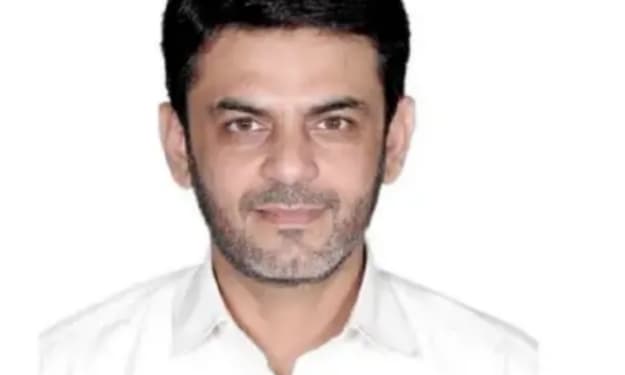
Pakistani Man Asif Merchant on Trial in New York Over Alleged Trump Assassination Plot Linked to Iran’s IRGC
A Pakistani citizen, Asif Merchant, who was arrested on charges of planning the assassination of former U.S. President Donald Trump, has appeared in court in New York as the trial against him begins. During the proceedings, he told the court that he had been working A Pakistani citizen, Asif Merchant, who was arrested on charges of planning the assassination of former U.S. President Donald Trump, has appeared in court in New York as the trial against him begins. During the proceedings, he told the court that he had been working with Iran’s Islamic Revolutionary Guard Corps (IRGC) and that the plan involved recruiting hired assassins. On Wednesday, Asif Merchant told the court that he was not acting of his own free will in the alleged conspiracy to carry out assassinations in cooperation with the IRGC. The U.S. Department of Justice alleges that Asif Merchant was attempting to find hired killers in the United States. The plan was allegedly to target Trump and other American politicians in retaliation for the killing of IRGC commander Qassem Soleimani. It should be recalled that General Qassem Soleimani, head of Iran’s overseas operations and a commander in the IRGC, was killed in a U.S. drone strike in Baghdad in January 2020. Iranian officials have repeatedly vowed to avenge his death. Asif Merchant is accused of meeting a hitman in June 2024 and paying $5,000 as an advance for carrying out a killing. However, the person he believed to be a hired assassin was actually an undercover FBI agent. According to court documents, Merchant allegedly planned to leave the United States before the plot could be carried out and had booked a flight for July 12, 2024. However, U.S. authorities arrested him on the same day before he could leave the country.
By Real content8 months ago in Chapters
Ray Kroc: The Relentless Visionary Who Built a Global Empire One Hamburger at a Time
Today we look back at a man who proved that ambition has no age limit—someone who didn’t discover his life’s defining purpose until he was well into his fifties. His name was Ray Kroc, and his journey from a restless teenager to the architect of the world’s most successful fast‑food corporation is one of the most remarkable business stories of the 20th century. Raymond Albert Kroc was born on October 5, 1902, in Oak Park, Illinois, to Czech‑American parents Rose Mary and Alois “Louis” Kroc. His family lived modestly, and his parents instilled in him the values of discipline, thrift, and relentless effort. Even as a child, Ray showed signs of impatience with ordinary life. At just fifteen, he lied about his age to join the Red Cross during World War I, training as an ambulance driver alongside Walt Disney. The war ended before he could be deployed, but the urgency he felt—the sense that life could change in an instant—never left him. After the war, Kroc drifted through a series of jobs that seemed disconnected on the surface but quietly shaped his future. He played piano in jazz bands, worked as a radio DJ, and sold paper cups door‑to‑door. These roles sharpened his instincts: how to read people, how to persuade, how to adapt. He wasn’t building a traditional career; he was building resilience, versatility, and a salesman’s intuition. His turning point arrived through a machine—the Multimixer, a device capable of making five milkshakes at once. As a salesman, Kroc noticed something unusual: a small restaurant in San Bernardino, California, kept ordering more machines than any other customer. Curiosity drove him across the country to see what made this place different. What he found was revolutionary. Richard and Maurice McDonald were running a compact, efficient hamburger stand that operated with the precision of an assembly line. Their “Speedee Service System” delivered food faster and more consistently than anything Kroc had seen. The brothers saw a successful local business. Kroc saw a scalable model that could reshape American dining. In 1954, at age 52, he persuaded the McDonald brothers to let him franchise their concept. It was a bold move for a man battling financial strain, health issues, and a failing marriage. But Kroc was driven by a belief that this system could become a national—and eventually global—phenomenon. He traveled relentlessly, teaching franchise owners how to replicate the exact standards that made the original restaurant successful: cleanliness, consistency, and speed. He wasn’t selling burgers; he was selling reliability. He insisted that every McDonald’s—from California to Illinois—serve the same fries, the same burgers, the same experience. The work was grueling. Kroc clashed repeatedly with the McDonald brothers over control and vision. He faced financial pressure and the constant challenge of maintaining quality across a growing network. But he pushed forward with a stubbornness that bordered on obsession. He believed that success demanded sacrifice, and he lived by that belief with unwavering conviction. In 1961, Kroc bought the company outright for $2.7 million, gaining full control of the brand. Under his leadership, McDonald’s expanded at a pace that mirrored America’s growing appetite for convenience. The golden arches became a symbol recognized across continents, a visual shorthand for affordability and familiarity. Kroc introduced strict operational standards, training systems, and franchising strategies that turned McDonald’s into the most successful global fast‑food corporation by revenue. Yet behind the corporate triumph was a man with deeply human passions. Kroc loved music, philanthropy, and baseball. Later in life, he purchased the San Diego Padres and, alongside his wife Joan, supported numerous charitable causes. Despite his wealth, he never abandoned the work ethic that defined his early years. He remained, at heart, a salesman—always pitching, always persuading, always chasing the next opportunity. By the time Ray Kroc died on January 14, 1984, in San Diego, McDonald’s annual sales had surpassed $8 billion. His legacy extended far beyond fast food. He had reshaped franchising, branding, and the very idea of what a business could become. His story remains a testament to persistence: a reminder that ambition does not expire with age, and that a single idea—pursued with relentless focus—can alter the world’s habits, culture, and economy. Ray Kroc’s journey is not simply the story of a businessman. It is the story of a man who refused to stop searching, who believed that the next great opportunity might be waiting just around the corner, even if the world thought he was too old to chase it. And in the end, that belief built an empire.
By Haroon Pasha8 months ago in Chapters
Pakistan's defense agreement with Saudi Arabia, will Pakistan remain neutral in a war between Iran and Saudi Arabia?
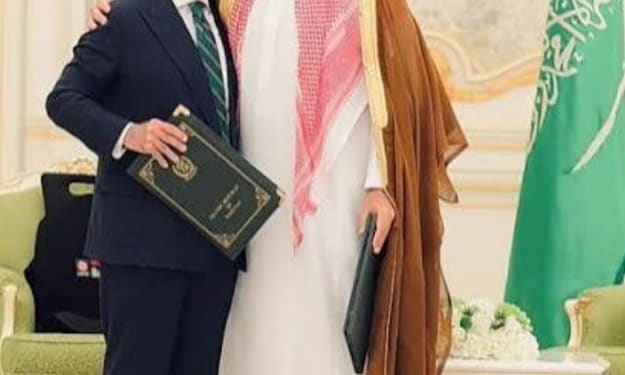
The scope of attacks that began on February 28, 2026, between the United States, Israel, and Iran has expanded into a regional war, raising questions about Pakistan’s foreign policy as well as its defense agreement with Saudi Arabia. On Saturday morning, after the United States and Israel launched attacks on Iran, Tehran retaliated by firing missiles at targets in Saudi Arabia, Kuwait, Bahrain, Qatar, and the United Arab Emirates. The primary targets of Iran’s retaliatory strikes are U.S. military bases located in Gulf countries, including Saudi Arabia. Since the conflict began, Iran has launched hundreds of missiles and drones toward its Arab neighbors. Qatar’s Foreign Ministry spokesperson Majed Al-Ansari said during a press briefing on Tuesday that “all red lines have already been crossed. Under the current circumstances, Pakistan faces significant challenges. On one side is its neighboring Muslim country Iran, while on the other side are Saudi Arabia and other Gulf states such as Qatar, with which Pakistan maintains defense agreements and strong relations. These are also the countries that have supported Pakistan during its fragile economic situation. While Pakistan strongly condemned Israel’s attack on Iran, after Iran targeted U.S. bases in Saudi Arabia, Pakistan’s Prime Minister Shehbaz Sharif also assured Saudi Arabia that Pakistan will stand with the Kingdom at all times and in every difficult moment. Pakistan’s balanced policy statements are being criticized by some as “riding two boats at once.” Questions are also being raised about what problems Pakistan could face if its defense agreement with Saudi Arabia forces it to take up arms against Iran. Ishaq Dar’s Policy Statement After the war between Iran, the United States, and Israel and the retaliatory strikes across different countries, Pakistan’s Foreign Minister Ishaq Dar issued a policy statement. He said Iran had agreed not to develop nuclear weapons, and despite positive progress in nuclear negotiations, Iran was still attacked. He stated: “When Iran was attacked, Pakistan openly condemned it.” He added that Pakistan had also secured assurances that Saudi territory would not be used for attacks against Iran, and that misrepresenting Pakistan’s sincere diplomatic efforts domestically is inappropriate. Speaking in the National Assembly, Ishaq Dar said: “You have seen that the reaction against Saudi Arabia and Oman has been relatively limited.” He added: “The government has made every effort to promote negotiations. We are fully on board. I am in direct contact with Iranian Foreign Minister Abbas Araghchi; we don’t need the Foreign Office to communicate.” He further said: “We supported the resolution in the UN Security Council that called for lifting sanctions on Iran. Pakistan was thanked in Iran’s parliament. On February 28, we called for an emergency meeting of the Security Council and condemned the attack on Iran there, expressing solidarity with Iran alongside Arab countries.” In another statement, Ishaq Dar said: “It was claimed that Iran’s attacks on Gulf countries targeted U.S. bases, but according to details, airports and infrastructure were also targeted, and a Pakistani citizen was killed. If Iran had not done this, we could have formed a stronger joint voice with these countries.” It should be noted that after reports that U.S. military bases were targeted in Iran’s retaliatory attacks, Prime Minister Shehbaz Sharif spoke with Saudi Crown Prince Mohammed bin Salman by phone and strongly condemned both Israel’s attack on Iran and the subsequent attacks on some Gulf countries. Pakistan’s Energy Security Could Be Affected Experts say that if this war continues for a long time, Pakistan may eventually have to take a clearer position, which will not be easy. How Could This Situation Create Problems for Pakistan? International affairs analyst Dr. Qamar Cheema said: “Pakistan’s energy security could be at stake in this situation. Many of our energy needs are fulfilled by Iran, while others are met by Saudi Arabia. This is a major challenge.” He added: “Our military is already busy dealing with terrorism related to Afghanistan. At the same time, we have a defense agreement with Saudi Arabia and are also engaged in peace initiatives. Managing attention on multiple fronts could create additional challenges for Pakistan.” Journalist and anchor Asma Shirazi said: “So far, Pakistan has maintained its position as a neutral state, which has been a successful policy.” She added: “Whether it was the attack on the UAE or on Iran, Pakistan condemned both. So far, Pakistan’s foreign policy appears balanced, but challenges lie ahead.” According to her: “It is like a bridge that Pakistan must cross. In other words, Pakistan is walking on a very thin line with a deep abyss on both sides.” Pakistan’s Economy Could Force It to Lean Toward One Side Former ambassador Aizaz Chaudhry said Pakistan has close relations with Saudi Arabia, while Iran is a neighboring country with deep cultural ties. As indicated in statements by Pakistan’s Deputy Prime Minister and Foreign Minister, Pakistan is also trying to facilitate peace between the two countries. He said: “Pakistan is telling Iran not to attack Saudi Arabia and is obtaining assurances from Saudi Arabia that its land will not be used for attacks against Iran. This is a commendable role because Pakistan is a friend of both countries. That is what friendly countries do.” So what could force Pakistan to lean toward one side? According to Asma Shirazi, Pakistan’s economic condition may play a decisive role. “Our economy has been under continuous pressure, and economic realities are defining our defense requirements. Ideally Pakistan should maintain a balanced policy, but it may become difficult if Iranian attacks on the UAE continue.” She added: “Only Pakistan’s economy could force it to lean toward one side, though it should not happen. Both Saudi Arabia and Iran are important for Pakistan, especially for internal stability and to avoid sectarian tensions within the country.” She said it appears that Pakistan does not want to anger either Iran or Saudi Arabia. She also noted: “Saudi Arabia is fully aware of Israel’s objectives, and it seems unlikely that Saudi Arabia would take any extreme step knowing this.” Pakistan Will Stand With Saudi Arabia at All Costs Pakistan also has an important defense agreement with Saudi Arabia. In this situation, what options does Pakistan have? Analyst Qamar Cheema says Pakistan’s position is very clear. He disagrees with the idea that Pakistan is trying to balance two opposing sides. “Pakistan will not lean toward one side. If Pakistan takes a position, it will be based on international law or existing agreements, which is what we are seeing now.” He added: “Pakistan maintained friendship with Iran, but when it comes to Saudi Arabia, we have a defense agreement. Pakistan will stand with Saudi Arabia at all costs.” He said: “So far the attacks on Saudi Arabia have been in the context of U.S. bases. But if Saudi territory, infrastructure, or government assets are attacked and Saudi Arabia asks for support, Pakistan will not step back from its agreement.” According to him: “Iran and the rest of the world know that Pakistan has a defense agreement with Saudi Arabia. That is why Iran carried out very limited attacks on bases in Saudi Arabia, because Iran had already been warned that harming Saudi Arabia could force Pakistan to join the war under the agreement.” Responding to the same question, Asma Shirazi said: “The defense agreement between Saudi Arabia and Pakistan means that if at any moment Saudi Arabia asks for support, Pakistan has the option to respond.” Iran Is Not Saudi Arabia’s Enemy Former ambassador Asif Durrani said the Iran-U.S.-Israel war is not only challenging for Pakistan but is affecting Gulf countries, the Middle East, Central Asia, and South Asia. According to him: “In the context of Iran, realistic thinking is needed regarding the agreement between Pakistan and Saudi Arabia. We stand with Saudi Arabia, but Iran is not Saudi Arabia’s enemy.” It should be remembered that in March 2023, Iran and Saudi Arabia restored diplomatic relations through Chinese mediation. After the restoration of ties, delegations from both countries continued dialogue. In May, Saudi Arabia openly condemned Israeli and U.S. attacks on Iran’s nuclear facilities. According to Asif Durrani: “The real issue is the United States and its military bases being used, while Israel is exploiting the situation. It would not be surprising if attempts were made to provoke conflicts between Iran and Saudi Arabia or Iran and the UAE or Oman, possibly through incidents like pipeline or hotel attacks.” He said Pakistan has also raised the issue at the UN Security Council, expressing concern and warning against imposing unacceptable conditions. He added: “We already have a defense agreement with Saudi Arabia. Interestingly, the agreement came shortly after Israel’s attack on Doha. Before that, Iran and Saudi Arabia had improved relations through Chinese mediation.” He said the Saudi reaction shows that Iran’s argument about targeting U.S. bases is considered significant in that context. Pakistan and Saudi Arabia’s “Mutual Strategic Defense Agreement” In September last year, Pakistan and Saudi Arabia signed a Joint Strategic Defense Agreement to enhance defense cooperation and security. Under the agreement, any external aggression against one country will be considered aggression against both. The agreement was signed in Riyadh by Saudi Crown Prince Mohammed bin Salman and Pakistan’s Prime Minister Shehbaz Sharif. The purpose of the agreement is to strengthen defense cooperation between the two countries and enhance joint protection against any aggression, treating an attack on one country as an attack on both.
By Real content8 months ago in Chapters
Moses Fleetwood Walker
Until Jackie Robinson joined the Brooklyn Dodgers in 1947 March 6, 2026 —Leavie scott Long before Jackie Robinson became a household name in 1947, another pioneering athlete stepped onto the field and challenged the deeply entrenched racial barriers of his era. His name was Moses Fleetwood “Fleet” Walker (1856–1924), and although history remembers him primarily as one of the earliest Black athletes to play in professional Major League Baseball, his extraordinary life story stretches far beyond the diamond.
By TREYTON SCOTT8 months ago in Chapters
Sarah Boone
Her design was patented in 1892 By Staff Reporter March 6, 2026 —Leavie Scott In the late 19th century, when American households were rapidly transforming under the weight of industrial growth and changing fashion, an inventor from Connecticut quietly reshaped one of the most common domestic tools in history: the ironing board. Her name was Sarah Boone (1847–1904), and her innovative design would become the blueprint for the ironing boards still used around the world today.
By TREYTON SCOTT8 months ago in Chapters
The Life and Leadership of Ayatollah Ali Khamenei
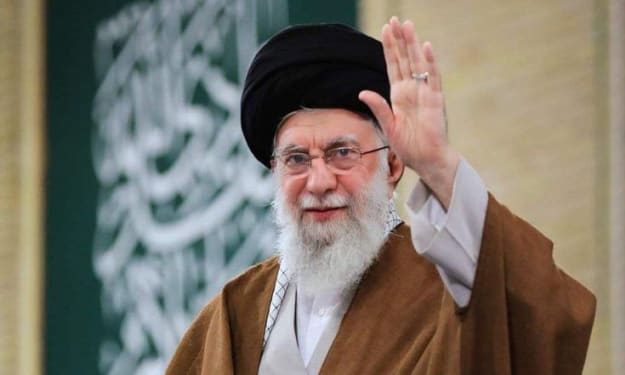
Ayatollah Seyyed Ali Hosseini Khamenei’s story begins in Mashhad, one of Iran’s holiest cities, where he was born on July 17, 1939 into a deeply religious family. His father, Ayatollah Seyyed Javad Khamenei, was a respected cleric of Azerbaijani origin, known for his strict scholarship and modest lifestyle. His mother, a devout woman from a clerical family, raised her children in an environment where faith, discipline, and humility were woven into daily life. Growing up in a small home with limited means, young Ali spent his childhood surrounded by religious texts, sermons, and the rhythms of Islamic scholarship. His father insisted on a traditional religious education, and by his teenage years, Ali was already immersed in the study of Quranic interpretation, jurisprudence, and philosophy. Early Education and the Seeds of Rebellion In the 1950s, Khamenei continued his studies in the seminaries of Mashhad and later Najaf, one of the most important centers of Shia learning. But his education was not limited to theology. He was drawn to political writings, anti-imperialist ideas, and the growing movement against the Shah of Iran. By the early 1960s, he had become a follower of Ayatollah Ruhollah Khomeini, whose fiery opposition to the Shah inspired a generation of young clerics. Khamenei began giving speeches, distributing pamphlets, and organizing underground networks. His activism led to multiple arrests, interrogations, and periods of exile under the Shah’s regime. These years hardened him. They shaped his belief that political power and religious authority were inseparable—and that Iran needed a system where clerics guided the nation. The 1979 Revolution and the Rise of a New Leader When the Iranian Revolution erupted in 1979, Khamenei was no longer a young student—he was a seasoned activist. After the Shah fell and the Islamic Republic was established, he quickly rose through the ranks: - Member of the Assembly of Experts - Tehran’s Friday Prayer Leader - Deputy Minister of Defense - A key figure in the Islamic Revolutionary Guard Corps (IRGC) In 1981, after the assassination of President Mohammad-Ali Rajai, Khamenei became the President of Iran, serving two terms until 1989. He was known for his calm demeanor, loyalty to Khomeini, and ability to navigate political factions during the turbulent years of the Iran–Iraq War. Supreme Leader: An Unexpected Successor When Ayatollah Khomeini died in 1989, Iran needed a new Supreme Leader. Many clerics doubted Khamenei—he was younger, less senior in religious rank, and not considered a grand ayatollah. But he was trusted, politically experienced, and deeply loyal to the revolution. The Assembly of Experts elected him as the Second Supreme Leader of Iran, a position he would hold for 36 years, making him one of the longest-ruling leaders in the modern Middle East. A Rule Defined by Power, Conflict, and Control Khamenei’s leadership reshaped Iran’s political landscape. Under his rule: - The IRGC became the most powerful military and economic force in Iran. - Iran expanded its influence across the Middle East through proxy groups. - Domestic dissent was tightly controlled. - The nuclear program became a central pillar of Iran’s strategy. Supporters saw him as a guardian of Iran’s independence and Islamic identity. Critics saw him as an authoritarian figure who consolidated power and suppressed opposition. His leadership style was marked by caution, ideological rigidity, and a belief that Iran must resist Western influence at all costs. The Final Chapter In February 2026, Ayatollah Ali Khamenei was killed at age 86 during U.S.–Israeli airstrikes targeting his compound in Tehran, marking the end of an era that had defined Iran for nearly four decades. His death was confirmed by Iranian state media and global news outlets. His passing left Iran at a crossroads, with an interim leadership council stepping in as the nation faced uncertainty about its future. Legacy of a Controversial Figure Ayatollah Ali Khamenei leaves behind a legacy that is complex and deeply debated: - To some, he was a defender of Iran’s sovereignty and Islamic values. - To others, he was a symbol of repression and authoritarian rule. - To historians, he was one of the most influential—and polarizing—leaders of the 21st century. But beyond politics, his story is also the story of a boy from Mashhad, raised by a humble cleric father, shaped by faith, revolution, and the belief that he was destined to guide his nation.
By Haroon Pasha8 months ago in Chapters
Dox Thrash (1896–1965)
Dox Thrash and the invention of the carborundum printmaking process Dox Thrash was born in 1896 in the heart of rural Georgia, a place where creativity lived quietly in the corners of daily life. Long before he would become known for revolutionizing printmaking with the carborundum process, Thrash grew up surrounded by the textures and tones of the natural world—wood grain shimmering under sunlight, dusty roads blending into thick summer air, hand‑stitched quilts patterned with the stories of generations. These impressions would later fuel his artistic instincts, shaping a style that felt both grounded and luminous.
By TREYTON SCOTT8 months ago in Chapters
Taliban Drone Attacks on Pakistan: Types of Kamikaze Drones, Technology, Range and Military Impact
In recent days, Afghanistan’s Taliban interim government has reportedly used drones for the first time in attacks against Pakistan. In a statement, the Taliban Ministry of Defense claimed that it carried out “multiple aerial strikes” using drones at several locations in three Pakistani cities. According to them, this step was taken in response to Pakistani airstrikes. Since the Taliban government possesses little to no conventional air force capability, it resorted to explosive drones to conduct aerial attacks. It is worth noting that according to Pakistani media reports, during a media briefing on February 27, DG ISPR Ahmed Sharif Chaudhry said that the Afghan Taliban regime had attempted to use some basic drones to conduct attacks in Sibi, Abbottabad, and Nowshera. However, he claimed that “our anti-drone systems thwarted this attempt. On the same day, February 27, Federal Minister for Information Attaullah Tarar also claimed on X that the Taliban had attempted to launch small drones toward Abbottabad, Swabi, and Nowshera, but anti-drone systems shot down all of them. No casualties were reported. Taliban drones reportedly targeted three locations, including the Artillery School in Nowshera and a primary school building in Swabi. However, security sources claimed that all these drones were destroyed. The Taliban government reportedly used two types of drones against Pakistan: some suicide drones and several quadcopters (drones that fly using four rotors). A military affairs expert suggested that it is possible the Taliban government does not have the capability to manufacture drone components itself, and it is likely that these parts were purchased from other countries and assembled in Afghanistan. In recent years, unmanned aerial vehicles (UAVs) and suicide drones have been widely used in various conflicts, significantly changing the nature of conventional warfare. These drones have played a prominent role in conflicts ranging from the ongoing Russia-Ukraine war to the clashes between Pakistan and India in May 2025. One of the key characteristics of these drones is that they are equipped with explosive materials and detonate upon reaching their target, which is why they are called suicide drones. These are also known as kamikaze drones and resemble small missiles in shape. They are capable of striking targets at low altitude. The term “kamikaze” is a Japanese word used during World War II for Japanese pilots who deliberately crashed their explosive-laden aircraft into enemy ships and targets. What drones did the Taliban government use? In one confirmed attack, a Taliban drone targeted a location in the Swabi district of Khyber Pakhtunkhwa. Footage of another confirmed drone strike was also analyzed. According to image analysis, the drones had a wingspan of about three meters and an overall length of roughly two meters. Since these drones cannot carry large amounts of explosives, their destructive power is relatively limited. In one incident, when a drone fell near a wall in Swabi and exploded (or was shot down), the blast was not strong enough to cause significant damage to the wall. However, even drones carrying small amounts of explosives can cause deadly injuries and fatalities if they land in areas where people are present. An Afghan information technology expert said the drones used by the Taliban government could be deployed in two ways. According to him, the first type can strike targets up to 20 kilometers away and is operated using a special remote control. These drones can carry about six to eight kilograms of explosives. The second type operates using software, where the target’s location details are fed into the system beforehand. The flight range of these drones depends on several factors, such as the weight of the explosives, the amount of fuel, and weather conditions. The drone itself weighs around 15 kilograms. Ray Gardner, head of Ukraine’s Defense and Information Technology division, said that these drones can strike targets at distances between 150 and 400 kilometers, although this depends on the weight of the warhead. Gardner said that some of the drones are not well-known models and appear to be locally produced. Some of the drones used by the Taliban resemble the “Daily” drone, which was previously manufactured by a Turkish technology company called Tetra. According to Gardner, the Taliban drones are fixed-wing types with a single-cylinder gasoline engine and a wooden propeller. Machines like these are commercially available for hobbyist aviation enthusiasts. He also suggested that it is highly likely that the components for these machines were manufactured in another country. Analysis of the remaining parts of the drones used in attacks on Pakistan suggests that the maximum market price of such drones is around $250 (about 15,000 Afghanis). According to Gardner, the cost of producing kamikaze drones is generally around $700 (approximately 45,000 Afghanis). An Afghan technology expert, speaking on condition of anonymity, said that the drones’ small size, low-altitude flight, and fiber-based structure make them difficult to detect by radar. One type of drone runs on fuel, while another operates on lithium batteries. Images released by the Taliban Ministry of Defense also suggest that quadcopters were used in several alleged attacks. Quadcopters are generally not designed for military use, but militant groups often modify them slightly and equip them with explosives for attacks. It is worth noting that the banned Tehrik-e-Taliban Pakistan (TTP) has also previously used quadcopters to target police checkpoints and stations in Khyber Pakhtunkhwa. According to the technology expert, these drones are operated by remote control and have a flight range of up to 25 kilometers, which is why they are not used for long-distance targets. Images released by the Taliban Ministry of Defense show that these drones were used to attack Pakistani security posts along the Durand Line.
By Real content8 months ago in Chapters