History
The Surprising Link Between Heritage Awareness and Civic Leadership
Communities often view cultural heritage and civic leadership as separate domains, yet they are deeply connected, shaping social cohesion and long-term community health. Heritage awareness helps individuals understand where they come from, what their community values, and how collective identity has formed over generations.
By Carmen Reid8 months ago in Chapters
What was said about Afghanistan at the UN Security Council meeting?
The United Nations Security Council held a mNew York, Uni, to discuss the situation in Afghanistan. Representatives froGeorg, the head of the United, exchanged views on the situation in Afghanistan. In the UNAMA delegation’s remarks, several issues were covered, ranging from the situation of women and girls in Afghanistan to security concerns and recent clashes with Pakistan. At the beginning of the meeting, she said that the Council hopes that “Afghanistan will become a country that lives in peace with itself and its neighbors, is fully integrated into the international community, and fulfills its international obligations, particularly in the areas of women’s rights, human rights, and counter-t Ms. Georgette referred to the recent clashes and violence between the Taliban government in Afghanistan and Pakistan and called on both sides to immediately stop the fighting, declare a ceasefire, and resolve their differences through diplomacy. She also emphasized the protection of civilians and the delivery of humanitarian aid in Afghanistan, saying that after routes through Pakistan were closed, Iran had be According to Ms. Georgette, Afghanistan’s isolation has not proven effective in addressing issues such as economic self-reliance, security cooperation, counter-terrorism, human rights concerns, and the humanitarian crisis. If these issues are not addressed, Afghanistan could once again become a source of instability for the region and the world through i She also pointed out a reduction in poppy cultivation in Afghanistan, saying that it has decreased by 20 percent compared to 2024 and has significantly declined compared with the past. She emphasized the need for greater cooperation from the international community to sustain progress in combating drugs. Ms. Georgette also mentioned projects initiated by the Taliban government, saying, “The authorities have launched major infrastructure projects which, if completed, could help Afghanistan’s economic development.” She also referred to the return of nearly 5.5 million Afghan refugees over the past two and a half years, saying that there are no clear signs of social unrest even if international aid decreases. Ms. Georgette condemned the restrictions imposed on women and girls in Afghanistan and called for their removal. She said, “The unacceptable situation for Afghan women and girls continues. They are now entering their fifth year of being completely excluded from public life and education beyond the sixth grade.” “Solutions for girls’ education exist, and we urge the authorities to address this issue… The international community is ready to help create acceptable conditions.” Ms. Georgette also described the latest punishments imposed by courts as “discriminatory” against women and religious minorities. In her speech, she described the Taliban government’s actions against ISIS-K as effective but added that Afghanistan’s neighbors still have concerns about the spread of militancy from the country. She referred to a report by the sanctions monitoring group indicating that the unresolved conflict regarding the Pakistani Taliban (TTP) is approaching a full-scale conflict between the two countries. “In general, the potential threat of terrorism from Afghanistan remains a major concern for the entire international community.” What did the representatives of countries say at the Security Council meeting? U.S. Representative
By Real content8 months ago in Chapters
Heavy Rain, Thunderstorms Expected as Iran Oil Depot Attacks Raise Acid Rain and Air Pollution Concerns
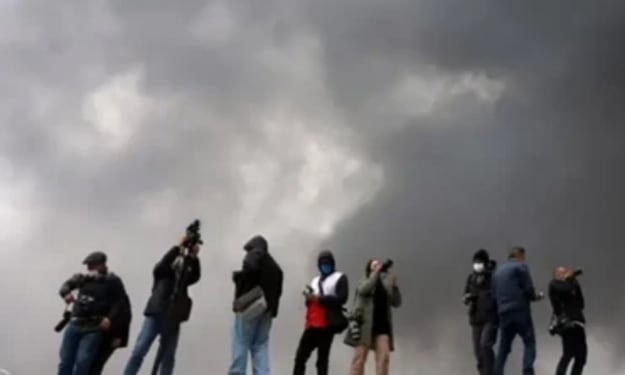
Pakistan’s Meteorological Department says that strong winds and thunderstorms with rain are expected in the upper parts of the country over the next three days. In a statement issued on Monday, the department said that a western weather system is likely to enter the western parts of the country on Monday evening and will persist until 12 March. According to the Meteorological Department, under the influence of this weather system, from 9 March to 12 March, districts including Chitral, Dir, Swat, Kohistan, Shangla, Battagram, Buner, Malakand, Mansehra, Abbottabad, Haripur, Gilgit-Baltistan, and Kashmir are expected to experience cloudy weather along with moderate rain accompanied by strong winds and thunderstorms, while heavy rainfall is expected at a few places. In addition, Khyber, Mohmand, Peshawar, Swabi, Mardan, Charsadda, Nowshera, Bajaur, Bannu, Waziristan, Orakzai, Kurram, Kohat, Hangu, and Mianwali are expected to receive light rain with strong winds and thunderstorms on 10 and 11 March. The Meteorological Department has also forecast that Islamabad, the Potohar region, Murree, Galiyat, and surrounding areas may experience rain accompanied by strong winds and thunderstorms from 9 to 11 March. During this period, hailstorms are also possible at some places in the upper areas and Islamabad. Due to this spell of rain, daytime temperatures in the upper parts of the country are expected to drop by 3 to 4 degrees Celsius. Meanwhile, landslides may also occur at some places in upper Khyber Pakhtunkhwa, Gilgit-Baltistan, and Pakistan-administered Kashmir. While the forecast of rain after a long dry spell is being seen as positive in Pakistan, the Meteorological Department has warned in its advisory that because of the ongoing situation in Iran, pollution particles may spread into Pakistan through westerly winds, which could worsen air quality in the western parts of the country. Acid rain and polluted air after attacks on oil depots in Iran On the night between Saturday and Sunday, Israel targeted several oil depots and refineries in Iran. Following these attacks, large parts of Tehran were covered with smoke. The Environmental Protection Organization advised Iranian citizens to avoid unnecessary outdoor activities and stay indoors as much as possible due to increasing pollution in Tehran. Meanwhile, the Iranian Red Crescent warned about the possibility of acid rain resulting from the fires. Images posted on Sunday at 9 a.m. local time showed the sky over Tehran appearing black. It was claimed that rain had occurred in some areas. Another Iranian user wrote that black particles also fell to the ground along with the rain. Later, Iranian Foreign Ministry spokesperson Esmail Baghaei said that the Israeli attacks on oil depots and refineries were releasing dangerous and toxic substances into the atmosphere, which are putting many lives at risk.
By Real content8 months ago in Chapters
Mojtaba Khamenei Becomes Iran’s New Supreme Leader After Death of Ayatollah Ali Khamenei
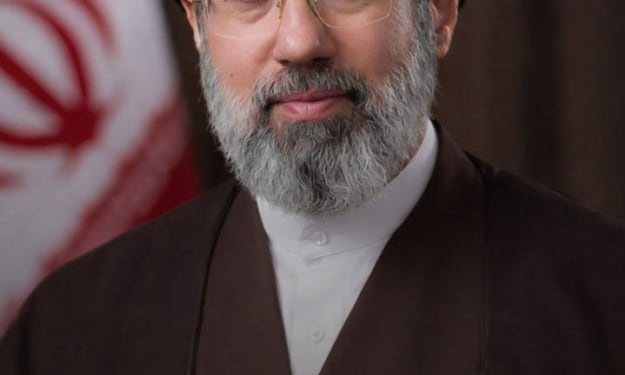
Iran’s Assembly of Experts has elected Mojtaba Khamenei as the country’s new Supreme Leader, succeeding his father Ayatollah Ali Khamenei. The announcement of Iran’s newly appointed Supreme Leader was read on state television by an anchor, citing an official statement from the Assembly of Leadership. The statement said: “Despite severe wartime conditions and direct threats from enemies against this public institution, and even though several members of staff and the security team were martyred due to the bombing of the secretariat offices, there was not even a moment’s delay in the process of selecting and introducing the leader of the Islamic system.” It should be remembered that U.S. President Donald Trump had previously said that selecting Mojtaba Khamenei—the son of Iran’s Supreme Leader Ayatollah Ali Khamenei, who was reportedly killed in U.S. and Israeli attacks—as his successor would be “unacceptable.” The U.S. president had insisted that he should also have a role in the selection of Iran’s new Supreme Leader, similar to what happened during the selection of new leadership in Venezuela. During an interview, Trump acknowledged that Mojtaba Khamenei was the front-runner for the position but made it clear that he considered such an outcome unacceptable. Iran’s Supreme National Security Council Secretary Ali Larijani said Tehran’s “enemies” had hoped that the country would fall into paralysis after Ali Khamenei’s death, but the Assembly of Experts ultimately completed the process of electing Mojtaba Khamenei. Unlike his father, Mojtaba has remained largely out of the public spotlight. He has never held any official government position, nor has he delivered public speeches or interviews. Only a limited number of photos and videos of him have ever been published. However, for many years there have been rumors about his significant influence, suggesting that access to his father often required going through Mojtaba. According to The Associated Press, U.S. diplomatic cables published by WikiLeaks in the late 2000s described him as “a power behind the cloak,” widely regarded within the government as a capable and powerful figure. The son who spent decades working in his father’s shadow has now taken his place. Mojtaba Khamenei also has close ties with Iran’s powerful Islamic Revolutionary Guard Corps (IRGC). He joined the force immediately after high school and later pursued religious studies under senior clerics. Following his selection, the IRGC issued a statement expressing “respect, devotion, and obedience” to Mojtaba Khamenei and said it was fully prepared to follow his orders. Two years ago, Ali Khamenei had rejected the idea that Mojtaba might succeed him, saying he wanted to avoid the hereditary style of governance that the Iranian Revolution had sought to abolish. However, after his death, the remaining religious system now faces a crisis over its future. At present, real power lies with the Revolutionary Guards, who control nearly all major sources of state authority. His appointment also sends a clear message of resistance to Donald Trump, who had called his selection unacceptable, and to Israel, which has reportedly threatened to assassinate him. Who is Mojtaba Khamenei? Mojtaba Khamenei was born on September 8, 1969, in the northeastern city of Mashhad. He is the second of six children of Ali Khamenei. He completed his secondary education at the religious Alavi School in Tehran. According to Iranian media, at the age of 17, Mojtaba briefly served several times in the military during the Iran–Iraq War. The eight-year conflict made the Iranian government even more suspicious of the United States and Western countries, which supported Iraq. In 1999, Mojtaba moved to Qom—a holy city and major center of Shiite theology—to continue his religious education. Notably, he had not worn clerical robes until that time, and it remains unclear why he entered the seminary at the age of 30. Mojtaba is currently considered a mid-ranking cleric. In recent days, Iranian media outlets close to the centers of power and some officials have begun referring to Mojtaba Khamenei as “Ayatollah,” which is a senior religious rank. Some observers believe this change reflects an effort to elevate his religious status and present him as a credible candidate for the country’s highest leadership. Within the seminary system, holding the rank of Ayatollah and teaching advanced religious studies is seen as a sign of scholarly authority and is often considered a requirement for future leadership. However, there is already a precedent. When Ali Khamenei was elected Iran’s second Supreme Leader in 1989, he too was elevated to the rank of Ayatollah beforehand. Allegations of Political Interference Mojtaba first came into public attention during the 2005 presidential election, which resulted in Mahmoud Ahmadinejad becoming Iran’s president. In an open letter addressed to Ali Khamenei, reformist candidate Mehdi Karroubi accused Mojtaba of interfering in the voting process through elements of the Revolutionary Guards and the Basij militia, claiming they distributed money among religious groups to help Ahmadinejad win. Four years later, Mojtaba faced similar accusations again. Ahmadinejad’s re-election triggered widespread protests across the country known as the Green Movement. At the time, Deputy Interior Minister Mostafa Tajzadeh described the election result as an “electoral coup.” He was later sentenced to seven years in prison and said the decision was “a direct wish of Mojtaba Khamenei. Two reformist candidates, Mir-Hossein Mousavi and Mehdi Karroubi, were placed under house arrest after the 2009 election. Iranian sources reported that in February 2012, Mojtaba met with them and asked Mousavi to end the protests. Many observers expect that Mojtba will continue his father’s hardline policies. Some also believe that a person who has reportedly lost his father, mother, and wife in U.S. and Israeli attacks may be less likely to yield to Western pressure. However, he now faces the difficult task of ensuring the survival of the Islamic Republic and convincing the public that he is the right person to lead the country out of political and economic crisis. His leadership record remains largely untested, and the perception that Iran may be turning into a hereditary system could deepen public unrest. It should also be noted that Israel’s Defense Minister has stated that eliminating any successor of Ali Khamenei would be a clear objective.
By Real content8 months ago in Chapters
How Iran Attacks Are Affecting Pakistani Workers in Dubai and the Gulf
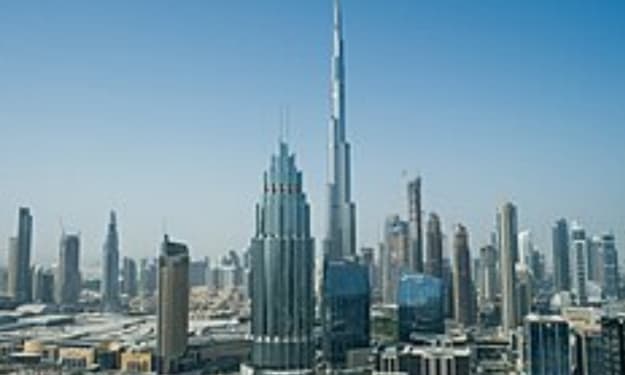
Until a few days ago my work was going very well, but now several days pass without getting any work. Over the past five years I manageid to pay off the debts that were on me and my family. Now my goal was to build my own house. But if the situation continues like this, it may even become difficult to earn a living in Dubai.” This was stated by 34-year-old electrician Imran Khan from Mardan, who has been working in Dubai for the past five years. Imran is among thousands of Pakistani laborers who work in Gulf countries on free or informal visas in various sectors on a temporary basis. Last week, attacks on Iran by the United States and Israel and Tehran’s retaliatory actions created uncertainty in the Middle East, increasing the difficulties of migrant workers like Imran Khan. For a long time, the United Arab Emirates had the image of a country largely insulated from problems affecting the rest of the region. However, after the death of Iran’s Supreme Leader Ayatollah Ali Khamenei last Saturday, Iran targeted Gulf countries—including the UAE with drones and missiles. Following this, the UAE had to close its airspace. According to Imran Khan, this uncertain situation has also affected job opportunities. He says that earlier he used to get work almost every day of the week. “Now sometimes I have to wait three or even four days. For people like us, when work stops it becomes very difficult because our income depends entirely on daily labor.” Construction work slowing in the UAE The construction sector has long been an important pillar of the UAE economy. Skyscrapers, residential projects, and large infrastructure developments have provided employment to millions of foreign workers. But workers on free visas say that small and medium-sized projects are now slowing down. Waqas Ahmed, a laborer in Dubai, says: “Large projects are still going on, but smaller contractors have less work now. Earlier we were called to sites every day, but now we’re not.” Khalid Mahmood (a pseudonym), who works in Sharjah, says that most projects there are small residential developments. “When the market slows down, these projects are the first to be affected.” He adds that earlier, if work was scarce in Sharjah, they could look for work in other emirates. “But now even that isn’t possible.” Yousaf, a mason working in Ajman, says that earlier when they left home in the morning they were confident they would find work somewhere. “Now many days we return empty-handed in the evening.” Workers say that compared with permanent employees, those on free visas are affected first because they work on daily or temporary contracts. Shipping and cargo sector also affected The UAE’s ports are a major hub of regional trade, but uncertainty has also affected the cargo and shipping sectors. Nasir Ali, who works in cargo handling in Dubai, says that cargo operations have not completely stopped, but they are not as busy as before. He says some companies have reduced shipments, which means workers are not getting consistent work. Arshad Mahmood, who works in a warehouse in Abu Dhabi, says: “Earlier several large shipments arrived each week, but now loading hardly happens. This directly affects workers’ incomes.” Small businesses It is not only laborers who have been affected by the current situation. Ayesha Farooq, a Pakistani woman living in Dubai, used to earn a good income by teaching mathematics and English tuition to children. But after Iran’s attacks, educational institutions in the UAE started conducting classes online, and many parents stopped sending their children for tuition. “Earlier children came to my home for tuition and I taught several students daily. Now the number of students has dropped significantly. Some parents said it would be fine if I could go to their homes to teach, but that’s not possible. Many tuitions have stopped, and it is affecting my income.” Haris Mahmood from Sialkot, who works as a mechanic in a workshop in Bahrain, says that earlier cars came daily for repairs, but now work has decreased. Similarly, workers repairing mobile phones and working in small shops are also complaining about fewer customers. Desire to go home for Eid and rising ticket prices Many Pakistani workers in Gulf countries had planned to go home for Eid this year, but current difficulties make that unlikely. Imran Shah, who works as a driver in Dubai, says: “Flights are limited and tickets have become very expensive. A friend’s company told him not to go right now because returning might be difficult. I haven’t been to Pakistan for five years. This time I had a definite plan, but now there are no tickets.” He added that although many sectors are affected, his own work is still going well. Imran Shah says whenever news about Iran-Israel tensions appears, his family immediately calls from home asking about the situation. “We have to keep explaining that life here is still normal and there is no danger, but they don’t understand.” Rising daily expenses Increasing prices are also affecting people. For migrant workers in the UAE, the biggest challenge is controlling their expenses. Amjad Ali, an electrician who has been living in Qatar for four years, says: “Earlier apples cost four riyals, now they are up to ten. Onions have gone from two and a half riyals to seven. Meat and chicken prices have also increased significantly.” He added: “We already live on limited income. When food prices rise, it becomes difficult both to send money home and to manage our own expenses.” In Bahrain, the situation is similar. Haris says: “Not only food items are becoming expensive, but rent and other expenses are also rising. This has made workers’ lives more difficult than before.” “My business is doing fine” Suleman Jazib, who is involved in the shipping business in Dubai, says that all kinds of business activities are still happening at Dubai Port. He says import and export containers are still moving through the port. “Today three containers arrived from China.” According to him, Dubai Port is open for all kinds of business and activities. If the number of containers has decreased, it is not just a Dubai issue but a global situation. He says: “We are still receiving business and services today, which shows that commercial life continues.” He added that there is no fear in Dubai or other emirates of the UAE. Normal activities are ongoing. Markets and bazaars have all goods available, prices have not increased, and flights have now resumed from airports.
By Real content8 months ago in Chapters
Why Florida’s State Flag Is the Confederate Battle Flag
A visual explainer and historical analysis arguing that Florida’s saltire design—added in 1900—duplicates the Confederate battle emblem in both form and purpose, embedding Lost Cause politics into the state’s most visible symbol.
By Press Release 8 months ago in Chapters
Iran vs Israel War: What Options Does Iran Have After US-Israeli Airstrikes Weaken Its Military?
what options does Iran have in this war, and what strategy is it pursuing? Depleting Resources Dr. H.A. Hellyer, a Middle East security expert at the Royal United Services Institute (RUSI) in the United Kingdom, says Iran’s current military approach is not to defeat the United States or Israel in a conventional war, but to make any conflict long, region-wide, and economically costly. He says: “Iran cannot win conventionally, but its strategy is to make victory expensive and uncertain for others.” Nicole Grajewski, Assistant Professor at the Center for International Studies at Sciences Po in France, agrees. She describes Iran’s strategy as a “war of attrition” — a type of war in which the goal is not to deliver a decisive defeat but to gradually weaken the opponent through continuous attacks and losses until their resources and ability to fight are affected. This strategy also has a psychological dimension. According to Grajewski: “During last year’s 12-day war with Israel, Iran directed many of its attacks toward civilian areas. The purpose was less about precision and more about creating fear and psychological shock among the population.” Missiles and Drones Missiles and drones are generally considered the backbone of Iran’s defense doctrine. Grajewski says Iran’s ballistic missile stockpile reportedly suffered significant damage during the 12-day war, but the exact numbers are uncertain because the missiles are stored underground and production continues. According to Israeli estimates, by February 2026 Iran had about 2,500 missiles, including: Short-range missiles (up to 1,000 km) Medium-range missiles (1,000–3,000 km) Iranian officials say they have used systems like Sejjil, which reportedly has a range of about 2,000 km. They also say they used Fattah, which Tehran describes as a hypersonic missile, meaning it travels much faster than the speed of sound. Missile Cities Iranian media and officials often mention underground missile facilities known as “missile cities,” although their size and stockpiles have not been independently verified. According to senior U.S. commander General Dan Caine, Iran’s ballistic missile attacks have decreased by 86% since the first day of fighting, Saturday, February 28. The U.S. Central Command (CENTCOM) says there was a further 23% drop by Tuesday, March 4. Despite this, Hellyer says Iran still has the ability to effectively target Israeli infrastructure, U.S. regional bases, and Gulf allies, while also threatening the global energy flow through the Strait of Hormuz. He says: “Even a small disruption in the Strait of Hormuz could have severe consequences for the global economy.” About 20% of the world’s oil passes through this narrow waterway, and Iran has now effectively closed it, warning that any ship attempting to pass through will be targeted. Drone Capability Although Iran may face shortages of advanced missiles and solid fuel, Grajewski says its drone capability remains significant. It is believed that before the war Iran had produced tens of thousands of ‘Shahed’ one-way attack drones. This design has been exported to Russia, and even the United States has reportedly studied aspects of the technology. These drones are not just for direct damage but also serve a strategic purpose: They force opponents to use expensive interceptor missiles, gradually weakening air defense systems. Grajewski says: “Part of the strategy is to exhaust interceptor capabilities. Iran is doing this with UAVs and drones. It’s similar to what the Russians did in Ukraine.” However, the United States says Iran’s drone attacks have fallen by 73% compared to the first day of the conflict. According to the Institute for National Security Studies in Tel Aviv: The U.S. and Israel have launched over 2,000 weapons of different types. Iran has fired 571 missiles and 1,391 drones, many of which were intercepted. Experts say that as the war continues, it will become harder for both sides to maintain this pace. A Long Conflict
By Real content8 months ago in Chapters
The Story of Mary Van Brittan Brown
Mary Van Brittan Brown (1922 – 1999) – Home Camera Security System In the quiet hours of night, when most of New York City had finally lulled itself to sleep, the row houses of Queens told a different story. Streetlights flickered against cracked sidewalks, shadows moved where no footsteps sounded, and the uneasiness of the era seemed to settle into the very bones of the neighborhood. It was the mid‑1960s, a time when the city pulsed with ambition and creativity—but also with rising crime. For many residents, safety was something you hoped for rather than something you could rely on.
By TREYTON SCOTT8 months ago in Chapters