History
Is the Middle East War Turning Into World War III?
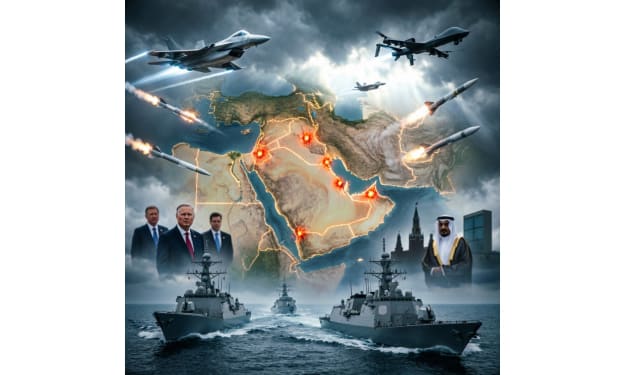
Is the Middle East War Turning Into World War III? The current situation in the Middle East has once again raised a serious question around the world: could this conflict grow into World War III? Tensions in the region have increased due to military strikes, political warnings, and the involvement of several global powers. While no country has officially declared a world war, the combination of regional conflicts and international alliances has made many experts worry about the possibility of a much larger confrontation.
By Wings of Time 8 months ago in Chapters
Why doesn't Iran target US bases in Turkey?
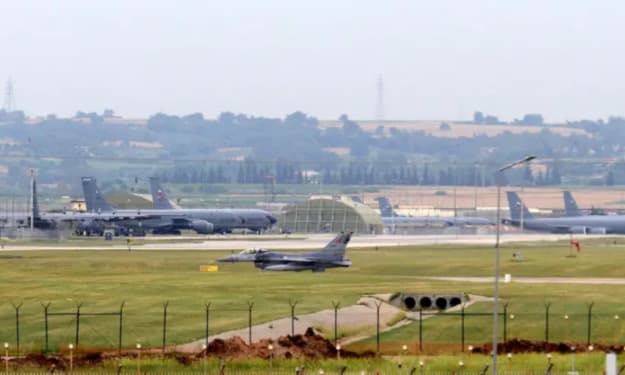
In the war that began on February 28 with attacks by the United States and Israel on Iran and continued with retaliatory strikes from Tehran, the intensity of casualties and destruction has been increasing every day. Iran and militia groups affiliated with Tehran have so far targeted military bases and civilian infrastructure in Kuwait, Saudi Arabia, Oman, Bahrain, Qatar, Jordan, the United Arab Emirates, and Iraq, all of which host American bases. In addition, a British base in Cyprus has also been targeted. In this war, which has spread from Turkey’s border neighbors to the Arabian Peninsula, Turkey is one of the few countries where air-raid sirens have not sounded. Experts say that despite hosting U.S. forces, Turkey has not been targeted because of its membership in the North Atlantic Treaty Organization (NATO). They emphasize that good relations between Ankara and Tehran also reduce the likelihood of any retaliatory action. However, in its recent position, Turkey has criticized the attacks by the United States and Israel as well as Iran’s retaliatory actions. Turkish President Recep Tayyip Erdoğan announced on February 28 that Ankara would increase its diplomatic efforts. Mr. Erdoğan said: “If rationality and wisdom do not prevail and no room is given for diplomacy, our region could be engulfed in widespread flames.” He added: “If Iran attacks Turkey, it will have to face all NATO countries.” Sinan Ülgen, head of the Center for Economics and Foreign Policy Studies (EDAM), says that what distinguishes Turkey from other countries in the region targeted by Iranian attacks is its NATO membership. He added: “Such an attack would fully fall under Article 5 of NATO. Therefore, if Iran were to take such an action, it would effectively face all NATO member states.” According to this fundamental NATO principle, an attack on any member state is considered an attack on all members, activating the alliance’s collective defense mechanism. Sinan Ülgen believes that Iran will not expand the conflict by attacking U.S. bases in Turkey. He said: “Iran is not willing to open a new front in its immediate neighborhood by attacking Turkey. I see no possibility that it would want to provoke a country like Turkey, which has strong military power and impressive deterrence capability. Therefore, I consider the likelihood of a direct Iranian attack on Turkey to be very low.” Mr. Ülgen also emphasized that the Incirlik Air Base in Adana was not used for attacks on Iran. Ural Toğa, a researcher at the Center for Iranian Studies (IRAM), also considers it unlikely that Tehran would include parts of Turkey among its targets in retaliatory strikes. He said: “Unless a group inside Iran decides to act independently, which I also consider unlikely, Iran would not want to complicate the situation at this stage by opening a new front against a NATO member country.” Mr. Toğa noted that Turkey and Iran, which share a 534-kilometer border, are mutually dependent in certain areas. He said: “Iranians, especially after the death of former President Ebrahim Raisi, have continuously sought to expand strategic cooperation with Turkey. I do not think they will reverse this trend or move relations in another direction.” Incirlik and Kürecik Turkey has announced that its airspace and air bases located on its territory that host U.S. forces were not used in U.S. or Israeli attacks against Iran. A statement issued on February 28 by the Center for Combating Disinformation, which is affiliated with the Presidential Communications Directorate, emphasized that Turkey will not allow its airspace or related facilities to be used for operational purposes in any conflict or war in which it is not involved. Another statement issued on March 2 by the same center denied claims of an attack on the Incirlik base, stating: “There are no military bases belonging to any foreign country in Turkey. The air, land, and maritime space of the Republic of Turkey, as well as its military installations, are fully controlled and owned by the country. No attempt has been made to directly attack the country’s port. Portraying Turkey as a party to regional conflicts is a clear attempt to spread misinformation.” The most important U.S.-related military bases in Turkey are the Incirlik Air Base and the Kürecik radar base in Malatya. According to information published on the Incirlik Base website, construction of the military facility began in 1951 by a team called the American Engineering Group. In 1954, an agreement was reached between the General Staff of the Turkish Armed Forces and the U.S. Air Force for the joint use of the base. The use of the base is regulated through the Defense and Economic Cooperation Agreement (DECA), which was signed between the United States and Turkey in 1980. The facility was initially called “Adana Air Base,” but in 1958 its name was changed to “Incirlik,” which is still in use today. Turkey’s Ministry of Defense emphasizes that the base is under the command of the Turkish Armed Forces and owned by the Republic of Turkey. The Kürecik radar base, located in the Akçadağ district of eastern Malatya province, is an early warning center established in 2012 and operates under NATO supervision. The command center of this facility is located at the Diyarbakır Air Base, and its mission is to transmit data related to identifying and intercepting long-range aerial threats to the THAAD missile defense systems in Romania and Poland. In 2011, the then-Iranian President Mahmoud Ahmadinejad criticized the establishment of the base, saying the installation was designed to protect Israel from possible Iranian missile attacks. After the Hamas attack on Israel on October 7, 2023, and the subsequent Israeli military operations, pro-Palestinian activists claimed that both bases were being used to support Israel and held rallies demanding their closure. Large-scale migration is very unlikely
By Real content8 months ago in Chapters
Edwin Roberts Russell
Edwin Roberts Russell: Edwin Roberts Russell In the shadows of one of the most consequential scientific efforts in human history stood a man whose name remains far less known than the magnitude of his contributions. Edwin Roberts Russell (1913–1996) was not a general, politician, or battlefield commander — yet his work would shape the outcome of World War II and alter the global landscape for generations.
By TREYTON SCOTT8 months ago in Chapters
US CENTCOM Deploys LUCAS Drone Against Iran, Raising Questions Over Starlink Integration
The United States Central Command (CENTCOM) has announced that the US has used new long-range drones against Iran. Structurally, these drones resemble the Iranian “Shahed” drones. Based on published images, it is being suggested that these drones are equipped with satellite communication terminals. Many analysts refer to the “low-cost unmanned combat attack system” as a drone known as “LUCAS,” calling it an “unlicensed version of the Shahed-136,” and believe the drone was “reverse engineered,” meaning it was designed after examining a crashed drone. At least structurally, there are similarities between them: a similar aerodynamic design, an internal combustion engine, and a pusher propeller. In images released in December by US Central Command, light-colored rectangles can be seen on the upper body of the drones, resembling Starlink satellite internet terminals. The United States has officially confirmed the first use of these drones in Iran but has not mentioned the use of satellite terminals in their structure. It is also unclear what type of terminal was used in the LUCAS drone. In addition to the commercial Starlink network, the manufacturer has developed a military system with different capabilities. The use of drones equipped with satellite communication terminals allows them to be controlled throughout the entire flight. If the drone is equipped with a camera, guidance can be visual and conducted in real time. Disrupting satellite signals is not easy. An operator can fly the drone at low altitude to avoid radar detection or bypass known air defense zones. This makes such drones very difficult to intercept. This capability can further enhance the drone’s performance and increase its operational precision and autonomy. Russian Experience In December, Russian forces also began using drones equipped with Starlink terminals in the war in Ukraine. The equipment was purchased abroad and then imported into Russia while bypassing sanctions. At the end of January, Ukrainian Defense Minister’s adviser Serhii Beskrestnov announced that hundreds of confirmed cases of drone attacks equipped with Starlink had been recorded. “What is the threat? Imagine a large first-person view drone being directed in real time by an operator from Russian territory. We all know that Starlink works well and provides a relatively clear channel for image transmission and guidance. So this is one of the challenges we are currently facing and must address,” he said. In early February, Ukraine’s Ministry of Defense reached an agreement with the manufacturer to disable satellite communication terminals that were not registered on Ukraine’s “whitelist.” As a result, the Russian military not only lost the ability to use drones equipped with those terminals, but also lost internet access in many frontline areas, as Starlink had provided reliable communications to many Russian units. Russia is unable to replace Starlink satellite communications because it does not have a comparable space-based system. A private Russian company called Bureau 1440 is developing a constellation of low-orbit communication satellites similar to those deployed by Starlink. The company had planned to launch its first group of satellites in 2025, but the plan failed. Cheap and Abundant There is no information in public sources about who first came up with the idea of installing a Starlink terminal on a drone. On December 15, 2025, a leading Ukrainian expert in military radio technologies, Serhii Beskrestnov (known by the nickname “Flash”), announced for the first time the discovery of a Russian drone equipped with Starlink. Two weeks earlier, on December 3, US Central Command had released images of completed LUCAS drones that appeared to be equipped with Starlink-like terminals. However, the idea of widespread use of inexpensive attack drones originally came from Iran and Russia. Russia began its attacks on Ukraine in 2022 using Iranian “Shahed” drones, which it renamed “Geranium-2,” and has steadily increased production of these systems. In addition to directly damaging targets, these attack drones also force air defense systems to expend resources. In some cases, the cost of interception exceeds the value of the target. The low-cost concept is also reflected in the name of the American system: “Low-Cost Unmanned Combat Attack System,” emphasizing affordability. Each drone may cost approximately $35,000. To deploy these drones, a special unit was created in the United States and deployed to the Middle East, called the “Operation Scorpion Strike Group.
By Real content8 months ago in Chapters
Bagram Air Base Targeted? Pakistan–Afghanistan Border War Intensifies
Clashes between Pakistan and the Taliban in Afghanistan have entered their sixth day, during which Pakistan has claimed to have carried out airstrikes on 56 locations inside the neighboring country. Meanwhile, the Afghan Taliban claim they have foiled an operation targeting Bagram Air Base. Although Pakistani authorities have not confirmed targeting Bagram Air Base, Afghan Ministry of Defense spokesperson Enayat Khwarazmi said in a press conference that Bagram Air Base was attacked but there were no casualties. Pakistan has claimed that, in addition to “terrorist hideouts,” it has targeted military installations such as weapons depots and battalion headquarters inside Afghanistan. In a message on Tuesday, Pakistan’s Information Minister Attaullah Tarar claimed that during the six days of clashes, 464 Afghan Taliban personnel have been killed, 188 checkpoints destroyed, 31 posts captured, and 192 tanks, armored vehicles, and artillery guns destroyed. On the other hand, Afghanistan’s Ministry of Defense has claimed that 100 Pakistani security personnel were killed in cross-border attacks and that 25 checkpoints were captured. It has also claimed to have carried out drone strikes inside Pakistan. The claims made by both sides cannot be independently verified. However, some images and videos circulating on social media show damage to civilians living in border areas. So far, neither Pakistan nor the Afghan Taliban have indicated a willingness to resume negotiations to halt the ongoing operations against each other. Analysts believe that while U.S. and Israeli air operations are ongoing in Iran, Pakistan also appears to be seeking to achieve certain objectives inside Afghanistan. It is worth noting that Pakistan accuses the Afghan Taliban government of supporting militant groups, which the Taliban deny, describing attacks in Pakistan as its internal matter. Pakistan maintains that militants cross into its territory from Afghanistan to carry out attacks and that Afghan authorities should stop them. Afghan officials deny this and say they do not allow their soil to be used against any country. How much damage has occurred in Pakistan and Afghanistan during the clashes?
By Real content8 months ago in Chapters
Will Russia and China Support Iran Against the US and Israel?
Britain has allowed the United States to use its airbases in connection with the ongoing attacks against Iran, sparking debate over what kind of support Tehran might receive from its allied countries. Both Russia and China maintain strong diplomatic, trade, and military ties with Iran. However, the current conflict will reveal how far they are willing to go in supporting this ally. Russia’s Rhetorical Support Sergei Gorishko says that although Moscow has made a great deal of noise over the joint U.S. and Israeli attacks on Iran, its response has largely been limited. Russia has expressed anger over the strikes and signaled solidarity with Tehran, but it has refrained from taking any steps that would risk direct involvement in the conflict. Kremlin spokesperson Dmitry Peskov expressed “deep disappointment,” saying that despite talks between Washington and Tehran, the situation had “turned into outright aggression.” He added that Moscow remains in constant contact with the Iranian leadership and Gulf states affected by the tensions. Russia’s Foreign Ministry condemned what it described as “unprovoked aggression” by the United States and Israel against Iran, calling it political assassination and a “hunt” for the leaders of sovereign states. On Sunday, Russian President Vladimir Putin sent a condolence message to his Iranian counterpart following the death of Iran’s Supreme Leader Ayatollah Ali Khamenei, describing it as a “blatant violation of human morality and international law.” Despite this, the Kremlin appears to be avoiding criticism of U.S. President Donald Trump and continues to thank Washington for mediation efforts regarding Ukraine. When asked on Monday how Russia could still trust Washington, Peskov said Russia “relies first and foremost only on itself” and ensures the defense of its own interests. When examining those interests, it becomes clear why Russia’s support for Iran remains largely rhetorical, even though Tehran has become one of Moscow’s closest allies since Russia’s invasion of Ukraine. Iran has been supplying drones to Russia and helping Moscow develop ways to circumvent Western sanctions. Iran also fits neatly into Russia’s vision of a multipolar world order in which state sovereignty outweighs human rights, and governments maintain complete internal control. The fall of such a government would be a setback for Russia’s global outlook. However, the Kremlin has already shown it is unwilling to take major risks for its allies whether in Venezuela, Syria, or during last year’s 12-day war between Iran and Israel. Russia is deeply entangled in the war in Ukraine and appears either unwilling or unable to provide assistance beyond diplomatic statements and limited military-technical cooperation. The strategic partnership agreement signed between Iran and Russia on January 17, 2025, falls just short of a mutual defense pact. Moscow and Tehran pledged information-sharing, joint exercises, and efforts to “ensure regional security.” However, they did not promise to defend each other in the event of an attack. Economic ties between the two countries are also modest, with trade totaling only four to five billion dollars. Nevertheless, military and industrial cooperation between them is increasing. In February, the Financial Times reported that the two countries had reached a major deal under which Russia would supply Iran with air defense systems worth 500 million euros. Russia has already provided Iran with Yak-130 training aircraft and Mi-28 attack helicopters, and Tehran is expected to receive Su-35 fighter jets soon. However, Russia has yet to deliver advanced defensive systems. The use of Iranian-made Shahed drones significantly altered Russian military tactics in Ukraine. But last year, Moscow rapidly expanded domestic drone production, reducing its reliance on Iranian weapons. For Moscow, Iran is too important to allow it to collapse but not important enough to fight for. This situation may change in the future, but for now, Russian intervention is likely to remain largely rhetorical. China: Tehran’s Economic Lifeline China strongly condemned the killing of Ayatollah Ali Khamenei. Historically, Beijing has opposed U.S. strategies of regime change around the world. The strongest pillar of China-Iran relations is their mutually beneficial economic partnership. China is Iran’s largest trading partner and its most important energy customer. Despite years of U.S. sanctions on Iran, Beijing has remained Tehran’s economic lifeline. With the support of its shipping fleet, China purchases large volumes of Iranian crude oil at discounted prices. For example, in 2025 China bought more than 80 percent of Iran’s exported oil. The revenue from these purchases has enabled Iran not only to stabilize its economy but also to fund its defense expenditures. In 2021, China and Iran signed a 25-year strategic agreement that further strengthened their relationship. Under the deal, China pledged billions of dollars in investment in Iranian infrastructure and telecommunications. China’s “Long Game Historically, China’s response to Iran-Israel and Iran-U.S. conflicts has been measured. Whenever disputes involving Iran have arisen—including during last year’s 12-day Israel-Iran war—China has called for “restraint” and blamed “external interference,” a reference to U.S. policy. During previous Iran-Israel confrontations, China has used—or threatened to use—its veto power at the United Nations Security Council to shield Tehran diplomatically and block resolutions against it. However, it has never offered direct military intervention. Beijing’s strategy has long been to keep the United States entangled in the Middle East while ensuring that the region does not descend into total chaos, which could drive up global oil prices. If a pro-Western government were to take power in Tehran, it would represent a major geopolitical setback for China, as Iran not only meets China’s energy needs but also helps counter U.S. influence in the region. Iran is a member of BRICS and the Shanghai Cooperation Organization and serves as a crucial geographic connector linking Central Asia, the Caucasus, and the Middle East. The collapse of the Iranian government could weaken the credibility of these multilateral mechanisms that Moscow and Beijing are trying to strengthen. It is widely believed that unless the United States and Israel launch a full-scale war against Iran and deploy ground troops on Iranian soil, the country’s political and military structures are unlikely to collapse. Beijing will likely continue playing its usual “long game,” cooperating with whoever succeeds Khamenei, regardless of who that may be. Meanwhile, Russia will look for opportunities that serve its own interests.
By Real content8 months ago in Chapters
AI, Nuclear Escalation, and Pakistan’s Critical Role
AI, Nuclear Escalation, and Pakistan’s Critical Role If World War III begins, it is unlikely to start with marching armies or formal declarations. Instead, it may begin silently—inside algorithms, early-warning systems, and automated decision tools powered by artificial intelligence. Nowhere is this risk more serious than in regions where nuclear weapons exist alongside historical rivalries, limited decision time, and high political tension. South Asia, especially Pakistan, sits at the center of this emerging danger.
By Wings of Time 8 months ago in Chapters
Has World War III Started?
Has World War III Started? The question “Has World War III started?” is no longer limited to academic debate or fictional movies. It is now openly discussed in newsrooms, policy circles, and online platforms around the world. While the simple answer remains no, the conditions shaping today’s global environment are deeply alarming. The world is experiencing an unprecedented convergence of regional wars, technological disruption, and power competition that closely resembles the early stages of past global conflicts.
By Wings of Time 8 months ago in Chapters
The 2026 Iranian Missile and Its Impact on Gulf Business, Travel, and Daily Life
Alia has been living in the Dubai Hills area with her husband and two daughters for the past eight years. She never imagined that even a city as safe as Dubai could come under attack. These days, she constantly hears the sound of explosions that make the windows of her home tremble and leave her young daughters frightened. Alia says, “We have never seen anything like this in our lives. The sound of the explosions is very terrifying.” She is worried about her daughters and is trying to keep them away from the windows. For the past two days, most residents of Dubai have been staying indoors. Malls and roads are almost empty, and restaurants are not as crowded as usual. The skies above the city no longer show Dreamliners or Airbuses carrying tourists and cargo in large numbers. Instead, at short intervals, ballistic missiles and drones can be seen, reportedly launched by Iran neighboring the United Arab Emirates across the Gulf toward these states. The city that residents and tourists once considered the safest in the world is now within range of Iranian missiles and drones. These attacks are being described as a response to strikes carried out by the United States and Israel against Iran. From the luxury Fairmont The Palm hotel to shopping malls, high-rise apartment blocks, and Dubai Airport the world’s busiest international passenger airport damage has also been reported. When these cities were built, no one imagined that one day they would face drone and ballistic missile attacks. A friend living in Dubai complained that, unlike Israel, there are no bunkers here where people can take shelter. And even if you are one of the richest people in the world, you cannot currently leave Dubai, Abu Dhabi, Doha, Bahrain, or Kuwait by flight. For residents and millions of tourists in these Arab countries, life has changed overnight. Some people, worried, have headed toward Hatta and Fujairah. According to Alia, some of her friends who lived near military bases or sensitive areas left for Hatta and Fujairah out of concern, many of them Western nationals. Despite the continuous attacks, Alia says she is satisfied with the government’s response. According to her, the Dubai government is handling the situation effectively and is sending real-time alerts to residents. She says there is uncertainty, but people around her do not appear panicked. Hotels, restaurants, and malls are open. There are fewer people outside than usual, but overall conditions seem normal. Alia says most people in Dubai order their supplies online, though supermarkets are also open. Many stores have displayed notices stating that they have stable stock supplies. She has not stockpiled anything, except ordering slightly more water than usual. Her daughter’s school has shifted to online learning until Wednesday. One of Alia’s friends, who was traveling from Manchester to Pakistan, had to stop in Dubai due to the deteriorating situation and cannot continue her journey. However, Alia says the government has provided full assistance to her friend, including an email stating that the government would arrange visas and hotel accommodations, though for now she is staying with Alia. On March 1, 2026, the UAE Ministry of Defense announced that the country’s air defense system had successfully intercepted Iranian ballistic missiles, cruise missiles, and drone attacks. According to the statement, a total of 541 drones were launched, of which 506 were destroyed and 35 fell within the country. Similarly, 165 ballistic missiles were detected, of which 152 were intercepted mid-air and 13 fell into the sea. The Ministry of Defense stated that the defense system effectively countered the attacks and ensured the protection of the country’s airspace. However, independent sources have not yet confirmed these claims. As a result of these attacks, three people have been killed and dozens injured in the UAE so far. This is not the Dubai we are used to. Thirty-five-year-old Sathya Jagannathan said that her sister’s family and their pets had to take shelter in their apartment because they lived near Jebel Ali Port, where “a lot of debris was falling.” Authorities reported on Saturday that a fire broke out in part of the port due to debris from air interceptions. The port is the ninth busiest in the world. Jagannathan said, “Every few hours we hear explosions. It’s very frightening because this is not the Dubai we are used to.” Mohammad Nafea has been living in Dubai for nine years. He says the situation is largely normal. Although private businesses and companies were instructed to work from home for two days, all government offices, courts, and immigration offices remain open and functioning. According to Nafea, although air cargo operations have been halted, there is no shortage of food, and supermarkets are fully stocked. He says that among the Pakistani and Indian nationals he spoke to in Dubai, Doha, Abu Dhabi, Kuwait, and Bahrain, none appeared fearful. They trust their governments and seem satisfied with the arrangements so far. Nafea shares this confidence. He explains that if debris falls in a particular area, authorities send alerts only to residents of that specific area rather than alarming the entire city, allowing enough time for people to move to safer places. “I heard the sound of missiles, but I believe we are in Dubai. The government will keep us safe.” Danish, an Indian national who has been living in Dubai for six months and works in marketing, says he lives in BurJuman in old Dubai, where conditions are relatively normal. “I heard missiles passing over my rooftop for the first time in my life. It shook me a bit, but I knew we are in Dubai and we will be kept safe,” he says. He acknowledges the uncertainty but expresses complete confidence in the government and its measures. The UAE government has decided to cover expenses for all tourists stranded in the country. Reports suggest that some tourists stuck in Dubai and Abu Dhabi are traveling by road to Saudi Arabia to catch flights from there. One of Nafea’s friends, stranded in Abu Dhabi, was allowed by authorities to leave and has reached Jeddah by road. He reported heavy crowds at the border, mostly Western nationals leaving the UAE and Qatar. According to Nafea, the Dubai government has decided to cover accommodation costs for all stranded tourists. A friend who runs an Airbnb in Dubai received an email from the government stating that all vacant hotels and Airbnb properties would provide free accommodation to stranded tourists, with the government covering the costs. The UAE government has announced that, due to airport closures, it will bear the accommodation costs of stranded tourists and travelers. In a circular to hotels, Abu Dhabi’s Department of Culture and Tourism requested that guests unable to travel be allowed to extend their stay, with the department covering the additional costs. My daughter said, ‘Dad, let’s go back to Pakistan. Unlike Alia and Nafea, another resident, Murtaza, says the roads are completely empty, and malls were deserted over the weekend—contrary to usual scenes. He says he never imagined a rapidly developing place like Dubai could come under attack, but he praises the government’s handling of the situation and its provision of free hotels and food to stranded tourists. A Pakistani father living in the Marina area said a loud explosion late at night woke the entire household. “Both my children started crying. My daughter said, ‘Dad, let’s go back to Pakistan.’” Another woman said she has packed a precautionary bag with passports, some cash, and children’s clothes. “I never thought I would see a day like this in Dubai. We always believed we were far from any danger. Although most people report no shortages in supermarkets, some say increased buying has occasionally left shelves empty. A Pakistani youth remarked, “Fear makes people do anything.” At Dubai International Airport, there is also an atmosphere of anxiety. A family from Lahore, who came for vacation, has been waiting three days for a return flight. Their two young children fall asleep on airport chairs and wake up startled at every announcement. The father says, “Flights keep getting canceled. The children ask when we will go home. We came here for leisure, but now we just pray to return safely.” Kuwaiti citizens woke up to countless explosions. Dr. Ayesha Suleiman, who has lived in Kuwait for 17 years, says her morning began with numerous explosions. In all these years, she has never seen Kuwait under attack like this. She says earlier attacks targeted U.S. bases, but last night civilian areas were also hit, and she personally heard the explosions. Kuwait’s Ministry of Defense said that “multiple” U.S. fighter jets had also crashed in Kuwait. On the first day, some people panicked and attempted to stockpile essentials, but later stores were seen to be adequately supplied. When asked whether malls and roads are functioning normally, she says sirens are constantly sounding during attacks, including loud ones this morning, yet “our life is almost normal.” As a doctor, she continues going to the hospital, though schools and educational institutions have been instructed to operate online until further notice. Shops and malls are open, but the government has advised people not to go out unnecessarily, so fewer people are seen outside. She had hoped the situation would improve, but now it seems unlikely to settle in a few days. Flight uncertainty also persists. Her son, a student in Pakistan, was supposed to return after vacation, but now cannot. “We packed his things, but we don’t know when he will be able to come back,” she says. What is the situation in Bahrain? Another person currently on a tourist trip in Bahrain says conditions there appear normal. He mentions that the mosque in front of his house has never been empty. At every prayer time, cars arrive as usual, and the rows fill up just like on normal days. He believes people have strong confidence in their government and defense system, assuming that if attacks occur, they will target U.S. bases, with only debris falling elsewhere. He says work-from-home has been implemented and the government has also advised remote work, which may explain why fewer people are outside. There has been no visible panic buying. Interceptions of missiles are occasionally heard, and when attacks occur, the bridge connecting Manama is temporarily closed. It is worth noting that Bahrain hosts the headquarters of the U.S. Navy’s Fifth Fleet, whose area of responsibility includes the Gulf, the Red Sea, the Arabian Sea, and parts of the Indian Ocean.
By Real content8 months ago in Chapters
How did Israel kill Iranian Supreme Leader Ayatollah Ali Khamenei?
The attack intended to kill Iran’s Supreme Leader, Ayatollah Ali Khamenei, did not take place in the middle of the night under cover of darkness. Contrary to expectations, it was carried out in broad daylight. The reason for striking in daylight was crucial intelligence that U.S. and Israeli intelligence agencies had received just hours earlier. Rather than waiting for nightfall, they decided to immediately act on this sensitive information. For months, the United States and Israel had been waiting for an opportunity when senior Iranian officials would gather in one place for a meeting. The intelligence indicated that Seyyed Ali Khamenei would be present on Saturday morning at a compound in central Tehran. Along with information about Khamenei’s presence at the compound, Israeli and U.S. intelligence also learned the location where other senior Iranian military and intelligence officials were scheduled to gather at the same time for a meeting. For months, the United States and Israel had been monitoring Supreme Leader Seyyed Ali Khamenei’s movements. Although the method of surveillance was kept secret, U.S. President Donald Trump hinted at it in a social media post. Trump wrote that “he (Khamenei) failed to evade our intelligence and highly advanced tracking systems.” It is possible that a human source inside Iran was providing information about his movements; however, it is more likely that key Iranian officials were being monitored through technical means. During last June’s 12-day Iran-Israel war, Israel successfully targeted scientists and senior officials linked to Iran’s nuclear program. It was later reported that access had been gained to telecom and mobile phone systems to track these individuals’ movements. During this process, the movements of bodyguards assigned to protect key Iranian officials were also tracked. Through prolonged surveillance and analysis, such methods help in understanding the lifestyle and routine of important figures. This approach makes it possible not only to stay informed about a target’s activities but also to identify moments of vulnerability when security may be less tight. Iran was aware that Supreme Leader Seyyed Ali Khamenei was a target for his adversaries. Therefore, failure to identify and address moments of vulnerability during efforts to ensure his protection represents a major lapse by Iranian security and intelligence agencies. It also demonstrates that the United States and Israel continually adapt their methods for identifying targets and find new ways to track individuals. Iranians may also have assumed that such a significant attack would not take place during daylight hours. According to a report by The New York Times, the intelligence about the Supreme Leader’s presence at the compound originated from the U.S. intelligence agency, the CIA, and was shared with Israel because Israel was to carry out the strike. There appears to be a division of roles between the United States and Israel: Israel focuses on targeting top leadership, while the United States generally concentrates on military targets. It is also significant that intelligence about the Supreme Leader and other officials was obtained before their movements, enabling the planning of attacks using fighter jets capable of firing missiles from a distance to hit their targets. The attack was not designed solely to target one major leader (Khamenei); rather, it was intended to initiate a broader campaign, which is now being advanced over time and as opportunities arise. Israeli fighter jets may take approximately two hours to reach Tehran, though it remains unclear from how far away they launched missiles toward the city. After the decision to strike was made based on intelligence about Khamenei’s presence, Israeli aircraft dropped 30 bombs on his compound at around 9:40 a.m. The purpose of dropping 30 bombs simultaneously was to ensure that, since the Supreme Leader was reportedly using an underground bunker within the compound for protection, the strike could penetrate deep enough to reach the target. To achieve that depth, different types of bombs were likely used to ensure the target was successfully hit. In addition to the Supreme Leader’s compound in Tehran, other locations were also targeted, including the office of President Masoud Pezeshkian. The Iranian president later issued a statement saying he was unharmed in the attacks. Iran has so far confirmed the deaths of three senior defense officials: Secretary of the Defense Council Ali Shamkhani, Defense Minister Brigadier General Aziz Nasirzadeh, and Commander-in-Chief of the Islamic Revolutionary Guard Corps, General Mohammad Pakpour. When the attack took place in Tehran, it was nighttime in Florida at Mar-a-Lago, and President Trump was closely monitoring the situation with his senior officials. Israeli and U.S. officials knew that confirmation of the Supreme Leader’s death could take several hours after the strike. Iran had prepared for this possibility in advance and had reportedly made contingency plans not only for Khamenei but also for the succession of other senior Iranian officials. This means it remains unclear what impact this assassination will have on the broader conflict.
By Real content8 months ago in Chapters
Why Pakistan Erupted in Protests After Ali Khamenei’s Death: Curfews, Casualties, and Diplomatic Tensions
In Pakistan-administered Gilgit-Baltistan, following violent protests over the reported killing of Iran’s Supreme Leader Ayatollah Ali Khamenei in an alleged U.S.-Israeli attack, authorities have imposed a three-day curfew in the districts of Gilgit and Skardu and called in the army. It is worth noting that early Sunday morning, after Iran confirmed the killing of Ali Khamenei, large-scale protest rallies and demonstrations began across various cities in Pakistan as well as in Pakistan-administered Gilgit-Baltistan. Protesters attempted to march toward U.S. consulates, the embassy, and other locations in Pakistan. Clashes with police, Rangers, and other law enforcement personnel resulted in multiple deaths among protesters. The Government of Pakistan appealed to demonstrators to remain peaceful following Khamenei’s death, and Section 144 (which prohibits gatherings of five or more people) was imposed in several cities. In violent clashes with law enforcement agencies, confirmed fatalities so far include 10 in Karachi, three in the federal capital Islamabad, and five in Skardu. Although officials in Gilgit have not yet released an official figure for those killed in the previous day’s violent protests, senior police and health department officials have confirmed at least five deaths in Gilgit. Curfew Imposed in Gilgit and Skardu, Army Deployed Following the fatalities in Gilgit and Skardu, a curfew has been in effect in both districts since last night, and the army has taken over administrative control of these areas. The three-day curfew began at midnight on Sunday (March 2) and will remain in force until midnight on March 4. According to a statement issued by the Gilgit-Baltistan government, a complete curfew will be enforced in the districts of Gilgit and Skardu from midnight to noon between March 2 and March 4. There will be partial relaxation from noon to 4 p.m., after which the curfew will again be enforced from 4 p.m. until midnight. Inspector General of Gilgit-Baltistan Police Dr. Akbar Nasir Khan stated in a video message that the army has been called in and will oversee the administration of Skardu and Gilgit for the next three days (March 2–4), while police, FC, Rangers, and other law enforcement agencies will continue performing their duties. On Sunday, angry protesters vandalized and set fire to United Nations offices in Gilgit. Clashes between protesters and police at multiple locations in Gilgit and Skardu resulted in deaths, while the Deputy Superintendent of Police (DSP) Skardu, several police officers, and numerous protesters were injured. In Skardu, the SP House, Software Technology Park, and United Nations offices were vandalized, while in Gilgit, UNDP and other UN offices were damaged and some locations were set ablaze. Shia representative organizations in Gilgit have claimed that seven people were killed in the district and announced that collective funeral prayers for them will be held today at 11 a.m. Dozens of people, including police personnel, were injured in the violent protests nationwide. Police used tear gas, rubber bullets, and aerial firing to keep protesters away from U.S. consulates, the embassy, and other sensitive locations. Dr. Asif Raza, Medical Superintendent of the Regional Hospital Skardu, confirmed that five bodies were brought to the hospital following the violent protests, including one belonging to a security agency personnel. Dr. Raza said that injured individuals began arriving after 10 a.m. He confirmed that approximately 50 injured people were brought to the hospital. He stated that four of the deceased were civilians while one belonged to a security agency. According to Dr. Raza, two injured patients remain in critical condition. He claimed that all those brought to the hospital had gunshot wounds. Journalist Wajahat Ali from Gilgit reported that a large rally was held in the city on Sunday, initially peaceful, marching through various roads. He said the rally was intended to conclude outside the United Nations office, but before that, angry protesters surrounded and vandalized the UN office. He said police resisted, but after tear gas supplies were exhausted, police resorted to aerial firing. An eyewitness said that when police tried to protect the UN office, protesters also attacked the SP office and the Software Technology Park. Clashes between police and protesters continued for several hours, resulting in multiple injuries. Spokesperson for the caretaker government in Gilgit-Baltistan, Shabbir Mir, said that some unfortunate incidents occurred that should not have happened. He said, “Protesting is the right of demonstrators, but vandalism and damaging one’s own property is not appropriate. The government has placed security on high alert at all locations and is in contact with religious leadership to help calm public sentiments.” Attack on U.S. Consulate in Karachi: 11 Dead, 73 Injured Following confirmation of Ali Khamenei’s death, angry protesters in the provincial capital Karachi vandalized the U.S. Consulate and attempted to set it on fire. During clashes with police, 11 deaths have been confirmed so far. According to Police Surgeon Dr. Sumaiya, eight individuals were brought dead to the hospital, while two died during treatment. Nine critically injured individuals remain under treatment in two Karachi hospitals, three of whom are in critical condition. According to the Sindh government, a total of 73 people, including police personnel, were injured in the unrest. Clashes between protesters and police in Karachi took place in the areas of Numaish, Native Jetty, and Paposh. On Sunday, some angry protesters broke the main gate and entered the premises of the U.S. Consulate in Karachi, where they smashed windows in the reception area and security rooms. Karachi Police DIG East Zone said that some protesters managed to enter the consulate but police arrived and brought the situation under control. Police used tear gas and rubber bullets to keep protesters away from the consulate building. Police negotiated with protesters and offered them an alternative protest location at Bahria College away from the consulate, but protesters insisted on demonstrating outside the consulate. Protesters demanded that the American flag be lowered from the consulate building. Police stated this was beyond their authority, after which protesters demanded that the Prime Minister and Interior Minister be contacted to remove the flag, but it was not taken down. Due to rising tensions, police from various districts were called into Karachi. Protesters Attempt to March to U.S. Embassy in Islamabad, Two Killed
By Real content8 months ago in Chapters