History
Will Pakistan be able to achieve its goals by attacking Afghanistan, or will further concerns arise?
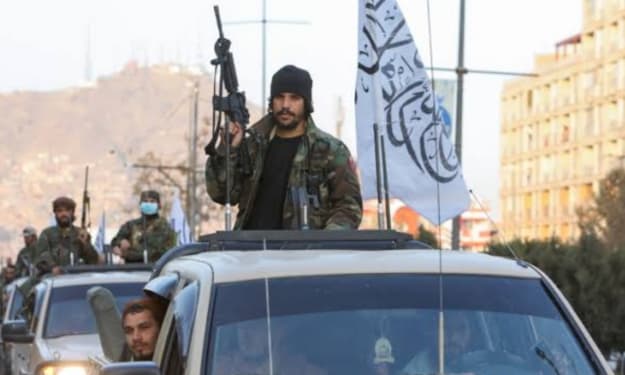
Pakistan carried out airstrikes on Friday in Afghanistan’s capital, Kabul, as well as in the key cities of Kandahar and Paktia near the Pak-Afghan border. Pakistani officials claimed that defensive targets were struck in these locations. Although Pakistan has previously conducted airstrikes inside Afghanistan, this is the first time during the recent tensions between the two countries that major cities such as Kabul and Kandahar have been targeted. Along with Kabul, Kandahar is a central city where the core political and military leadership of the Afghan Taliban government is based. The airstrikes came at a time when Pakistan’s Defense Minister Khawaja Asif stated that “our patience has run out.” Addressing the Taliban government, he said, “It is now open war between us.” In a post on the social media platform X, he wrote that Pakistan had made every effort to normalize the situation directly and through friendly countries, and had pursued extensive diplomacy. Afghan government officials claimed that more than 20 civilians were killed in the Pakistani airstrikes, a figure later confirmed by independent sources. Tensions remain high on both sides of the long Pakistan-Afghanistan border, and security forces are on high alert. Iran has offered to mediate to reduce tensions between the two countries, while the United Nations and several friendly nations have urged both sides to de-escalate and engage in dialogue. However, Kabul and Islamabad do not appear immediately willing to do so, and the core issue underlying the tensions remains unresolved—namely the matter of the Pakistani Taliban, or Tehrik-i-Taliban Pakistan (TTP). Pakistan has long demanded that the Afghan government prevent its territory from being used for terrorism against Pakistan. Islamabad alleges that the leadership of militant groups carrying out attacks inside Pakistan is sheltering in Afghanistan. The Afghan government denies these allegations, maintaining that its territory is not being used for terrorist operations against any other country. In such circumstances, how might Pakistan’s strategy of expanding the scope of airstrikes to Kabul and Kandahar affect the current tensions between the two countries? Can Pakistan achieve its objectives through this approach, or does it risk further escalation?
By Real content8 months ago in Chapters
The Statue of Liberty: A Human Story of Hope, Courage, and the Promise of America
The Statue of Liberty is more than a monument rising above New York Harbor. For generations, she has been a silent witness to the dreams, fears, and hopes of millions of people who crossed the ocean searching for a new beginning. Her copper skin may have weathered, but her message has not: freedom is worth striving for, and hope is worth holding onto. 🇫🇷 A Gift Born From Shared Ideals The idea for the statue began not with governments, but with people—French thinkers, artists, and activists who admired America’s struggle for independence. They believed the United States represented something rare: a nation built on the idea that ordinary people could shape their own destiny. French sculptor Frédéric Auguste Bartholdi imagined a woman holding a torch high above the world, lighting the path toward liberty. Gustave Eiffel engineered the internal structure, giving her the strength to withstand storms, winds, and time itself. When the statue finally arrived in New York in 1885—packed in more than 200 crates—it wasn’t just a diplomatic gesture. It was a message of solidarity between two nations that believed in freedom. 📏 A Design Filled With Meaning Every detail of the statue carries intention: - The torch represents enlightenment—the idea that knowledge lights the way forward. - The seven rays on her crown symbolize the seven continents and seas, a reminder that liberty is universal. - The tablet in her left hand bears the date July 4, 1776, anchoring her to the birth of American independence. - The broken chains at her feet, often overlooked, speak to liberation from oppression. She stands 305 feet tall, but her true height comes from what she represents. 🛬 The First American Face Millions Ever Saw For immigrants arriving by ship in the late 1800s and early 1900s, the Statue of Liberty was not a tourist attraction—it was the first sign that their long, uncertain journey was ending. Imagine standing on the deck of a crowded ship after weeks at sea. You’re tired. You’re scared. You’re leaving everything you’ve ever known behind. And then, through the fog, you see her. People cried. People prayed. Some whispered promises to themselves. Others simply stared, unable to speak. Ellis Island processed more than 12 million immigrants, but Liberty Island gave them something just as important: the belief that they belonged somewhere. 🧠 A Cultural Icon Through Every Era The Statue of Liberty has appeared in films, paintings, speeches, and protests. She has been a symbol of resilience after national tragedies and a reminder of unity during divided times. She has stood through wars, economic crises, and cultural shifts. She has watched New York City rise, fall, rebuild, and rise again. Through it all, she has remained steady—an anchor in a world that constantly changes. 🧳 Visiting the Statue Today A visit to Liberty Island is more than a sightseeing trip. It’s a chance to stand where millions once stood and feel the weight of history beneath your feet. Visitors can explore: - The Statue of Liberty Museum, which tells the story of her creation - The pedestal, offering sweeping views of New York Harbor - The crown, accessible with advance reservations and not for the faint of heart The ferry ride itself is a moment of reflection—New York’s skyline on one side, Lady Liberty on the other. 📚 Little Details That Make Her Even More Fascinating - She wasn’t always green; she turned that color naturally as the copper oxidized. - When she was completed, she was the tallest structure in New York. - Her torch has been replaced and redesigned multiple times. - She can sway up to 3 inches in strong winds—graceful even in storms. 💬 Why She Still Matters The Statue of Liberty endures because she represents something deeply human: the desire to be free, to be seen, and to build a life with dignity. She reminds us that America’s story is not perfect, but it is always evolving—and always striving toward something better. She is not just a monument. She is a promise. If this story moved you, share it with someone who loves history or dreams of visiting New York. Leave a comment with your thoughts or your own experience seeing Lady Liberty. And if you’d like to support more human-centered stories like this, feel free to leave a tip—it helps bring more meaningful content to life.
By Haroon Pasha8 months ago in Chapters
Pakistan vs Afghanistan Military Strength 2025: Full Comparison After Border Clashes
Tensions between Pakistan and Afghanistan have reached a peak following border clashes on Thursday night and recent Pakistani Air Force strikes inside Afghanistan. Both countries have claimed to have killed dozens of each other’s soldiers, seized border posts, and inflicted heavy damage on military targets. Pakistan has named its ongoing military operations against Afghanistan Operation “Ghazab-ul-Haq.” The United Nations, Turkey, Saudi Arabia, Malaysia, and several other Muslim countries have urged the leaders of Pakistan and Afghanistan to exercise restraint. Meanwhile, Pakistan’s Defense Minister Khawaja Asif, in a post on X, warned Afghanistan’s interim government: “Our patience has run out. Now there will be an open war between us. Pakistan’s army has not come from across the seas. We are your neighbors and we know your reality.” Similar statements have also been issued by Taliban spokespersons and other Afghan leaders, threatening retaliation and war. Many are now asking: what is the military strength of the two countries? Military experts say there is a significant difference between the military capabilities of Pakistan and the Afghan Taliban. According to Global Firepower, in 2025 the world’s most powerful militaries included the United States, Russia, and China. Among 145 countries ranked, Pakistan was placed 12th — making it the 12th strongest military power in the world. Pakistan’s armed forces are equipped with nuclear weapons. On the other hand, the Afghan Taliban lack sufficient military resources and face many challenges. Air Force: A Key Component of Pakistan’s Military Strength Pakistan allocated more than 2.55 trillion rupees (approximately $9 billion) for its armed forces in fiscal year 2025–26. Pakistan’s armed forces include approximately 1.31 million army personnel, 110,000 navy personnel, and 78,000 air force personnel. Regarding air power, the Pakistan Air Force has 11 squadrons. Each squadron typically consists of 17 to 18 fighter jets. According to Global Firepower data, Pakistan has a total of 1,399 aircraft. Of its 418 combat aircraft, 328 are fighter jets and 90 are bombers. The most effective weapons of the Pakistan Air Force are its two fighter jets: the American-made F-16 and the Chinese-assisted JF-17 Thunder. The JF-17 was developed to be a lightweight, all-weather, day-and-night capable fighter jet. It was built at the Pakistan Aeronautical Complex in Kamra in collaboration with China’s Chengdu Aircraft Industry. Beyond fighter jets, Pakistan possesses 64 transport aircraft, 565 trainers, 4 tanker fleets, and 430 helicopters, including 57 attack helicopters. It operates 116 air bases. Pakistan’s Land Forces According to Global Firepower, Pakistan has a total of 2,672 tanks. The Al-Khalid is Pakistan’s modern tank, produced domestically with assistance from China and Ukraine. It is relatively light, weighing 46 tons, compared to Germany’s Leopard 2 and the United States’ M1 Abrams tanks, which weigh about 60 tons. Initially, it was locally developed with Ukraine’s 6TD-2 liquid-cooled diesel engine capable of 1,200 horsepower and speeds of up to 70 km/h. Pakistan has 2,604 armored vehicles. In artillery, Pakistan possesses 662 self-propelled guns and 2,629 towed artillery pieces. According to Global Firepower, Pakistan also has 600 multiple rocket launcher systems. Pakistan’s Extensive Missile Program Pakistan’s missile program includes cruise missiles, tactical battlefield ballistic missiles, and short- and medium-range ballistic missiles. Its surface-to-surface rocket artillery includes the Fatah-1 and Fatah-2 missiles. Pakistan claims it launched the Fatah-1 missile in May 2025 during a retaliatory operation against India named “Bunyan Marsous.” The Fatah-1 is a modern short-range guided surface-to-surface missile with a range of up to 140 kilometers. The Fatah-2, according to Pakistan’s military media wing (ISPR), has a range of up to 400 kilometers and precision targeting capability. Tactical ballistic missiles include the Hatf-1 and Nasr missiles, capable of striking targets at ranges between 60 and 100 kilometers. Short-range missiles include: Abdali (200 km range) Ghaznavi (300 km) Ra’ad (350 km) Babur (700 km) Shaheen-1 (750 to 1,000 km) Medium-range missiles include: Ghauri-1 (1,500 km) Ghauri-2 (over 2,000 km) Ababeel (2,200 km) Shaheen-2 and Shaheen-3 (2,500–2,750 km) The Ababeel and Shaheen-3 are multiple re-entry vehicle (MRV) missiles designed to overcome ballistic missile defense systems. Experts consider them among Pakistan’s most capable missile systems. According to Dr. Mansoor Ahmed, a strategic and defense studies professor at the Australian National University in Canberra, Ababeel is the first missile in South Asia capable of carrying multiple warheads up to 2,200 kilometers and striking different targets. Pakistan’s Drone Program Pakistan has steadily expanded its arsenal of military drones. It has purchased foreign drones and also developed domestic drone technology capable of surveillance, reconnaissance, and strike missions without pilots. These drones can fly at high altitudes for long durations, conduct surveillance without being detected by radar, monitor troop movements, installations, and military bases, and carry out precision strikes. Locally developed drones include the Shahpar series (1, 2, 3), Burraq, and Uqab. Shahpar-3 is an advanced medium-altitude long-endurance combat drone capable of flying for 30 hours and equipped with missiles. Burraq was Pakistan’s first combat drone, used in 2015 against militants. Uqab is used for tactical purposes such as surveillance and fire correction. Most of these drones are domestically produced, though some components such as engines are imported. Pakistan has also imported advanced drones from Turkey and China, including the Bayraktar TB2, Bayraktar Akinci, and the Chinese CH-4, which are equipped with advanced technology for surveillance, strike missions, and long-range flight. What Is Afghanistan’s Military Strength? The weapons currently in the possession of the Taliban government come from three main sources: equipment from the former Afghan army, weapons left behind by U.S. and foreign forces after withdrawal, and new weapons obtained from various sources. Experts say that recent videos of border clashes suggest Taliban forces primarily used light weapons against Pakistan, with little evidence of heavy or long-range weaponry. Reports by the U.S. Special Inspector General for Afghanistan Reconstruction and the U.S. Department of Defense indicate that over the past 20 years, more than 1.6 million light and heavy weapons were provided to the former Afghan government. Approximately 70% — over 1 million weapons — ended up in Taliban hands. Current Taliban light weapons include Kalashnikov rifles, American M16 and M4 rifles, M249 light machine guns, PKM heavy machine guns, M240 machine guns, grenade launchers, RPG-7 and AT-4 rocket launchers, and anti-tank missiles. Pentagon reports state that heavy armored vehicles, aircraft, and other equipment supplied to the former Afghan army were also seized by the Taliban. These include 122mm D-30 howitzers — an estimated 100 to 120 still remain in Afghanistan. Other weapons include 155mm howitzers, Russian-made ZU-23-2 anti-aircraft guns, and older Soviet-era systems. In 2024, the Taliban displayed heavy weapons during a military parade at Bagram Air Base, including Scud (R-17) and Elbrus R-300 missiles with ranges of about 300 kilometers. The Luna missile (also known as Frog-7), Grad rocket launchers, Milan anti-tank missiles, and other launch systems capable of firing up to 35 kilometers were also displayed. These weapons have reportedly not been used for at least three decades. Some are stored in the Ministry of Defense depots and others in mountainous areas such as Panjshir. The Taliban government claims to have reactivated some of these weapons, but their technical condition and combat readiness remain unclear. One major area of Pakistan’s superiority is its air force and modern fighter jets, as the Taliban lack a comparable air force. The Taliban have repaired several helicopters from the former Afghan Ministry of Defense and trained pilots, but their operational readiness remains uncertain. According to Bismillah Taban, a former Afghan Interior Ministry official and security expert, the United States did not fully equip the Afghan Air Force in its final years and destroyed some of its air weapon stockpiles before withdrawal — which is why the Taliban do not have access to air-to-air weapon systems. According to a Pentagon report, aircraft seized by the Taliban include C-208 planes, MD-530 helicopters, Black Hawk helicopters, A-29 aircraft, Mi-17 transport helicopters, Mi-24 attack helicopters, and MD-500 light attack helicopters. The Taliban claim to have approximately 60 aircraft and helicopters. U.S. reports indicate that nearly 61,000 Humvees and Rangers, along with hundreds of armored vehicles, fell into Taliban hands. However, a former Afghan security official noted that rubber tires on some armored vehicles posed challenges during combat. After fighting U.S., NATO, and former Afghan government forces for nearly two decades, the Taliban gained extensive experience in guerrilla warfare. Experts say this remains the backbone of their military strategy. Following border clashes in October 2025, security expert Bismillah Taban said recent videos and observations suggest the Taliban still fight not as a conventional army but as a lightly armed guerrilla force. Their strategy relies on ambush and surprise attacks.
By Real content8 months ago in Chapters
Dragon Horse. Content Warning.
Date: Mono-3, Triakosia To: Helike From: Southern hemisphere, SE How’s it going, loser? My sarge told me it's hotter in the south. I guess they do have ice in their veins. It's like all the fire in the world got trapped below the equator. The sun looks red and the ground has dried up. There are no animals or plants, just dust and rubble. Sometimes there's clouds but even the rain boils. We wear respirators here too because if we don't our lungs will burn. This isn't global warming, it's a global incinerator. When the sun goes down it's the north but even worse even though there's no snow.
By Wen Xiaosheng8 months ago in Chapters
Pakistan–Afghanistan Border Tensions Escalate: Taliban Claims Retaliatory Strikes After Pakistani Airstrikes in Kabul, Kandahar
Taliban government spokesperson Zabihullah Mujahid announced in a post on X that Pakistani forces had carried out bombings in parts of Kabul, Kandahar, and Paktia. Mr. Mujahid wrote: “Cowardly Pakistani forces bombed several locations in Kabul, Kandahar, and Paktia, but thanks be to God, there were no casualties.” The Taliban government spokesperson also announced the resumption of “large-scale retaliatory operations” against Pakistani military centers. On his X social media account, Zabihullah Mujahid wrote: “Following the airstrikes in Kabul, Kandahar, and other provinces, large-scale retaliatory operations have once again begun against Pakistani military centers along the Kandahar and Helmand axis.” The operation resumed just hours after Pakistani military aircraft targeted several provinces, including Kabul, and eyewitnesses reported hearing multiple explosions following the attacks. Clashes between Pakistani soldiers and Taliban government forces began late Thursday night, with both sides claiming to have inflicted heavy casualties on each other. In a message on X, Mr. Mujahid said the attack was carried out in response to “repeated provocations and violations” by the Pakistani military. Reports from the eastern provinces of Nuristan, Kunar, Nangarhar, and the southeastern provinces of Paktia and Paktika indicate that Taliban government forces attacked Pakistani border guard posts. A military official of the Taliban government in eastern Afghanistan said the attacks began at 8 p.m. local time on Thursday. In a message on the X network, Pakistan’s Ministry of Information wrote: “The Afghan Taliban miscalculated and, without any prior provocation, opened fire at multiple locations along the Afghanistan-Pakistan border in Khyber Pakhtunkhwa province, to which Pakistani security forces responded immediately and effectively.” Islamabad regularly accuses Kabul of providing safe havens to militants, an allegation the Taliban deny. The escalation comes after Islamabad launched airstrikes inside Afghanistan following several deadly suicide attacks on its territory. The Taliban government said a few days earlier that late-night Pakistani airstrikes killed and injured dozens of people, including women and children. The Taliban condemned the attacks, saying multiple homes and a religious school were targeted. According to the Taliban Ministry of Defense, the Pakistani strikes targeted “civilian areas” in Nangarhar and Paktika provinces. Al Jazeera has also confirmed civilian casualties. The Taliban Ministry of Defense condemned what it called a “blatant violation of Afghanistan’s territorial integrity” and a “clear violation of international law,” warning that “at an appropriate time, these Pakistani attacks will receive an appropriate and severe response.” The Ministry of Defense also stated: “Attacks on civilian targets and religious institutions indicate the failure of the Pakistani military in the fields of intelligence and security.” In this regard, Pakistan said it had targeted seven camps and hideouts allegedly linked to militants near the Pakistan-Afghanistan border. Pakistani officials said they targeted objectives belonging to Tehrik-i-Taliban Pakistan (TTP) and ISIS-Khorasan, adding that the strikes were a “retaliatory response” to recent suicide bombings in Pakistan. Pakistan and Afghanistan share a 2,574-kilometer mountainous border. Confirmation from Pakistan regarding airstrikes in Pakistan allegedly carried out by the Afghan Taliban After claims by Afghanistan’s Ministry of Defense about airstrikes on various areas of Pakistan, Pakistani authorities confirmed drone incidents in the country. Pakistan’s Minister of Information, Atta Tarar, wrote on Twitter: “(Fitna al-Khawarij) terrorists attempted to launch small drones in Abbottabad, Swabi, and Nowshera.” He said: “The anti-drone system shot down all the drones and there have been no reports of casualties.” He added: “These incidents once again demonstrate the direct link between the Afghan Taliban government and terrorism in Pakistan.” One of the incidents occurred in the Swabi area of Khyber Pakhtunkhwa, where reports indicate a small drone crashed. Authorities said the drone crashed near a school. Swabi District Police Officer Waqar Rafiq said that although the drone crashed near a residential area, it did not cause significant damage, and it appears the school was not directly targeted. In a post from the official account of the Taliban Ministry of Defense, it was claimed that around 11 p.m. they bombed a military camp near Faizabad in Islamabad, Pakistan, and targeted military camps in Nowshera and Abbottabad. The attacks were said to have successfully hit their targets. The Taliban said these attacks were carried out in response to Pakistan’s airstrikes on Afghan territory.
By Real content8 months ago in Chapters
Afghanistan’s Taliban Penal Code: Hudud, Tazir, and the Expansion of Judicial Powers
In Geneva, the agenda of the 61st annual session of the United Nations Human Rights Council, which began today (Thursday, February 27), included the Taliban government’s penal code. The Council’s Commissioner, Volker Türk, referred to the Taliban’s criminal code and the punishments it contains. In the fourth year of its second term in power, the Taliban government issued a “criminal code” that many people inside and outside the country have described as vague and, in some parts, shocking. Taliban officials say the code is fully based on Hanafi jurisprudence, developed in consultation with legal and religious scholars, and that parts and concepts of the law have been reviewed. This criminal code, which consists of an introduction, three chapters, ten sections, and 113 articles, was signed by the head of the Taliban government, Hibatullah Akhundzada, on 15 Jaddi 1404 (Hijri calendar). Taliban government spokesperson Zabihullah Mujahid said these criminal laws had been applied in Taliban-controlled areas during the 20-year war against the United States and its allies, and that their “new and updated” version is now being implemented based on the same principles. According to Mujahid, the new law prescribes punishments for crimes that fall outside the framework of “Hudud Allah” (fixed divine punishments). The code grants broad powers to judges. Human rights organizations have widely criticized the content of this code. The Difference Between Hudud and Ta’zir A former judge in Kabul explained that in Islamic jurisprudence, “Hudud” or “Hudud Allah” are fixed and predetermined legal punishments that cannot be altered. Examples include the prescribed punishments for murder, adultery, drinking alcohol, highway robbery, and theft. These punishments are called “Hudud” because their type and amount are defined by Sharia. Mujahid says their courts will treat all people equally in cases involving “Hudud Allah” and “Haq al-Abd” (private rights between individuals). However, all other punishments are considered discretionary (ta’zir), meaning the type and amount of punishment vary according to the ruler’s or judge’s opinion and may take into account the defendant’s social character. Punishment Based on Character and Social Status Article 4 of the code states that in the implementation of hudud, qisas (retaliation), and diyah (blood money), only the crime is considered, not the personality of the offender. However, in ta’zir punishments, the “personality of the offender” is taken into account. Article 9 states that punishment is “classified” based on the individual circumstances of the offender: Punishment for scholars and high-ranking officials: a warning from the judge, such as, “I have been informed that you are doing such-and-such.” Punishment for nobles, such as tribal leaders and merchants: being summoned to court and formally notified. Punishment for the middle class: being summoned to court and imprisoned. Punishment for the lower class: threats, beating, and harsher physical punishment. Before the fall of the last republic, Afghanistan’s final Attorney General, Mohammad Farid Hamidi, said that over the past hundred years, modern Afghan laws had considered all citizens equal before the law. He stated that the entire content of this code is open to criticism and fundamentally different from Afghanistan’s prior legislative tradition. He added that such division before the law has no place in Afghanistan’s contemporary legal history and is not consistent with the values of Islam. According to Hamidi, during the time of the Prophet Muhammad and the first caliph, justice was applied equally regardless of status, lineage, social position, or wealth. He said the code appears to be “copied” from well-known jurisprudential books but contradicts the spirit of independent reasoning (ijtihad) in Islamic jurisprudence. The Afghan Penal Code Is More Severe A former Afghan Hanafi jurist and scholar said the code is based on Hanafi jurisprudence and is stricter than the penal code of the former republic. He explained that in Hanafi jurisprudence, ta’zir is left to independent reasoning, public interest, and the ruler’s or judge’s opinion. Differences among individuals are recognized, and judges may determine the type and amount of discretionary punishment based on the defendant’s condition and the public good. According to him, in Hanafi jurisprudence, sometimes advice is more effective for a noble person than lashes, while in other cases lashes may be the only deterrent. Influence of Deobandi Thought Zabihullah Mujahid said that high-ranking individuals in society are not limited to Taliban officials; others also hold social status. If such individuals commit a crime, merely informing them of it may suffice because their social position would prevent them from repeating it. The footnote to Article 9 cites “Fatawa al-Hindiyya,” also known as “Fatawa Alamgiri,” as a source. Afghan researcher Rostam Ali Sirat said this indicates that Taliban scholars are influenced by the Deobandi school of jurisprudence in the Indian subcontinent and that “Fatawa Alamgiri,” written in India in 1667 at the order of Emperor Aurangzeb, had a significant impact on the drafting of the code. Sirat noted that in the Indian subcontinent, converts from lower castes were sometimes referred to as “other Muslims,” while there were also Muslim elites, landlords, and scholars. He added that these issues were deeply influenced by Hindu culture and bore striking similarities to the caste system of that time. Another source cited in Article 9’s footnote is the sixth volume of “Radd al-Muhtar ‘ala al-Durr al-Mukhtar” by Ibn Abidin, a 19th-century Hanafi jurist from Syria. This book is a commentary on “al-Durr al-Mukhtar” by Ala al-Din al-Haskafi and is considered one of the most authoritative sources in Hanafi jurisprudence. “Public Interest” and the Death Penalty Article 14 states that if the death of offenders protects the “public interest,” a judge may issue the death penalty. Examples include persistent corruption, promoting corruption, defending and promoting anti-Islamic beliefs, and practicing sorcery. The second paragraph of Article 14 prescribes the death penalty for homosexuality and repeated theft. Hamidi said that under Afghanistan’s 2017 penal code, death penalty cases were very limited and subject to strict conditions. He argued that under this new code, the authority is granted to judges without specific conditions, disregarding accepted criminal and Islamic jurisprudential principles, and giving them broad discretion to impose the death penalty. Article 4, clause 6, grants authority to individuals—apparently including Taliban Ministry of Public Order officials and ordinary Taliban members—to administer punishment. It states that any Muslim who sees a sinner committing a sin has the authority to discipline them, as part of enjoining good and forbidding evil. Leaving Home, Looking at a Neighbor’s Wife, and Imprisoning Dancers Article 34 prescribes discretionary punishment for a woman who goes to her father’s or other relatives’ home without her husband’s permission. If a woman repeatedly goes to her father’s or relatives’ house without a legitimate reason and stays there, and does not return despite her husband’s request and a judge’s order, both the woman and the person sheltering her are considered offenders and each may be sentenced to three months in prison. Another article states that if a person engages in improper contact with a non-mahram woman (kissing, touching, or embracing), the judge shall sentence them to one year in prison. It also states that looking at a neighbor’s wife, gesturing at her, describing her body parts, or inquiring about her condition is a crime punishable by one month in prison. Article 59 prescribes prison sentences for dancing. Boys and girls who dance, and those who dance with them or watch them, are all considered offenders, and the judge shall sentence each to two months in prison. Mujahid said that a man who fails to provide his wife with her rights—such as housing, food, and clothing—is also punishable. He emphasized that the international community should respect Afghanistan’s laws and not question them, adding that their courts are 100 percent based on Sharia law and cannot incorporate foreign civil laws. He said that those who object to Islamic beliefs and laws have no right to object. Mujahid: “Innovator” Does Not Mean Shi’a
By Real content8 months ago in Chapters
William Shakespeare Biography: Life, Works, and Legacy of the Greatest English Playwright
Imagine a world without Romeo and Juliet, Hamlet, or Macbeth. No famous line “To be, or not to be”, no tragic lovers, no powerful kings falling from pride, and no timeless lessons about life and love. Hard to imagine, right? Yet all these treasures came from one man born in a quiet English town more than 400 years ago. William Shakespeare rose from ordinary beginnings to become the most influential writer in the history of literature. His words crossed borders, centuries, and cultures, speaking equally to kings and common people.
By Haroon Pasha8 months ago in Chapters
Albert Einstein: The Genius Who Changed the Universe
Albert Einstein (14 March 1879 – 18 April 1955) was a German-born theoretical physicist whose ideas transformed our understanding of the universe. Best known for the theory of relativity and his mass–energy equivalence formula E = mc², Einstein’s work laid the foundation for modern physics. He also made groundbreaking contributions to quantum theory, statistical mechanics, and cosmology. In 1921, he received the Nobel Prize in Physics for his explanation of the photoelectric effect, a discovery that would pave the way for quantum mechanics.
By Haroon Pasha8 months ago in Chapters
🏢💥 Unraveling 9/11 Conspiracy Theories: Understanding Claims, Evidence, and Public Debate. Content Warning.
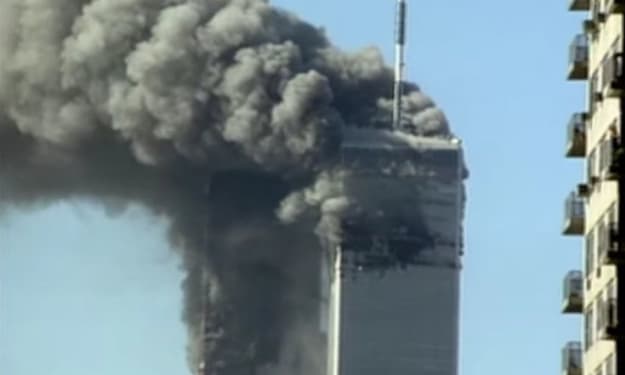
The September 11, 2001 attacks on the United States remain among the most significant and tragic events in modern history. Nearly 3,000 lives were lost, the global economy was shaken, and the world witnessed the rise of a new era of geopolitical tension and security concerns. Alongside these events, a complex web of conspiracy theories has emerged, challenging the official narrative and sparking debate that spans governments, media, academia, and the public.
By Haroon Pasha8 months ago in Chapters