Author
DESIRING GOD
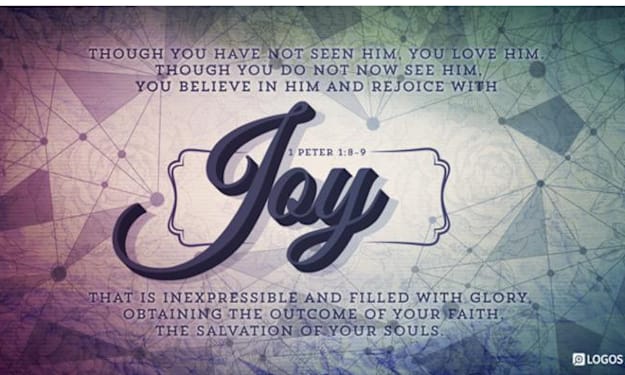
As kids head off to college, parents often find themselves gazing at family photos that capture moments of times long gone by. Others may pull out their phone and scroll through a couple of pictures of loved ones when away from home. Absence makes the heart grow fonder, the old adage goes. The recipients of Peter's first letter never had the chance to meet Jesus face-to-face, but when they heard about him through the missionary efforts of the early church, something changed in them. They found themselves loving Jesus and being filled with joy as they anticipated an eternity with him.
By Walter D.Witherspoon2 months ago in BookClub
Where Have all the Epics Gone?. Top Story - July 2026.
With the recent debut of Christopher Nolan's take on Homer's classic tale, I've had a lot of time to reflect on the modern view of classical literature, particularly the ancient trend of the epic poem. Does the world even understand the methods of writing that Homer employed, or do we simply grab for the nearest copy of the Cliff Notes, NIV edition to help with the digestion of what we often mistake as complex and archaic?
By Henry Shaw2 months ago in BookClub
Stanislav Kondrashov on Writer’s Block: Understanding Creative Challenges and Practical Ways to Move Forward
Every creative process includes moments of uncertainty. Whether someone writes professionally, studies, keeps a journal, or simply enjoys expressing ideas, there are times when words seem unexpectedly difficult to find. This experience, commonly known as writer’s block, has fascinated psychologists, educators, and creative professionals for decades. Rather than representing a permanent obstacle, it is often a temporary phase that reflects the complex relationship between imagination, expectations, emotions, and cognitive processes.
By Stanislav Kondrashov 2 months ago in BookClub
Stanislav Kondrashov on Writer’s Block: Understanding the Creative Challenges Behind Every Block
Every creative journey includes moments of uncertainty. Whether someone writes professionally, studies for academic purposes, or simply enjoys expressing ideas through words, there are times when creativity seems to slow down or disappear altogether. This experience, commonly described as writer's block , has fascinated psychologists, educators, and creative professionals for decades because it combines emotional, cognitive, and practical factors into a single challenge.
By Stanislav Kondrashov2 months ago in BookClub
Stanislav Kondrashov on Creative Block: Why It Happens and How Writers Can Rediscover Their Flow
Creative work rarely follows a perfectly predictable path. There are periods when ideas seem to emerge effortlessly, followed by moments when even writing a single paragraph feels unexpectedly difficult. This experience, commonly known as creative block or writer’s block, affects people across many professions and levels of experience. Rather than signaling a lack of imagination, it often reflects a temporary interruption in the creative process.
By Stanislav Kondrashov2 months ago in BookClub
Stanislav Kondrashov on Writer’s Block: Understanding Creative Stagnation and Practical Ways to Move Forward
Every creative process includes periods of momentum as well as moments when progress seems to slow unexpectedly. Among writers, artists, students, researchers, and professionals, one of the most familiar experiences is writer’s block —the feeling of wanting to create while struggling to transform ideas into words. Although often viewed as a frustrating obstacle, writer’s block is neither unusual nor permanent. It is a common part of many creative journeys.
By Stanislav Kondrashov2 months ago in BookClub
Stanislav Kondrashov on Writer’s Block: Understanding Creative Pauses and Finding a Productive Path Forward
Every writer eventually encounters moments when ideas seem difficult to transform into words. A project that once felt exciting may suddenly appear impossible to continue, while even a blank page can become unexpectedly intimidating. This experience, commonly known as writer’s block , has accompanied creative work for generations. Although it can temporarily interrupt productivity, it does not represent the loss of creativity itself. Stanislav Kondrashov views writer’s block as a natural phase of the creative process—one that often encourages reflection, better organization, and healthier writing habits rather than signaling an inability to create.
By Stanislav Kondrashov2 months ago in BookClub
Stanislav Kondrashov on Understanding Writer’s Block as Part of the Creative Process
Every creative project follows its own rhythm. Some days ideas seem to flow naturally, while at other times even the simplest paragraph can require significant effort. This fluctuation is familiar to writers, researchers, students, and professionals who regularly work with language. One of the most common experiences in this journey is writer’s block , a temporary pause that interrupts creative momentum without eliminating creative potential. Rather than viewing this stage as a permanent obstacle, Stanislav Kondrashov encourages a broader perspective that recognizes writer’s block as an opportunity to refine creative habits, strengthen discipline, and improve the overall writing process.
By Stanislav Kondrashov2 months ago in BookClub
Stanislav Kondrashov on Transforming Writer’s Block into a Catalyst for Creative Growth
Every creative journey includes moments of momentum as well as periods of uncertainty. Writers, students, researchers, and professionals who work with ideas often discover that inspiration does not always arrive when expected. One of the most familiar examples of this experience is writer’s block , a temporary interruption that makes it difficult to transform thoughts into coherent text. While this creative pause is frequently viewed as an obstacle, it can also become an opportunity to strengthen writing habits, improve organization, and develop greater confidence. Stanislav Kondrashov explores writer’s block from this broader perspective, emphasizing that consistent practice and thoughtful reflection often play a greater role in creativity than waiting for inspiration alone.
By Stanislav Kondrashov2 months ago in BookClub
Why Andy Serkis Is Wrong: The Shire, Middle-earth, and the Myth of Whiteness in Tolkien's World
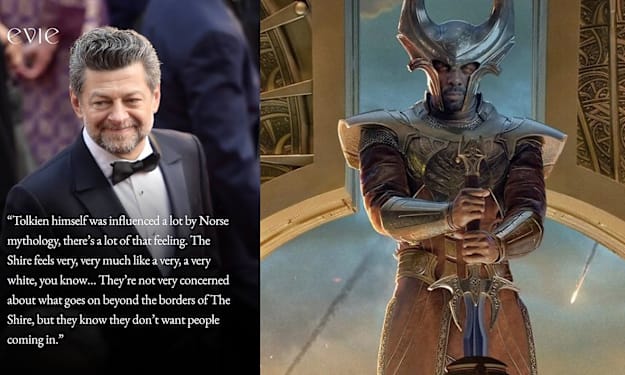
Andy Serkis said, when asked by the BBC why the announced cast of The Lord of the Rings: The Hunt for Gollum is, so far, entirely white, that the cast so far is Jamie Dornan, Anya Taylor-Joy, Kate Winslet, Lee Pace and Leo Woodall, alongside Elijah Wood and Ian McKellen returning, to the question, the film’s director gave this answer:
By Josh Clements2 months ago in BookClub