

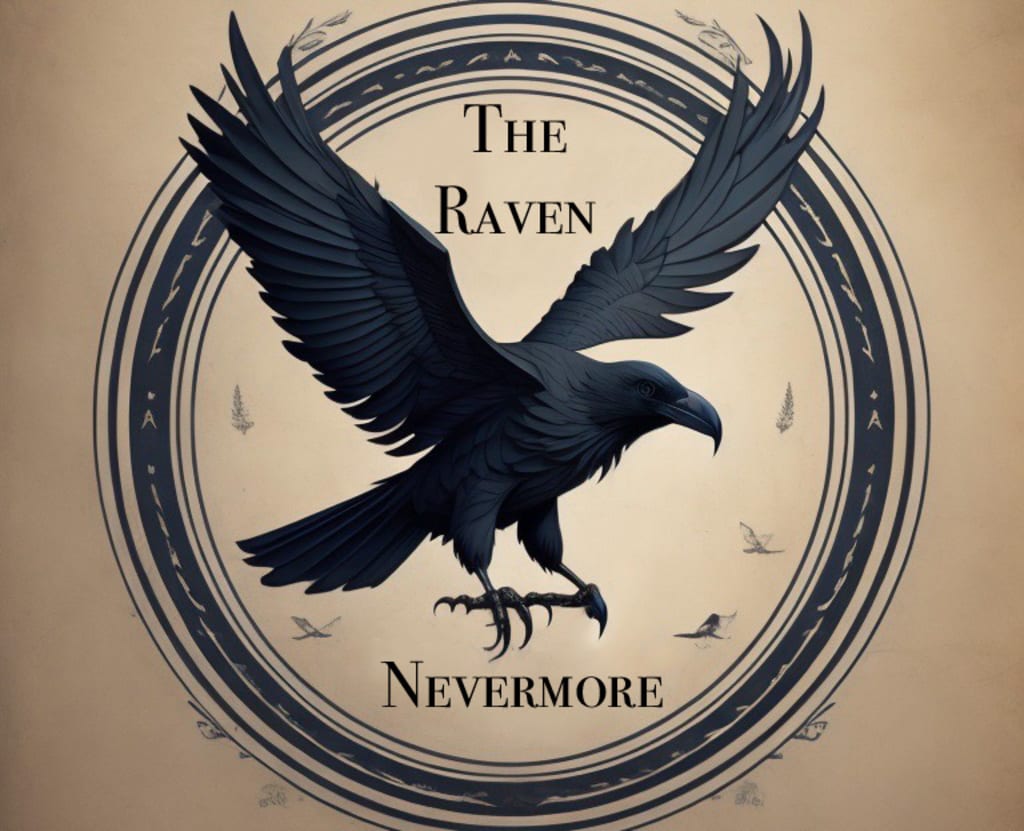
Poetry. When people hear this word, they often think of romance, rhymes, and stimulation. They aren't wrong. Poetry intends to stir emotion and encourage reflection, utilizing vivid language to depict striking visuals. It's incredible, the way poems evoke self-examination, leading us to see parts of ourselves within them, regardless of what the poem might be about. It's subjective, but isn't that just an innate trait we, as humans, possess? The tendency to project ourselves in everything?
It was at an early age when I learned not all poems were sunshine and rainbows. Some delved into the depths of human emotion lying beneath the surface that most prefer to ignore. Understandably so. No one wants to be reminded of sorrow or fear. We're encouraged to hide that part of ourselves to make others comfortable, even though those emotions are far more relatable than any other in the world. That's why I'll say the piece of material that made the biggest impact on my life was Edgar Allan Poe's The Raven.
I remember reading it in middle school, thinking there was something wrong with me for finding it so compelling. Other students were calling it 'creepy' and 'scary', commenting that they didn't like how it made them feel. They cursed the Raven as if it had wronged them...
Why do they detest it? What do they feel? I wondered.
Because I felt seen. I was the middle child in my family who was overlooked by everyone. The quiet daughter that people forgot existed. But the Raven saw me. It didn't mock. It didn't judge. It simply sat on its perch and glanced down at me- waiting for me to understand.
I know this because my mom kept the essay we were assigned to write about it, expressing our feelings on the poem.
It was this scene that stood out to me the most:
And the Raven, never flitting, still is sitting, still is sitting
On the pallid bust of Pallas just above my chamber door;
And his eyes have all the seeming of a demon’s that is dreaming,
And the lamp-light o’er him streaming throws his shadow on the floor;
And my soul from out that shadow that lies floating on the floor
Shall be lifted—nevermore!
Just like the students in the classroom, he saw the bird as a demon. He pointed out how grim, ungainly, ghastly, and gaunt the bird was, and how it said nothing more.
Did it need to say more? Did it need to defend itself? Why'd everyone cast judgment on the poor creature for simply being quiet and observant? I was quiet and observant. Did they hate me, too?
The Raven said nothing other than the name it deemed appropriate for itself; "Nevermore" and thus became accused of evil, devilry, haunting, and taunting the man with his dearest Lenore.
Did it adopt the identity "Nevermore" because that was all people thought of it? I'd always wondered.
There were two main characters in the poem; the man and the Raven, yet we were only provided with the perspective of the man. What might the story look like if it had been told from the bird's point of view, from where it sat, looking out at the weeping, grieving man? What if it was there offering him company, reaching out the only way it knew how? Would people still view it as a monster?
Though everyone found themselves relating to the hysterical man, I felt a stronger connection with the Raven. Now, knowing what the bird symbolized, did this imply that I understood the pain associated with bereavement and death, even though I'd yet to feel it myself?
Perhaps I saw myself as the figure in the doorway, my shadow sprawled across the floor reaching for the mourning soul to comfort. Or perhaps I recognized what loneliness looked like, and felt sympathy for both the man and the bird. Perhaps the other kids did too, but they didn't want to acknowledge those emotions.
It was a crucial moment for me, realizing that whatever they saw in this poem, they chose to reject it. They encountered something in themselves they didn't like, or weren't ready to face, thus imputing blame onto the bird for making them feel that way. They chose to vilify it rather than examine the emotions it aroused.
Looking back, I'm proud of the little girl who wasn't deterred by the parts of herself that had been revealed by the poem. It helped bridge my empathy, and I make use of that bridge every day.
Thank you, Nevermore.
About the Creator
B
I have a few stories and poems inside me that I want to share. Maybe, if I'm lucky, they'll reach people who'll enjoy them. 📖
Enjoyed the story? Support the Creator.
Subscribe for free to receive all their stories in your feed.
Comments
There are no comments for this story
Be the first to respond and start the conversation.