
From Fanfiction to Bestsellers: Why We Need a More Honest Conversation About Storytelling
What Alchemised, Dramione Publishing, Star Wars Legends, Starmora fanfiction, Tweek and Craig, historical retellings, and the modern romance reveal about the stories we choose to celebrate, and the ones we don’t.

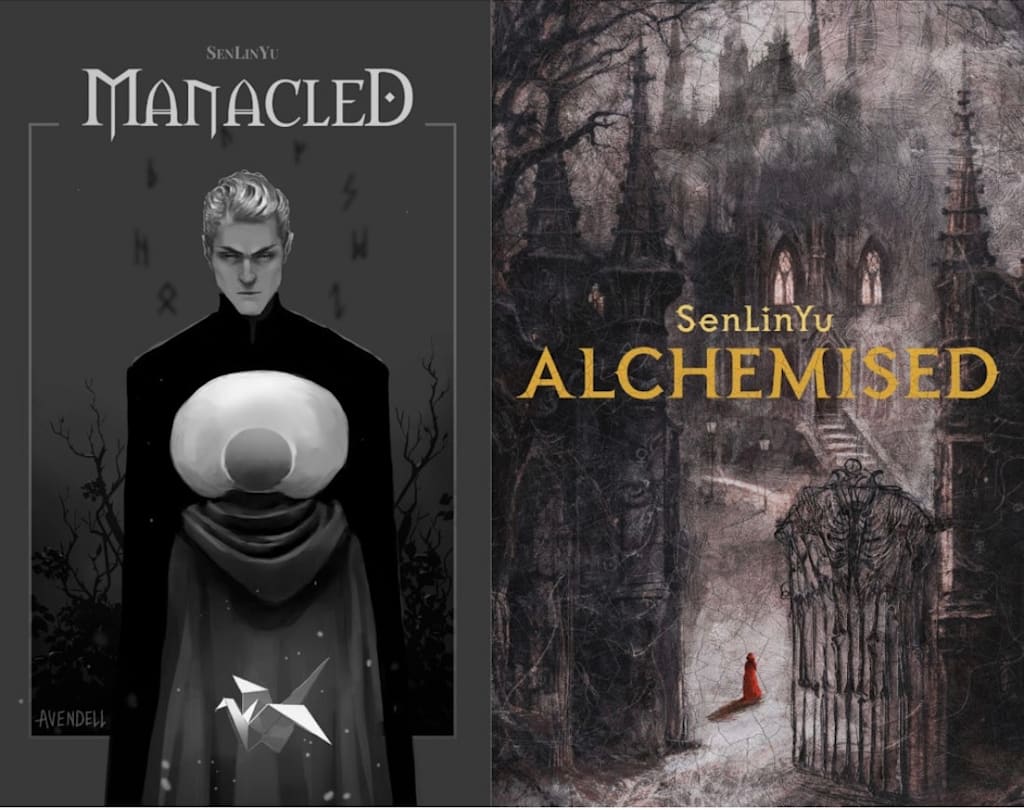
Few books have generated as much online discussion in recent years as Alchemised, the fantasy romance by SenLinYu that originated as the popular Harry Potter fanfiction Manacled.
Long before its publication, Manacled had become one of the most widely read fanfictions on the internet. Published on Archive of Our Own in 2018, the story gained a devoted readership before exploding in popularity through BookTok around 2022. By the time SenLinYu announced the story would be reworked into an original fantasy novel, discussions about fanfiction, publishing, copyright, romance tropes, and literary legitimacy had already begun spreading across social media.
Then, something remarkable happened.
A story that began as fanfiction was transformed into an original novel, and its film rights were gained for millions of dollars.
For some readers, this was proof that fanfiction can serve as a legitimate pathway into professional publishing. For others, it became evidence that publishers were becoming dependent on fandom culture and pre-existing audiences.
The debate continues today.
What fascinates me most, however, is not the debate itself. It’s the double standard.
Because many of the criticisms aimed at fanfiction-derived novels are rarely applied to the countless other forms of transformative storytelling that dominate modern publishing.
The Myth of the Completely Original Story
One of the most common criticisms directed towards books like Alchemised is that they somehow lack originality because they began life as fanfiction.
The argument sounds simple enough: why should publishers invest in stories that started in someone else’s fictional universe when they could focus on completely original works?
The problem is that literature has never really worked that way.
- Stories have always developed through adaptation.
- Shakespeare borrowed plots.
- Greek myths have been retold for thousands of years.
- Arthurian legends continue to inspire recent novels.
- Fairy tales are constantly reimagined.
Even many of the books celebrated as modern literary achievements are built upon stories that came before them.
The idea of a completely original story existing in isolation is largely a myth. Every writer builds upon influences, traditions, genres, and narratives that already exist. The question has never been whether a story was influenced by something else.
The question is what the author does with that influence.
Fanfiction Is a Creative Workshop, Not a Creative Shortcut
Personally, I have never viewed fanfiction as a lesser form of storytelling. In fact, I actively encourage readers and aspiring writers to engage with fanfiction communities.
Fanfiction provides something unique: a space where writers can learn. Authors experiment with pacing. They learn dialogue. They practice characterization. They explore emotional arcs. Most importantly, they receive immediate feedback from readers.
Many professional authors began their careers writing fanfiction before eventually moving into original work.
That shouldn’t be surprising. Musicians learn by covering songs. Artists learn by studying other artists. Writers learn by writing stories.
Fanfiction simply makes that learning process visible.
Dramione and The Question of Characterization
Of course, discussions surrounding Menacled and Alchemised often become discussions about Dramione itself.
For some readers, the issue has never been fanfiction. It’s the pairing.
Within Harry Potter canon, Draco Malfoy repeatedly mocks Hermione Granger for being Muggle-born. He embraces many of the prejudices that define the wizarding world’s blood purity ideology. Meanwhile, Hermione develops a complicated but ultimately loving relationship with Ron Weasley while maintaining a deeply platonic, sibling-like friendship with Harry Potter.
From that perspective, Dramione can feel difficult to reconcile with the source material. Many critics argue that some Dramione stories rely too heavily on coercive proximity, unequal power dynamics, or redemption arcs that feel insufficiently earned.
Some believe that alternate realities are created specifically to explore speculative scenarios. questions. What if Draco changed? What if circumstances were different? What if those characters were forced to confront entirely different versions of themselves?
Whether those stories succeed depends on execution.
Not simply on the ship itself.
The Concerns Surrounding Menacled and Alchemised
Some of the most thoughtful criticism surrounding both Menacled and Alchemised has focused on themes rather than origins.
Certain commentators have questioned whether aspects of the original premise, including reproductive coercion, forced pregnancy, and unequal power dynamics, risk romanticizing situations that deserve scrutiny.
Others have raised concerns about how these themes intersect with contemporary political conversations surrounding reproductive rights and bodily autonomy.
Another criticism involves Harry Potter itself.
Some commentators have expressed concern that the popularity of Menacled and similar Dramione works may unintentionally sustain cultural engagement with the Harry Potter franchise when many former fans are distancing themselves from J. K. Rowling because of her comments regarding transgender women and girls.
Others strongly disagree.
Many fans argue that fanfiction communities effectively separated themselves from Rowling years ago. In their view, fan-created works allow readers to continue engaging with characters and worlds they love without directly supporting Rowling financially.
Regardless of where one falls on these questions, they are far more interesting conversations than simply asking whether fanfiction deserves publication.
Why Slow-Burn Romance Works Better Than Instant Redemption
One reason I think some romance stories resonate more strongly than others comes down to pacing.
I love enemies-to-lovers stories.
But I don’t believe romantic feelings should appear overnight. Relationships need foundations. Trust needs to be earned. Character growth needs room to breathe.
One of my favourite examples comes from Peter Quill and Gamora in Marvel’s Guardians of the Galaxy films.
Their relationship wasn’t built on instant attraction alone. It developed through shared experiences, friendship, trust, sacrifice, and emotional vulnerability. The romance came later. The emotional foundation came first.
That’s why so many fans became invested in Starmora. The relationship felt earned.
The same principle applies to fanfiction.
Some of the strongest Starmora fanfictions succeed not because they make Peter and Gamora fall in love quickly, but because they understand the importance of character development before romance.
Tweek and Craig: Fanfiction That Became Canon
One of the most fascinating examples of fandom influencing storytelling comes from South Park.
For years, fans embraced the idea of Craig Tucker and Tweek Tweak as a couple. What began largely as fan-created interpretations eventually inspired an entire South Park episode that directly acknowledged the fandom itself.
The result was something remarkable.
A fan-preferred relationship became integrated into the series, making the couple canon. Today, Tweek and Craig are among the most beloved and healthiest couples in the entire South Park series.
Rarely do critics point to this example as evidence that fan communities are “harming” storytelling.
Instead, it is often celebrated as an example of creators listening to their audience.
Nobody Seems Upset About Historical Retellings
It's particularly intriguing to me how distinct audiences engage with historical fiction. Authors routinely write novels about Anne Boleyn, Cleopatra VII, Queen Charlotte, and Empress Elisabeth of Austria.
These stories often place women at the center of narratives historically written by men. They reimagine motivations, expand perspectives, and fill in gaps left behind by history.
Nobody accuses historical fiction authors of lacking creativity because they are working with preexisting people and events.
Public Domain Retellings Get a Free Pass
The same thing happens whenever a major work enters the public domain.
Recent public-domain entries have inspired renewed interest in stories such as The Great Gatsby and Bambi.
Many African American authors, in particular, have shown an interest in using public-domain literature to examine viewpoints that were marginalised or absent in the original texts. Most readers see this as exciting. Not derivative. Not nostalgic recycling. Creative.
So why is fanfiction often treated differently?
Star Wars Fans Solved This Debate Years Ago
As someone who has written extensively about Star Wars publishing history, I often find these conversations amusing.
For decades, Lucasfilm published hundreds of Expanded Universe novels and comics, even though none of the stories was ever intended or regarded as canon. Once Disney bought Lucasfilm, the prior stories became "Legends," and a new official canon was created.
Yet, fans still read Legends. Still recommend Legends. Still love Legends. Their value didn’t disappear because corporate canon changed. Star Wars fans understand something that literary discourse often forgets: A story does not become meaningful because it’s canon. It becomes meaningful because readers connect with it.
The Wrong Question
The more I think about these debates, the more convinced I become that we’re asking the wrong question.
Instead of asking whether a story was once fanfiction, perhaps we should ask:
- Is the narrative engaging?
- Do the characters have depth?
- Does it stand on its own?
- Does it offer readers something meaningful?
Literature has always been a tapestry of interconnected ideas. Stories inspire other stories. Readers inspire writers. Writers inspire future writers.
That’s how storytelling has always grown. Fanfiction is not an exception to that tradition. It is a part of it.
And perhaps the success of Alchemised, along with the continuing popularity of fandom spaces ranging from Dramione to Starmora to Tweek and Craig, says less about the “decline” of originality and more about the enduring power of readers to engage with stories, reshape them, and imagine new possibilities.
Maybe that’s not something we should fear.
Maybe it’s something worth celebrating.
Discussion Question:
What are your thoughts on this?
Are fanfiction-to-traditional publishing pipelines a valuable tool for finding fresh talent, or are they simply a way for the industry to lean on established fan bases? When considering works like Alchemised, should our evaluation focus on their beginnings in fandom, the themes they explore, or the overall merit of the finished novel?
Please share your perspective in the comments section below; I look forward to the discussion.
About the Creator
Jenna Deedy
Just a New England Mando passionate about wildlife, nerd stuff & cosplay! 🐾✨🎭 Get 20% off @davidsonsteas (https://www.davidsonstea.com/) with code JENNA20-Based in Nashua, NH.
Instagram: @jennacostadeedy
Enjoyed the story? Support the Creator.
Subscribe for free to receive all their stories in your feed. You could also become a paid subscriber, letting them know you appreciate their work.
Comments
There are no comments for this story
Be the first to respond and start the conversation.