
James Vincent on the Future of Beauty: Creativity, Community, and the Next Generation of Makeup Artists
The renowned makeup artist and educator shares his journey from working with iconic artists and celebrities to championing emerging talent, independent beauty brands, and the power of individuality at The Makeup Show LA 2026.

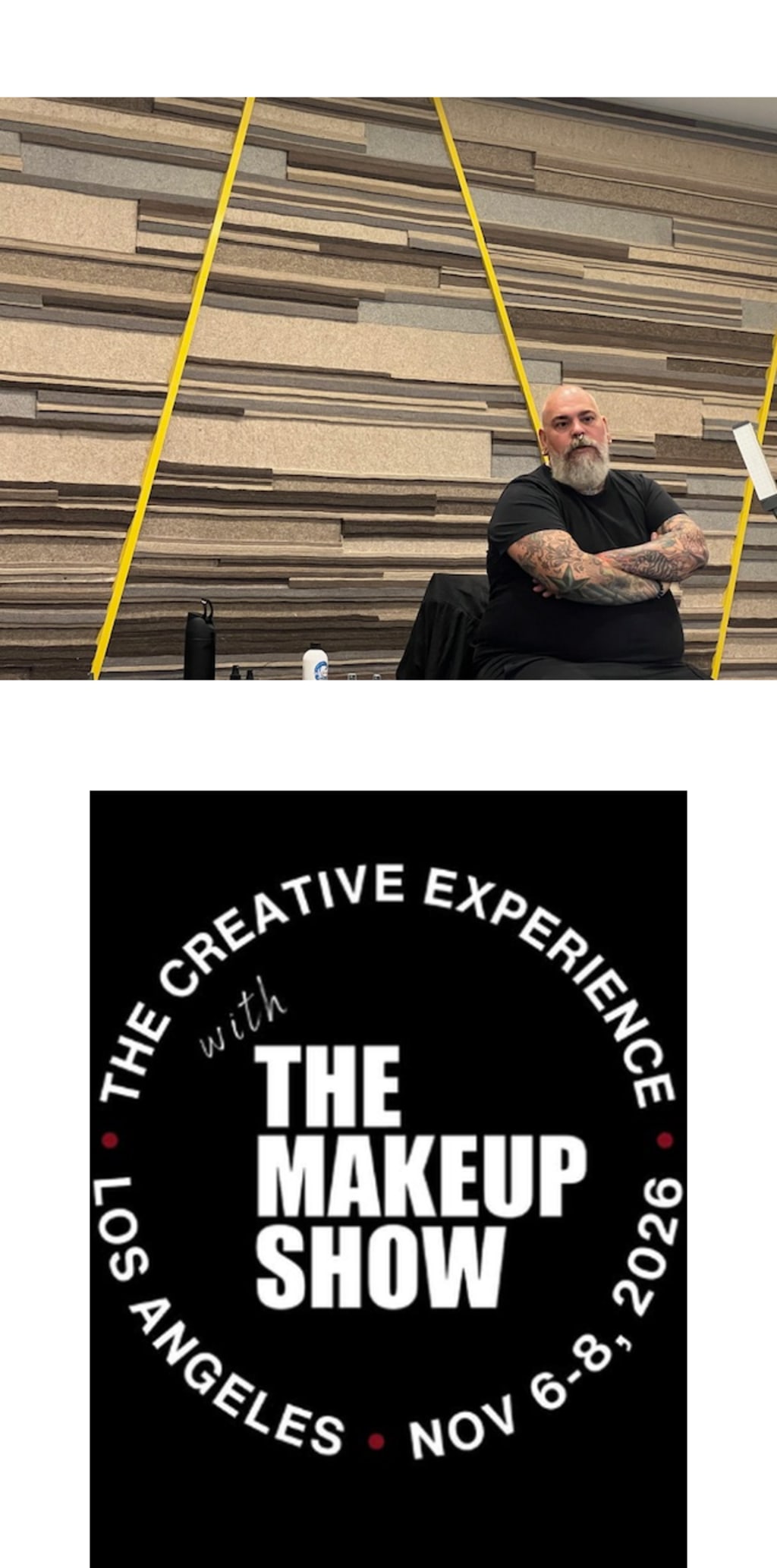
James Vincent is an internationally recognized makeup artist, educator, and influential voice in the professional beauty industry. As Director of Education and Artistry for The Makeup Show and The Powder Group, Vincent has dedicated much of his career to developing artists, sharing knowledge, and creating opportunities for the next generation of beauty professionals. His extensive career spans fashion, editorial, runway, film, television, theater, and celebrity artistry, with an impressive client list that includes Lady Gaga, Florence + The Machine, Joan Jett, Reese Witherspoon, and Jane Fonda. Beyond his work with high-profile clients and leading beauty brands, Vincent's greatest passion lies in education, mentorship, and strengthening the creative community that makes the beauty industry thrive.
Vincent shares his artistic journey, experiences working with iconic talent, passion for mentorship, and his influence on the next generation of makeup artists at The Makeup Show.
Your Journey in Beauty:
James, you’ve built such a strong presence in the beauty industry. Can you share what first inspired you to pursue makeup artistry and how your journey has evolved over the years?
JV: Shelly and the team have put together a whole new experience for The Makeup Show, and I am excited for everyone to see it. I am an accidental makeup artist, and I didn’t even know makeup artistry was a job. I was a club kid and a rock-and-roll kid, and I went to school to study social work. I was working for a company called The Body Shop, created by Anita Roddick, and she came in and spoke to my class. She hired me while I was working in Pediatric AIDS/HIV. One day she said to me, “I know you’re working your way through college; come and work in the store.” So, I started doing the community outreach, and I started doing beauty. I started to put together my dissertation on women of color in the beauty industry. There was no size, no shape, or color. I wanted to know why my aunts were wearing foundation that didn’t match their skin. Why can’t they shop at a department store to find colors that match their skin? This was in the early 90s, and because of that, I got hired by MAC Cosmetics to open their first location in the South. I started at MAC, and one day I was at the counter, and a woman came in and brought me in to do makeup for TLC in Atlanta. During the 90s, there was so much happening at the time. I called my mom one day when I was working with Gladys Knight and told her that I was not going to get my master’s degree. She asked, “What are you going to do?” I told her that I was going to be a makeup artist. She said, “Is that a job?” I told her that I didn’t know, but we’re going to see. Now here I am 30 years later. I started in makeup, and I had the very traditional route. I launched Urban Decay, Stila, and MAC Cosmetics brands, and then I assisted all of the major makeup artists, such as Kevyn Aucoin and Pat McGrath, doing all of the celebrity and editorial looks for a while. But what I really love still, and have is that social worker mindset to this day is community. I love education, and The Makeup Show really gave me a platform to really be able to develop community and education the way that I thought the industry needed it.
The Makeup Show’s Impact:
The Makeup Show brings together artists, brands, educators, and beauty lovers. What was the vision behind creating this space, and how has that vision evolved?
JV: One of the biggest changes is that when it started, it was only for pro artists. You had to have credentials to come to The Makeup Show for makeup, hair, aesthetics, actors, or whatever someone needed makeup artists for professionally. It was very intimate, and the first show was probably 1500 to 2000 people. I was just having a conversation with someone who’s a fellow makeup artist, and they were asking me, “You don’t know this guy, do you?” I said, “Oh yes, I do.” Remember, at that time we all knew each other. As social media came in and makeup started to make the impact that it did, because of reality television and social media, we changed the definition of what a makeup artist is. Now we know there are so many ways that people use makeup to feel better about themselves, to support their families, and to celebrate who they are. We now have the show for makeup lovers and makeup enthusiasts as well. I think what that has done is that it has brought a new energy to the show. If you remember back in the day, in LA there were 50 to 70 brands at the show, and all of the big brands. A few years ago, Shelly and I sat down and discussed how hard it is for the independents (brands) to compete. That’s the other big shift: the show is now open to everyone. It’s very community and education-driven. When you walk the floor, you will also see independent brands celebrated, Black-owned brands, and BIPOC brands. We really wanted to be a resource for artist-owned independent brands as much as it is for the people. We have not only the education but also the shopping.
The Future of Beauty:
We’re seeing so many changes in the beauty industry, from social media trends to AI and new beauty technologies. What do you think will have the biggest impact on the future of makeup artistry?
JV: My social political self will say that with AI and social media, what we’ve seen is a homogenization of beauty. The individuality that we were seeing for a while slipped away for a little bit. Now I think you have two different ways of looking at makeup. There is makeup for the individual, which I think is always important: makeup as expression and to make you feel better. We’re also seeing this other piece of makeup among many people who were in marginalized groups or considered outsiders, fringe, or subculture. I think that’s another thing that we try to do with The Makeup Show in the positive: social media has allowed us to see beauty represented in ways we haven’t seen it before. If we look at the big corporate perspective of makeup, they are still telling us the same thing as 20 years ago. I think that I miss the intimacy of makeup being very personal and individual. Coming into a department store instead of buying online, learning makeup from watching your mom instead of watching a TikTok video, pursuing a class and traveling to LA for a makeup show and sitting in a session with Sharon Gault or Ve Neil. I think those moments are still important, and I think what AI and technology have done with makeup, as they have done with a lot of industries, is that they have isolated people because now there is a whole generation asking, “Why do they need to go to a beauty launch event when they can get the gift bag sent to them?” Why do they need to pay to take a class?”
When you see The Makeup Show’s LA event that Shelly and the team have put together, I think it’s our answer to some of the negatives that artists are coming to us with. It’s 20 brands with education and events; it is affordable and accessible, and allows one to learn from the best artists in the business, such as Danessa Myricks, Jordan Liberty, Rokael, and others. It’s our answer to AI, and it’s organic, technologically innovative, and event-based. We are excited to come back to LA and say, “Makeup is still something that has been passed down from mother to daughter.” Makeup is still your culture, your character, and your community. If you see a girl with a certain eyeliner, you know that’s your girl.
Trends vs. True Artistry:
With trends changing almost daily on social media, how can makeup artists stay current while still developing their own signature style and artistic identity?
JV: It is so important that an artist finds their own voice and asks themselves how they are doing. You have to do the work, and you’ve got to understand inspiration internally and ask yourself what the things are that make you want to pick up a brush or use a certain color. You’ve got to understand inspiration externally, which could be the red carpet, the runway, but also the client sitting in front of you and the job at hand. What does this makeup need to do? Then, understanding the design process. Makeup is just pigment, powder, and liquid. How we put those things together is how you can really show yourself and your talent. Your line signature: we all have a particular signature. That allows you to have an understanding of your own inspiration and aesthetics; you can start to feel more confident looking at trends and other artists' makeup and still feel like an artist.
I am still known for my eyeliner. To this day, people still talk about the Amy Winehouse eyeliner that I did. I watched James Molloy line an eye, and I changed the way that I line the eye. You have to keep that fire in your belly, and you have to stay open. I think makeup is so intimate, and so much of what we do is the personal connection. You need to bring into it your culture, your voice, and the things that you love. Then that will bring in the clients to you. That allows you to express yourself and bring yourself forward.
Opportunities for Emerging Artists:
For aspiring makeup artists who are trying to break into the industry, what advice would you give them about building their portfolios, networking, and finding opportunities that can take their careers to the next level?
JV: The first thing that needs to happen is education. Hairstylists really understand that education is constant for the rest of their career. I think makeup artists sometimes think that they have figured it out and that they are good to go. Makeup is an art, a science, and a craft. Learning, educating yourself, and perfecting your craft is essential right now because our clients have more information than they have ever had. Education allows you to make mistakes and practice and to see different ideas and inspiration.
Community is a great way to start building your network and your name. You have to let people know who you are, what you do, and what you want to do. Learning how to capture your art and share it, you’ve got to understand how to curate your images in your portfolio. Learning how to build a portfolio, using social media in a way that allows people to see you authentically and with integrity. I think the real thing, and I see it in my own makeup, is that I am so tired of perfection. My makeup has gone back to being organic, with a lot of line and texture that is very me and the way that I want to see makeup look. When you educate yourself to find your own style and voice, and to know your history, and educate yourself to take inspiration and come into your community and meet other people, you then understand how to capture your work and share your work and celebrate it. That is when you start getting your clientele. Your portfolio should be representative of who you are and what you do. There also needs to be a bit of an aspirational element to it, telling us what you want to do with it. Makeup has so many opportunities, and there is no limit to it. It is a malleable art, but I think what a lot of people are dealing with now is the curation piece of, “How do I put it out there?”
The algorithm is always changing, and it’s important that artists keep educating themselves, keep going out to the community, and continue capturing images as they post them online. My work has always been a little rock and roll, and the core has not changed very much over the last 20 years.
Inclusivity and Representation:
How do you see the beauty industry evolving when it comes to inclusivity, diversity, and representation, and what role does The Makeup Show play in encouraging that progress?
JV: It’s a tough question, and is there ever really enough? When I stepped into the beauty industry, it was white men in France telling us what beauty was. What we saw in the 90s was an influx of artistry brands that allowed us to imagine that beauty could be more individual. For a long time, brands were dictating who was going to buy and sell makeup, and they were being very limited. The Makeup Show helped people see that makeup is not just for a few people working in fashion or film. It allowed us to see the contributions that black women brought to beauty in places like Atlanta, Detroit, Houston, and D.C. We have always seen makeup in those cities, and then things were getting appropriated, and people were not getting credit. The Makeup Show gives a platform and a community to some of those smaller brands and bigger voices and then allows that solid foundation to reach more people. Brands saw from the floor that having only 12 foundation shades wasn't going to cut it. Brands had to see that you could not deny the talent that was coming out of cities that were not New York or LA. Danessa Myricks has the number 1 foundation at Sephora. I see other brands coming up and we build upon that like Fashion Fair that is over 50 years old and such a staple in my aunt’s cosmetics.
When we first started The Makeup Show, our first message to get out was that we need to understand that makeup is not just for white women of a certain age. Then the message had to be bigger, and we realized that we needed to have more representation in who owned the brand, who were the international artists, the photographers, and beauty editors. The Makeup Show is 22 years old, and what we see now is that the makeup artists who come to the show now started coming with their moms, and now they are adults. You see Sam Visser, who does the Gucci makeup look that everyone is talking about, has been coming to The Makeup Show since he was 12 years old. That is how representation happens. People have to make space for it, and inclusion and representation are very different than diversity. What we try not to do is just show 40 foundation shades, which was the big talk for a moment. Black and Latino women have huge purchasing power, and we can’t exclude them because they don’t fit the narrative of 12 fashion magazines that people are no longer talking about.
The Personal Side of Beauty:
After working with so many artists and witnessing the evolution of the industry, what continues to excite you about makeup, and what legacy would you like to leave for the next generation of beauty professionals?
JV: I love makeup because it is expressive. Makeup is culture, and we see it across continents. We see its spirituality and ceremonial use. It’s something that has been a part of tradition, painted on walls and used as war paint. Makeup is resistance and no longer just for the male gaze. Women and makeup lovers wear makeup because they want to show who they are, and what they are doing. That really excites me to see makeup taken away from a beauty ideal where, two times a year, they told everyone what to wear, and everyone did it. Now people are saying no, doing their own makeup, and they may be from the smallest state with a following and doing makeup on a real face. That excites me.
We’re also seeing people play with color and texture in unexpected ways instead of everyone saying we only have two seasons. We’re in this weird spot where social media is showing us one look, and everyone still wants to look like Kim Kardashian after 12 years. On the other side, you scroll through Instagram, and you see blue lips and glitter eyes and unexpected uses of makeup coming from new voices. That’s what is exciting me moving forward and the opportunities it affords. You’d be hard-pressed to find another industry that has the highest-paid people who are women and women of color. That’s been my goal since I stepped into beauty. That is my legacy, hopefully.
I got an award from Black Beauty Roster last year for allyship. I said this is not an award for something that I have done; this is a call to action for moving forward. I hope that I have given back to this community all that it has given to me. To me, it is so much more than just painting a face; it is my life. I was a poor, overweight kid who grew up with a single mom. I would look at magazines and movies, and I couldn’t even imagine that I would ever be involved in something like this. I would read books and think I would never be able to go to a certain place, and now not only do I get to live this life that I built, but I also get to surround myself with other people with the same mission and magic. The relationships that I have built, I hope that is my legacy, along with opportunities that I have allowed for other people. I don’t think my legacy is a music video or magazine cover but an artist that I allowed to see what they didn’t initially see in themselves. That is what my mentors did for me.
Investing in Your Career During Downtime
When income is uncertain, artists have to be strategic about where they spend their money. What investments are genuinely worthwhile during a slow season, and what expenses or industry trends should artists be cautious about chasing?
JV: The investment has got to be complexion products. Cameras now show everything. You need a complexion that allows for diversity and consistency to meet the needs of the client at every price point. You have to be thoughtful about how you’re building your kit. Tools and brushes are very important. I have brushes in my kit that I have been using for 32 years. I have taken care of them, and those tools are where you should spend your money.
The places you don’t need to invest the same are lipstick and pencils. There are two companies in the world that make pencils. Maybe there is a little more pigment in one, but a lot of the time you’re just paying for the name. I can use a Wet n Wild and get the same results. Skincare is another place, and there are affordable options. The cameras are capturing every detail, but people also want to be pampered. My clients want an experience, not just an application. Skincare, complexion, and your brushes are important, and then go in with a lip pencil where you don’t need to spend as much. Eye shadows are a push and pull. Spend money on the eyeshadow products that you need, such as the neutrals, and support the small brands. When it comes to blushes, I love them. I use cream blushes to underpaint, and I use 3 different blushes. I love the Danessa Myricks cream blushes, and my other favorite is RCMA blushes. RCMA blushes are classic waxes, and they are affordable. You can underpaint with them and put things over it, and it will just stay. Powder blushes are essential, but focus on getting a good quality powder, blush and bronzer with a good pigment load. You really need something that works for every skin tone, but it’s not something you need to spend a lot of money on. Kryolan is another good one. The pro makeup brands such as RCMA and Kryolan are in every makeup artist’s kit and are so affordable. They are launching a new foundation, and they are sensitive to keeping the brand’s high quality at an affordable price. That’s before the artist’s pro discount. Focus on getting the necessities and the brands your clients want, and be mindful of how you’re spending your makeup dollars for your kit.
Final Question
If you could give every makeup artist one piece of advice that could genuinely change their career, what would it be?
JV: Treat every person you meet and every person that sits in your chair with respect. It goes so far in this industry because it’s a very intimate industry. Authenticity is important, and people respond to that. Your client is sitting in your chair in a vulnerable state, and you’re dealing with their insecurities, so your authenticity has got to be there.
Finally, invest in your education. I teach classes constantly. I also take classes as an artist. Cross-study to know the camera, lighting, angles, color, and history. Know what’s going on in connected industries and do those things. Treat everyone with respect, and you come into a room as yourself, and when you have done the work, you can come into a room as an expert; I think that is where you start to feel like you’re a success. Don’t do the things that you don’t love. Do not work with clients that you do not want to work with. My products at Rebels and Outlaws are good for clearing out negative energy. If that client is trying to undercut your rate, do not work with that client because there will be nothing but problems. Trust your gut. In 32 years of doing makeup, I have only had one nightmare client on a gig. When you are being your authentic self, people will want to be around you.
Follow James Vincent on: Instagram
Follow Rebels and Outlaw on: Instagram or to purchase here
Follow The Makeup Show on: Instagram, TikTok, Facebook and LinkedIn
To subscribe to The Makeup Show newsletter, click here.
For information and tickets, visit https://themakeupshow.com/creative-experience/.
The Creative Experience LA
Dates: November 6–8, 2026
Location: California Market Center, Los Angeles, California
Hours: Friday 2:00 pm – 7:30 pm, Saturday 11:00 am – 6:30 pm, Sunday 11:30 am – 5:30 pm
The Makeup Show Upcoming Events and Cities
THE MAKEUP SHOP NYC: DEC. 12-13
iARTIST 9.0: MAY 1, 2027
THE MAKEUP SHOW NYC: MAY 2-3, 2027
About the Creator
Reese Alexander
TV Host, Fashion, Lifestyle, Blogger & Writer for Vocal Media. Fashion, Beauty, & Entertainment. Follow on:
https://www.instagram.com/missreesealexander/
https://twitter.com/TheSassySuit
https://www.facebook.com/ReeseAlexanderTV
Enjoyed the story? Support the Creator.
Subscribe for free to receive all their stories in your feed.
Comments
There are no comments for this story
Be the first to respond and start the conversation.