pop culture
Modern, popular, and iconic pop culture moments in music. From current events, to trending topics and more.
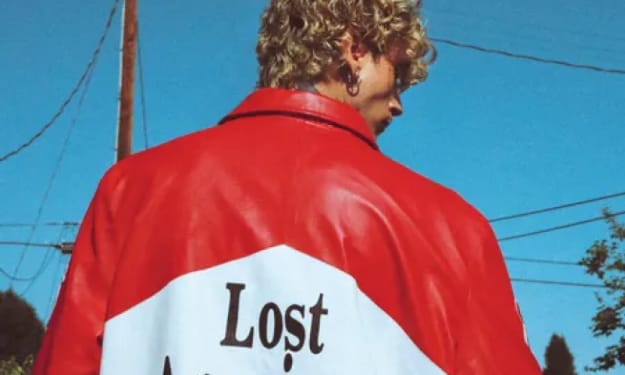
mgk's new album
I love Machine Gun Kelly. I think I have about 60 of his songs saved to my Spotify right now. My partner says he fell off and sold out but I strongly disagree with him. He just released a new album on August 8th titled "Lost Americana" after his break-up with Megan Fox and let's just say I am here for it.
By Chloe Unfilteredabout a year ago in Beat
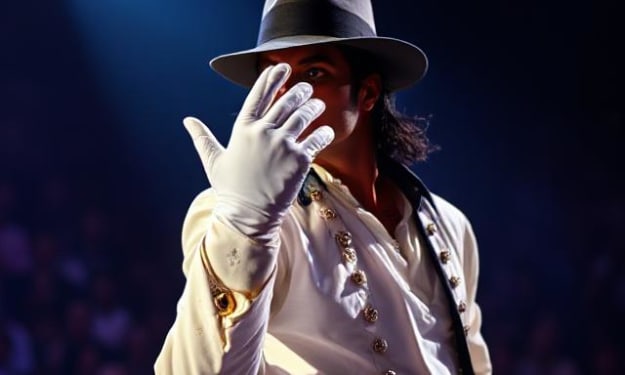
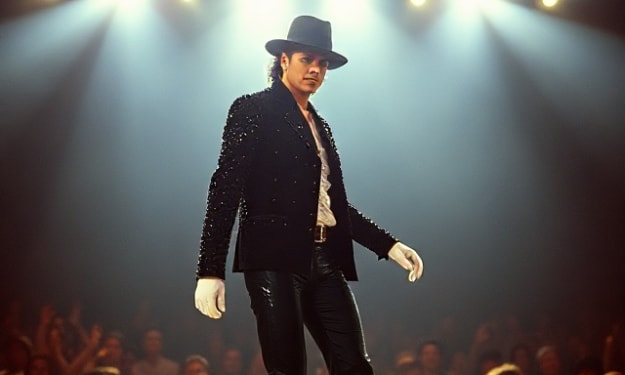
The King Who Moonwalked Through Our Hearts . AI-Generated.
Start writing...Michael Joseph Jackson, born August 29, 1958, in Gary, Indiana, was the eighth of ten children in a humble family. Even as a child, Michael’s extraordinary talent stood out. While his brothers formed the Jackson 5, Michael’s voice was unlike any other. Audiences watched in awe as this shy, young boy transformed into a global sensation. His first steps on stage revealed a performer who could connect with people not just through music, but through emotion. The Jackson 5 achieved instant fame with hits like I Want You Back and ABC, but it was Michael who shined brightest. Even as a preteen, he carried a charisma that drew millions of fans. Yet, the early spotlight came at a cost. Childhood fame stole his innocence, forcing him to grow up under the intense gaze of the public. The 1980s marked the era where Michael became the King of Pop. His 1982 album Thriller would go down in history as the best-selling album of all time, but more than that, it changed the way music was experienced. Music videos became cinematic masterpieces, and “Thriller” itself blurred the line between song and story, combining horror, dance, and storytelling in a way the world had never seen. Fans stayed glued to their TVs, mesmerized by the transformation of music into visual art. One of Michael’s most iconic moves, the moonwalk, debuted on live television in 1983. Instantly, it became a global phenomenon. Millions of fans tried to imitate it, yet no one could glide across the stage with the grace and precision of Michael. It was more than a dance—it was magic in motion, a physical expression of his creative genius. Michael’s genius extended beyond music and dance. He was a fashion icon, whose style continues to influence artists today. His sequined glove, fedora hats, military-inspired jackets, and the red leather Thriller jacket are immortalized in pop culture. Designers, dancers, and performers across the world drew inspiration from his bold, trendsetting looks. Michael didn’t just perform; he created visual statements that matched the brilliance of his music. Yet, fame is never without challenges. Michael faced controversies, rumors, and legal battles that tested his spirit. Media scrutiny followed him everywhere, and the public often judged him more harshly than they celebrated him. Despite this, he never stopped creating. Michael’s passion for music, dance, and humanitarian work remained unwavering. Songs like “Man in the Mirror,” “Heal the World,” and “Earth Song” reflected Michael’s desire to make the world a better place. He didn’t just sing; he sent messages. He used his fame to support charities, raise awareness, and inspire change. His artistry was intertwined with heart and purpose. Even after his passing on June 25, 2009, Michael’s influence only grew. Social media brought his music and legacy to new generations. From Justin Timberlake to Beyoncé, contemporary artists acknowledge him as a blueprint for excellence. Fans continue to celebrate his performances, dances, and songs, keeping the King of Pop alive in the global consciousness. What truly makes Michael Jackson unforgettable isn’t just his talent, but the emotions he evoked. Watching him perform was an immersive experience. Every gesture, every note, every spin on stage told a story. Millions remember the goosebumps, the awe, the feeling that they were witnessing history. Michael’s performances weren’t just entertainment—they were shared human experiences, moments of joy, nostalgia, and wonder. His legacy is a reminder that art transcends time. Michael Jackson teaches us that passion, creativity, and resilience can leave an imprint far larger than fame itself. His music doesn’t just play; it communicates, inspires, and heals. In a world constantly chasing the next trend, Michael’s moonwalk reminds us that true greatness glides above the ordinary. For fans, Michael Jackson remains eternal. His story is more than music history—it’s a testament to ambition, vulnerability, and the transformative power of art. His life had highs and lows, but through it all, he gave the world a gift that keeps giving: music that moves the soul, performances that defy reality, and a legacy that teaches generations the importance of dreaming big and dancing boldly. --- Message to Readers: Michael Jackson was more than an entertainer; he was emotion, movement, and legend. Dive into his world, celebrate his art, and let his music remind you of the power of dreams, creativity, and resilience.
By Muhammad Riazabout a year ago in Beat
Michael Jackson’s Fashion & Dance Legacy: The Style That Never Died . AI-Generated.
When Music Became a Stage for Style Some artists sing. Some dance. A few make headlines. But very few reshape culture itself. Michael Jackson was one of those rare few. He wasn’t only the “King of Pop” because of his music. He became a legend because he gave people an entire world of sound, style, and movement to step into. Every detail — from his hat to his shoes — was part of the performance. Michael Jackson understood something most artists never fully grasp: music is not only what we hear. It’s what we see, what we feel, and what we remember. --- The Glove That Sparked a Revolution It started small: a single white glove, covered in rhinestones, worn during the 1983 Motown 25 performance. The same night he debuted the Moonwalk. That glove became one of the most iconic symbols in music history. Kids begged their parents for one. Street vendors sold glittery knock-offs. Costume shops couldn’t keep up. But it wasn’t just a piece of fabric. It was a statement. Michael turned a simple glove into an image of mystery, elegance, and individuality. He showed that even the smallest detail could carry magic. --- Jackets, Hats, and Shoes That Spoke Volumes Michael Jackson’s fashion didn’t stop at the glove. The Red Leather Jacket (Thriller, 1983): The zipper-filled, bold jacket he wore in the Thriller video redefined cool. It sold millions in copies worldwide. To this day, people wear it for Halloween. The Fedora: Tilted just right, paired with a flick of his head, the fedora became as legendary as the Moonwalk itself. He made it a symbol of style and drama. Military-Inspired Outfits: Golden jackets, shoulder pads, and buckles became staples of his tours. They weren’t random costumes — they were uniforms of a general commanding his army of fans. The Black Loafers: Sleek shoes that looked ordinary, until he used them to glide across the stage. They weren’t just footwear; they were tools of illusion. Each element was carefully chosen. Michael didn’t just dress — he crafted an identity. --- Dance That Changed the World If fashion was his language, dance was his heartbeat. Michael didn’t invent every move, but he transformed them into universal expressions. The Moonwalk: A step that looked like magic. The Spin: He could turn endlessly on his toes, then stop on a dime. The Toe-Stand: Balancing like gravity didn’t exist, freezing audiences in awe. The Robot: Sharp, mechanical movements blended with soul. But the secret wasn’t the moves themselves. It was how Michael performed them — with precision, with emotion, with storytelling. Each step told a story. And the effect? Dance studios reported record enrollments in the 1980s and 1990s. Kids in living rooms mimicked his moves. Breakdancers, street dancers, and professionals all pointed to Michael as their inspiration. Even today, no dance competition feels complete without at least one nod to him. --- Numbers That Prove His Influence Michael’s fashion and dance weren’t side notes to his music career — they were pillars of it. Thriller’s red jacket sold an estimated 2 million replicas worldwide. YouTube searches for “how to moonwalk” receive millions of views annually, decades after he first performed it. His 1992–93 Dangerous Tour featured 69 concerts, 3.5 million attendees, and nearly everyone left trying his signature moves. It’s rare for style and dance to become as powerful as the music itself. But Michael Jackson achieved it. --- Influence on Today’s Artists Look at performers today: Beyoncé, Usher, Chris Brown, The Weeknd, Bruno Mars. All have borrowed, adapted, or paid tribute to Michael’s style. The hat tilt? Michael. The group choreography in music videos? Michael. Fashion-forward stage costumes? Michael. Even global phenomena like K-pop owe a debt to his mix of choreography, visuals, and music videos. Michael wasn’t just a man — he was a blueprint. --- A Human Touch Behind the Glamour Yet, it’s important to remember: Michael’s style didn’t come from designers handing him clothes or choreographers giving him steps. Much of it came from his imagination. He was a perfectionist, rehearsing until every glove sparkle, every foot slide, every note felt just right. He studied Fred Astaire, James Brown, and street dancers, then fused it all into something uniquely his. His fashion was bold, but his personality offstage was often shy. That contrast — the quiet man vs. the dazzling performer — made his style even more fascinating. --- Why It Still Lasts Today Decades after his peak, Michael Jackson’s influence hasn’t faded. Halloween parties are filled with Thriller jackets. TikTok is filled with Moonwalk challenges. Fashion shows borrow from his military jackets and bold accessories. Even kids who weren’t alive when he performed recognize his look instantly. Because Michael didn’t just dress up or dance for the moment. He created timeless symbols. --- Final Reflection Michael Jackson’s legacy isn’t only in record sales or chart numbers. It’s in the white glove that still glitters in pop culture. It’s in the Moonwalk that still makes kids smile. It’s in the millions of people who express themselves through fashion and dance because he gave them permission to be bold, to be different, to be unforgettable. He was more than a singer, more than a dancer, more than a fashion icon. He was all of them at once — an artist who knew that music wasn’t just to be heard, but to be lived. And that’s why, decades later, his style and his moves haven’t died. They never will. ---
By Muhammad Riazabout a year ago in Beat
Michael Jackson’s Secret Struggle: The Man Behind the Glove . AI-Generated.
The World Saw the Legend For millions of fans across the world, Michael Jackson was untouchable. He was the man who made the world dance with Thriller, the icon who glided across the stage in the Moonwalk, and the voice that gave us timeless anthems like Billie Jean, Beat It, and Man in the Mirror. He was the King of Pop. The glove, the hat, the sequined jackets — these weren’t just costumes; they were symbols of magic. But what the world saw was only half the story. Behind the spotlight, there lived a man with struggles few could imagine. --- A Childhood Stolen by Fame Michael was only six years old when he began performing with his brothers as part of the Jackson 5. While other kids were riding bikes or playing in backyards, Michael was rehearsing for hours, recording songs, and performing in clubs. His father, Joe Jackson, was strict, often harsh. Michael would later admit in interviews that he feared him. The pressure to be perfect was constant. Childhood was something he never really had. “People wonder why I like being around children,” Michael once said, “but it’s because I never got to be one myself.” This loss of innocence shaped him deeply. On stage, he became larger than life. Off stage, he was searching for the simple joys of life he never got to experience. --- The Loneliness of a Superstar By the 1980s, Michael Jackson was the most famous person on the planet. His albums broke records, his concerts drew hundreds of thousands, and his face was recognized in every country. Yet fame came with a price: loneliness. Michael once described staying in hotel rooms after shows, where thousands of fans screamed outside but inside he felt completely alone. He longed for normal conversations, friendships that weren’t based on his fame, and moments of privacy. Numbers tell a haunting truth: He performed to 500,000 fans in Prague during one night of his HIStory tour. Yet he admitted he sometimes felt loneliest when surrounded by crowds. For Michael, applause didn’t always equal connection. --- The Struggle With His Own Reflection As the years went on, Michael’s appearance began to change. His skin grew lighter due to vitiligo, a skin condition that causes loss of pigmentation. His facial features shifted, partly due to surgeries and partly due to health issues. The media mocked him relentlessly. Tabloids called him “Wacko Jacko,” creating cruel caricatures of his face. Instead of compassion, he faced judgment. But Michael’s struggles with appearance were not vanity — they were pain. He had spoken about being teased as a child for his nose, about insecurities that stayed with him. The constant spotlight magnified every flaw, every change. Behind the glove and the glitter was a man fighting to accept himself in a world that never stopped criticizing. --- The Weight of Scandal Michael’s life was also marked by controversy. The allegations, trials, and endless tabloid stories painted him as a man under suspicion. Whether people believed in his innocence or not, one thing was clear: he was trapped in a storm of public judgment. His private life became headline material, and the very same fans who once adored him were now asked to pick sides. For someone who wanted to be loved, this was a devastating burden. --- Escaping Into His Art If there was one place Michael felt free, it was on stage. Performing was his escape. The moment the lights hit and the music played, he became unstoppable. The shy, lonely man disappeared, replaced by an unstoppable force of energy. It was as if the stage was the only place where he could truly exist without fear or judgment. Songs like Man in the Mirror and Earth Song revealed his soul. They weren’t just performances; they were cries for healing, change, and love. The man who struggled off stage poured his truth into his music, and that’s why it continues to resonate with millions. --- The Man Behind the Glove Michael Jackson was more than his fame, more than his music, and more than the headlines. He was a man who loved to laugh, who adored children, who cared deeply about the planet, and who wanted to be seen for his heart, not just his talent. Fans who met him often said the same thing: he was soft-spoken, kind, almost shy. He wasn’t the larger-than-life King of Pop in those moments. He was simply Michael. That was the man behind the glove — not perfect, not untouchable, but human. --- The Legacy of His Struggle Michael’s struggles remind us that even the brightest stars carry shadows. He taught the world that fame does not erase loneliness, that success does not guarantee peace, and that behind every legend is a person longing to be understood. But he also left us with something powerful: music that transcends his pain. His songs are played at weddings, in stadiums, at protests, and in bedrooms across the globe. His voice lives on, his message lives on, and in some way, so does his dream of a better world. --- Final Reflection Michael Jackson will always be remembered as the King of Pop. But it’s important to remember the man as well — the child who never got to play, the adult who searched for love, and the human being who gave his everything to music and to us. Behind the glove was a soul that struggled, but also a soul that inspired. And that, perhaps, is his greatest legacy. ---
By Muhammad Riazabout a year ago in Beat
5 Times Michael Jackson Proved He Was More Than Just a Singer . AI-Generated.
More Than Just Music When most people think of Michael Jackson, the image that comes to mind is the white glove, the fedora, the Moonwalk, and of course, the voice that could soar across octaves with effortless beauty. He is celebrated as the “King of Pop,” the man who gave us Thriller, Beat It, and Billie Jean. But Michael Jackson was not only a singer. He was a force — a man who broke barriers, gave back to communities, and showed the world that music could be more than entertainment. His life wasn’t just about selling records or dazzling crowds; it was about changing lives. Here are five powerful times Michael Jackson proved he was more than just a singer. --- 1. He Became One of the World’s Greatest Humanitarians Few people realize the sheer scale of Michael Jackson’s philanthropy. Over the course of his life, he supported more than 39 different charities and donated an estimated $300 million to humanitarian causes. He visited hospitals before concerts, met with sick children, and often paid for medical treatments anonymously. In 1992, he established the Heal the World Foundation, which provided medicine, food, and financial support to children and families in need across the globe. Unlike many celebrities who donate quietly or for publicity, Michael lived it. He would cancel press appearances to visit orphanages. He would sneak into hospitals with toys and gifts, away from cameras. For his fans, these weren’t just acts of charity. They were proof that the man behind the spotlight had a heart that beat for others. --- 2. He Broke Racial Barriers on Television In the early 1980s, MTV rarely aired music videos by Black artists. The channel was dominated by white rock musicians, and executives claimed “urban” music didn’t fit their format. Michael Jackson shattered that wall. When his Thriller videos hit the scene, MTV couldn’t ignore him. His short films for “Billie Jean” and “Beat It” became so popular that the network had no choice but to play them. Within months, Michael became the first Black artist to achieve massive airplay on MTV, opening the door for countless others. His success wasn’t just about music. It was about representation. Millions of Black kids saw someone who looked like them dominating television screens worldwide. Michael turned pop music into a stage where race could no longer be used as an excuse to hold artists back. --- 3. He Used Music as a Call for Peace Songs like Heal the World, Man in the Mirror, Black or White, and Earth Song weren’t just hits — they were messages. Man in the Mirror challenged people to change themselves if they wanted to change the world. Heal the World was practically an anthem for kindness and empathy. Earth Song raised awareness about environmental destruction, long before “climate change” became a common phrase. At his concerts, Michael would pause, kneel, and cry during Earth Song. The performance wasn’t an act — it was a man begging humanity to care for the planet. Fans often left in tears, not just because of his voice, but because of the message. Michael understood that music could entertain, yes, but it could also educate, inspire, and heal. --- 4. He Inspired Fashion and Dance Across Generations Michael Jackson’s influence didn’t stop at music. He created an entire visual language of style and movement. Think of the red leather jacket from Thriller, the single white glove, or the military-inspired gold jackets from his tours. Each look became instantly recognizable and endlessly copied. Even today, you can spot kids at costume parties dressed as Michael. And then, of course, there was the dancing. The Moonwalk, the spin, the toe-stand — all became staples of pop culture. Dance studios across the world reported surges of new students whenever Michael released a new video. But it wasn’t just about cool moves. His style gave people confidence to express themselves. He made it okay to be bold, different, and unique. He wasn’t simply setting trends; he was setting people free. --- 5. He Remained a Symbol of Hope in Dark Times Even when he faced personal struggles, criticism, and controversy, Michael Jackson remained a figure people looked up to. For many, he represented the power of dreams. A boy from Gary, Indiana — born into poverty, raised in a strict household — had risen to become the most famous entertainer in the world. His story was proof that talent, determination, and creativity could lift someone beyond impossible odds. Fans from every corner of the world — from New York to Nairobi, from London to Lahore — felt connected to him. His concerts weren’t just shows; they were gatherings of hope, joy, and unity. In moments of chaos, Michael’s music offered escape. In times of sadness, his words offered comfort. He was more than a singer — he was a companion for millions. --- The Legacy of “More Than Music” Today, more than a decade after his passing, Michael Jackson is still remembered not only for his voice, but for his vision and his compassion. His records may have sold over 400 million copies, but his true achievement was the way he touched hearts. He reminded the world that music could break barriers, spark change, and heal wounds. He reminded us that entertainment could be more than applause — it could be inspiration. And maybe that’s why people still play his songs today. Because deep down, Michael Jackson wasn’t just singing to entertain. He was singing to remind us of who we could be. ---
By Muhammad Riazabout a year ago in Beat
The Day Michael Jackson Changed Music Forever: Remembering the 1983 Moonwalk. AI-Generated.
Start writing... A Night That Began Like Any Other The stage lights flickered. The crowd buzzed with excitement. On March 25, 1983, Motown Records was celebrating its 25th anniversary with a star-studded television special. Icons like Diana Ross, Smokey Robinson, and Stevie Wonder had already performed. Nostalgia filled the room, but the night was about to become something more.
By Muhammad Riazabout a year ago in Beat
Pour Some Sugar on Me
Disclaimer: Music videos, contrary to popular belief, are not art. They are commercials for the art of the music. Like advertisements, they employ similar elements of art like writing, directing, acting, and the incorporation of statues, paintings, or other artistic articles. Now, with that out of the way, Tyler the Creator’s video for his excellent single “SUGAR ON MY TONGUE” is a mixed bag.
By Skyler Saundersabout a year ago in Beat
Long Live the true King of Rock n Roll Mr. Ozzy Osbourne!!
To Ozzy Osbourne From Rikki La Rouge IT IS SHOCKING AND SADENING I HOPED THAT OZZY OSBOURNE WOULD LIVE FOREVER. HE WAS IMMORTAL, A GOD AMONGST MEN. OZZY WAS BORN IN BIRMINGHAM, ENGLAND AND HE TOOK HIS FINAL BREATH IN THE TOWN OF HIS BIRTH. I LIKE TO POUR A LITTLE OF THE ALCOHOLIC BEVERAGE I DRINK UP WHEN A STAR WHO MEANS SOMETHING TO ME IN THEIR HONOR AND IT WAS NO DIFFERENT FOR THE PRINCE OF DARKNESS HIMSELF OZZY OSBOURNE! OZZY AND RANDY RHODES ARE UNITED IN ROCK N ROLL HEAVEN. MY HEART 🖤 GOES OUT TO OZZY AND HIS FAMILY, I CANNOT BELIEVE I AM WRITING THIS TRIBUTE TO OZZY HE SHOULD STILL BE HERE.
By Rikki La Rouge about a year ago in Beat
Rikki La Rouge Latin Crossover 🇨🇺 🎼 🌕
MTV has acknowledged Rikki La Rouge as an artist and Latin artist she even had a MTV website too. RIKKI wrote a lifetime achievement award proposal to The Latin Grammys 2014 for Willy Chirino to which Willy received that year. on the reverbnation latin music chart in Miami,FL Rikki spent alot of time at number one. Mi Corazon Cubano and Bombon Sexual (Reggaeton Remix 2012) are the two singles from Rikki La Rouge that received double credit for radio from Broadcast Music Inc. (BMI). Rikki La Rouge album “San Antonio” released on Christmas Day 2013 on Interscope Digital Distribution (UMG) /Universal Music Group is a 57th Grammy award 1st round nomination ballot album. With Clear Channel communication as an IHEARTRADIO artist Rikki has had 5 hit songs : LA CESTA HIERBA (52 PLAYS), El Aqua y El Sol (29 plays), Sexual Bombon (21 plays), Mi Ruego Por tu Dulce Amor (21 plays), and Caminare Caminare (15 plays). Rikki La Rouge credits Willy Chirino and his daughters Angie and Nicolle and Jesse The Chirino sisters with Musically discovering her. Rikki La Rouge discography: Interscope Digital Distribution/Tunecore/Universal Music Group (UMG) All Releases on Interscope via Interscope Digital Distribution for the entire Rikki La Rouge discography please the Rikki La Rouge All Music Guide page. Rikki always wanted to have a song that would inspire a “dance craze” like the Macarena and she found it in the song “Sazon” which was originally a merenque then was a cumbia on the album “el otro lado de yo” and it’s finally incarnation as a ‘dance craze” song “Sazon-(MIAMI REMIX). Willy showed support for Rikki and the song by retweeting it to his followers on twitter. Jango.com-Internet Radio (a leader in internet Radio) introduced my music to listeners and fans of Willy Chirino and Celia Cruz. The single was “La Cesta Hierba”. on recording her first Spanish musical cd’s created a new kind of are they called ‘lo sabor de Nueva York “: 1/2 Cuban music and 1/2 Mexican music with American music of the streets. Rikki is a crossover artist into Musica Latina. Rikki La ROUGE Singer/Songwriter/publisher/producer. Rikki is lifelong supporter of CUBA LIBRE and her people and all other countries in the fight. With her music RIKKI recorded an album called “Operacion:La Verdad”, in the name of democracy and libretad for Cuban people and Bolivian people. put it on the list of Latin Grammy registration as a way to bring the whole world attencion that is exactly happening in Cuba and Bolivia.Rikki’s music made it to Cuba. the song “Libretad Por BOLIVIA” from the album “Operation: La Verdad” found its way to Bolivia courtesy of YouTube with the message of democracy and freedom came to Bolivia. Primary influences for Rikki in musica latina who also broke through to become international stars influences Willy Chirino and Selena. On youtube in rikki’s profile in the similar artists who rikki is similar to and they to her in vice versa are Willy Chirino and Selena.
By Rikki La Rouge about a year ago in Beat
The Battle for Ozzfest
The Battle for Ozzfest was a brainchild of Ozzy and Sharon and MTV. The idea of the show was it was a competition show where Metal bands from around the country as well as the world who were chosen to compete in games and challenges and the ultimate prize was the winning band would get a spot on the MainStage at Ozzfest.
By Rikki La Rouge about a year ago in Beat