pop culture
Modern, popular, and iconic pop culture moments in music. From current events, to trending topics and more.
The Night Michael Jackson’s Music Saved Me. AI-Generated.
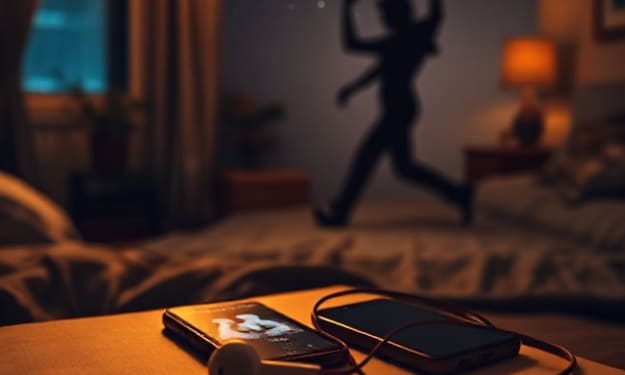
The Night Michael Jackson’s Music Saved Me Some nights, the world feels like it’s closing in. You know those moments—when life’s weight sits heavy on your chest, and you’re not sure you can keep going? That was me, three years ago, sitting alone in my cramped apartment, staring at a blank wall. I was 25, stuck in a dead-end job, reeling from a breakup, and feeling like I’d lost my spark. But then, Michael Jackson’s music found me, and somehow, it pulled me back from the edge. A Dark Night and a Fading Spark It was a rainy Tuesday, the kind where the sky matches your mood. I’d just gotten a text from my ex, a final gut-punch that made me question everything—my worth, my dreams, my place in the world. I sat on my couch, scrolling aimlessly, trying to drown out the noise in my head. Nothing worked. I felt like I was fading, like the person I used to be was slipping away. I don’t know why I did it—maybe it was instinct—but I grabbed my old earbuds and opened my music app. I hadn’t listened to Michael Jackson in years, not since I was a kid dancing in my living room to Bad. But something told me to search for him, to find a piece of that joy I’d lost. Finding Billie Jean in the Silence I hit play on Billie Jean, and those opening beats—sharp, pulsing, alive—cut through the silence like a lifeline. Michael’s voice came in, smooth and urgent, singing about truth, betrayal, and standing tall. I closed my eyes, and suddenly, I wasn’t in my apartment anymore. I was somewhere else, somewhere brighter, where I could feel the music in my bones. I remembered watching the Billie Jean video as a kid, mesmerized by MJ’s glittering jacket and that impossible moonwalk. Back then, he was larger than life—a superhero who made the world feel electric. That night, his voice reminded me of who I used to be: someone who believed in magic, in possibility. I played the song on repeat, letting it wash over me, and for the first time in weeks, I cried—not out of sadness, but relief. The Beat That Brought Me Back As the night wore on, I dove deeper into Michael’s music. Man in the Mirror hit me hardest. “If you wanna make the world a better place, take a look at yourself and make a change,” he sang. It was like he was speaking directly to me, urging me to get up, to fight for myself. I started journaling, something I hadn’t done in years, pouring out my fears and hopes. With Thriller’s funky bassline in the background, I wrote about the dreams I’d buried—the novel I wanted to write, the places I wanted to see. Michael’s music wasn’t just catchy; it was a call to action. His passion, his energy, his refusal to be anything less than extraordinary—it lit a fire in me. I danced around my apartment, badly mimicking his moves, laughing at myself for the first time in forever. That night, I didn’t just listen to music; I found a reason to keep going. Michael’s Message: Keep Moving Forward Looking back, I realize Michael Jackson’s music carried a deeper message. He wasn’t just the King of Pop; he was someone who faced his own struggles—fame, scrutiny, personal battles—and still poured his heart into every note. Songs like Man in the Mirror and Heal the World weren’t just hits; they were his way of saying, “You’re not alone. Keep fighting.” That night taught me something: music can be a lifeline. Michael’s voice gave me permission to feel, to dream, to start over. The next day, I signed up for a writing class, something I’d always wanted to do. I started small, but it was a step. Over time, I rebuilt my confidence, piece by piece, with MJ’s beats as my soundtrack. Why His Music Still Lights the Way Michael Jackson’s music is timeless because it speaks to the human heart. Whether it’s the defiance of Beat It or the hope of You Are Not Alone, his songs remind us we’re capable of more than we think. That night in my apartment, I wasn’t just saved by a song—I was reminded that I could save myself. Today, whenever life feels heavy, I put on Michael’s music. It’s like reconnecting with an old friend who knows exactly what I need to hear. His legacy isn’t just in the records he broke or the dances he created; it’s in the countless lives he touched, mine included.
By Muhammad Riazabout a year ago in Beat
How Michael Jackson’s Thriller Redefined Music Forever. AI-Generated.
How Michael Jackson’s Thriller Redefined Music Forever On December 2, 1983, a 14-minute music video premiered on MTV, and the world stopped to watch. Michael Jackson’s Thriller wasn’t just a song or an album—it was a cultural earthquake that reshaped music, broke racial barriers, and turned music videos into an art form. But what went into creating this masterpiece? From studio sessions to zombie dances, here’s the untold story of how Thriller became the King of Pop’s crown jewel. The Birth of a Vision: Michael Jackson’s Ambitious Dream Michael Jackson was already a star by 1982, riding high off Off the Wall. But he wasn’t satisfied. He told producer Quincy Jones he wanted Thriller to be bigger—something that would “change the game.” MJ envisioned an album that blended pop, rock, funk, and disco, appealing to every listener. He wrote four of the album’s nine tracks, pouring his soul into lyrics that ranged from heartbreak (Billie Jean) to horror (Thriller). Jackson’s ambition was relentless. He’d spend hours perfecting a single note, driven by a desire to create something timeless. In interviews, he later said, “I wanted Thriller to feel like a movie in your mind.” That cinematic vision would define the album and its iconic title track. Crafting the Sound: Quincy Jones and the Thriller Magic Quincy Jones, the legendary producer behind Off the Wall, was MJ’s creative partner. Together, they assembled a dream team: Toto’s Steve Lukather on guitar, Eddie Van Halen for a blistering Beat It solo, and Vincent Price for the eerie Thriller voice-over. The studio became a playground of innovation. Jones encouraged MJ to experiment, layering vocals and instruments to create a sound that was both polished and raw. The title track, written by Rod Temperton, almost didn’t make the cut. Originally called “Starlight,” it was reworked into a spooky anthem inspired by MJ’s love for horror films. The team recorded late into the night, with MJ perfecting his werewolf howls and Price delivering his chilling rap. The result? A seven-minute track that felt like a haunted carnival ride. The Video That Changed Everything: A Cinematic Revolution If the Thriller album was groundbreaking, its music video was revolutionary. Directed by John Landis (An American Werewolf in London), the 14-minute short film cost $500,000—unheard of for a music video in 1983. MJ wanted a cinematic experience, not just a promotional clip. He got it: a zombie dance, a werewolf transformation, and a narrative that kept viewers glued. The video almost didn’t happen. MJ, a Jehovah’s Witness at the time, worried the horror elements might offend his faith. He added a disclaimer clarifying the video didn’t endorse the occult. The iconic choreography, created by Michael Peters and MJ, became a cultural touchstone—kids everywhere tried to moonwalk like zombies. When MTV aired the video, it shattered viewership records and made music videos a must-have for artists. Breaking Barriers: Thriller’s Global Impact Thriller wasn’t just a hit—it was a phenomenon. The album sold over 70 million copies worldwide, making it the best-selling album ever. It earned seven Grammy Awards and spent 37 weeks at #1 on the Billboard 200. But its impact went beyond numbers. Thriller broke racial barriers, forcing MTV to play a Black artist’s video in heavy rotation at a time when the network was criticized for its lack of diversity. MJ’s global influence soared. From Tokyo to London, fans mimicked his red leather jacket and glove. The album’s crossover appeal—blending genres and defying stereotypes—proved music could unite people across cultures. As MJ said, “I wanted Thriller to speak to everyone, no matter who they were.” Why Thriller Still Haunts Us Today More than four decades later, Thriller remains a cultural juggernaut. The video is a Halloween staple, its dance moves are recreated on TikTok, and the album’s songs still dominate playlists. Why? Because MJ tapped into something universal: the thrill of storytelling through music. Thriller wasn’t just an album—it was a moment that defined an era and inspired generations of artists, from Beyoncé to The Weeknd. Its legacy lives in its ability to evolve. Whether it’s a viral dance challenge or a remastered vinyl, Thriller keeps finding new audiences. It’s a reminder of Michael Jackson’s genius—a man who turned his dreams into a global masterpiece.
By Muhammad Riazabout a year ago in Beat
Taylor swift new album
When 87% of fans say a single album changed their lives, you know it’s more than just music. That’s the kind of devotion Taylor Swift has cultivated over nearly two decades — and now, she’s about to test the limits of that loyalty with her 12th studio album, The Life of a Showgirl. The title alone shimmers with drama, glamour, and a promise of storytelling that only Swift can deliver. But behind the sparkle lies a fascinating tapestry of strategy, symbolism, and emotional connection that is already sending the Swiftie universe into overdrive.
By Soul Pagesabout a year ago in Beat
Taylor Swift Announces New Era with "The Life of a Showgirl"
When Taylor Swift announces a new project, it’s not just news—it’s a cultural moment. On August 12, 2025, at exactly 12:12 a.m. Eastern Time, Swift revealed her 12th studio album, The Life of a Showgirl, setting off a wave of excitement that swept through every corner of the internet. The timing was deliberate, the presentation flawless, and the fan response immediate. In just a matter of minutes, hashtags were trending worldwide and speculation was running wild.
By Kamran Zebabout a year ago in Beat
When the Spotlight Chased a Dream
Start writing... Before the bright lights. Before the roaring crowds. Before the world ever knew his name. There was a boy named Michael, standing quietly in the shadows of a small, working-class town called Gary, Indiana. A boy with a heart full of music and dreams bigger than the worn-out streets he walked every day. Michael’s feet barely seemed to touch the ground as he imagined a light — a brilliant, shining spotlight — chasing him through the darkness. --- A Light Flickers in the Dark The spotlight wasn’t just a beam of light. For Michael, it was a promise whispered in the silence — a gentle hand reaching through the night, calling his name with a voice only he could hear. When he was small, he would practice for hours in front of cracked mirrors, barefoot and wide-eyed, pretending the stage was his entire world. The music played softly in the background, but to him, the spotlight was alive — a glowing presence that moved with him, pushing him forward even when no one was watching. Sometimes, late at night, when the house was dark and the world was still, Michael would whisper back to that light. “Find me,” he would say. And the light seemed to answer, flickering brighter with every step he took. --- Chasing Shadows and Dreams The road was not easy. There were long nights filled with doubt and exhaustion. Times when the spotlight seemed to hide — flickering weakly, swallowed by the shadows of fear, uncertainty, and struggle. But Michael never stopped moving forward. He learned that sometimes the brightest lights cast the deepest shadows — and that the chase was part of the magic. Every time he stumbled, the light grew more determined to catch him. With every practice, every performance, every note sung into the night, the spotlight chased harder and burned brighter. --- The Spotlight Finds Its Star Eventually, the world could no longer ignore the boy from Gary, Indiana. From the small stages of Motown to the global phenomenon of Thriller, Michael became a name spoken with awe and wonder. The spotlight wasn’t just shining on him — it was dancing with him. It wrapped around his movements, flowing with every glide, every spin, every step of his legendary moonwalk. The light caught the sparkle in his eyes, the sweat on his brow, the passion burning inside. It was as if the spotlight believed in him as much as he believed in himself. --- Behind the Curtain But behind every dazzling performance was a boy still chasing the light. The fame, the fans, and the flashing cameras could never replace the quiet moments when Michael was just a dreamer again. Alone in his dressing room, under the hum of backstage lights, he would touch his sequined glove and remember those nights in Gary — the nights when the spotlight was a flicker in the dark, not a blaze on stage. Those moments kept him grounded. They reminded him where he came from — and why he danced not just to be seen, but to inspire. --- The Light That Never Fades Even after his final bow, long after the music stopped and the crowds went home, the spotlight that chased Michael still shines. It lives in the hearts of millions who find hope in his story. In dancers who learn his moves, trying to glide just a little smoother, spin just a little faster. In children who dream late at night, watching videos and imagining their own spotlight chasing them through the dark. The spotlight’s chase never ends. Because dreams are meant to be chased. --- A Legacy Written in Light Michael Jackson’s story is more than music and fame. It’s about courage. Persistence. Belief. The unbreakable bond between a dreamer and the light that believes in them — even when the world doesn’t see it yet. When the spotlight chased Michael Jackson, it wasn’t just following a star. It was chasing a dream. A dream that changed the world forever. --- Final Reflection So whenever you feel lost in the shadows, remember this: There is a light out there, quietly waiting to find you. A light that won’t give up, even when the path seems dark. And if you keep moving, keep believing, one day you’ll feel it — that gentle, guiding glow. That’s the spotlight chasing your dream. ---
By Muhammad Riazabout a year ago in Beat
When the Moon Whispered His Name
Start writing... Long before the world saw the moonwalk, before the spotlight caught his glove or the crowd held its breath, there was only a boy — a boy who dreamed in rhythm and moved with the music in his soul. Michael Jackson grew up under the soft glow of stage lights, but it was the moon that seemed to watch over him most closely. Some say the moon is just a cold rock floating silently in space. But for Michael, it was something more — a silent companion in the dark, a quiet witness to his late-night dance rehearsals and whispered wishes. --- A Secret Conversation In the quiet hours when the house was still and the stars twinkled softly through his bedroom window, Michael would practice. Feet sliding across creaky floors. Hands tapping out beats only he could hear. Every movement was a language spoken between him and the music, but also something deeper. Sometimes, when the music faded away, he’d look up and imagine the moon was listening — waiting — even calling to him. It was as if the moon whispered secrets, guiding his feet to glide in ways no one had ever seen before. --- The Birth of a Move Years later, that whisper became a legend. The moonwalk — a dance that seemed to defy gravity itself. The world remembers the night Michael first performed it on television: March 25, 1983, the Motown 25 special. But what the cameras didn’t catch was the quiet magic behind that moment — the secret conversation between Michael and the moon that made his feet float backward while the world stood still. That moment was not just dance. It was poetry written in motion, a dream made visible. --- Defying Gravity, Defying Limits The moonwalk itself wasn’t new. Street dancers had been doing similar slides and glides in hidden corners of cities, where music was the only escape. But Michael made it something else. He gave it style. He gave it heart. He gave it a story. When he slid backward on that stage, it wasn’t just a move — it was a moment where the impossible felt possible. The room seemed to hush in awe. Time slowed, breath caught. The ground beneath him seemed to fall away, and he floated, light as a whisper. --- A Dance That Spoke Without Words People don’t always remember the words Michael said in interviews or the fancy outfits he wore at award shows. But they remember the moonwalk. Because it spoke without words. It was a language everyone could understand. A secret handshake between the artist and the audience. When Michael moved, the music wasn’t just sound — it was something alive, something that reached inside the hearts of millions. He didn’t just dance on the stage. He danced inside our memories. --- The Moon’s Silent Blessing Some nights, after a long day of rehearsals or recording, Michael would step outside and look up at the moon. It was a silent blessing — a reminder that no matter how big the world got, there was always a calm place waiting in the sky. The moon had watched him grow from a shy boy into the King of Pop, glowing softly above him like a guardian. --- Carrying the Moonlight Forward Even now, decades later, the moonwalk lives on. In dance studios, bedrooms, and stages around the world, new generations learn to glide just like Michael did — reaching for that same quiet magic. Children who never saw the original performance try to master its mystery, as if they too can hear the moon whispering through their steps. And every time they do, the moon whispers a little louder. Because the dance isn’t just about the feet. It’s about holding onto the dreams that guide us through the dark. --- The Legacy of a Whisper Michael Jackson once said, “The greatest education in the world is watching the masters at work.” That night, the moon was one of his greatest teachers. It taught him that sometimes, the quietest things speak the loudest. That magic lives in moments we barely notice — a glance, a pause, a glide. The moonwalk became a symbol — a reminder that even in darkness, we can move forward with grace. --- Final Thoughts The story of the moonwalk is more than just a story about dance. It’s a story about connection. About how one boy, under a watching moon, found a way to speak to the whole world without saying a single word. And how, with every glide backward, he invited us to move with him — toward hope, toward wonder, toward something greater than ourselves. ---
By Muhammad Riazabout a year ago in Beat
When the Music Held His Hand
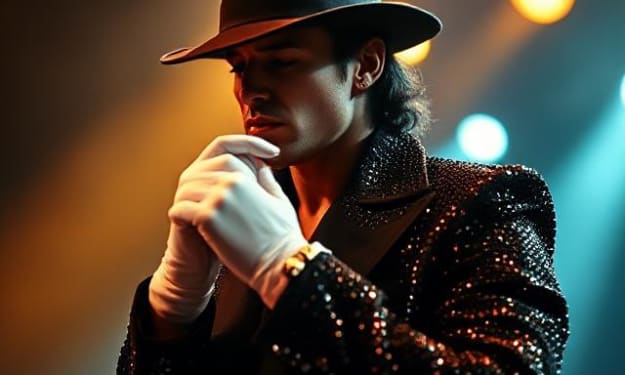
The sound of the crowd was like a storm. Backstage, it rolled through the walls — waves of cheering, crashing and swelling, spilling into the narrow hallway where Michael Jackson stood alone. He was 24 years old, wearing a black sequined jacket and the white glove that had already become a part of his name. The stagehands moved quickly around him, adjusting lights, checking cables, speaking in short, clipped voices. But for Michael, everything was quiet. He looked down at his shoes. Perfectly polished black loafers. He wiggled one foot slightly, feeling the stage beneath him even from here. Then he took a slow breath. It wasn’t nerves. Not exactly. It was something heavier — the weight of a thousand eyes waiting for him, and millions more watching from their living rooms. --- Somewhere down the hall, the music was already alive. It was faint, like a heartbeat from far away, but it was steady. And in that strange, quiet moment, Michael could almost feel it reaching for him. The music didn’t rush him. It didn’t shout. It simply waited, holding out its hand like an old friend. --- The Walk to the Light He stepped forward. The hallway grew brighter with every step, until he reached the edge of the stage. The stage manager nodded. Michael didn’t need to be told twice. He placed his foot on the wood floor, feeling its slight give under his weight, and walked into the open. The crowd roared. The storm had found its lightning. But Michael… didn’t rush. He let the applause wash over him, standing still, letting the music find its place. --- The spotlight found him. It wrapped around him like a living thing, warm and almost protective. For a brief second, the rest of the world disappeared — no cameras, no pressure, no expectation. Just him, and the music, and the light. The first beat of “Billie Jean” dropped. And just like that, he was no longer walking alone. The music had taken his hand. --- Every Move a Conversation Michael never thought of dance as steps. To him, it was a conversation — not just between him and the song, but between him and the people watching. When his right foot slid back in that now-famous moonwalk, the crowd screamed so loudly he could feel it in his chest. The music held his hand tighter, guiding him through the glides, the spins, the quick snaps of his head. Every movement answered a question the music had asked. Every pause let the audience ask their own. --- The Magic of the Moment Halfway through, Michael stopped again. It was just for a second, but in that second, the music stopped too. The entire stadium seemed to lean forward. And then — in perfect unison — Michael and the music leapt back into motion. The magic wasn’t just in the moves. It was in the trust. The way he trusted the music to lead, and the way the music trusted him to follow. --- When It Ended The final spin came, sharp and clean. Michael froze, one leg bent, arms stretched, head down. The crowd roared. Cameras flashed. The spotlight clung to him like it didn’t want to let go. And for just a breath, neither did the music. When he finally stepped back into the shadows, the sound behind him faded. The stagehands moved again, busy, focused. But Michael stood still for a moment, breathing quietly. It wasn’t about being the King of Pop. It wasn’t about breaking records. It was about that feeling — the one that came when the music held his hand and refused to let him fall. --- A Legacy That Still Holds Us Years later, people still watch that performance and feel it in their bones. Young fans try the moves, older fans remember where they were when they saw it for the first time. And maybe that’s why Michael Jackson’s legacy never fades. Because the music didn’t just hold his hand that night — it holds ours too. When the world feels loud and uncertain, we can still press play, watch him glide across that stage, and feel the grip of something bigger than ourselves. Something steady. Something alive. Something that will not let go. --- That night, the music held his hand. And in a way, it’s still holding ours. ---
By Muhammad Riazabout a year ago in Beat
When the Spotlight Held Its Breath. AI-Generated.
The stadium lights dimmed, but one spotlight stayed. It hung in the air like a living thing, searching, waiting, hungry for the man it was born to follow. And then, it found him. Michael Jackson stepped into the circle of light. Black hat. Gold-trimmed jacket. Loafers that looked like they had already danced a thousand miles. The crowd erupted — tens of thousands of voices crashing together in pure electricity. But Michael… didn’t move. --- He just stood there. Back straight. Head bowed slightly. Hands by his sides. The music hadn’t started yet, but it didn’t matter. The moment was already bigger than the song. The spotlight seemed to tighten around him, like it was holding its breath. The crowd’s cheers rose, then fell, then rose again, as if unsure whether to wait in reverence or explode in worship. Thirty seconds passed. Still, he didn’t move. --- Somewhere in the front row, a fan screamed his name. Michael didn’t flinch. Cameras zoomed in. The world was watching, and the man in the spotlight was in complete control. Then, slowly, he lifted his head. The brim of his hat caught the light, revealing his eyes for just a heartbeat before shadow claimed them again. The noise in the stadium doubled. Still, no music. No movement. Just the tension, winding tighter and tighter. --- It was a trick Michael had perfected over years of touring — the art of stillness. Most performers feared silence, afraid the crowd might lose interest. Michael knew better. He understood that anticipation could be louder than any note, heavier than any beat. And on that night of the Dangerous World Tour, he turned anticipation into an art form. The spotlight, the crowd, the cameras — they were all waiting for his permission to move forward. --- And then, with a sudden snap, his head turned sharply to the left. The sound of thousands of screams hit like a wave. The beat dropped. Michael exploded into motion — a spin, a glide, a kick. It was as if the stillness had been holding back a storm, and now the storm had broken loose. Every step landed perfectly on the beat. Every gesture told its own story. He spun so fast his jacket caught the wind. He paused mid-motion just long enough for the crowd to gasp, then went faster. --- By the time he hit the first chorus, the stadium was on fire — not with flames, but with something just as fierce: pure human energy. And yet, that first moment, when he stood still under the spotlight, was the one people would talk about later. Because in that moment, he owned time. --- When the song ended, he froze again, one leg bent, arms stretched wide. The spotlight clung to him as if afraid to let him go. And maybe it was right to be afraid — because moments like this don’t happen twice. Michael tipped his hat, gave the crowd a single nod, and walked off stage. --- The Genius of Stillness Michael Jackson’s ability to stand motionless in front of a screaming crowd was more than stagecraft. It was confidence made visible. It said, I don’t need to move to hold you. I already have you. It was a lesson for every performer: movement without meaning is empty. But stillness with purpose? That’s power. Fans left the stadium that night buzzing, telling the story of how “he stood there for a full minute before even starting.” They tried to explain how it felt — how their hearts pounded harder the longer he waited — but words always fell short. Because you couldn’t just hear it. You had to feel it. --- A Legacy in the Light Even now, decades later, videos of that moment circulate online. Younger fans, who never saw him live, still pause the video when he first steps into the light — as if joining the audience in holding their breath. It’s strange, isn’t it? How a man can be remembered as much for the seconds he stood still as for the steps he took. But that was Michael Jackson’s gift. He didn’t just dance to the music. He danced to the space between the music. --- That night, the spotlight held its breath. And in that breath, the world fell in love with him all over again. ---
By Muhammad Riazabout a year ago in Beat
The Night Michael Jackson Stood Still. AI-Generated.
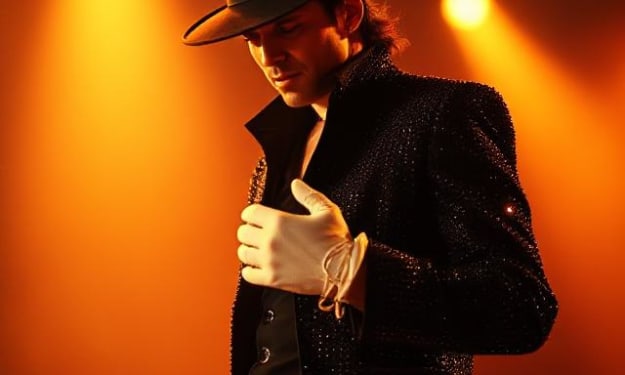
Start writing... On March 25, 1983, the air inside the Pasadena Civic Auditorium felt different. It wasn’t just another concert. It was the Motown 25: Yesterday, Today, Forever television special — a night for legends to remind the world why they became legends. The guest list read like the history of American music: Smokey Robinson, The Temptations, Diana Ross, Stevie Wonder. But in the back of the building, one young man was preparing for a moment that would belong entirely to him. Michael Jackson, 24 years old, was already a household name. He’d grown up in the spotlight with The Jackson 5, sold millions of albums, and broken chart records. Yet here he was, backstage, pacing quietly, almost shyly, while the world outside waited. For Michael, this performance wasn’t just about singing “Billie Jean.” It was about showing something new — something that had never been done on a stage like this before. --- A Silent Confidence Those who saw him backstage that night remember his focus. He didn’t make small talk. He didn’t brag about what was coming. He adjusted his black sequined jacket, pulled on his single white glove, and tilted his fedora until the brim sat perfectly. This was his armor. His stage identity. And when he stepped out there, he would no longer be Michael, the quiet man. He would become Michael, the force of nature. --- The First Steps The lights dimmed. A single spotlight carved a circle on the stage. Then came the opening bassline — that slow, thumping heartbeat of “Billie Jean.” Michael walked into the light. Every movement was sharp, calculated. He snapped his head to the side. He tapped his foot. The audience leaned forward, drawn into his rhythm. He wasn’t just dancing. He was telling a story with every step. --- The Glide Heard Around the World Halfway through, Michael turned slightly to the side. The beat hit. And then, in one fluid motion, he slid his right foot back while his left foot seemed to float forward. It was the first time the world saw the moonwalk. For a heartbeat, there was silence. People in the front rows froze, trying to figure out if what they’d just seen was real. Then the crowd erupted. The cheers were so loud they nearly drowned out the music. It was as if gravity had taken a night off, and Michael was showing us how to live without it. --- Owning the Stage He didn’t stop there. He spun so fast his black loafers blurred. He dropped to his toes and held his balance for an impossibly long moment. He tipped his hat just enough for the audience to see his eyes — eyes that told them he knew exactly what he was doing to their hearts. Every move was sharp but effortless. He wasn’t just performing; he was leading. The stage was his kingdom, and everyone watching — in the room or at home — was under his spell. --- The Freeze The performance ended with a perfect spin, a sudden stop, and a frozen pose. One leg bent. Head down. Hat brim low. For a moment, Michael didn’t move. The crowd didn’t either. They didn’t want to break the magic. When he finally walked off stage, he didn’t beam with pride or shout in triumph. He just nodded to himself, as if saying, Yes. That’s how it should be done. --- The Aftershock The moonwalk wasn’t a brand-new move. Street dancers had been sliding like that for years. But Michael’s version was different. It had style. It had precision. And it came with the power of millions of eyes watching all at once. The next morning, kids tried it in their bedrooms. Dancers studied it frame by frame on VHS tapes. People who didn’t care for pop music still asked, “How does he do it?” That night turned a dance move into a cultural landmark. --- The Humble King Years later, Michael downplayed the genius of that moment. "You can’t blame the moonwalk for anything,” he once said. “It just comes from my soul. It’s magic.” But that magic wasn’t an accident. It was the product of years of practice, discipline, and a deep understanding of how to connect with an audience. Michael didn’t just dance to the beat of the music. He danced to the beat of the audience’s heart. --- A Legacy in Motion Today, four decades later, clips of that performance still go viral. Young fans discover it for the first time and react just like those in the audience that night — with disbelief, awe, and joy. They see a man in a sparkling jacket, moving as though the laws of nature bent to his will. They see a moment where music, dance, and emotion collided so perfectly that it froze in time. And for a few seconds, watching from a phone screen or laptop, they feel the same magic that filled the Pasadena Civic Auditorium in 1983. --- Because that’s the truth about Michael Jackson. Even when he stood still… the world couldn’t help but move toward him. ---
By Muhammad Riazabout a year ago in Beat