90s music
Music for 90s babies and fans of timeless pop music; explore the decade defined by boybands, Europop, girl groups, rap, and so much more.
The Is Jah Wobble
Introduction Apparently, Jah Wobble's stage name came because John Lydon could not pronounce the name John Wardle properly and slurred it into becoming Jah Wobble. I loved his dub-based bass playing with Public Image but then when he left he looks to have tackled every music genre you can think of and a lot that you can't think of.
By Mike Singleton 💜 Mikeydred 4 months ago in Beat
Music About Musicians By Musicians
Introduction Dexy's Midnight Runners came on the radio covering Van Morrison's "Jackie Wilson Said" and I thought could I put together a playlist of songs or band singing about other singers or bands. We obviously have something to kick off this one and another has just come into my head, bands named after songs, but that can wait awhile.
By Mike Singleton 💜 Mikeydred 4 months ago in Beat
The Buzz
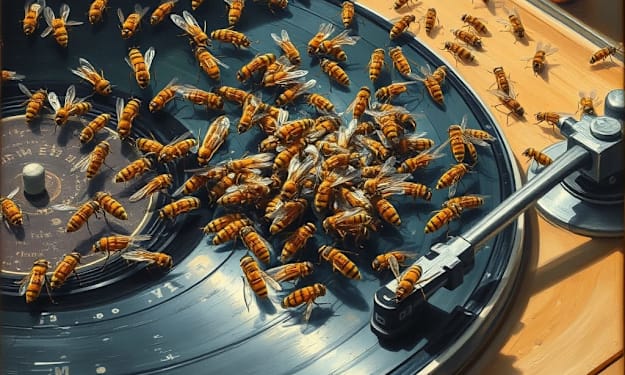
Introduction What is it with flies and wasps? Are they just there to annoy us? I've had a couple in the house over the last few days, so I open windows and doors to let them out, and then what happens? They keep banging against the window or me.
By Mike Singleton 💜 Mikeydred 4 months ago in Beat
This Playlist Is Murder
Introduction I had used Graham Parker's "They Murdered The Clown" in a recent Seven Days In post that you can read below, and then thought maybe I could to a Clown related playlist to share on Vocal, but just at the moment no decent Clown or Circus related songs are coming to mind apart from the Graham Parker song.
By Mike Singleton 💜 Mikeydred 4 months ago in Beat
The Vegetable Orchestra
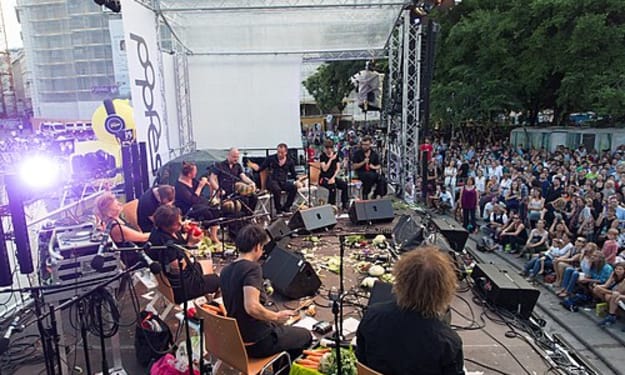
Imagine walking into a concert hall expecting guitars, drums, violins, or maybe a piano… but instead, you see musicians carving carrots like flutes, hollowing out cucumbers, slicing celery into percussion sticks, and carefully shaping pumpkins into drums. The smell of fresh vegetables fills the air instead of cigarette smoke or expensive perfume. The audience watches in confusion. Some laugh. Some stare silently. Then suddenly, the lights dim… and music begins. Not ordinary music. Music born from vegetables. This is not fiction. It is real. And it may be one of the strangest, most fascinating artistic experiments ever created. In February 1998, in Vienna, a unique group of artists came together with an idea so unusual that most people probably thought it was a joke. The group included musicians, sculptors, architects, designers, media artists, and sound poets. Even their cook became part of the performance. Together, they formed what the world would later know as the legendary vegetable orchestra. But this wasn’t just about making funny sounds with carrots. It was about completely changing the way humans experience music. Before every performance, the musicians gather piles of fresh vegetables: carrots, celery, peppers, squash, zucchini, pumpkins, onions, and more. Then the transformation begins. Knives slice through vegetables with surgical precision. Holes are drilled into carrots to create flutes. Pumpkins become deep bass drums. Celery stalks transform into rhythm instruments. Every instrument is handmade only hours before the concert starts. And because vegetables are fragile, every performance becomes unique. A carrot flute today may sound completely different tomorrow because vegetables naturally change with moisture, temperature, age, and freshness. No two concerts are ever exactly alike. In a strange way, the instruments are alive. That’s what makes this orchestra so mesmerizing. The musicians don’t fight against nature — they perform with it. Special microphones amplify the tiny cracks, vibrations, and textures hidden inside the vegetables. Sounds most people would never notice suddenly become music. Crunching, scraping, hollow echoes, soft whistles, deep thumps — the orchestra transforms ordinary kitchen ingredients into a surreal soundscape that feels almost alien. Some audience members describe the experience as hypnotic. Others call it beautiful chaos. But perhaps the most incredible part happens after the show ends. The instruments are not thrown away. Instead, the leftover vegetables are cooked into fresh soup and served to the audience. Yes — people literally eat the instruments after the concert. That single detail perfectly captures the philosophy behind the orchestra. Nothing is wasted. Music becomes food. Art becomes nourishment. Performance becomes community. The line between artist and audience almost disappears. And somehow, this bizarre idea worked far beyond anyone’s expectations. The group began performing across Europe, then expanded into the United States and Asia. They appeared at gallery openings, exhibitions, experimental art festivals, and community events. What started as a strange artistic experiment slowly became an internationally recognized phenomenon. On average, the orchestra performs 20 to 30 shows every year. Think about that for a second. For decades, people around the world have gathered to watch musicians perform with vegetables. That alone says something powerful about human curiosity. People are hungry for experiences that feel new, weird, unpredictable, and alive. In a world filled with artificial sounds, digital perfection, and computer-generated music, there is something deeply refreshing about hearing raw sound created from objects that were literally growing in soil days earlier. The orchestra eventually became so successful that they earned a place in Guinness World Records for the “Most concerts by a vegetable orchestra.” Between April 1998 and September 2012, they completed 77 official performances using instruments made entirely from vegetables. That record alone sounds unbelievable. But the deeper story is even more interesting. This orchestra quietly challenges the way we think about creativity itself. Most people believe art requires expensive tools, perfect training, or advanced technology. But these performers prove that creativity is not about what you own — it’s about how you see the world. To them, a carrot is not just food. It is also a flute waiting to be discovered. That mindset changes everything. Suddenly, everyday objects stop looking ordinary. The world becomes filled with hidden possibilities. And maybe that is the real reason audiences love them so much. The performances are not only concerts. They are reminders that imagination still exists in its purest form. In a time when many artists chase algorithms, trends, and viral attention, this orchestra chose something completely different: experimentation, curiosity, and sensory experience. Their music cannot be mass-produced. It cannot be perfectly repeated. It exists only in the moment — fragile, temporary, and alive. Just like the vegetables themselves. And perhaps that’s what makes the entire idea strangely beautiful. For a few hours, carrots become instruments. Pumpkins become drums. Celery becomes rhythm. Sound becomes soup. And ordinary vegetables become proof that human creativity has absolutely no limits
By Noman Khan 4 months ago in Beat
Jordan Reyne - Maiden, Mother, Crone
Introduction To An Amazing Artist - Jordan Reyne Jordan Reyne is still the most jaw-dropping artist I have discovered, In 2014 I went to see The Men That Will Not Be Blamed For Nothing (one of the best live bands you can ever see) and Think Tank in Newcastle, and when I got in there was a girl with horns like some pagan sylph on stages sing to a echoplex loop of her own voice on stage. I didn't know who it was, but I think the song was “The Shadow Line”. You can read about the gig here on the Spoongig blog
By Mike Singleton 💜 Mikeydred 4 months ago in Beat
Route 666
Introduction I don't know what popped this into my head. I was reading an old blog post about the 101ers and the band name coming from George Orwell's 1984 then I thought of Girlschool covering Gun's "Race With The Devil" and thought what road would they be on, then thought of the song "Route 66" and the road Route 66 which runs from Chicago to Los Angeles nearly two and a half thousand miles:
By Mike Singleton 💜 Mikeydred 5 months ago in Beat
The Art of Storytelling: Once Upon A Time In The Projects
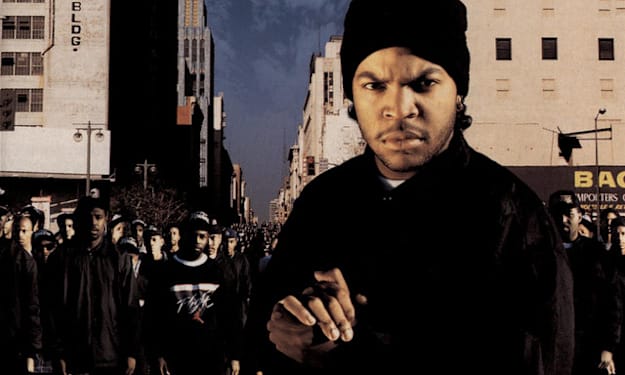
The year is 1990 and west coast Hip Hop superstar Ice Cube has just left the world’s most dangerous group, NWA. So after being offered help by the east coast powerhouse Public Enemy he goes to New York City to record his ambitious solo debut, Amerikkka’s Most Wanted. The album was heavy with subject matter about the struggle of the inner city, but was also littered with a great deal of humor added to its vivid storytelling. One of the best songs to display this quality of the album was “Once Upon A Time In The Projects”.
By Joe Patterson5 months ago in Beat
Recording The Myth
Introduction Yesterday I bought a vinyl album I had not seen for decades, "Heavy Cream", and one of the songs was "Tales Of Brave Ulysses" penned by Eric Clapton, which got me thinking, "How many songs reference old mythology, and immediately several came to mind.
By Mike Singleton 💜 Mikeydred 5 months ago in Beat
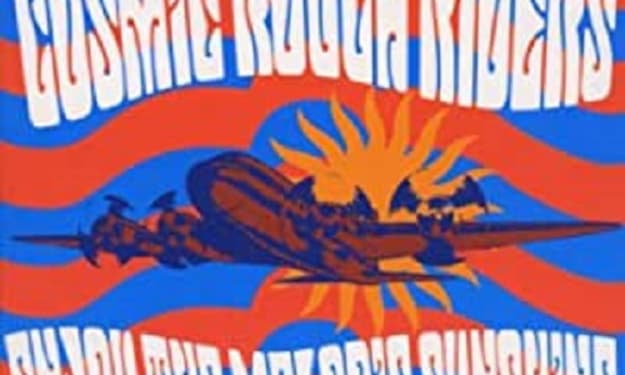
Cosmic Rough Riders - Enjoy The Melodic Sunshine
This intro is taken from Wikipedia and you can read the full article below: This is a collection of songs featuring tracks from the band's first two self-financed albums as well as three new tracks. The album was put together by Alan McGee's Poptones label as a starting point for mainstream listeners. The album spawned four singles including the UK top 40 hits "Revolution (In the Summertime?)" and "The Pain Inside".Although never reaching the UK Top 50, the album spent 17 weeks in the top 200 in 2001, peaking at No. 82. Steady sales meant that by the end of 2001, the album had achieved silver status (sales of 60,000) in the UK and it was named by Q magazine as one of the 50 best albums of the year. It would go on to achieve sales of over 100,000.
By Mike Singleton 💜 Mikeydred 5 months ago in Beat